Voyager 1 One Light-Day November 18 2026: A Two-Day Conversation With the Farthest Machine Ever Built
On 18 November 2026, a spacecraft older than most of the people who will read about it will cross a line that no human-made object has ever crossed. Voyager 1, launched in 1977 and now sailing through interstellar space, will be one light-day from Earth. That is not a poetic way of saying “very far away”. It is a precise measurement: light itself, the fastest thing in the universe, will need a full 24 hours to travel the gap between our planet and the probe. Send Voyager 1 a command on a Monday morning, and, as the mission’s project manager Suzy Dodd has put it, the reply will not arrive until Wednesday morning. From that day on, humanity’s farthest conversation will take two days to complete a single exchange.
NASA flagged the milestone in its skywatching notes on 30 October 2026, and the date is worth marking now, while there is still time to appreciate what it means. Voyager 1 will not cross a wall, pass through a gate, or trigger a fanfare in deep space. Nothing out there will change at the moment of crossing. What changes is us: the scale of our reach, the patience our engineering must have, and the strange fact that a machine built with 1970s technology is still talking to us from a place where sunlight is just another star in the sky.
What a light-day actually means
A light-day is a distance, not a time, although the name invites confusion. It is simply the distance light travels in 24 hours: about 25.9 billion kilometres, or about 16.1 billion miles. NASA’s own explainer makes the same point about its smaller cousin, the light-minute, which is also a distance rather than a duration. Astronomers use these units because ordinary units break down at interstellar scales. Miles and kilometres become unwieldy strings of digits; astronomical units, the Earth-Sun distance, are better but still abstract. Light travel time, by contrast, is something anyone can feel. A signal to the Moon takes about 1.3 seconds. A signal to Mars takes minutes, depending on where the planets sit in their orbits. A signal to Voyager 1 will soon take a full day.
That is why the milestone matters more than the round number alone suggests. Every space mission lives inside a light-time delay, and engineers design around it. A rover on Mars cannot be driven with a joystick; commands are sent in batches, and the rover executes them alone. Voyager 1 takes that logic to its extreme. Its operators at NASA’s Jet Propulsion Laboratory cannot react to anything in real time. They cannot watch a problem develop and intervene. They send a carefully checked sequence, wait a day for it to arrive, and wait another day to learn whether it worked. A single troubleshooting exchange can consume most of a working week. The fact that the mission still works at all under those conditions is one of the quiet triumphs of the space age.
There is also a small piece of housekeeping worth doing, because readers searching for this milestone may find two different dates. An earlier calculation that circulated last year put the crossing on 13 November 2026. NASA’s current tracking, set out in its 30 October 2026 skywatching note, gives 18 November 2026, when Voyager 1 will be 16.1 billion miles from the Sun. Tracking pages that refine the figure further put the distance from Earth at 25,902,068,356 kilometres at the moment of crossing, early on 18 November in Pacific time. The difference between the old estimate and the current one is a reminder of how precise this work has to be: at these distances, a few days of travel is a rounding error in one sense and the whole story in another. This article uses NASA’s current date, 18 November 2026.

The road to sixteen billion miles
Voyager 1 began life as a planetary tourist. NASA launched twin spacecraft, Voyager 1 and Voyager 2, in 1977 to take advantage of a once-every-175-year alignment of the four giant planets: Jupiter, Saturn, Uranus and Neptune. Using six gravity assists between them, the pair were able to tour the outer solar system in a single grand journey, photographing gas giants and ice giants and their moons up close. By the 1980s the two probes went their separate ways at Saturn. Voyager 2 continued on to Uranus and Neptune, the only spacecraft ever to visit those two worlds. Voyager 1 took a different path, arcing up and out of the plane of the planets, and on its way out it grabbed one more portrait of the solar system, including the final image of Earth as a pale blue dot, a single pixel of light suspended in a sunbeam.
That portrait was, in a sense, the end of the original mission and the beginning of the longer one. Voyager 1 kept going. In August 2012 it crossed the heliopause, the boundary where the Sun’s solar wind gives way to the interstellar medium, the thin gas and dust that fills the space between the stars. It became the first human-made object to enter interstellar space. Voyager 2 followed in November 2018, on a different trajectory, giving scientists a second sampling point in a different direction. The two spacecraft are now the only operating probes outside the heliosphere, the protective bubble blown by the solar wind and shaped by the Sun’s magnetic field.
The numbers since then are difficult to hold in the mind all at once, so it helps to stack them up. At the time of NASA’s 30 October 2026 note, the Canberra antenna of NASA’s Deep Space Network was tracking Voyager 1 at 25.80 billion kilometres from Earth, just over 16 billion miles. The spacecraft is moving at nearly 61,000 kilometres per hour, about 38,000 miles per hour, or roughly 3.5 astronomical units per year, in the general direction of the constellation Ophiuchus. It is still sending data home at about 160 bits per second, slower than the earliest dial-up modems, through a transmitter that puts out roughly 23 watts, about the power of the bulb inside a refrigerator. By the time that faint signal reaches Earth, it has faded to less than a billionth of a billionth of a watt, and only the largest dishes of the Deep Space Network can catch it. The 70-metre dish near Canberra, Australia, known as DSS-43, is the network’s key station for talking to the Voyagers, and its role will only grow as the distance grows.
None of this was in the original plan, at least not in this form. The Voyager spacecraft were designed for a five-year mission to Jupiter and Saturn. They have now operated for 49 years. Their longevity is not luck. It is the product of conservative engineering, generous margins, and, in recent years, an extraordinary programme of remote care by engineers who have learned to nurse a spacecraft they can never touch, whose replacement parts do not exist, and whose every command takes a day to arrive.
A golden record, still travelling
Every account of Voyager 1 eventually comes back to the Golden Record, and for good reason. Each Voyager carries a 12-inch phonograph record, a time capsule of Earth bolted to the side of the spacecraft. It holds spoken greetings in 55 languages, 27 musical tracks, 116 images, and other sounds from Earth, from whalesong to a kiss. The record is protected by a cover etched with instructions for playing it, including a diagram showing the Sun’s location relative to 14 pulsars, a cosmic map drawn in the language of astronomy rather than any human tongue. The record itself is copper plated with gold to protect the information from space radiation; the cover is aluminium, electroplated with an ultra-pure sample of uranium-238, whose half-life of 4.468 billion years serves as a clock by which any finder could date the artefact.
NASA’s skywatching note quotes the record’s opening greeting: “Hello from the children of planet Earth.” It is a line that has lost none of its strangeness in nearly half a century. The record was never expected to be found. The odds that either Voyager will ever pass close to another star system are vanishingly small, and the timescales involved are geological. In roughly 40,000 years, Voyager 1 is expected to pass within about 1.7 light-years of a star known as AC +79 3888, also called Gliese 445, which is itself moving towards the spacecraft’s path. That is the closest stellar encounter on its itinerary, and it is still more than a light-year away. The record is, in the end, less a message to aliens than a message to ourselves: a statement, made in the 1970s, that a species that had just learned to leave its home planet thought its music and its greetings were worth sending into the dark.
The one-light-day milestone gives that statement a new frame. When Voyager 1 crosses the line on 18 November, the Golden Record will be a full day of light travel from the planet that made it. The greetings in 55 languages will be further from every speaker of those languages than any human artefact has ever been. There is something fitting about that, and something melancholy too. The record was designed to outlast its makers. At one light-day and counting, it is well on its way.
Two instruments left, and a power budget measured in watts
If the Golden Record is Voyager 1’s poetry, its power budget is its prose, and the prose has grown stark. Voyager 1 does not run on sunlight. Beyond the planets, sunlight is too feeble to power a spacecraft, so the probe runs on radioisotope thermoelectric generators, which convert heat from decaying plutonium-238 into electricity. As the plutonium decays and the conversion hardware ages, the spacecraft loses roughly four watts of power every year. Four watts is almost nothing on Earth, about the draw of a small night light. On Voyager 1, it is the entire margin between operating and dying.
Mission engineers have managed that decline by triage, shutting down instruments and heaters one by one according to a list agreed years in advance. Of Voyager 1’s original ten science instruments, only two remain in operation: the magnetometer, which measures magnetic fields, and the plasma wave subsystem, which listens to waves in the charged gas around the spacecraft. The most recent shutdown came on 17 April 2026, when engineers switched off the low-energy charged-particle instrument, which had operated almost continuously since launch in 1977 and had provided critical data about the interstellar medium. Reporting on the shutdown noted that it was deemed necessary to stabilise plunging power levels and to avoid triggering an autonomous failsafe that could end the mission. An earlier shutdown, of the cosmic-ray instrument, took place in February 2025, according to mission trackers. Without these shutdowns, engineers have said, the probes would probably have only a few more months of power. With them, NASA expects at least one instrument to keep running into the 2030s.
The engineering behind that survival deserves a paragraph of its own, because the last few years have tested it severely. In November 2023, a memory fault began garbling Voyager 1’s data, sending back streams of unintelligible ones and zeros. Engineers diagnosed the problem from a day away, traced it to a faulty computer chip, and devised a workaround that moved the affected code to another part of the spacecraft’s memory. In October 2024, a transmitter switched itself off, apparently after a fault-protection routine tripped, and the team had to coax the spacecraft back onto its weaker backup transmitter. Clogged thruster fuel lines have forced the team to switch to backup thruster branches that had not been used in decades. Each rescue was carried out across a communications delay of nearly two days, with no room for a careless command, because a wrong command could take two days to diagnose and another two days to correct.
There is also, according to reporting from mid-2026, an ambitious reconfiguration nicknamed the “Big Bang” plan, under which engineers would simultaneously swap multiple heaters and powered components to save roughly 10 watts of power. The plan illustrates the scale of the problem: on Voyager 1, 10 watts is a fortune, worth a risky, carefully choreographed operation. Whether and when such a swap takes place will depend on the spacecraft’s health and on the team’s judgement about risk. The one-light-day milestone arrives in the middle of this long, careful decline, and it is worth remembering that every additional day of operation is bought with decisions like these.
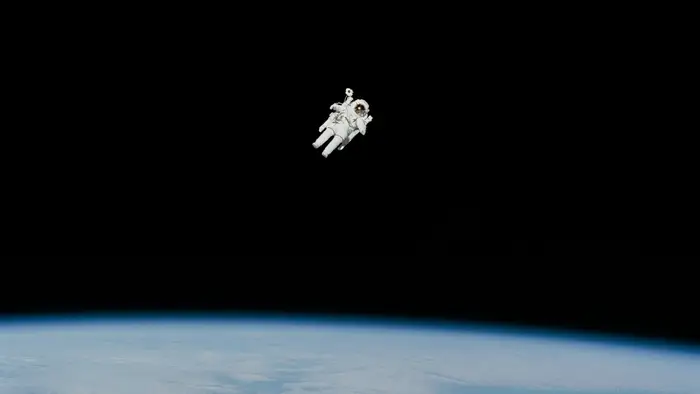
What Voyager 1 is still measuring
It would be reasonable to ask whether two instruments, returning data at 160 bits per second across a one-day delay, are still worth the effort. The answer from the science is yes, and the reason is location. Voyager 1 is the only operating spacecraft in interstellar space in its direction, and its two surviving instruments measure things that cannot be measured from inside the heliosphere.
The magnetometer measures the strength and direction of the magnetic field in the interstellar medium. Before Voyager 1 crossed the heliopause, models of that field were educated guesses. Now they are measurements, and they have surprised researchers: the interstellar magnetic field is stronger and more ordered than some models predicted, and it appears to be draped around the heliosphere in ways that reveal how our Sun’s bubble interacts with the galaxy around it. The plasma wave instrument, meanwhile, listens for oscillations in the thin plasma around the spacecraft, and from those oscillations scientists can infer the density of interstellar matter. Those density measurements have shown that the interstellar medium is not uniform; it has structure, clumps and voids, and Voyager 1 is flying through them one by one, like a ship sounding the depth of an ocean it cannot see.
Together, the two instruments are building the first in-situ map of our immediate interstellar neighbourhood. That map matters for reasons beyond curiosity. The heliosphere shields the solar system from a large fraction of galactic cosmic rays, high-energy particles from elsewhere in the galaxy. Understanding the shape of that shield, and the properties of the medium outside it, is part of understanding the radiation environment that future interstellar probes, and eventually interstellar travellers, will face. Voyager 1’s data also calibrate the remote observations of other telescopes: when astronomers look at the heliospheres of other stars, they now have one ground-truth example, measured from both inside and outside, to compare against.
It is also worth noting what Voyager 1 is not doing. It is not taking photographs. Its cameras were switched off long ago, after the pale blue dot portrait, to save power, and they will not be switched back on. There will be no new selfie from one light-day away, no image of the spacecraft against the stars. The milestone will be marked by numbers on a tracking page, by a signal delay crossing 24 hours, and by articles like this one. That is appropriate. Voyager 1’s current mission is not about pictures. It is about fields and waves, about the invisible structure of the space between the stars, measured by a machine that has become, in effect, a weather station for the galaxy.
The two-day conversation
There is a human side to the one-light-day milestone that is easy to miss among the numbers. Operating Voyager 1 is an act of institutional memory. The engineers who built the spacecraft have largely retired. The engineers who operate it today learned the spacecraft from documentation, from older colleagues, and from the spacecraft itself, whose behaviour after 49 years in space does not always match its manuals. Commands are written in an era of software the original designers would barely recognise, translated into a language the spacecraft understands, and sent across a gap that light needs a day to cross. When the reply comes back two days later, the person who sent the command may be on a different shift, in a different week, solving a different problem.
That rhythm shapes the mission’s culture. There is no rushing Voyager 1. There is no “quick check”. Every command is reviewed, simulated, and checked again, because the cost of an error is measured in days, not seconds. The culture is the opposite of the move-fast ethos that dominates much of modern technology, and it may be one reason the mission has survived so long. Caution, at one light-day, is not a personality trait. It is a survival strategy.
The Deep Space Network is the other half of the conversation. NASA’s network of giant dishes in California, Spain and Australia takes turns listening to the spacecraft as Earth rotates, and the Canberra station’s role in tracking Voyager 1 at 25.80 billion kilometres, noted in NASA’s October note, is a reminder that this is a planetary effort. A signal that leaves Voyager 1 with less power than a refrigerator bulb must be caught by a dish 70 metres across, amplified, cleaned, and decoded, and the resulting data, arriving at 160 bits per second, must be reassembled into science. The fact that this chain works every day, across a distance that light needs a day to cross, is itself a kind of miracle, albeit a thoroughly engineered one.
For comparison, it is worth remembering that Voyager 1’s twin has not yet reached this milestone. Voyager 2, on its slower, different trajectory, will not reach the one-light-day mark until November 2035, according to current projections. The nine-year gap between the twins is a measure of how different their paths have been since they parted at Saturn in the 1980s. One probe took the fast road out of the solar system; the other took the scenic route past two more planets, and is still paying for the detour in travel time. Both are still operating, both are still returning science, and both will eventually cross the same line, years apart, in different directions, into different regions of interstellar space.
Why this milestone is not just a number
It is tempting to dismiss a distance milestone as a curiosity, a record for the record books. Voyager 1 has, after all, been setting distance records continuously since it passed Pioneer 10 in 1998 to become the farthest human-made object from the Sun. Every day it is farther than it has ever been. Why should one particular day matter more than the day before or the day after?
The answer is that light travel time is the one distance measure that translates directly into human experience. A billion miles is abstract. A day is not. Everyone knows what a day feels like, how long it takes for a message to go unanswered, how much can change in 24 hours. When Voyager 1 crosses one light-day, the abstraction collapses into something visceral: a message sent today will not even arrive until tomorrow, and its answer will not come back until the day after that. The universe, at that scale, stops being a place we visit and becomes a place we correspond with, slowly, by post.
That is also why the milestone is a useful moment to think about what comes next for interstellar exploration. Voyager 1 will not last forever. Its power will continue to decline by about four watts a year, its instruments will be switched off one by one, and sometime in the 2030s, NASA expects, the last instrument will fall silent. The spacecraft itself will keep travelling, silent and dark, carrying its Golden Record towards Gliese 445 and beyond. Long before then, however, its data will have shaped the design of whatever comes next: a dedicated interstellar probe, faster, better instrumented, and designed from the start for the decades-long journey that Voyager 1 undertook by accident.
Such a probe is, for now, a concept rather than a funded mission, but the case for it grows stronger with every year Voyager 1 survives. The Voyagers proved that a spacecraft can operate in interstellar space. They did not prove what interstellar space looks like in detail, because they were never designed to study it. A purpose-built interstellar probe, travelling faster and carrying modern instruments, could map the heliosphere’s boundary in detail, sample the interstellar medium directly, and perhaps even reach the inner edge of the Oort Cloud, the distant shell of icy bodies that surrounds the solar system, within a human lifetime. Voyager 1 will take about 300 years to reach that inner edge, and about 30,000 years to fly beyond it. A faster successor could do in decades what Voyager 1 will do in centuries.
In the meantime, the missions of today are the heirs of Voyager’s approach in a different sense. Long-duration deep-space probes still depend on the same virtues: patience, redundancy, and careful power management. NASA Lucy Trojan Asteroid Region Reached After Five Years and 2.2 Billion Miles shows a modern spacecraft settling into a multi-year cruise of its own, while ‘Pedal to the Metal’: NASA’s Psyche Fires Its Thrusters Almost Nonstop on the Way to a Metal World shows electric propulsion carrying a probe steadily towards a distant target. Earth Gave Juice a Push: ESA’s Jupiter Probe Completes Daring Gravity-Assist Flyby shows the gravity-assist technique that first flung the Voyagers outward still shaping trajectories today. None of these spacecraft will reach a light-day from Earth. They do not need to. Their journeys are measured in years and billions of miles, not in days of light travel, and they carry the same lesson Voyager 1 taught: that a well-built machine, carefully operated, can outlive every expectation placed on it.

Counting down to 18 November
As this article is published, 18 November is a little over two weeks away. In that time, Voyager 1 will travel roughly another 20 million kilometres, closing the last fraction of the gap to one light-day. Its signal delay, already close to 24 hours, will creep past 23 hours and 58 minutes, then 23 hours and 59 minutes, and then, early on 18 November in Pacific time, it will reach 24 hours exactly. There will be no ceremony on board. There is no one on board. There will be, most likely, a quiet note from NASA, a flurry of articles, and a tracking page whose numbers roll over into a new digit.
That quietness is fitting. Voyager 1’s greatest achievements have always been quiet ones: a signal caught by a giant dish in the Australian desert, a magnetic field measurement filed away in a database, a line of code moved to a different part of a computer’s memory by engineers working across a two-day delay. The mission has never been loud. It has simply continued, year after year, further than anything else humanity has ever built.
It is worth spending a moment, on 18 November, thinking about what is actually out there. A spacecraft about the size of a small car, weighing a little over 700 kilograms at launch, carrying a golden record of greetings and music, powered by a dwindling lump of plutonium, listening to plasma waves and measuring magnetic fields in a place where the Sun is just the brightest star in the sky. It has no crew, no destination in any meaningful sense, and no way home. It is, by any practical measure, alone. And yet it is not silent. It is still talking to us, at 160 bits per second, across a gap that light needs a full day to cross.
The conversation will get slower. That is the one certainty in Voyager 1’s future. Every day, the delay grows by a fraction of a second, as the spacecraft adds another 61,000 kilometres to the gap. One light-day will become one light-day and an hour, then a week of light travel measured in days and hours, then more. The round trip will stretch from two days to two days and an hour, and beyond. The engineers will adapt, as they always have, by planning further ahead, checking more carefully, and accepting that their spacecraft lives, increasingly, in its own time zone, a day behind ours and falling further behind with every orbit of the Earth.
And then, one day in the 2030s, the conversation will end. The last instrument will be switched off, or the power will fall below the level needed to run the transmitter, and the signal that has travelled for 24 hours, then longer, will simply not arrive. The spacecraft will continue, dark and silent, towards Gliese 445, carrying its record of greetings from the children of planet Earth. That ending is still years away, and it is not the story of 18 November 2026. The story of 18 November is simpler and, in its way, more remarkable: after 49 years, the farthest thing we have ever built is still talking, still measuring, and still, one light-day out, answering back.
On Monday 18 November, if you remember, send it a thought. It will arrive on Tuesday. The reply, if the engineers ask it a question, will come back on Wednesday. That is the pace of interstellar exploration now: two days for a single exchange, across a distance that took a spacecraft nearly half a century to travel. It is slow, it is fragile, and it is, so far, the farthest conversation humanity has ever held.

