'Pedal to the Metal': NASA's Psyche Fires Its Thrusters Almost Nonstop on the Way to a Metal World
Deep space is a patient place, but NASA’s Psyche spacecraft is in a hurry now. In an October 22, 2026 mission update, the agency announced that its probe to a metal-rich asteroid has begun firing its electric thrusters almost continuously, a dramatic shift from the intermittent burns of the mission’s early years. Since September 28, 2026, the spacecraft has been operating its solar-electric propulsion system on a near-constant schedule, pausing only for weekly check-ins with Earth and essential engineering work.
“It’s now ‘pedal to the metal’ to the asteroid Psyche,” said Don Han, the mission’s navigation lead at NASA’s Jet Propulsion Laboratory in Southern California, which is managed for the agency by Caltech. “We will be running our propulsion system at every available opportunity, pausing only for necessary engineering activities. The thrusters will be operating nearly 90% of the time from now until we reach the asteroid.”
The update marks the beginning of the decisive middle act of one of the most unusual missions in NASA’s Discovery program: a journey to 16 Psyche, a 140-mile-wide world in the main asteroid belt that appears to be made mostly of iron and nickel — quite possibly the exposed metallic heart of a failed planet.
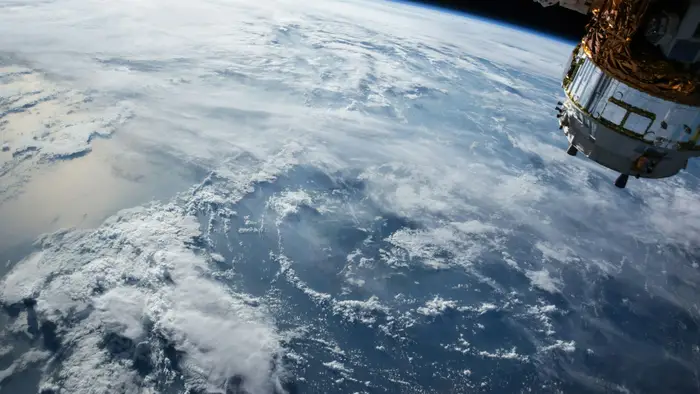
NASA’s Psyche mission launched in October 2023 and is now in the most intensive propulsion phase of its cruise. Image: Unsplash.
A whisper of thrust, for years on end
Electric propulsion sounds like a compromise: tiny thrust applied over very long times. Psyche is living proof that the compromise wins. The spacecraft carries four Hall-effect thrusters, though it operates only one at a time. Inside each thruster, xenon gas is ionized and the resulting charged atoms are accelerated out of the engine by electromagnetic fields, producing thrust in the opposite direction. The propellant’s energy and its power source are fully separated — sunlight collected by the spacecraft’s big cross-shaped solar arrays becomes electricity, and the xenon is simply mass to be thrown out the back.
The thrust involved is modest: the system tops out at about 250 millinewtons, roughly the weight of a few sheets of paper resting on your hand. A chemical rocket delivers thousands of times more force. But a chemical engine fires for minutes; Psyche’s thrusters will run for years, accumulating velocity changes a chemical mission could never afford. NASA expects the propulsion system to operate for nearly 90 percent of the remaining travel time to the asteroid belt.
The craft launched with roughly 2,400 pounds of xenon propellant, and about a third of it has been used so far — leaving ample reserves not only for the cruise but for maneuvering once Psyche arrives at its target in 2029. That frugality is the whole point of solar-electric propulsion: xenon used ion by ion stretches a mission’s delta-v budget across interplanetary distances that would be ruinous for conventional rockets.
NASA expects the system to run at full power for roughly three months following the October update, then throttle back gradually toward half power as the spacecraft travels farther from the Sun. The reason is simple physics: less sunlight on the arrays means less electricity available for the thrusters. Mission planners have accounted for this taper from the beginning, designing a cruise profile that spends its richest energy while it’s still relatively near the Sun.
The Mars slingshot that set the stage
The sustained thrust phase follows directly from a maneuver completed earlier this year: a gravity assist at Mars. After its October 2023 launch aboard a SpaceX Falcon Heavy, Psyche spent its first leg firing its thrusters only intermittently, nudging its trajectory into position to harness the Red Planet’s gravity. The flyby delivered a propellant-saving speed boost and a slight trajectory change that locked in the 2029 arrival.
The numbers, confirmed by tracking data, were striking. Monitoring the Deep Space Network’s Doppler signal in real time during the flyby, Han’s navigation team confirmed that Mars gave the spacecraft roughly a 1,000-mile-per-hour boost and shifted its orbital plane by about one degree relative to the Sun. Gravity assists are often described as interplanetary billiards — a clever, free lunch of momentum borrowed from a planet — and for Psyche the math was unforgiving: without the encounter, the timeline to the asteroid belt would have slipped beyond reach.
The flyby doubled as a dress rehearsal for the science instruments. Near a planet, in a dynamic radiation and magnetic environment, the payload team could prove its hardware works. The gamma-ray and neutron spectrometer registered a neutron count-rate enhancement right around closest approach that lined up with pre-flyby models. “Around the time of Mars closest approach, the neutron spectrometer detected a count-rate enhancement close to what we anticipated. It was very gratifying to see,” said David Lawrence, the spectrometer lead at the Johns Hopkins Applied Physics Laboratory. The magnetometer, meanwhile, recorded an intense jump in the magnetic field that matched the bow shock — the region where the solar wind slams into Mars’ magnetosphere. Ben Weiss, the deputy principal investigator and magnetometry lead at MIT, described the readings as validation of the instrument’s performance, with the data checking out against known Mars measurements from orbiters, rovers, and even the United Arab Emirates’ Hope probe.
With the gravity assist confirmed and the instruments proven healthy, the team had no reason to linger in a cautious posture. The Mars encounter was the gate; the long burn is the road.
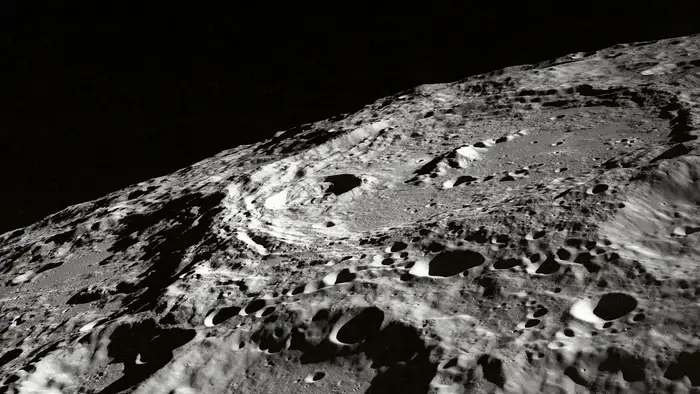
Psyche borrowed momentum from Mars earlier this year, gaining roughly 1,000 miles per hour in a gravity assist that locked in its 2029 arrival. Image: Unsplash.
Taming the swirl
Running a Hall thruster for years exposes quirks no laboratory can fully reproduce. One of them is swirl torque: as charged xenon particles spiral within the thruster’s magnetic field, they impart a small but persistent twisting force on the spacecraft. Reaction wheels aboard Psyche absorb that angular momentum, spinning faster as they soak up the twist. Periodically, controllers pause the main thrust, reorient the spacecraft, and briefly operate a different thruster at low power to unload the wheels.
That this effect can only be measured and managed in the real environment of space makes Psyche’s long cruise a unique engineering experiment as well as a voyage. The October 22 update describes the unloading routine as part of the weekly rhythm of the cruise: one pause each week for communications with Earth, plus engineering activities like wheel desaturation. The result is a duty cycle approaching 90 percent — as close to a continuously running engine as any deep-space mission has yet attempted.
The hardware itself is a collaboration: Maxar Technologies built the spacecraft chassis, including the solar-electric propulsion system, under NASA direction, while JPL manages the mission. Hall thrusters have flown before — on commercial communications satellites and on smaller deep-space probes — but Psyche’s application pushes them into the longest, most sustained thrusting campaign ever attempted at these power levels.
The long road here
The sustained-burn milestone is all the more satisfying for how hard-won the journey has been. Psyche was originally targeted for a 2022 launch, but late verification of the spacecraft’s flight software forced NASA to stand down. An independent review board found the mission had been under stress from staffing shortfalls and workload, and recommended changes that delayed the launch to October 2023. The slip rewrote the mission’s entire trajectory: instead of flying directly to the asteroid belt, the spacecraft would now swing past Mars for a gravity assist, trading a year of schedule for a new route — and adding the flyby that, in the event, doubled as a dress rehearsal for the science payload.
The launch itself, on October 13, 2023, aboard a SpaceX Falcon Heavy from Kennedy Space Center in Florida, was flawless. Since then the mission has logged a string of firsts. Its Deep Space Optical Communications demonstration — a pioneering laser terminal that transmits data as pulses of near-infrared light — achieved the first deep-space laser data link in late 2023. By the spring of 2024, DSOC was returning data at rates exceeding 250 megabits per second from more than a hundred million miles out, demonstrating a technology that could multiply future missions’ bandwidth many times over and stream high-definition video from Mars and beyond.
Each milestone has built toward the current phase. The intermittent burns of 2024 and 2025 shaped the trajectory; the Mars flyby in 2026 locked it; now the long burn maintains it. There is something fitting in the cadence: a mission to the most metal-heavy world ever visited is being flown by the most patient engine ever trusted with an interplanetary cruise.
How a Hall thruster works
Psyche’s engines belong to a family worth understanding, because they are quietly becoming the workhorse of deep-space flight. The spacecraft carries four SPT-140 Hall thrusters built into Maxar’s chassis, firing one at a time. A Hall thruster traps electrons in a magnetic field at the mouth of an annular discharge channel; the electric field those electrons create then accelerates xenon ions out of the channel at tens of kilometers per second. The design differs from the gridded ion thrusters flown on missions like NASA’s Dawn: there are no delicate metal grids to erode, which is why Hall thrusters tolerate the years-long firing campaigns a cruise like Psyche’s demands.
The trade is elementary and unforgiving: thrust versus specific impulse. Chemical engines are spectacularly powerful and spectacularly wasteful, flinging propellant out at a few kilometers per second. Electric engines fling a trickle of xenon out far faster — far more velocity per kilogram of propellant — but they need electrical power, and lots of it. Psyche’s cross-shaped solar arrays exist almost entirely to feed the thrusters; at full power the system draws more electricity than the spacecraft’s other systems combined. As the mission’s October update notes, that is why the thrust will taper: physics, not caution, dictates the throttle setting as sunlight thins with distance from the Sun.
The result is a mission profile that looks alien next to the burn-and-coast arcs of the chemical era. For roughly three years, Psyche will be under thrust for the overwhelming majority of every week — a low, steady push that bends the trajectory continuously rather than kicking it at discrete moments. Navigators at JPL speak of “shaping” the trajectory rather than correcting it, and the distinction is real: with the engine always on, the mission design folds propulsion, navigation, and communications into a single tightly choreographed plan.
A destination unlike any other
Everything about the propulsion campaign is shaped by the destination. Asteroid Psyche orbits the Sun in the main belt between Mars and Jupiter, a potato-shaped body roughly 140 miles (226 kilometers) across. Radar and spectroscopic observations have suggested it is extraordinarily rich in metal — iron and nickel in concentrations far beyond what ordinary rocky asteroids show.
The leading hypothesis, put forward by principal investigator Lindy Elkins-Tanton of Arizona State University, is that Psyche is the exposed core of a protoplanet: a world that began to differentiate, letting heavy metals sink to its center, before violent collisions stripped away its rocky mantle and crust. If that’s right, Psyche is a time capsule from the earliest epoch of planet formation, offering a direct look at the kind of metallic interior that lies thousands of miles beneath our feet on Earth — a place no probe could ever reach on our own world.
It is also possible, as Elkins-Tanton herself has acknowledged, that the asteroid is something else entirely — perhaps a body formed from metal-rich material that never fully differentiated. That ambiguity is precisely why NASA selected the mission. This is the first time any mission will visit a world made primarily of metal, and whatever Psyche turns out to be, it will rewrite textbooks.
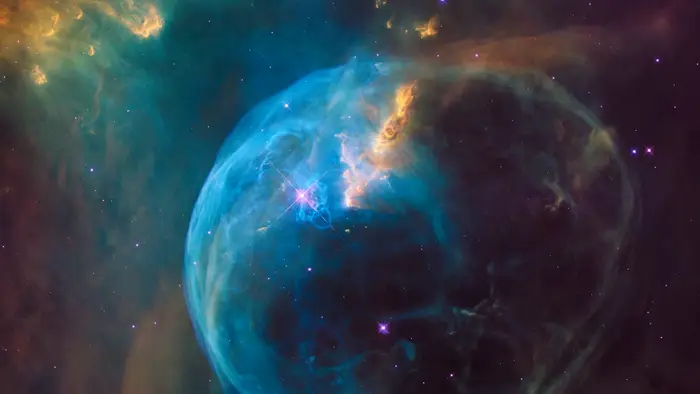
The asteroid Psyche, a 140-mile-wide metal-rich world in the main asteroid belt, may be the exposed core of a failed planet. Image: Unsplash.
What awaits in 2029
Arrival is planned for the summer of 2029. When Psyche reaches its namesake, the propulsion campaign will end and the science campaign will begin: roughly two years in orbit, descending through progressively lower altitudes to map the asteroid in ever-finer detail.
The instrument suite was designed to test the core hypothesis from every angle. A magnetometer will search for a remnant magnetic field — a core that once churned with molten metal may have generated a magnetic dynamo, and a fossil field would be powerful evidence of a differentiated past. A gamma-ray and neutron spectrometer will map the elemental composition of the surface, quantifying just how metal-rich it really is. A multispectral imager will photograph the surface at high resolution, looking for the geological story written in craters, fractures, and possible flows of once-molten metal that erupted long ago.
The survey is planned in descending orbits, each phase bringing the spacecraft lower for sharper measurements, with the full campaign lasting about two years. Descent through the gravity field of a metal world — denser than any asteroid yet orbited — will itself be a measurement, refining the body’s mass, density, and internal structure before the mission’s end.
And riding along is the Deep Space Optical Communications demonstration, a laser-communications experiment that has already transmitted data from deep space at record rates during the cruise. Its success on Psyche’s journey is steadily validating a technology that could multiply the bandwidth of future deep-space missions many times over.
Why a tiny engine matters for the big questions
The Psyche mission is sometimes framed as a voyage to a cosmic curiosity — a metal asteroid, a quirky destination. That framing undersells it. The early solar system was a violent foundry, and the planets that survived emerged from collisions that melted, mixed, and shattered thousands of smaller bodies. Earth’s own iron core, the dynamo that generates our magnetic field and shields our atmosphere from the solar wind, formed in that era. We know our core exists because of seismic waves and magnetic measurements, but we have never seen such an object, never touched one.
Psyche offers a window into that hidden architecture. If it is a planetary core, studying its composition, structure, and magnetic memory will tell us how cores form, how dynamos switch on and off, and what separates the worlds that became planets from the ones that were destroyed. If it is not a core, it will force planetary scientists to invent a new explanation for one of the solar system’s strangest bodies — and that, too, would be progress.
The route there is almost as interesting as the destination. Every day the thrusters fire, Psyche is demonstrating that electric propulsion can do the heavy lifting of interplanetary cruise: slow, relentless, efficient thrust replacing the violent kicks of chemical engines. The Mars gravity assist showed the navigation team’s mastery of trajectory design; the years-long burn will show the propulsion system’s endurance.
“It’s now ‘pedal to the metal,’” Han said — an unusually colloquial flourish from a JPL navigator, and an apt one. For a mission built around a whisper of thrust, there is nothing subtle about the ambition: nearly continuous propulsion, three years of it, aimed at a metal world that may hold the blueprint of every rocky planet ever made. The burn is on, and the summer of 2029 cannot come soon enough.
Deep-space cruise is a test of endurance for both spacecraft and propulsion — Psyche’s Hall thrusters will operate nearly 90 percent of the time until arrival. Image: Unsplash.
If Psyche is an exposed planetary core, studying it could illuminate how Earth’s own iron core formed — and why it still powers our magnetic shield. Image: Unsplash.