NASA Mars Sample Return PSRA November 2026: A Fresh Plan to Bring Perseverance's Rocks Home
Somewhere in Jezero Crater on Mars, sealed inside pencil-sized titanium tubes, sit the most valuable rocks in the Solar System. Perseverance has spent more than five years drilling them out of an ancient river delta, sealing them, and in some cases setting them down in the dust as a backup cache, all in the belief that one day a spacecraft would come to fetch them. For a while it looked as though that day would never come. The plan to bring them home grew so expensive and so slow that NASA and Congress killed it. Now, eleven days ago, the agency announced it is starting over.
On November 9, 2026, Tiffany Morgan, director of NASA’s Mars Exploration Program, told a virtual meeting of the Mars Exploration Program Analysis Group — MEPAG, the community body that advises NASA on Mars science — that the agency is launching a fresh study called the Perseverance Sample Retrieval Architecture, or PSRA. Its job is to produce impartial recommendations for collecting the rock and soil tubes Perseverance has gathered and delivering them safely to Earth. The strategy team kicks off in January 2027, and its final report is due in the winter of 2027 to 2028. Until then, the tubes stay where they are: sealed, waiting, and — for the first time in years — with a plausible route home on the table again.
The announcement matters because it reopens the most scientifically consequential unfinished business in planetary exploration. The samples in Jezero Crater include material from a rock NASA has described as a potential biosignature — chemical patterns that could have been made by ancient microbial life, though non-living chemistry may also explain them. Only laboratories on Earth, with instruments too large and too delicate to fly to Mars, can settle the question. Every year the samples sit in the dust, the answer waits with them. And the clock is no longer NASA’s alone: China aims to launch its own Mars sample-return mission, Tianwen-3, around 2028 and bring its samples home around 2031. If that schedule holds, the first Martian rocks to reach an Earth laboratory could arrive on a Chinese spacecraft, even though an American rover did years of careful sample selection first.
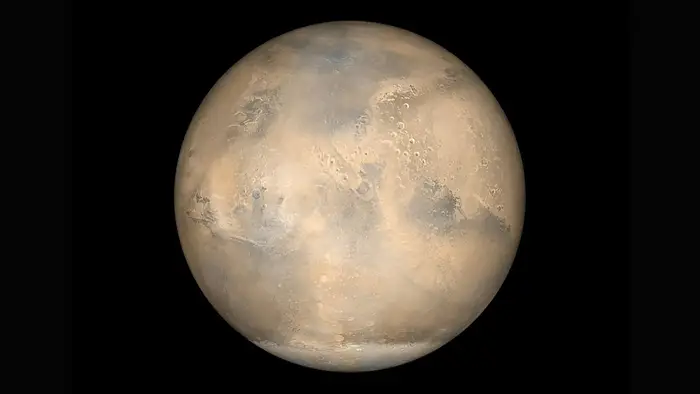
Mars, the Red Planet, holds sealed sample tubes in Jezero Crater that NASA’s new PSRA study aims to bring home. Image: Unsplash.
A study, not yet a mission
It is worth being precise about what PSRA is, because the distinction shapes everything that follows. PSRA is not a spacecraft, not a launch date, and not a budget line. It is a study — a year-long effort to design an architecture that NASA could actually build and afford, after the previous architecture collapsed under its own weight. Morgan’s presentation laid out four tasks for the team: develop impartial recommendations for retrieving the samples and delivering them to Earth; assess proposed mission requirements; review lessons learned from earlier planning efforts; and evaluate current capabilities and acquisition options, including commercial partners.
That last item is the one to watch. In recent years NASA has leaned on companies for cargo, crew, and lunar landers, and a commercially supplied sample-return mission could be one of the options on the table. The original Mars Sample Return campaign was a government-built affair, planned jointly with the European Space Agency, and its cost is the reason it died. A PSRA architecture that leans on commercial hardware — a bought launch vehicle, a commercially built lander, or a contracted Earth return orbiter — would look very different from the plan it replaces, and it would be judged against the same brutal question that killed its predecessor: can it be done for a price Congress will pay, on a schedule scientists can live with?
The timeline Morgan set out is deliberately unhurried. A strategy team kickoff in January 2027, a year of work, and a final report in the winter of 2027 to 2028. Only after that will NASA and Congress decide what to build and how to pay for it. That is a long time to wait for a decision about rocks that have already been waiting since 2021, but it is also the point: the last plan was rushed into being before its cost was understood, and the new one is being built the other way around. The samples, sealed in titanium, can wait. They were sealed to last.
How the old plan died
To understand why NASA is starting from a clean sheet, it helps to retrace how the original Mars Sample Return campaign fell apart. On paper, the plan was elegant. Perseverance would collect the samples. A lander would set down near the rover’s landing site in Jezero Crater, and the rover would bring its tubes to it. The lander would carry a small rocket, the Mars Ascent Vehicle, which would launch the sample canister into Martian orbit — the first launch from the surface of another planet. Europe’s Earth Return Orbiter, a spacecraft of about seven metric tons, would autonomously capture the canister, secure it, and begin the long journey back to Earth, where the samples would drop into the atmosphere in a capsule tough enough to survive a hard landing without cracking open.
In practice, the elegance was unaffordable. Independent reviews put the bill at around 11 billion dollars, with samples not reaching Earth until about 2040. NASA itself judged that too costly and too slow. In April 2024 the agency said that, with expected budgets, the design of the day would return samples in 2040, and it solicited new ideas. A later review group argued the job could be done for roughly 8 billion dollars, with samples back as early as 2035 — better, but still a staggering sum for a single robotic mission, and still a decade or more away.
The politics finished what the arithmetic started. As SpaceNews reported in NASA Killed Mars Sample Return. China Is Coming for the Rocks Instead., NASA’s budget request for fiscal year 2026 said the agency planned to terminate the Mars Sample Return Program, given that current architecture options remained unaffordable. Congress agreed: the joint explanatory statement for the fiscal 2026 spending law said the agreement “does not support the existing Mars Sample Return program,” and the law, Public Law 119-74, was signed on January 23, 2026. NASA’s own web page now describes Mars Sample Return in the past tense, as “a proposed multi-mission campaign.” The agency’s spending plan for fiscal 2026, dated July 2026, still lists 35 million dollars on a Mars Sample Return line, without saying what it pays for — but the fiscal 2027 budget request, published in April 2026, has no Mars Sample Return line at all.
NASA Administrator Jared Isaacman has been blunt about the numbers. Testifying to House appropriators on April 27, 2026, he said the mission “was conceived to cost up to 4 billion dollars and in just a few years ballooned to over 10 billion dollars, with 2 billion dollars in taxpayer funds already spent.” He has also been bullish about the prize: speaking on the New York Post’s Pod Force One podcast on August 5, 2026, he said there was “a very good chance” that Mars samples would show microbial life lived there once. The hard part, as he and everyone else in the program knows, is getting the samples to Earth. The program to do it was cancelled in January. PSRA is the attempt to build a replacement that survives contact with a budget.
| Item | Figure |
|---|---|
| Original Mars Sample Return cost estimate | ~$11 billion, return ~2040 |
| Later independent review estimate | ~$8 billion, return as early as 2035 |
| Amount already spent, per NASA Administrator | ~$2 billion |
| FY2026 spending plan, Mars Sample Return line | $35.0 million |
| Samples sealed by Perseverance (NASA list) | 28, plus 2 unsealed |
| Backup tubes cached at Three Forks depot | 10 |
| Perseverance driving distance record | More than 28 miles (45 km) |
| Mars Ascent Vehicle speed needed for orbit | ~3.5 km per second |
| Mars surface gravity vs Earth | ~38 percent |
| Radio signal delay, Earth to Mars | ~3 to 22 minutes each way |
| Tianwen-3 planned launch / sample return | ~2028 / ~2031 |
| PSRA final report due | Winter 2027–2028 |
The table tells the story in miniature: a mission that was supposed to cost four billion dollars grew to eleven, was cancelled, and is now being rethought from scratch while the samples it was meant to fetch sit in the Martian dust, and while a rival mission aims to beat it home by years.
What is waiting in Jezero Crater
Perseverance landed in Jezero Crater in February 2021, and the landing site was chosen with the sample return in mind. Jezero once held a lake fed by a river, the kind of place where signs of ancient microbial life could have been preserved in mud and rock. Since landing, the rover has drilled cores, sealed them in pencil-sized titanium tubes, and kept most of them on board. Between late 2022 and early 2023 it also left a backup set of ten tubes on the ground at a site called Three Forks, as insurance in case the rover itself could not deliver them later. NASA’s list gives sealing dates for 28 samples; the last two on it, “Bell Island” and “Gallants,” are listed as “to be determined,” and NASA says the Bell Island tube was left unsealed on purpose.
The rover has not stopped working while the return plan was debated. In late October 2026 it drilled “Singita,” its first sample in more than a year, a core that is not on NASA’s published list yet. In the autumn of 2026 it also passed the 28-mile mark in total distance driven, breaking the record for the longest drive by any vehicle on another world — a record previously held by NASA’s Opportunity rover at 28.06 miles. The machine that is supposed to hand over the samples is healthier and more capable than the mission planners who designed the original return campaign ever expected it to be.
The scientific stakes are concentrated in a single sample. In July 2024 Perseverance drilled a rock nicknamed Cheyava Falls, in a formation scientists call “Sapphire Canyon,” in an old dry riverbed in Jezero Crater. NASA announced on September 10, 2025 that the sample contains features it described as a potential biosignature: chemical compounds and minerals that together may have been formed by past microbial life. It is the strongest hint of ancient Martian life ever found, and it is also the most frustrating, because the rover’s instruments cannot settle the question. Only a laboratory on Earth can tell whether those patterns were made by life or by chemistry that merely imitates it.
The rover’s more recent discoveries only raise the stakes. As SpaceNews reported in Perseverance Finds Corundum on Mars: Rubies Hiding in Jezero Crater, the rover has found corundum — the mineral family that includes rubies — in rocks on the rim of Jezero Crater, the oldest ground the rover has reached, forged and reworked by impacts deep in the crust long before the crater held a lake. A core from a corundum-bearing outcrop, analysed in a laboratory on Earth, could settle formation questions that the rover’s laser cannot. That is the promise the PSRA review now carries: find a workable way to fetch the samples Perseverance has already sealed, and the rocks the rover is still finding, before the trail goes cold.
Jezero Crater’s ancient lakebed is a desert now, but its sediments may hold the strongest hint of ancient Martian life ever found. Image: Unsplash.
Why bringing rocks home is so hard
Bringing anything back from Mars means doing several things no one has ever done, in sequence, with no chance to intervene in real time. Mars has about 38 percent of Earth’s gravity and a thin atmosphere, but a rocket still has to reach about 3.5 kilometres per second to get into orbit. Every kilogram of that rocket must first be landed safely on the surface, which means the lander carrying it must survive entry, descent, and landing with a fully fuelled ascent vehicle on board. Then the samples have to be caught in orbit — an autonomous rendezvous around another planet — flown across tens of millions of kilometres, and dropped into Earth’s atmosphere in a capsule tough enough to survive a hard landing without cracking open.
Distance makes all of this harder. Radio signals between Earth and Mars take anywhere from about 3 to 22 minutes each way, so the robots must work largely on their own. There is no joystick, no real-time control, and no chance to watch a problem develop and intervene in the moment. Every command is sent as a carefully checked sequence, and every confirmation arrives long after the fact. The Mars Ascent Vehicle, if it flies, will be the first rocket ever launched from the surface of another planet, and it will have to work the first time, with no test flight, after sitting on the Martian surface for months or years.
Then there is the question the PSRA team must answer before any hardware is built: how do you protect Earth’s biosphere when the samples arrive? The tubes may contain traces of ancient Martian life, or they may contain chemistry that merely looks like it. Either way, the return capsule must be treated as though it carries something alive until laboratories prove otherwise, and the containment, handling, and quarantine procedures have to be designed into the mission from the start, not bolted on at the end. Planetary protection is not a footnote to sample return; it is one of the reasons the mission is expensive, and one of the reasons a clean-sheet review has to consider it early.
The questions the PSRA team is likely to face, as laid out at the MEPAG meeting, reflect all of this. Should a lander pick up the tubes directly from Perseverance, or should helicopters ferry tubes from the Three Forks depot? How big does the Mars Ascent Vehicle need to be, and can it be smaller — and cheaper — if Perseverance delivers fewer tubes? Can commercial rockets and spacecraft carry part of the load? None of these answers has been published yet, and NASA has not set a new return date. That is the point of a study: to ask the questions before committing to the answers.
The race with China
NASA is not alone in wanting Martian rocks, and the competition is now the sharpest pressure on the PSRA timeline. China’s Tianwen-3 mission is expected to launch around 2028 on two Long March 5 rockets from the Wenchang launch site, with the aim of bringing Martian samples to Earth around 2031. China expects to pick the landing site by the end of 2026, and the mission’s chief scientist calls signs of life its top goal. If that schedule holds, China could become the first country to return material from Mars, even though NASA’s rover has already done years of careful sample selection on the surface.
The two efforts are very different, and the difference matters for the science. Tianwen-3 is designed as a fast “grab and go” mission at a site of China’s choosing: land, collect, launch, return. Perseverance’s samples come from a carefully mapped ancient lake bed, chosen after years of orbital reconnaissance and five years of ground truth, with each tube’s geological context documented in detail. Scientists on both sides would gain from having both sets of samples in laboratories on Earth — the Chinese samples for their freshness and speed, the American samples for their context and their potential biosignature. But prestige does not split so neatly, and the first country to return Martian material will own a historic first that no amount of later science can take away.
That is the political current running underneath the PSRA announcement. A study that reports in the winter of 2027 to 2028, followed by years of design, construction, and flight, puts an American sample return well into the 2030s at the earliest — after Tianwen-3’s samples, if China holds its schedule. The Glance report on the announcement put the new plan’s target at a potential return in the mid-2030s for around 8 billion dollars, years ahead of the rejected 11-billion-dollar plan but still behind China’s 2031. For the scientists who have waited since 2021, that is a long time. For the politicians who cancelled the old plan, it is the price of a plan they can defend. Whether the PSRA team can find an architecture that closes the gap — a cheaper lander, a commercial launch, a smaller ascent vehicle — is the question the next year of study has to answer.
Why the samples must come back before the astronauts
There was another voice at the November 9 MEPAG meeting, and it reframed the whole debate. Bruce Jakosky, of the Laboratory for Atmospheric and Space Physics at the University of Colorado Boulder, argued that Mars Sample Return and human Mars exploration planning should be developed together, and that the samples must come back before humans go. His point was not about science for its own sake. It was about safety.
Examining Martian samples on Earth could help spot dangerous substances, including chemicals in the soil, that might endanger astronauts on future crewed flights. Jakosky pointed to perchlorates, chloromethanes, and fine dust as threats to people and equipment — substances that are known to exist in Martian soil but whose exact concentrations, chemistry, and behaviour in a habitat or a spacesuit are still poorly understood. The samples could assist spacesuit design, support the hunt for organisms that might interact with Earth life, give rehearsal for a round trip to Mars covering entry, descent, landing and ascent, and test planetary protection steps before anyone’s life depends on them.
That argument turns sample return from a science luxury into a prerequisite. NASA’s Artemis program is already rehearsing the return to the Moon, and the agency’s long-term aim is Mars. If astronauts are going to land on Mars in the 2030s, they will land in dust that contains perchlorates, breathe air filtered from an atmosphere laced with fine particles, and work in suits that must keep that dust out. Knowing exactly what is in that dust — from samples analysed in Earth laboratories, not from a rover’s instruments alone — is the difference between designing for a known hazard and guessing at one. Jakosky’s case, drawn from a workshop held in May by Explore Mars, Inc., is that the purpose of bringing samples home is, in part, to understand the risk to astronauts and to hardware.
It is a strong argument, and it may be the one that ultimately saves the program. Science alone did not save the old Mars Sample Return; its cost killed it. Safety, tied to the human exploration program that Congress funds far more generously, might succeed where science alone could not. If PSRA can frame sample return as the reconnaissance that crewed Mars missions need, the budget case changes shape entirely.
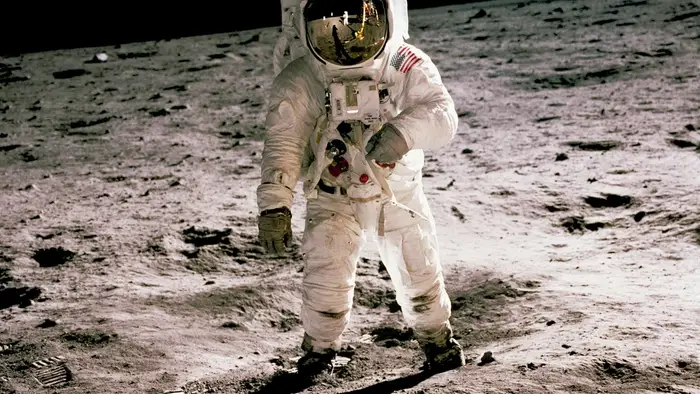
Before astronauts walk on Mars, scientists argue the samples must come home first — to learn what the dust contains and what it could do to people and hardware. Image: Unsplash.
What the old plan’s ghost still teaches
The PSRA team will not be working from nothing. The cancelled campaign left behind a decade of engineering: designs for the Sample Retrieval Lander, the Mars Ascent Vehicle, the capture and containment system, and the Earth Entry System. In January 2025 NASA said it would pursue two landing options for the retrieval mission, and it had ordered eleven studies — from NASA centres, the Johns Hopkins Applied Physics Laboratory, and eight companies, among them SpaceX, Blue Origin, Lockheed Martin, and Rocket Lab — to find cheaper ways to do the job. Those studies are part of what PSRA will review when it looks at lessons learned and current capabilities.
The team will also inherit the hard-won knowledge of what went wrong. The original plan’s cost grew because every element was a first: the first launch from another planet, the first autonomous orbital rendezvous around Mars, the first containment system for a potentially living sample. Firsts are expensive because they cannot be tested end to end on Earth; they can only be simulated, and simulation leaves margins that cost money. A PSRA architecture that reuses proven hardware — a commercial lander derived from a lunar design, a launch vehicle already flying, an Earth return capsule based on one that has already flown — would trade some performance for a great deal of risk reduction. That is the kind of trade a clean-sheet study is free to make, and the kind a program already committed to its design cannot.
There is also the question of how many samples are worth fetching. The original plan was built around returning a large cache, and the Mars Ascent Vehicle was sized accordingly. A smaller return — a dozen tubes instead of thirty, say — would need a smaller rocket, a smaller lander, and a smaller bill. But it would also mean choosing which samples to leave behind, and the Cheyava Falls core, with its potential biosignature, would have to be first in line. The science community has spent five years arguing about which tubes matter most; the PSRA team will have to turn that argument into a manifest.
And there is the backup cache to consider. The ten tubes at Three Forks were left there as insurance, and any retrieval plan must decide whether to fetch them, fetch the tubes aboard Perseverance, or fetch both. Helicopters — descendants of Ingenuity, which flew 72 sorties on Mars before its retirement — could ferry tubes from the depot to a lander, but they would add complexity and cost. A lander that goes to the rover, or a rover that drives to the lander, is simpler. The geometry of Jezero Crater, the health of Perseverance, and the location of the depot will all shape the answer, and none of them will be decided until the study reports.
From cancellation to clean sheet: a timeline
| Date | Milestone |
|---|---|
| February 2021 | Perseverance lands in Jezero Crater and begins collecting samples |
| Late 2022 – early 2023 | Backup depot of 10 sample tubes left at Three Forks |
| July 2024 | Cheyava Falls sample drilled at “Sapphire Canyon” |
| April 2024 | NASA says original plan would cost ~$11 billion and return samples in 2040 |
| September 10, 2025 | NASA announces Cheyava Falls sample as a potential biosignature |
| January 23, 2026 | FY2026 spending law signed; Congress does not support existing Mars Sample Return |
| April 27, 2026 | Administrator Isaacman tells Congress the cost “ballooned to over $10 billion” |
| August 5, 2026 | Isaacman says “very good chance” samples show ancient microbial life |
| Autumn 2026 | Perseverance passes 28 miles driven, breaking the off-world record |
| Late October 2026 | Perseverance drills “Singita,” its first sample in more than a year |
| November 9, 2026 | Tiffany Morgan announces PSRA at the virtual MEPAG meeting |
| January 2027 | PSRA strategy team kickoff |
| Winter 2027–2028 | PSRA final report due |
| ~2028 | China’s Tianwen-3 planned launch on two Long March 5 rockets |
| ~2031 | Tianwen-3 samples planned to reach Earth |
The timeline makes the shape of the story plain. The science was done years ago — the samples are sealed, the rover is healthy, the biosignature is waiting. What failed was the plan to fetch them, and what PSRA represents is the decision to design the fetch before promising the date.
The long road home
For now, NASA’s Mars sample return plan is a study rather than a mission, and it is worth saying plainly what that means. No lander is being built. No rocket is being fuelled. No launch date exists, and no return date has been set. The PSRA team begins in January 2027, its recommendations are due by the winter of 2027 to 2028, and only after that will NASA and Congress decide what to build and how to pay for it. Anyone promising an American sample return by a particular year is guessing.
But a study is also how every mission that has ever flown began, and this one begins with advantages its predecessor never had. The samples are already collected, catalogued, and sealed. The rover that collected them is still driving. The science case — a potential biosignature in a tube waiting in the dust — is stronger than it was when the original plan was drawn up. The commercial launch industry that PSRA is invited to consider barely existed when Mars Sample Return was conceived. And the argument for bringing the samples home has grown beyond science into safety: the dust those samples contain is the dust future astronauts will walk in.
The tubes on Mars can wait; they were sealed to last. The bigger question is whether the first Martian rocks to reach an Earth laboratory will arrive on an American or a Chinese spacecraft — and whether the year of study now beginning can produce a plan cheap enough, fast enough, and robust enough to survive the politics that killed the last one. The answer will not come from Mars. It will come from a meeting room in January, from a report in the winter of 2027 to 2028, and from a Congress that has already cancelled this mission once. Perseverance, meanwhile, will keep driving, keep drilling, and keep sealing tubes — doing the easy part, and waiting for the hard part to catch up.

An Earth Return Orbiter would have to catch the sample canister in orbit around Mars and fly it home across tens of millions of kilometres. Image: Unsplash.

The Mars Ascent Vehicle would be the first rocket ever launched from the surface of another planet — and it would have to work the first time. Image: Unsplash.