USSF-627 Falcon 9 Launch November 10 2026: Classified Space Force Mission Rides a Seventh-Flight Booster
SpaceX is counting down to another launch that almost nobody will be allowed to watch all the way. On Monday night, November 9, a Falcon 9 rocket is scheduled to lift off from Vandenberg Space Force Base in California carrying USSF-627, a classified mission for the United States Space Force. The four-hour window opens at 7:03 p.m. Pacific Time — 03:03 UTC and 10:03 WIB on Tuesday, November 10 — and the first stage assigned to the flight, booster B1103, will be making its seventh trip to space.
What the rocket is carrying is, officially, a secret. The Space Force has said nothing about the payload beyond its designation, and SpaceX’s mission page describes it only as a classified mission. But the clues left in public records point in a familiar direction: independent trackers note that the rocket’s stage drop zones match those of previous Starlink Group 15 launches almost exactly, suggesting the payload is a batch of satellites built on SpaceX’s Starshield bus — the military cousin of Starlink, designed for classified government customers. If so, USSF-627 would be the latest instalment in the Pentagon’s quiet build-out of a proliferated low Earth orbit constellation, launched in plain sight and discussed in almost no detail at all.

What is flying
USSF-627 is a classified mission for the United States Space Force, and that classification shapes almost everything about how the launch is presented. SpaceX’s public mission page gives the time, the place, the booster and the landing plan — and nothing about what sits under the fairing. There will be a live webcast, beginning about ten minutes before liftoff, but the broadcast will end when the first stage separates: for classified missions, SpaceX cuts the feed before the second stage and fairing deployment, so the payload’s journey to orbit happens off camera.
The secrecy is standard for this class of mission. USSF-627 is part of the National Security Space Launch programme, the framework under which the Space Force buys launches for its most sensitive payloads. Under that programme, SpaceX and United Launch Alliance compete for missions that range from single high-value satellites to batches of smaller spacecraft, and the details that would normally fill a mission press kit — the payload’s mass, its orbit, its purpose — are withheld. What leaks out comes from the paperwork a launch cannot hide: maritime hazard warnings, airspace closures and the physics of where the rocket’s stages are allowed to fall.
That paperwork is where the Starshield theory comes from. Launch trackers who study the hazard zones for USSF-627 found that the locations of the rocket’s stage drop zones are exact fits with previous Starlink Group 15 launches — the series of Falcon 9 flights that deploy Starlink’s internet satellites from Vandenberg into a 70-degree-inclination shell. A classified payload flying the same profile as a Starlink batch, from the same pad, with the same drop zones, is most plausibly a batch of satellites built on the same bus. Starshield is SpaceX’s government version of Starlink: the same satellite platform, reconfigured with encrypted communications and sensing payloads for military and intelligence customers, and operated for the U.S. government rather than for commercial subscribers.
Neither SpaceX nor the Space Force has confirmed the count or a Starshield identity for this flight. The official record will say only that a Falcon 9 launched a classified payload to low Earth orbit. But the pattern is well established by now: the Space Force has been flying Starshield-derived batches on Falcon 9 throughout 2026, including the USSF-385 mission in September and the USSF-432 mission just three days before this one, on November 7. If USSF-627 follows the same pattern, it will add another set of classified satellites to a constellation the Pentagon is assembling one Falcon 9 at a time.
The booster: B1103’s seventh flight
The rocket itself is, by contrast, an open book. The first stage assigned to USSF-627 is booster B1103, and this will be its seventh flight. SpaceX says the booster previously launched NROL-179, the Space Development Agency’s SDA-T1TL-E and SDA-T1TL-A tranches, and three Starlink missions. It is a veteran of the classified world: NROL-179 was a National Reconnaissance Office launch, and the two SDA tranches were part of the Space Development Agency’s proliferated missile-warning and communications network. A booster that has already flown for the intelligence community and the missile-warning constellation is a fitting choice for another classified Space Force flight.
The turnaround tells its own story about the pace of operations at Vandenberg. Space Affairs, which tracks launch schedules, lists B1103’s turnaround for this mission at 31 days — a month between landing on a droneship and standing vertical on the pad again. That is not a record, but it is the kind of tempo that makes reusability an operational reality rather than a demonstration: the same hardware, inspected, refuelled and reflown, month after month, for missions that would once have required a brand-new rocket each time.
After stage separation, B1103 is scheduled to land on the droneship Of Course I Still Love You, stationed in the Pacific Ocean about 574 to 593 kilometres downrange from the pad, according to launch trackers. The landing is the part of the flight SpaceX will show: the webcast follows the booster through its entry and landing burns and down to the deck, even as the second stage’s work continues out of sight. For a classified mission, the booster recovery is the public half of the show.
Mission at a glance
| Item | Detail |
|---|---|
| Mission | USSF-627, classified U.S. Space Force payload |
| Launch vehicle | Falcon 9 Block 5, booster B1103 (7th flight) |
| Launch site | Space Launch Complex 4E, Vandenberg SFB, California |
| Window opens | Mon 9 Nov 19:03 PT / Tue 10 Nov 03:03 UTC / 10:03 WIB |
| Window closes | Mon 9 Nov 23:03 PT / Tue 10 Nov 07:03 UTC / 14:03 WIB |
| Backup opportunity | Tue 10 Nov 18:49 PT (Wed 11 Nov 01:49 UTC / 08:49 WIB) |
| Target orbit | Low Earth orbit |
| Booster history | NROL-179, SDA-T1TL-E, SDA-T1TL-A, three Starlink missions |
| Booster turnaround | 31 days |
| Landing | Of Course I Still Love You droneship, ~574–593 km downrange |
| Launch cost | About $52 million (per launch schedule data) |
| Payload (unconfirmed) | Possibly a batch of Starshield-based classified satellites |
The table above is drawn entirely from SpaceX’s mission page, Launch Library 2 data carried by independent trackers, and launch schedule reporting. The payload identification remains unconfirmed by SpaceX and the Space Force.
The flight, minute by minute
SpaceX publishes a detailed countdown and ascent timeline for every Falcon 9 mission, and USSF-627 is no exception — at least for the part of the flight the public is allowed to see. The sequence runs from propellant loading, 38 minutes before liftoff, to the booster’s touchdown a little over eight minutes after launch. It is a choreography the company has now performed hundreds of times, and the precision of the published times is itself a measure of how routine the Falcon 9 has become.
| Time | Event |
|---|---|
| T−38:00 | Launch director verifies go for propellant load |
| T−35:00 | RP-1 kerosene and first-stage liquid oxygen loading begin |
| T−16:00 | Second-stage liquid oxygen loading begins |
| T−07:00 | Falcon 9 begins engine chill |
| T−01:00 | Final prelaunch checks; propellant tanks pressurised to flight pressure |
| T−00:45 | Launch director verifies go for launch |
| T−00:03 | Engine ignition sequence starts |
| T+00:00 | Falcon 9 liftoff |
| T+01:07 | Max Q — moment of peak mechanical stress |
| T+02:26 | First-stage main engine cutoff (MECO) |
| T+02:29 | First and second stages separate |
| T+02:36 | Second-stage engine starts |
| T+02:58 | Fairing separation |
| T+06:06 | First-stage entry burn begins |
| T+06:30 | First-stage entry burn ends |
| T+07:52 | First-stage landing burn begins |
| T+08:11 | First-stage landing on the droneship |
The webcast will follow the flight through stage separation and the booster’s return. After that, the coverage ends: no second-stage video, no fairing deployment, no confirmation of the payload’s fate until the Space Force or independent trackers say otherwise. For the audience, the mission effectively ends at T-plus eight minutes. For the payload, that is when the real work begins.
A one-day slip, and a backup in hand
USSF-627 was originally scheduled for Sunday, November 8, before slipping a day to Monday, November 9. Delays of a day are unremarkable in spaceflight — weather, range availability and final checks routinely shuffle the calendar — but the slip is worth noting because of what it says about the pace at Vandenberg. The mission is flying just three days after USSF-432, another classified Falcon 9 launch from the same pad on November 7, and the spaceport’s manifest is crowded enough that a one-day delay still leaves a backup opportunity on Tuesday, November 10, at 6:49 p.m. Pacific Time.
The backup matters because the window is generous: four hours, from 7:03 p.m. to 11:03 p.m. Pacific, gives the launch team room to wait out a passing weather cell or a minor technical hold without losing the day. Vandenberg’s coastal fog is famously fickle, and the range has scrubbed launches for less. But the combination of a four-hour window and a next-day backup makes a scrub less likely to cost the mission its week — and the Space Force’s manifest for the rest of the month suggests the pad will not sit idle for long either way.
Residents of Santa Barbara, San Luis Obispo and Ventura counties may hear one or more sonic booms during the launch, SpaceX says, depending on weather and other conditions. The warning is a reminder of how close Vandenberg sits to civilian life: a military spaceport on a coastline shared with towns, farms and wine country, where the sound of a booster coming home is part of the local weather.
Three days after USSF-432
USSF-627 arrives in the slipstream of its predecessor. On November 7, a Falcon 9 lifted off from the same pad carrying USSF-432, another classified Space Force mission, aboard booster B1095 — a flight SpaceNews covered in USSF-432 Falcon 9 Launch November 7 2026: Classified Space Force Payload Reaches Orbit. Two classified launches from one pad in three days is the kind of tempo that would have been unthinkable a decade ago, when a single national-security launch was a months-long campaign. It is now, apparently, a normal week at Vandenberg.
The two missions are part of a broader surge. The Space Force has been flying a steady drumbeat of classified Falcon 9 missions through 2026, and SpaceX’s Vandenberg operation has become the workhorse of American military space: the pad passed its 50th launch of the year earlier in the autumn, a milestone SpaceNews covered in Fifty and Counting: SpaceX’s Vandenberg Surge Hits a New Milestone as the West Coast Takes Over. The classified missions fly alongside Starlink batches and commercial rideshares from the same complex, sharing pads, droneships and recovery crews in a schedule that treats a top-secret payload and a batch of internet satellites as interchangeable cargo.
That interchangeability is the point. The Space Force’s strategy for the past several years has been proliferation: instead of a handful of large, expensive, irreplaceable satellites, it is building constellations of many smaller spacecraft, launched frequently and cheaply on reusable rockets. A single launch can be lost without crippling the constellation, and the constellation as a whole is harder for an adversary to degrade. USSF-627, whatever it carries, is a piece of that strategy — one more batch of spacecraft in a network designed to be too numerous to kill.
The same logic runs through the booster’s history. B1103’s previous flights include the SDA tranches — SDA-T1TL-E and SDA-T1TL-A — which deployed satellites for the Space Development Agency’s Transport Layer, the mesh network that will carry military communications and missile-tracking data around the globe. The agency’s satellites are built by multiple vendors on standard buses, launched in tranches, and replaced as they age. It is the same proliferated model, applied to a different mission, and the same booster has now served both.
Starshield and the quiet constellation
If the trackers are right and USSF-627 is carrying Starshield satellites, it would be the latest chapter in one of the least-discussed stories in spaceflight. Starshield began as a SpaceX product line announced in December 2022, offering government customers satellites built on the Starlink bus with three capabilities: Earth observation, communications and hosted payloads. The National Reconnaissance Office has been the most visible customer, flying Starshield batches on Falcon 9 under the NROL designation — NROL-179, which B1103 itself launched, was one of them — and the Space Force has flown its own Starshield-derived missions under the USSF designation, including USSF-385 in September. SpaceNews covered that flight in Fog, Secrecy, and Starshield: SpaceX’s USSF-385 Launch Caps a Frenetic September for Military Space.
What makes Starshield significant is not any single launch but the accumulation. Each batch adds satellites to a classified constellation whose size, capabilities and even existence are only partly public. The satellites are thought to carry imaging and sensing payloads alongside their communications role, giving the intelligence community a persistent, low-orbit eye that can be replenished as often as a Falcon 9 can fly. The programme’s budget is classified, its satellite count is classified, and its imagery is classified — but its launch cadence is not, because rockets cannot be hidden. Counting the launches is the closest the public gets to counting the constellation.
There is a tension in that arrangement that will only grow. The same reusable rockets and mass-produced satellites that make proliferated constellations affordable also make them visible: every Falcon 9 that flies a Starshield batch leaves a public trail of hazard warnings, tracking data and amateur observations. The secrecy is real, but it is partial — a classified payload on a very public rocket, launched from a pad that anyone can watch from the highway. USSF-627 will be no different: the world will see it go up, watch the booster come back, and be left to guess at what is riding on top.
Why this launch matters
It is tempting to file a classified launch under “nothing to see” and move on. That would miss what USSF-627 represents. The mission is a data point in three overlapping stories: the Space Force’s shift to proliferated constellations, SpaceX’s transformation of Vandenberg into the busiest military spaceport in the world, and the quiet normalisation of reusable rockets for the most sensitive payloads the United States flies.
A decade ago, a classified payload would never have flown on a reused booster — the risk, real or perceived, was too great. Today, B1103 is making its seventh flight carrying a top-secret mission, and nobody involved seems to think that is remarkable. The reliability record of the Falcon 9, now past its 700th flight overall, has settled the argument: reuse is not a compromise, it is the baseline, and the Space Force buys it the way it buys everything else — on price, schedule and proven performance.
The economics reinforce the point. Launch schedule data puts the cost of this mission at about $52 million — a figure that covers the rocket, the range and the recovery, and that would have been a fraction of the cost of a single expendable national-security launch a generation ago. That price is what makes proliferation affordable: when a launch costs tens of millions rather than hundreds, a constellation of hundreds of satellites stops being a fantasy and becomes a procurement plan.
And the cadence is the strategy. USSF-432 on November 7, USSF-627 on November 10, and more classified missions already on the manifest for the weeks ahead — the Space Force is launching at a rate that would have exhausted the old expendable fleet in months. The reusable Falcon 9, the droneship in the Pacific, and the pad crews at Vandenberg are what make that rate possible. The rocket that flies tonight is the same one that flew three Starlink missions and two SDA tranches, and if the pattern holds, it will fly again.
What to watch for
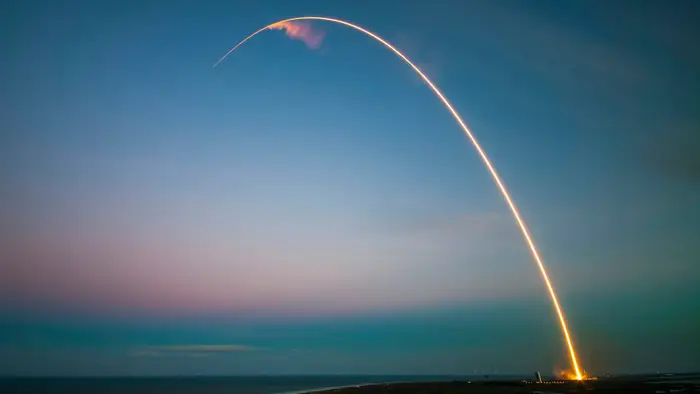
The first thing to watch is the clock. The window opens at 10:03 WIB on Tuesday, November 10, and the launch team has four hours to work with. SpaceX’s webcast begins about ten minutes before liftoff, and the feed will stay live through stage separation and the booster’s landing — the part of the mission the public is invited to see. After that, the broadcast ends, and confirmation of success will come the way it always does for these missions: a brief statement, a few hours later, that the payload reached its intended orbit.
The second thing to watch is the booster. B1103’s seventh landing would extend a reuse record that already spans intelligence, missile-warning and commercial missions. A clean recovery keeps the booster available for an eighth flight, and the 31-day turnaround it just completed is a reminder that the bottleneck in military spaceflight is no longer the rocket — it is the range, the weather and the manifest.
The third thing to watch is what happens after. Independent trackers will begin cataloguing new objects in low Earth orbit within a day or so, and their count — how many satellites appeared, and in what orbit — will be the first public evidence of what USSF-627 actually carried. If the count matches a Starlink-style batch, the Starshield theory gains another data point. If it does not, the mystery deepens, and the guessing starts again.
And beyond this single flight, the week ahead is crowded. On Friday, November 13, SpaceX is targeting the 15th integrated flight test of Starship, a mission expected to attempt the first-ever catch of the Starship upper stage with the launch tower’s arms, alongside a catch of the Super Heavy booster. It is a week that begins with a secret and ends with a spectacle — and both, in their own way, are the new normal for spaceflight in 2026.
Timeline: USSF-627’s road to the pad
- November 2, 2026 — Maritime hazard warnings issued for the USSF-627 launch window, covering November 9–15.
- November 8, 2026 — Original launch target; the mission slips one day to Monday, November 9.
- November 9, 2026, 19:03 PT — Four-hour launch window opens at Vandenberg SLC-4E; liftoff targeted for the start of the window.
- November 10, 2026, 03:03 UTC / 10:03 WIB — Window opens in UTC and Western Indonesian Time.
- November 10, 2026, ~03:11 UTC — Booster B1103 scheduled to land on the Of Course I Still Love You droneship, about eight minutes after liftoff.
- November 10, 2026, 18:49 PT — Backup launch opportunity, if the Monday attempt does not fly.
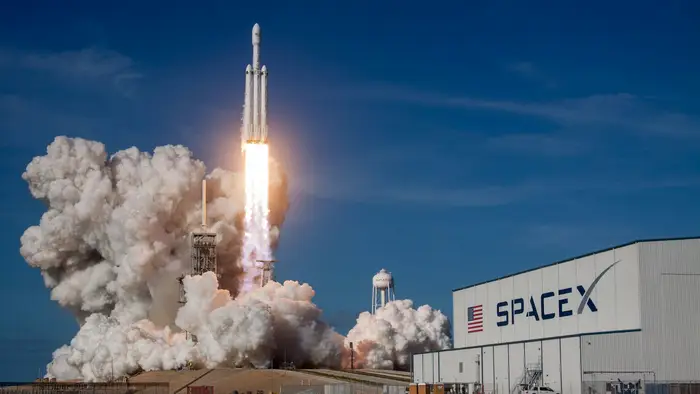
For now, the facts are simple and the countdown is real: a proven booster on its seventh flight, a coastal pad, a four-hour window on a Monday night, and a payload that nobody will name. When the Falcon 9 climbs away from Vandenberg, it will be carrying more than a classified satellite or two. It will be carrying the latest instalment of the Pentagon’s bet that the future of military space is not a few exquisite spacecraft, but many ordinary ones, launched often, on rockets that come back — delivered, as ever, nine minutes at a time, with the interesting part happening off camera.