Fifty and Counting: SpaceX's Vandenberg Surge Hits a New Milestone as the West Coast Takes Over
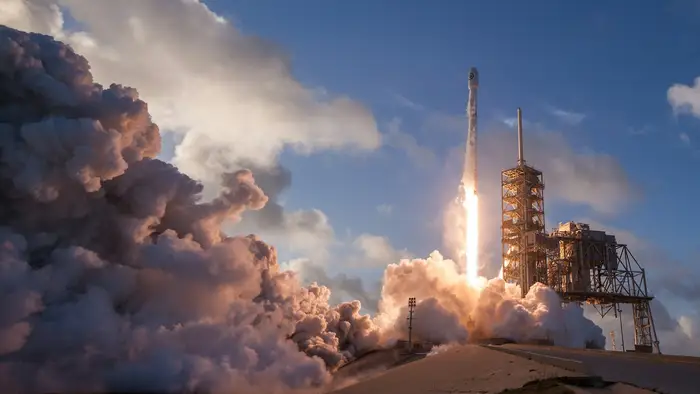
The marine layer was already burning off the Santa Ynez Mountains when the countdown reached zero. At 9:35 on a Saturday morning, a Falcon 9 rose from Space Launch Complex 4-East at Vandenberg Space Force Base, its nine Merlin engines carving a bright plume into the pale blue August sky. To the casual observer on a Central Coast beach, it looked like any other SpaceX launch — and in a sense, it was. But Starlink 17-38 carried a quiet significance that set it apart from the dozens of Falcon 9 flights that came before it in 2026: it was SpaceX’s fiftieth launch from the West Coast this year.
Fifty launches from a single California spaceport before the middle of August. To put that in perspective, the flight rate works out to roughly one launch every four and a half days, sustained for more than seven months, from a range that a decade ago struggled to manage a dozen launches in a good year. Vandenberg, long the quiet sibling of the bustling Florida spaceports, has become the beating heart of SpaceX’s Falcon operations — and the shift is only accelerating as the company turns its East Coast attention toward Starship.

The mission: 24 more Starlinks, delivered on schedule
Starlink 17-38 was, by design, an unglamorous mission — the kind of operational flight that has become SpaceX’s bread and butter. The Falcon 9’s second stage carried a stack of 24 Starlink internet satellites, which were deployed just over an hour into the flight, following a south-south-westerly trajectory out over the Pacific. SpaceX confirmed the successful deployment later that afternoon. It was the company’s 71st operational Starlink delivery mission of 2026, and the 413th batch of Starlinks ever launched, pushing the total number of Starlink satellites ever sent to orbit past 12,600.
The satellites rode to a sun-synchronous low Earth orbit, the now-familiar destination for the current generation of Starlink spacecraft launched from California. From there, they will spend the coming weeks raising themselves into their operational shells, joining a constellation that has grown into the largest fleet of satellites ever assembled — a network that provides broadband service across the globe and has become one of the most consequential infrastructure projects of the decade.
There was nothing experimental about the flight profile. The Falcon 9 performed exactly as the flight plan demanded: liftoff, a clean first-stage burn, main engine cutoff, stage separation, a second-stage burn to orbit, and satellite deployment on the dot. In an industry where novelty tends to grab headlines, Starlink 17-38 was a reminder that SpaceX’s most impressive trick in 2026 is not any single spectacular mission, but the sheer metronomic reliability of the machine it has built.
B1093: a veteran booster earns its sixteenth flight
SpaceX assigned first-stage booster B1093 to the mission — a vehicle that has quietly become one of the hardest-working rockets in the fleet. B1093 joined the Falcon 9 fleet in April 2025, and Starlink 17-38 marked its sixteenth flight. Its résumé tells the story of SpaceX’s diversified 2026 manifest: two missions for the Space Development Agency (SDA-T1TL-B and SDA-T1TL-C), the Transporter-16 dedicated rideshare mission, and a dozen previous Starlink deliveries.
About eight minutes and nineteen seconds after liftoff, B1093 touched down on the drone ship Of Course I Still Love You, stationed in the Pacific Ocean downrange of Vandenberg. The landing — the booster’s sixteenth recovery — was as routine as these things get, which is to say it was the product of an extraordinary engineering achievement that the industry has simply gotten used to watching. Each recovered booster is money saved and schedule preserved; B1093’s turnaround for this flight was measured in weeks, not months, and the vehicle will almost certainly fly again before the summer is out.
The economics of reuse are the engine underneath the Vandenberg surge. Without the ability to fly the same first stage sixteen times, a pace of fifty launches in seven months from a single pad complex would be financially ruinous. With it, each Starlink mission is an incremental investment in a constellation whose economics improve with every batch deployed.
Fifty launches: what the number really means
Fifty launches from the West Coast by August 8 is a number worth sitting with. Vandenberg spent most of its history as a low-cadence range, hosting a handful of government and commercial launches per year. The transformation into a spaceport that launches more often than some entire countries is one of the underappreciated stories of the 2020s — and 2026 is the year the curve went nearly vertical.
Consider the arithmetic: fifty launches in 220 days is a launch every 4.4 days, on average, including holidays, weather scrubs, and range maintenance. Starlink 17-38 was the second launch of August from Vandenberg, and the manifest showed no sign of slowing. The range teams of Space Launch Delta 30, the Space Force unit that operates the Western Range, have had to reinvent their processes to keep up — streamlining countdown operations, range safety procedures, and the choreography of getting rockets, payloads, and recovery ships in the right place at the right time, week after week.
The milestone also reflects a deliberate strategic choice by SpaceX. As the company’s own launch commentary has acknowledged, the flight rate from the East Coast has fallen in 2026 as SpaceX focuses on ramping up Starship preparations at the Cape. With Starship test flights consuming pad time, engineering attention, and regulatory bandwidth in Florida, the company has shifted the bulk of its operational Falcon manifest — Starlink deployments above all — to California. Vandenberg, in other words, is not just busy by accident. It is busy by design, carrying the load while the Cape retools for the next era.
The West Coast takes the baton
The pivot is visible in the geography of SpaceX’s 2026 manifest. Starlink missions, which once flew overwhelmingly from Florida, now launch predominantly from Vandenberg’s SLC-4E. The southerly trajectories available from the California coast are ideal for the sun-synchronous and high-inclination orbits that much of the Starlink constellation requires, and the range has proven it can absorb a punishing cadence.
Meanwhile, at Cape Canaveral, the story of 2026 is increasingly about Starship. SpaceX has been working toward bringing its giant next-generation vehicle to Florida’s Space Coast, with Pad 39A being prepared for a rocket more powerful than anything the Cape has ever hosted — a vehicle whose 33 Raptor engines generate thrust on a scale that dwarfs even the Saturn V. The preparations consume the kind of engineering and operational focus that once went into maximizing the Falcon 9 flight rate from Florida’s pads. Something had to give, and what gave was the East Coast Falcon cadence.
This is not a retreat; it is a division of labor. Vandenberg handles the present — the relentless, profitable business of deploying and replenishing the Starlink constellation, flying national security payloads, and serving commercial customers. The Cape is being groomed for the future — Starship test flights, and eventually the operational Starship missions that SpaceX believes will redefine what is possible in spaceflight. The fiftieth Vandenberg launch of the year is the clearest possible evidence that the present is in good hands.

The constellation keeps growing
Zoom out from the pad, and Starlink 17-38 is one frame in a much larger film. Seventy-one operational Starlink missions in 2026 alone. More than 12,600 satellites launched in total. A constellation that provides internet service to millions of subscribers worldwide, that has become a strategic asset in conflicts and disasters, and that funds the development of Starship itself.
The economics are circular in the best way: Starlink revenues fund Starship development; Starship, once operational, will deploy Starlink satellites — including the larger, more capable V3 generation — at a scale and cost that Falcon 9 cannot match. The Vandenberg surge is the bridge between those two eras: Falcon 9 working at maximum tempo to build out the constellation that pays for its own successor.
There are challenges ahead, of course. Orbital congestion, astronomical interference, and regulatory scrutiny all grow with the constellation. Competitors — from Amazon’s Kuiper to China’s Guowang — are racing to deploy their own megaconstellations. But on a Saturday morning in August, with a veteran booster touching down on a drone ship in the Pacific and 24 more satellites joining the fleet, the story was simpler: the machine works, the cadence holds, and fifty launches is just a number on the way to whatever comes next.
A launch every four days: inside the range machine
Behind every one of those fifty launches is an organization that has had to reinvent itself. Space Launch Delta 30, the Space Force unit that operates the Western Range, is responsible for range safety, airspace coordination, and the choreography of countdown operations at Vandenberg. A decade ago, its teams might go weeks between launches. In 2026, they have been turning the range around in days — sometimes with barely 72 hours between a booster landing on a drone ship and the next Falcon 9 rolling to the pad.
The transformation has been as much about process as hardware. Automated flight safety systems have replaced many of the manual range-safety procedures that once required days of preparation. Propellant logistics — the steady flow of rocket-grade kerosene and liquid oxygen to the pad — have been industrialized. Recovery operations, from the drone ships that catch boosters to the vessels that retrieve fairing halves, run on a rhythm that would have been unimaginable five years ago.
None of this happens without people, and the human side of the surge deserves recognition. Pad crews work in shifts around the clock. Range controllers monitor telemetry through the night. The weather officers who make the final call on upper-level winds and marine layer constraints have one of the most thankless jobs in the business: scrub a launch and you disappoint thousands; launch into marginal conditions and you risk everything. That Vandenberg has sustained its cadence with an enviable safety record is a testament to a workforce that has learned to operate at a tempo the range was never originally designed for.
The infrastructure has grown to match. Additional propellant storage, expanded integration facilities, and upgraded tracking assets have all been added in recent years. SLC-4E itself — the pad SpaceX leases from the Space Force — has been modified repeatedly to shave hours off the turnaround between flights. Every minute saved in pad flow is a minute that compounds across fifty launches.

The view from the 805
On the Central Coast, the surge has become part of the texture of daily life. Locals have a name for their stretch of California — the 805, after the area code — and the 805 has become one of the best places on Earth to watch a rocket launch. On launch mornings, the beaches fill early: Jalama Beach County Park, Surf Beach near the base’s western gate, the Guadalupe-Nipomo Dunes. Veterans bring folding chairs and scanners; newcomers bring questions.
For the August 8 launch, the Lompoc Valley sat under its characteristic morning fog, so many regulars made the drive out to Jalama, where the skies were clear and the view unobstructed. It is a ritual now — check the launch time, check the marine layer, pick your beach. The launches have become a genuine tourist draw, with local businesses from hotels to taco trucks doing brisk business on flight days. Community groups organize viewing parties; photographers trade tips on the best angles for the ascent plume.
There are trade-offs, and residents are candid about them. Sonic booms rattle windows across Santa Barbara, San Luis Obispo, and Ventura counties when boosters return for landings — though most Vandenberg missions, Starlink 17-38 included, land their boosters on drone ships far offshore, sparing the coast the loudest booms. What reaches the beaches instead is the deep, rolling thunder of liftoff, arriving seconds after the rocket is already climbing, a sound felt in the chest as much as heard.
The relationship between the base and its neighbors has matured alongside the cadence. Decades ago, Vandenberg’s launches were sporadic events that caught residents by surprise. Today, launch alerts ping phones across the region, viewing guides circulate on community pages, and schoolchildren can practically set their watches by the rhythm of the range. A spaceport that launches every four days stops being an abstraction and becomes a neighbor.
The fleet behind the surge
B1093’s sixteenth flight is impressive, but it is no longer exceptional — and that is precisely the point. SpaceX’s Falcon 9 fleet in 2026 numbers in the dozens of active boosters, many of them veterans with double-digit flight counts. Fleet management has become a discipline unto itself: matching the right booster to the right mission based on flight history, refurbishment status, and performance margins; rotating vehicles through inspections; and retiring airframes only when the economics demand it.
The numbers tell the story of an industry transformed. A Falcon 9 first stage that flies sixteen times amortizes its manufacturing cost across sixteen missions. The second stage is still expended on every flight, as are the fairing halves on most Starlink missions (though fairing recovery has become increasingly routine), but the first stage — the most expensive single component — has become a reusable asset in the truest sense. This is the economic foundation that makes fifty launches from one coast financially sane.
Turnaround times keep shrinking. B1093’s history shows gaps between flights measured in weeks, and across the fleet, SpaceX has demonstrated the ability to refly a booster in well under a month when the manifest demands it. Each turnaround is a small industrial miracle: inspection, any necessary component replacement, static fire testing, and reintegration with a new second stage and payload — all executed with airline-like routine.
It is worth remembering how recently this was considered impossible. When SpaceX first landed an orbital-class booster in 2015, much of the industry dismissed reuse as a stunt. When the company began reflying boosters in 2017, competitors predicted rapid diminishing returns. A decade later, a booster flying for the sixteenth time on the fiftieth West Coast launch of the year barely rates a mention in the launch commentary. The revolution succeeded so completely that it became boring — the highest compliment engineering can receive.
What comes next
If the first seven months of 2026 are any guide, Vandenberg’s fiftieth launch will not remain a record for long. The manifest points toward a second half of the year just as busy, with Starlink deployments continuing alongside national security missions and commercial rideshares. The range that once measured its years in single-digit launch counts is now measuring its months in double digits.
And at the Cape, the future is literally taking shape on the pad. When Starship begins flying from Florida — a milestone SpaceX has been driving toward all year — the division of labor between the coasts will be complete: Vandenberg as the tireless workhorse of the Falcon era, the Cape as the proving ground for what comes after. August 8, 2026, will be remembered not for any single dramatic moment, but as the day the West Coast’s quiet takeover became impossible to ignore. Fifty launches down, and the surge rolls on.