USSF-432 Falcon 9 Launch November 7 2026: Classified Space Force Payload Reaches Orbit
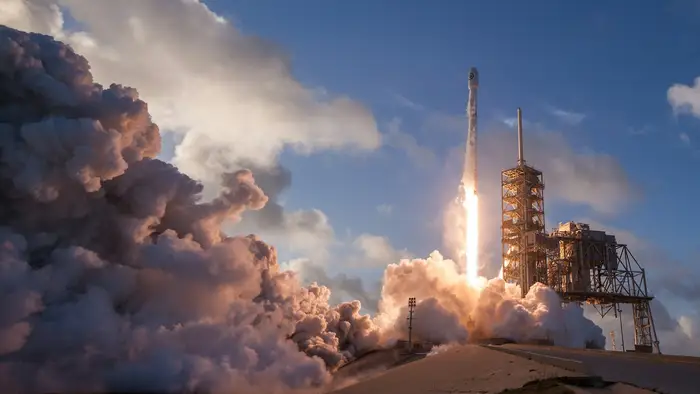
A Falcon 9 rocket lifted off from the California coast in the early hours of Saturday, carrying a payload the United States Space Force will not describe, to an orbit it will not confirm, for a mission whose purpose remains officially unspoken. The launch itself, however, was anything but secret: SpaceX’s webcast showed the rocket climbing into the night sky over Vandenberg Space Force Base, the first stage turning back toward the Pacific, and the booster touching down on a drone ship a little more than eight minutes after liftoff. By the time most Americans woke up on Saturday, the mission designated USSF-432 — also catalogued as R-4 — was already in the books as a success, the 702nd flight of a Falcon 9 and the 119th Falcon 9 launch of 2026.
The mission is the latest in a quiet, fast-moving series of classified launches that has reshaped how the U.S. military builds its eyes and ears in low Earth orbit. Officially, almost nothing about the payload has been disclosed. Unofficially, independent trackers and analysts believe USSF-432 carried a batch of satellites built on SpaceX’s Starshield platform, joining a growing constellation designed to sense and track targets from orbit. What is certain is that the launch happened, the booster came home, and the Space Force’s orbital inventory grew by an undisclosed amount on a Saturday morning in November.

Two minutes into the window
Falcon 9 lifted off from Space Launch Complex 4 East at Vandenberg Space Force Base at 00:48:42 UTC on Saturday, November 7, 2026 — 07:48:42 in Western Indonesian Time, and 4:48 p.m. local time on Friday afternoon in California. The four-hour launch window had opened at 00:46 UTC, so the rocket left the pad almost exactly two minutes after the first opportunity, a sign that the countdown, the weather, and the range were all in agreement from the start.
The timing itself tells a small story about the week that preceded it. USSF-432 was first targeted for November 2, with a launch time in the early evening Pacific Time. The mission then slipped — three times, according to launch trackers — before settling on the Friday evening window that ultimately produced Saturday’s 00:48 UTC liftoff. A classified mission’s slips are rarely explained in public, and neither SpaceX nor the Space Force offered a reason for the moves. Weather, range availability, hardware checks, or simple scheduling traffic at a busy spaceport could each have played a role. What matters is that when the window finally opened, the rocket went.
Launch Library 2, the open launch database that tracks missions worldwide, recorded the liftoff at 00:48:42 UTC and later updated the mission’s status from in flight to success. Spaceflight Now, which covered the launch, confirmed the liftoff time and the successful booster landing. The flight was logged as the 702nd Falcon 9 launch on record, the 259th orbital launch attempt worldwide in 2026, and SpaceX’s 125th launch of the year. From Vandenberg’s SLC-4E alone, it was the 69th launch of the year — a number that says as much about the tempo of American spaceflight in 2026 as any single mission could.
The flight profile followed the now-familiar script for a West Coast Falcon 9 mission. The nine Merlin engines of the first stage burned for roughly two and a half minutes before main engine cutoff and stage separation. The second stage continued toward low Earth orbit with the classified payload, while the first stage flipped, reignited, and steered itself back toward the Pacific. SpaceX’s webcast, carried on the company’s website and its X account, showed the booster’s landing burn and touchdown. What the webcast did not show was the payload: coverage of classified missions typically ends after the booster landing, and the second stage’s work proceeds off camera.
Booster B1095: eighth flight, eighth landing
The first stage that flew USSF-432 was B1095, making its eighth flight. SpaceX had confirmed before launch that this would be the booster’s eighth mission, following GPS III-8 — the tenth GPS III satellite, also known as SV10 — and six Starlink missions. The gap since its previous flight was 199 days, a long rest by the standards of SpaceX’s most-flown boosters, some of which have turned around in a matter of weeks. The reason for the pause is not public, but the booster was assigned to a national security mission, and such assignments often come with longer preparation and additional checks.
Eight minutes after liftoff, B1095 landed on the autonomous drone ship Of Course I Still Love You, stationed in the Pacific Ocean downrange from Vandenberg. The landing was the 234th successful touchdown on that particular drone ship out of 242 attempts, according to launch trackers. It was also another data point in the quiet transformation of the Falcon 9 fleet: boosters that once flew once and were discarded now fly eight, ten, twenty, even thirty times, and a national security payload — the most demanding class of customer — now routinely rides on a reused rocket. The Space Force, which once insisted on new boosters for its most sensitive missions, has fully embraced flight-proven hardware, and USSF-432 is the latest proof.
The economics of reuse are part of the story, but so is the operational tempo. A fleet of proven boosters lets SpaceX sustain a launch cadence that would have been unthinkable a decade ago: 119 Falcon 9 flights in a single year, with weeks to go before 2026 ends. For the Space Force, that cadence is not a curiosity. It is the mechanism by which constellations get built — not one exquisite satellite at a time, but in batches, on a schedule, with rockets that come back and fly again.
What we know — and what we don’t — about the payload
Here the reporting must slow down, because the gap between what is known and what is guessed is unusually wide, and the distinction matters. Officially, the payload of USSF-432 is classified. SpaceX released no payload description and did not disclose a target altitude. The Space Force has said nothing about the spacecraft’s identity, its capabilities, or its exact mission objectives. The mission’s designation in launch listings is simply “Government/Top Secret,” and the target orbit is listed as low Earth orbit.
What independent observers believe is a different matter. Launch listings describe the mission as R-4, the fourth in a series of launches identified only by the letter R. Next Spaceflight, a launch tracking service, describes the payload as possibly a batch of classified low Earth orbit satellites built on SpaceX’s Starshield bus, associated with the Space Force’s Space Based Sensing and Targeting portfolio. The reasoning rests partly on geography: the locations of the rocket’s stage drop zones are, according to the tracking data, an exact fit with previous Starlink Group 15 launches, suggesting a similar trajectory and a similar kind of payload deployment. The assessment of a Starshield connection has also been attributed to independent analyst Jonathan McDowell, who tracks military space activity. It is an assessment, not an official statement, and it should be read as such.
The same caution applies to numbers. Spaceflight Now has reported that each previous R-series launch placed 23 satellites into orbit, according to the public satellite catalogue. That is a fact about earlier launches, not a fact about this one. Neither SpaceX nor the Space Force has confirmed how many satellites USSF-432 carried, or whether it carried satellites in the plural at all. Some launch listings describe a single classified satellite; others describe a batch. The available reporting does not settle the question, and until independent trackers catalogue new objects in orbit and match them to the launch, the count will remain an open question.
This is the normal condition of reporting on classified spaceflight: the launch is public, the rocket is public, the booster is public, and the payload is a black box. The information that does emerge tends to arrive weeks later, when amateur satellite trackers identify new objects, measure their orbits, and publish their findings. Until then, the honest account of USSF-432 is a launch report with a hole in the middle — and the hole is part of the story.
A launch that slipped three times
USSF-432’s path to the pad was not smooth. The mission was originally targeted for November 2, 2026, with a liftoff planned for the early evening Pacific Time inside a four-hour window. It then moved, and moved again. One launch tracker records three slips before the final date. An update published on November 4 said SpaceX had moved the mission to Friday, November 6, with the window opening at 6:46 p.m. Central Time and a backup on Saturday, November 7. In the end, the rocket flew at 6:48 p.m. Central on Friday, November 6 — two minutes into the window that had opened at 6:46 p.m. — which is 00:48 UTC on Saturday, November 7.
The date confusion is a reminder that launch times live in several time zones at once, and that a mission can be described as a Friday launch in California and a Saturday launch in Jakarta without any contradiction. For readers in Indonesia, the liftoff came at 07:48 on Saturday morning. For the launch team at Vandenberg, it was a Friday afternoon shot into a darkening sky.
Why the mission slipped is not public. Classified launches are subject to the same constraints as any other — weather at the pad and downrange, range scheduling, technical checks — plus the additional security and coordination requirements that come with a national security payload. A slip of a few days is unremarkable in the launch business, and the fact that the mission flew at the first opportunity in its final window suggests the rocket and the range were ready when the date arrived.
It is worth noting that USSF-432 was not the only classified Space Force business on SpaceX’s manifest this year, and not the only one to reach orbit from Vandenberg. The Space Force has leaned heavily on SpaceX for its national security launches, alongside United Launch Alliance’s Vulcan, and the two providers have split a series of missions under the National Security Space Launch programme. Earlier this year, SpaceNews reported on the classified USSF-481 launch from Vandenberg, another mission whose payload details were withheld. The pattern is now well established: the launch is announced, the rocket flies, the booster lands, and the payload disappears into the classified world.
The R-series and the quiet constellation
If the analysts are right, USSF-432 is a piece of a larger construction project that the Space Force has been assembling in plain sight, one launch at a time, without ever quite announcing it. The R-series missions — the letter is a launch-catalogue designation, not an official programme name — appear to be deploying satellites for space-based sensing and targeting: spacecraft that watch the Earth from low orbit, detect and track objects of military interest, and pass that information to users on the ground.
The idea behind such a constellation is straightforward. A single large satellite in a high orbit can watch a wide area, but it is expensive, slow to replace, and a conspicuous target. A constellation of smaller satellites in low orbit, built on a production line and launched in batches, can revisit a given spot far more often, can be replenished quickly, and can keep functioning if individual satellites fail or are lost. The trade-off is complexity — dozens or hundreds of satellites to manage instead of one — but the launch cadence and the cost curve of the last few years have made the trade-off attractive.
SpaceX’s Starshield is the platform most often named in connection with these missions. Starshield is the government and defence sibling of Starlink: the same basic satellite bus and production approach, adapted for government payloads and missions. SpaceX has described Starshield as supporting Earth observation, communications, and hosted payloads for government customers. What it has not done is confirm which specific missions use it, and the Space Force has not confirmed it either. The connection between USSF-432 and Starshield therefore remains an inference, built from trajectory data, drop-zone geometry, and the pattern of previous launches — strong enough to report, careful enough to label as what it is.
An earlier mission in the same family, USSF-385, was reported as a Starshield launch from Vandenberg, and SpaceX’s Starshield-related launches in June were covered in our report on the June Starshield launches. Taken together, the R-series and its neighbours sketch a constellation being built at a pace of several launches a year, each one adding a batch of satellites whose precise number only becomes clear when the catalogues catch up.
Vandenberg’s record year
USSF-432 was the 69th launch from Space Launch Complex 4 East in 2026, a figure that would have seemed absurd at Vandenberg a decade ago. The base, on the central California coast, was for decades a quieter cousin of Cape Canaveral: a place for polar-orbit launches, missile tests, and the occasional classified mission. The rise of SpaceX’s West Coast operations, the proliferation of small launchers, and the demand for polar and sun-synchronous orbits have turned it into one of the busiest spaceports on the planet.
The tempo is visible in the numbers. SpaceX’s 125 launches in 2026, with weeks still to run, already exceed any previous annual total. Falcon 9’s 119 flights this year include Starlink deployments, commercial satellite launches, crew and cargo missions to the International Space Station, and national security flights like USSF-432. The 259th orbital launch attempt worldwide in 2026 — the tally USSF-432 joined — reflects a global launch market that has grown far beyond the handful of government programmes that once defined it, with China, the United States, and a growing cast of commercial operators all flying at a pace that would have been record-breaking only a few years ago.
For Vandenberg specifically, the growth has brought both opportunity and strain. The base has had to manage range scheduling across a crowded manifest, coordinate with commercial operators, and handle the environmental and community questions that come with rockets flying several times a week. SpaceX’s dominance of the West Coast manifest is now so complete that the base’s identity is increasingly tied to the company’s operations, and SLC-4E — originally built for the Titan IV, then rebuilt for Falcon 9 — has become one of the most-flown pads in the world.
Why classified launches still matter
It is tempting to treat a classified launch as a non-story: no payload to describe, no science to explain, no images to admire. That misses what these missions represent. The satellites the Space Force is putting up — whatever their exact design — are the infrastructure of modern military awareness. They are how a military knows what is happening on the Earth’s surface, in the air, and in orbit itself, in near-real time. The shift from a handful of large, exquisite satellites to constellations of smaller ones is one of the most consequential changes in military spaceflight since the dawn of reconnaissance satellites in the 1960s, and it is happening in public, one launch at a time, even when the payloads themselves are secret.
The shift also matters for the commercial space industry. The Space Force is now one of SpaceX’s most important customers, and its willingness to fly national security payloads on reused boosters — and to buy launches at a commercial cadence — has helped underwrite the economics of reusability. The relationship runs both ways: the military gets frequent, affordable access to orbit, and the launch provider gets a steady, demanding customer whose requirements push reliability and tempo. The same dynamic is visible in the Space Development Agency’s proliferated constellations, in the National Reconnaissance Office’s own batch launches, and in the growing list of classified missions that share a pad and a rocket family with Starlink.
There is also a transparency question, and it cuts both ways. The United States publishes its launch schedule, streams its rockets, and lets independent trackers catalogue its satellites — even the classified ones, once they are in orbit. That openness is unusual among major space powers, and it is what makes reporting like this possible. At the same time, the details that matter most — what the satellites can see, how the data is used, and how the constellation fits into military planning — remain undisclosed by design. The public record of USSF-432 will, in time, include the number of satellites and their orbits. It will probably never include their capabilities.
What happens next
In the days and weeks after the launch, independent satellite trackers will do what they always do: watch the skies over the launch’s orbital plane, pick up new objects, and publish their orbital elements. The public satellite catalogue will eventually list the payload or payloads of USSF-432, and analysts will be able to say how many satellites flew and where they are. That process is usually a matter of days for the first identifications and weeks for a confident count. Until then, the mission’s scorecard reads simply: launch successful, booster recovered, payload on its way.
SpaceX’s manifest does not pause for the weekend. More Starlink launches, more commercial flights, and more national security missions are queued behind USSF-432, and the Falcon fleet will keep flying through the rest of November and into December. The Space Force, for its part, has more launches under the National Security Space Launch programme, and the R-series — if the designation holds — will presumably return to the pad when the next batch of satellites is ready.
For the moment, the story of USSF-432 is a story of a rocket that flew on time, a booster that came home for the eighth time, and a payload that vanished into the classified world the moment the webcast cut away. The launch was the 702nd for Falcon 9 and the 119th of the year, numbers that will be footnotes by the time 2026 ends. What will not be a footnote is the constellation it helped build — a network of sensors circling the Earth, launched in batches, on reused rockets, for a customer that will not say what it is watching.