USSF-317 Launch Status November 21 2026: Falcon 9 Counts Down to 11:20 WIB Liftoff
The countdown clock is running, the weather is clear, and after five scrubbed attempts, SpaceX’s Falcon 9 finally looks ready to fly. The classified USSF-317 mission for the United States Space Force is scheduled to lift off from Space Launch Complex 4 East at Vandenberg Space Force Base in California at 11:20 WIB on Saturday, November 21, 2026 — 04:20 UTC — with the launch provider confirming the time and the status board showing GO.
As of the morning of launch day in Jakarta, the countdown was active and the mission’s status had been set to GO at 00:15 UTC, according to Launch Library 2, the provider record that tracks the flight. The four-hour launch window opens at 09:32 WIB (02:32 UTC) and closes at 13:32 WIB (06:32 UTC), giving SpaceX room to work through any late issue without losing the day. But the plan, as it stands, is to fly at the refined time of 11:20 WIB — a time SpaceX itself set late on Friday evening in the United States, moving liftoff back by one hour and 48 minutes from the earlier 09:32 WIB opening of the window.
That last adjustment was the final twist in a campaign that has already tested everyone’s patience. USSF-317 has been scrubbed five times, most recently on Friday morning, November 20, Jakarta time, when SpaceX called off the attempt without stating a reason. Friday morning had already seen the planned liftoff time slip from 11:32 WIB to 13:43 WIB before the scrub was announced at about 10:16 WIB. By Friday evening in the United States, SpaceX had moved the target to Saturday, and late that night it refined the time again, to 11:20 WIB. The mission’s long road to the pad is the story of this launch as much as the rocket itself — and if the countdown holds this time, the sixth attempt will be the one that flies.
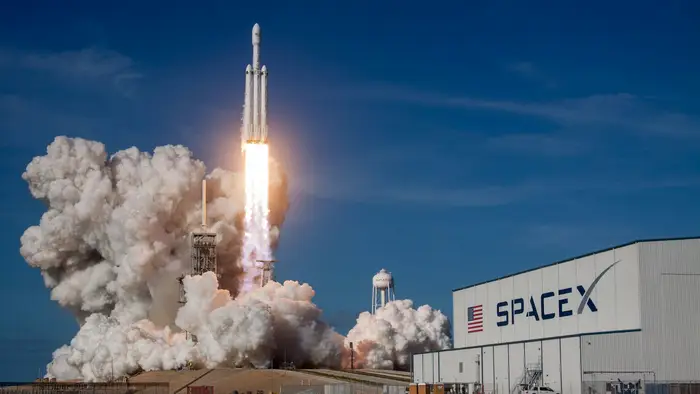
The countdown at 10:53 WIB: GO, and less than half an hour to go
With liftoff set for 11:20 WIB, this edition of SpaceNews reaches readers with the countdown in its final stretch. At the time of writing, the launch is less than half an hour away, the status is GO, and the provider record shows the countdown active — the three conditions every launch watcher wants to see at this point in the morning.
The timing matters because of how the day has been structured. The window opened at 09:32 WIB, and SpaceX chose not to fly at the opening. Instead, the company targeted 11:20 WIB, a slot it confirmed on Friday night at 10:01 p.m. Eastern Time — 03:01 UTC on Saturday — when it updated the liftoff time on its mission page. Launch Library 2 recorded the change the same evening: a delay of 1.8 hours, from 02:32 UTC to 04:20 UTC, logged at 17:15 UTC on November 20. The status then flipped from “to be confirmed” to GO in the early hours of Saturday, at 00:15 UTC.
That sequence is worth spelling out because it is the clearest evidence that the mission is genuinely ready rather than simply still scheduled. A launch that is merely on the calendar can sit at “to be confirmed” for days. USSF-317 has moved through the steps that matter: a provider-confirmed time, a GO status, and an active countdown. None of those steps guarantees a launch — rockets have scrubbed inside the final minute before, and USSF-317’s own history proves it — but together they are the strongest signal yet that the sixth attempt will leave the pad.
SpaceX plans to fly the Falcon 9 on a south-easterly trajectory after leaving the pad, a departure direction that fits the mission’s low Earth orbit destination and the drop zones for the booster’s return. The rocket will head out over the Pacific, and the first stage will come back to the droneship Of Course I Still Love You, stationed in the ocean off the California coast.
Clear skies over Vandenberg
If there is one part of the launch picture that has never been in doubt, it is the weather. The forecast for the launch site calls for clear skies at liftoff, with a temperature of 52 degrees Fahrenheit, cloud cover of just 6 percent, and winds of 10 miles per hour. The chance of precipitation is zero percent. For a mission that has been delayed five times for reasons SpaceX has not explained, the weather at least is cooperating completely.
That matters more than it might seem. Vandenberg’s coastal weather is famously changeable, with marine fog rolling in off the Pacific and low cloud decks that can ground a launch even when the rocket is healthy. The base sits on a stretch of California coastline where the morning fog can be thick enough to violate launch weather rules, and evening launches — the usual slot for west coast Falcon 9 flights — often have to wait for the fog to clear. On this occasion the forecast is about as good as a launch team could ask for: clear, calm, and dry.
The one weather-related note in the official record is not about the launch itself but about its aftermath. Vandenberg Space Force Base warned in its launch update that the flight would carry a moderate potential for sonic booms, forecast mainly for areas around Ventura County, as the returning first stage comes back through the atmosphere. The warning is a standard part of west coast Falcon 9 operations, where the booster’s return path can send a boom rolling across the coast, but it is a reminder that a launch from Vandenberg is felt well beyond the base fence line.
How to watch the launch live
SpaceX will stream the mission on its own website, at spacex.com/launches/ussf317, with the live webcast beginning about ten minutes before liftoff, according to the Vandenberg launch update. That is a shorter lead-in than SpaceX sometimes offers, and it reflects the classified nature of the mission: the broadcast is expected to cover the countdown, the launch, and the booster landing, and then to end before the payload deployment phase, which SpaceX does not show for classified flights.
Spaceflight Now, which has covered the mission’s long campaign in detail, will run its own live coverage beginning about 30 minutes before liftoff, with updates through the countdown and the flight. Its coverage page has tracked every twist of the campaign so far, including the Friday night change of the liftoff time, and it remains the most complete running record of the mission’s status.
For readers in Indonesia, the timing is convenient in an unusual way. An 11:20 WIB liftoff falls in the late morning on a Saturday, rather than in the middle of the night, which is where most Vandenberg launches land in Jakarta time. The webcast will be over well before lunch, and the booster landing — about eight minutes after liftoff — will be visible live in the same broadcast. If the launch goes ahead as planned, the result will be covered in the 13:53 WIB edition of SpaceNews, with the booster landing and any official confirmation of the mission’s success.
B1100: a veteran booster on its eleventh flight
The rocket flying USSF-317 is a Falcon 9 Block 5, and its first stage is one of the most experienced boosters in SpaceX’s fleet. Tail number B1100 is making its eleventh flight, a milestone that puts it among the hardest-working first stages SpaceX has ever operated. Its ten previous flights were all successful, and it has landed ten times out of ten — a record that the mission team will be counting on again today.
B1100’s flight history tells the story of the modern Falcon 9 program in miniature. Its earlier missions include NROL-105, a classified launch for the National Reconnaissance Office, and USSF-385 — the third of the “R” series of classified Space Force missions of which USSF-317 is the latest. The other eight flights were Starlink missions, carrying batches of SpaceX’s own internet satellites to low Earth orbit. That mix — national security payloads and commercial satellite constellations, flown on the same hardware — is exactly how SpaceX’s reusable rocket business is designed to work: a booster proves itself on routine flights and is then trusted with the missions that cannot fail.
If B1100 lands successfully on the droneship Of Course I Still Love You about eight minutes after liftoff, it will be the 235th landing on that vessel and the 679th Falcon booster landing to date, according to Spaceflight Now’s running tally. Those numbers are worth pausing over. The 679 figure counts every Falcon booster landing since SpaceX first brought one back to a landing zone in December 2015 — a capability that was once considered impossible and is now so routine that a landing is expected rather than celebrated. The 235 figure for Of Course I Still Love You alone is a measure of how much of that history has been written off the California coast, where the droneship has become the workhorse of west coast recoveries.
The flight profile for the landing is precisely choreographed. After the first stage separates from the upper stage at about two and a half minutes into the flight, it will flip around, fire its engines to slow down and steer itself back toward the droneship, and then begin its landing burn at about seven minutes and 52 seconds after liftoff. Touchdown is targeted for eight minutes and 11 seconds after liftoff. The whole sequence — from a rocket travelling at several times the speed of sound to a standing booster on a ship in the Pacific — takes less than nine minutes, and it is the part of the mission that the live webcast is most likely to show in full.
| Mission figure | Value |
|---|---|
| Mission | USSF-317, classified United States Space Force flight |
| Rocket | Falcon 9 Block 5 |
| Booster | B1100, 11th flight (10 previous flights, 10 landings) |
| Launch site | Space Launch Complex 4 East, Vandenberg Space Force Base, California |
| Liftoff (T-0) | Saturday, November 21, 2026, 11:20 WIB (04:20 UTC) |
| Launch window | 09:32–13:32 WIB (02:32–06:32 UTC) |
| Target orbit | Low Earth orbit |
| Trajectory | South-easterly from Vandenberg |
| Booster landing | Droneship Of Course I Still Love You, about T+8 minutes |
| Landing milestones if successful | 235th landing on this vessel; 679th Falcon booster landing |
| Weather at liftoff | Clear skies, 52°F, 6% cloud cover, 10 mph winds, 0% precipitation |
| Previous scrub count | Five attempts scrubbed before today |
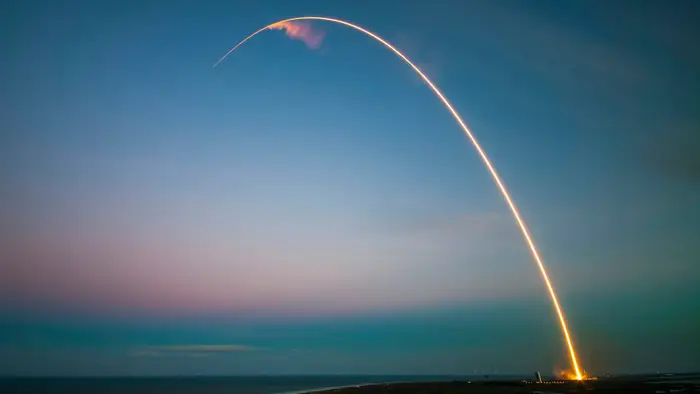
What we know — and what we don’t — about the payload
USSF-317 is a classified mission, and that classification shapes everything about how it is covered. SpaceX says it will launch “an undisclosed number of satellites” on behalf of the United States Space Force, and the Space Force has said nothing at all about what is on board. There is no published payload mass, no satellite count, no deployment timeline, and no statement of what the satellites are for. That silence is normal for this kind of mission, and it will continue after liftoff: for classified flights, SpaceX ends its webcast after the booster landing and does not show the deployment of the payload.
What is known is the pattern the mission fits into. USSF-317 is the latest in a series of “R” missions assigned to SpaceX, and it would be the sixth of them. The five that came before are all a matter of public record: USSF-366, known as R-1, launched on August 16; USSF-153, or R-2, on September 10; USSF-385, or R-3, on September 26; USSF-432, or R-4, on November 6; and USSF-627, or R-5, on November 12. Each of those launches was followed by the cataloguing of 23 satellites in orbit, and in each case the Space Force said nothing afterwards to confirm the deployments or describe the satellites. USSF-317 is expected to follow the same pattern, and the satellite trackers will be watching for the same signature — a fresh batch of objects appearing in low Earth orbit in the hours and days after launch.
The most widely discussed theory about what those satellites are is that they are a batch of classified satellites built on SpaceX’s Starshield bus — the military variant of the Starlink satellite platform. The evidence for that theory is circumstantial but specific: the locations of the rocket stage drop zones for these missions are an exact fit with previous Starlink Group 15 launches, which suggests the same kind of payload flying the same kind of trajectory. Launch Library 2, which supplies the provider record for the mission, describes USSF-317 in exactly those terms: “possibly a batch of classified LEO satellites based on SpaceX’s Starshield satellite bus, based on locations of rocket stage drop zones being exact fits with previous Starlink Group 15 launches.” That is a possibility, not a confirmation, and it should be treated as one. The Space Force has never confirmed the Starshield connection, and the payload could be something else entirely. What the drop-zone evidence does establish is that the mission is flying a profile consistent with a Starlink-family deployment — and that, in a classified program, is often the most that can be said.
The R-series itself is worth understanding on its own terms. Five missions in three months, each putting a similar number of satellites into low Earth orbit, is a tempo that would have been remarkable even a few years ago. It reflects a deliberate shift in how the Space Force builds its orbital capability: smaller satellites, launched more often, in larger numbers, replacing the model of a few large, expensive spacecraft that take a decade to build. The “R” designation is not an official program name — it is a shorthand used by launch watchers for a run of missions that share a pattern — but the pattern is real, and USSF-317 is its next chapter. If it flies today, it will be the sixth R mission in 97 days, a pace that says as much about the Space Force’s ambitions as any press release could.
There is also a practical reason to pay attention to what happens after the launch. Because the Space Force does not confirm these deployments, the public record of the mission is built afterwards, by independent satellite trackers who catalogue the new objects in orbit. That process takes hours to days, and it is how the “23 satellites” figure for each previous R mission was established. For USSF-317, the same watch will begin as soon as the rocket leaves the pad — and the first independent confirmations of new objects in orbit will be the closest thing to an official result the mission is likely to get.
The road to Saturday: a timeline of five scrubs
Saturday morning feels like a small victory in itself, and the timeline of the campaign explains why. USSF-317 was first aimed at Thursday, November 19. That attempt ended in a scrub: SpaceX called off the Thursday night launch at 10:16 p.m. Eastern time — 03:16 UTC on Friday, or 10:16 WIB on Friday morning — and did not state a reason. It was the fifth time the mission had been scrubbed, and by then the delays had become the story as much as the launch. SpaceNews covered that fifth scrub in its final preview of the mission, published on Saturday morning, which set out the full history of the campaign and the stakes of the sixth attempt.
Friday did not go to plan either. The target time for the Friday attempt began the day at 11:32 WIB, then slipped to 13:43 WIB, and then — hours before that revised time — the mission moved again, all the way to Saturday, with the window opening at 09:32 WIB. That sequence was documented in SpaceNews’ launch-day coverage on Friday, when the target slipped twice in a single morning before the mission was pushed to the weekend. It captures the particular frustration of this mission: not one dramatic failure, but a slow accumulation of small slips, each one pushing the rocket a little further from the pad.
The pattern is not new for this series. The previous mission in the same programme, USSF-627, also slipped three times in four days before finally lifting off on Thursday, November 12, at 11:36 WIB, when booster B1103 — flying for the seventh time — climbed away from the same pad and landed on the same droneship about eight and a half minutes later. That result is recorded in SpaceNews’ report on the USSF-627 launch, which remains the most recent successful R-series flight. USSF-317 has now exceeded USSF-627’s record of patience, and the question on Saturday morning is whether the sixth attempt is finally the one that sticks.
The road to liftoff
- Aug 16, 2026 — USSF-366 (R-1) launches; 23 satellites catalogued afterwards.
- Sep 10, 2026 — USSF-153 (R-2) launches; 23 satellites catalogued afterwards.
- Sep 26, 2026 — USSF-385 (R-3) launches; 23 satellites catalogued afterwards.
- Nov 6, 2026 — USSF-432 (R-4) launches; 23 satellites catalogued afterwards.
- Nov 12, 2026, 11:36 WIB — USSF-627 (R-5) launches after three slips in four days; booster B1103 lands on Of Course I Still Love You. Twenty-three satellites catalogued.
- Thu, Nov 19, 10:16 p.m. EDT (Fri, Nov 20, 10:16 WIB) — The USSF-317 attempt is scrubbed for the fifth time. SpaceX gives no reason and retargets Friday.
- Fri, Nov 20, morning — The Friday target slips from 11:32 WIB to 13:43 WIB, then the mission moves to Saturday, with the window opening at 09:32 WIB.
- Fri, Nov 20, 17:15 UTC — Launch Library 2 records the targeted time moving from 02:32 UTC to 04:20 UTC, a delay of about one hour and fifty minutes.
- Sat, Nov 21, 00:15 UTC — The launch status is set to GO, with the countdown active.
- Sat, Nov 21, 11:20 WIB (04:20 UTC) — Targeted liftoff from Space Launch Complex 4 East.

What happens after liftoff
If the countdown holds, the flight itself will follow a profile that Falcon 9 watchers know by heart — and that, for this mission, is exactly the point. The timeline below is the published sequence for the flight, from the final minutes of the countdown to the booster’s return:
The countdown’s final phase begins with the launch director’s go for propellant load at about 38 minutes before liftoff, followed by the start of liquid oxygen loading in the first stage at about 35 minutes. At one minute before liftoff the fuel tanks are pressurised to flight levels and the onboard computer takes control of the countdown, running its final checks. At 45 seconds the launch director gives the go for launch, and at three seconds the ignition sequence begins. Liftoff is at T+0.
Just over a minute into the flight, at T+1 minute and 7 seconds, the rocket passes through Max-Q, the point of maximum aerodynamic pressure. At T+2 minutes and 26 seconds the main engine cuts off — MECO — and the first stage separates from the upper stage, which continues toward orbit with the payload. The first stage then begins its journey home: a boost-back and re-entry sequence that ends with the landing burn at T+7 minutes and 52 seconds and touchdown on the droneship at T+8 minutes and 11 seconds.
What happens after that is, by design, mostly invisible. The upper stage will continue to low Earth orbit and deploy its payload on a schedule that SpaceX does not publish for classified missions. There will be no live pictures of the deployment and no announcement of how many satellites were released. Instead, the public record of the mission’s second half will be built in the hours and days that follow, as independent trackers catalogue the new objects in orbit and compare them with the 23-satellite pattern of the five previous R missions. If USSF-317 follows that pattern, the first confirmations should begin to appear by Sunday — and the 13:53 WIB edition of SpaceNews will carry the launch result, with the booster landing and any confirmation of a successful liftoff.
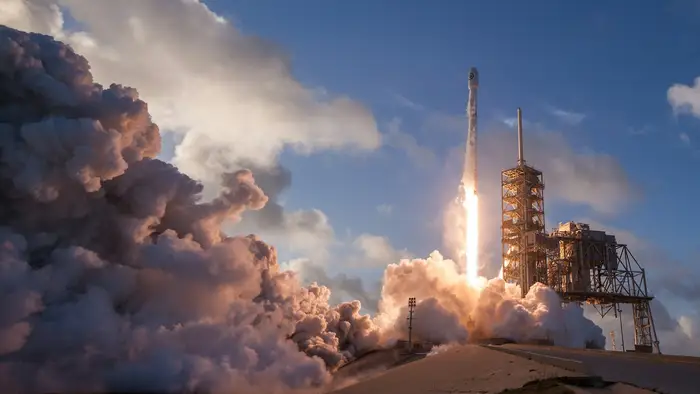
A double-header day at Vandenberg
Saturday is not just USSF-317’s day at Vandenberg; it is a double-header. Later on Saturday evening, a second Falcon 9 is scheduled to lift off from the same Space Launch Complex 4E carrying NROL-136, a classified mission for the National Reconnaissance Office, with booster B1097 flying for the fourteenth time and a planned landing at Landing Zone 4 on the base itself. Liftoff for that mission is set for 19:30 WIB. Two classified Falcon 9 launches from the same pad on the same day is a measure of how far Vandenberg’s launch tempo has come — and a reminder that USSF-317, for all its delays, is only the first half of the day’s work.
The double-header also explains something about the pressure on USSF-317 to fly today. A pad that must turn around for a second launch in the evening cannot afford an open-ended delay in the morning, and the four-hour window for USSF-317 — from 09:32 WIB to 13:32 WIB — leaves room for a slip of an hour or two without threatening the evening’s mission. But a scrub today would complicate the schedule for both flights, and it would make USSF-317 the mission that has now been delayed six times. The teams at Vandenberg will be well aware of that arithmetic as the countdown runs down.
Beyond Saturday, the pace does not slow. SpaceX is scheduled to launch at least two more missions for the United States Space Force before the end of the month, according to Spaceflight Now, and Monday, November 23, brings another classified launch — USSF-266, a Falcon 9 flight with booster B1081 making its 29th flight, targeted for 23:04 WIB. November 2026 is shaping up to be one of the busiest months ever for national security launches from the west coast, and USSF-317 is the mission that opens the final stretch.
Why this launch matters beyond the pad
It is easy to treat a classified launch as a story with nothing to say — no payload details, no mission objectives, no pictures of the satellites. But USSF-317 matters precisely because of what can be seen around the edges of the classification. The R-series is the visible part of a shift in American military spaceflight: from a small number of large, expensive satellites to larger numbers of smaller ones, launched often, on reusable rockets, by a commercial provider. Five missions in three months, each apparently placing a similar batch of satellites in orbit, is a deployment pattern, not a one-off. If USSF-317 flies today, it will be the sixth data point in that pattern in 97 days — and the pattern will be harder to dismiss as coincidence.
There is a second reason the launch matters, and it is closer to home for anyone who follows the rockets themselves. B1100’s eleventh flight is a test of the Falcon 9 reuse model at the edge of its current envelope. SpaceX has flown individual boosters more than twenty times, but every flight past ten is still a data point in a programme that is learning, flight by flight, how far a first stage can be pushed. A successful landing today would be B1100’s eleventh recovery, and it would keep alive a booster that has already flown national security missions and commercial constellation flights with equal reliability. A failure would be a reminder that reuse is a discipline, not a guarantee — and that the margin for error on a classified mission is exactly zero.
And then there is the simple human fact of the wait. A mission scrubbed five times is a mission that has been tested by its own ground campaign, and a booster that has waited on the pad through five scrubs is a booster whose teams have rehearsed the countdown until it is muscle memory. The history of spaceflight is full of launches that failed because the ground teams were rushed; it has very few examples of launches that failed because the ground teams waited too long. USSF-317 has waited. On Saturday morning, at 11:20 WIB, the waiting may finally end — and if it does, the rocket that lifts off will carry with it not just a classified payload, but the accumulated patience of a week that refused to hurry.

Sources
- Spaceflight Now: Live coverage — SpaceX to launch of classified payload for the U.S. Space Force
- Space Launch Live: Falcon 9 Block 5 | USSF-317 — launch countdown and status
- Space Launch Schedule: SpaceX USSF-317 Falcon 9 Block 5 rocket launch
- Vandenberg Space Force Base: USSF-317 launch update, November 20, 2026