Starship Ship 42 Refly November 2026: Musk Says the Caught Ship Could Fly Again in Weeks
SpaceX spent years promising that Starship would fly like an airliner: land, refuel, and fly again. On Sunday, November 15, 2026, Elon Musk walked around the first Starship upper stage ever caught from orbit, ran his eyes over its heat shield tile by tile, and told the world the promise might be closer than anyone expected. “Overall, it looks great. The engines look great too. Ship 42 could probably be reflown with a few weeks of refurbishment,” Musk wrote on X after the inspection.
The ship in question is Ship 42, the 52-metre upper stage that rode Starship Flight 15 into orbit on Friday, November 13, deployed 26 next-generation Starlink V3 satellites, circled Earth 14 times over 22.5 hours, and then did something no spacecraft had ever done: it flew itself back to its launch tower and was caught in mid-air by the giant mechanical arms nicknamed Mechazilla. The catch, at Starbase in Texas on Saturday, November 14, closed a mission that had already delivered its payload and survived a full orbital re-entry. Now the question is no longer whether a Starship can come home. It is how fast it can go back up.
Musk was careful not to oversell the moment. In the same post he added that “many small fixes are needed to achieve immediate reusability (like an airplane), which requires zero expected refurbishment, apart from scheduled maintenance.” That caveat matters. A ship that can fly again after a few weeks of work in a hangar is a breakthrough. A ship that can fly again tomorrow with nothing but a fuel load is the revolution SpaceX has been chasing since the programme began. Ship 42 sits somewhere between the two — and the gap between them is now measured in specific, fixable problems rather than in unknowns.
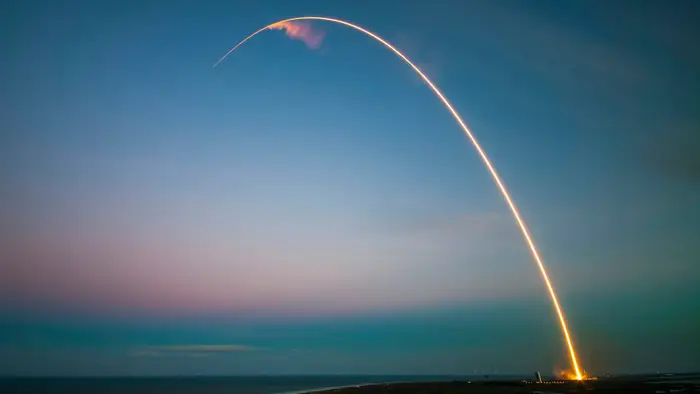
The inspection that changed the conversation
The day after the catch, Musk was photographed standing on a platform beside Ship 42 at the base of the launch tower, inspecting the heat shield tiles with SpaceX personnel. Video shared on X showed him moving along the charred flank of the vehicle, which had been transported back toward the production area for further inspection. “Ship 42 brings back a motherlode of data for further improvements to the heat shield,” Musk wrote, reacting to footage of the inspection.
The heat shield was always the part of this story that engineers watched most closely. Starship’s windward side is covered in hundreds of black hexagonal ceramic tiles, each designed to survive the brutal heating of atmospheric re-entry. On earlier flights, tiles cracked, fell off, or let hot gas through to the structure beneath. Flight 15 was the first time a ship had to prove its shield across a full orbital re-entry — roughly an hour of descent after a deorbit burn — and then be examined on the ground the next day instead of sinking into the ocean. According to reporting on the flight, imagery from Starlink satellites carrying cameras had already shown the heat shield in good shape during the return, which is why controllers passed on a backup splashdown option and committed to the tower catch.
That the shield survived well enough for Musk to call it great is the single most important technical result of Flight 15, because the shield is the bottleneck that has always stood between Starship and rapid reuse. Engines can be inspected and swapped. Tanks can be refilled. But a heat shield that needs weeks of tile-by-tile replacement after every flight is a schedule killer, and a shield that comes back largely intact changes the arithmetic of the whole programme. Aviation Week reported on November 17 that the heat shield was in good shape after the 22-hour orbital flight, and that Musk’s assessment — a possible reflight within weeks of refurbishment — followed directly from what he saw on the vehicle.
It is worth keeping the claim in proportion. SpaceX has never reflown a Starship upper stage. Its two Super Heavy booster reflights each came months apart: the first booster went back up about four months after its debut flight, and the second flew again about seven months after its first launch. A Ship 42 return to flight within weeks would therefore be a first for the programme and a sharp break with the pace of booster reuse so far. The ship’s condition makes it plausible; it does not make it certain. Refurbishment is not just a matter of replacing scorched tiles. Every engine, valve, and structural joint that endured re-entry heating and the loads of a tower catch has to be checked, and the data Ship 42 brought home — the “motherlode” Musk mentioned — exists precisely so engineers can find the damage that is not visible from a platform at the pad.
What went wrong with Booster 22
The inspection story is only half of Flight 15. The other half is the booster that did not come home. Under the original plan, Super Heavy Booster 22 was supposed to return to the tower minutes after separation, giving SpaceX the first same-site recovery of both vehicle stages on a single flight. It never got the chance.
According to SpaceX’s Flight 15 report, the boostback burn of the first stage ended early because of low fuel mass, and one of its 33 Raptor engines failed to reignite for the burn. With the vehicle off its planned return trajectory, its guidance, navigation, and control system triggered an automated abort of the catch. The booster diverted to a designated offshore location, hovered briefly over the Gulf of Mexico, and activated its flight termination system, exploding above the sea. SpaceX is still investigating the cause, and has not yet published the results of that investigation.
Musk has offered a preliminary explanation: the booster ran short of propellant because its engines slightly underperformed, and the fix involves better consistency from the Raptor V3.2 engines and cutting the engines off about a second earlier on the ascent burn, preserving the margin needed for the return. He added that losing the booster does not change SpaceX’s timeline to high-volume, fully reusable flights, and that the next booster is almost ready to fly. The logic of that last point is worth noting. A failed catch attempt that damages the tower or the launch mount could cost SpaceX two to three months, Musk said — which is why the automated abort exists. Losing a booster over the ocean is expensive; losing the tower would be far worse.
The booster failure was not a new kind of problem for Starship. The previous mission, Flight 14, also suffered engine trouble on the way home: the booster failed to relight two engines for its boostback burn, and during the landing burn it ignited only 11 of the planned 13 engines before splashing down in the Gulf. Flight 14’s ship had its own problems too — an early engine shutdown cut short a mission that was supposed to last 10 hours, forcing controllers to deorbit it prematurely after about three hours, though it still managed to deploy its Starlink V3 satellites. Flight 15 fixed the ship side of that equation completely and repeated the booster side of it in a new form. The pattern is consistent: the ship is now flying clean orbital missions while the booster return remains the unreliable half of the system, and the V3 booster has still never been recovered. A full vehicle catch — both stages, one flight — remains to be shown.
For the full story of the catch itself, see our report on the Ship 42 Mechazilla catch, and for the launch-day sequence, our coverage of how the Starship Flight 15 booster catch was aborted while Ship 42 pressed on to orbit.
Flight 15 at a glance
| Fact | Detail |
|---|---|
| Flight | Starship Flight 15, 15th integrated test flight, 2nd to reach orbit |
| Liftoff | Friday, November 13, 2026, 4:47 p.m. CST, Starbase, Texas |
| Ship | Ship 42, Starship V3 upper stage, about 52 m tall, 6 Raptor engines |
| Booster | Booster 22, Super Heavy, 33 Raptor engines |
| Payload | 26 Starlink V3 satellites, all contacted and raising orbits |
| Time in orbit | About 22.5 hours, 14 orbits, at roughly 265 km altitude |
| Re-entry | About 1 hour; deorbit burn on a single Raptor engine |
| Catch | Saturday, November 14, 2026, at T+22 hours 32 minutes, by Mechazilla tower arms |
| Booster outcome | Catch aborted; diverted offshore and lost over the Gulf of Mexico |
| Post-flight | Musk inspected heat shield November 15; ship moved to Production for inspection |
| Next steps | Flight 16 reportedly targeted for December; first upper-stage reflight planned early 2027 |
The table makes the scale of the achievement plain. A 52-metre spacecraft spent nearly a day in orbit, released a full load of satellites that are too large to launch on SpaceX’s Falcon rockets, survived re-entry, and came back to the exact pad it left — all while the vehicle that carried it to space was lost. The mission’s duration alone set a record for Starship, eclipsing the roughly three-hour orbital test of the previous flight and the short suborbital hops that came before it.
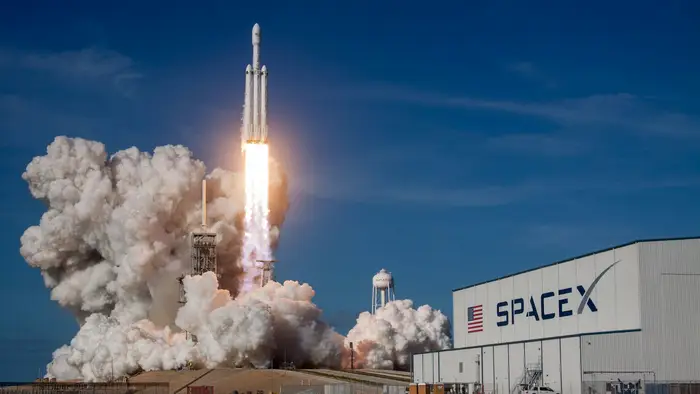
From liftoff to the inspection: Flight 15’s timeline
- Friday, November 13, 2026, 4:47 p.m. CST — Starship lifts off from Starbase, Texas, on its 15th test flight under a newly updated FAA licence that took effect the same day.
- Minutes after liftoff — The stages separate cleanly. Booster 22 begins its return, but its boostback burn ends early on low fuel mass and one Raptor fails to reignite. Guidance triggers an automated abort of the booster catch.
- About 27 minutes after liftoff — Ship 42 reaches orbit smoothly and deploys all 26 Starlink V3 satellites. SpaceX reports contact with every satellite as they begin raising their orbits.
- November 13–14, overnight — Ship 42 coasts for more than 20 hours, completing about 14 orbits at roughly 265 km altitude, the longest Starship mission yet flown.
- Saturday, November 14, afternoon — Ship 42 fires a single Raptor for the deorbit burn, re-enters over Mexico and South Texas, flips upright, and fires three engines to steer between the tower’s arms. At T+22 hours 32 minutes, Mechazilla catches the first orbital upper stage in history.
- Saturday, November 14 — NASA Administrator Jared Isaacman welcomes the achievement, calling it “almost magic” on X. NASA is paying billions of dollars for Starship to land astronauts on the Moon later this decade.
- Sunday, November 15, 2026 — Musk inspects Ship 42’s heat shield and engines at the pad and says the ship could probably be reflown within a few weeks of refurbishment, while cautioning that many small fixes remain before immediate, airliner-like reuse.
- Sunday–Monday, November 15–16 — Musk outlines Starship V4: a roughly 70-metre ship with nine engines and more than 60 percent more propellant than the V3 ship that just flew.
- December 2026 (reported target) — Flight 16, possibly from SpaceX’s new launch pad at NASA’s Kennedy Space Center in Florida.
- Early 2027 (planned) — First reflight of a recovered Starship upper stage, with weekly launches targeted for the first half of the year.
The timeline matters because it shows how quickly the story moved from a single test flight to a programme-level shift. Within 48 hours of the catch, SpaceX had a recovered ship under inspection, a preliminary diagnosis for the lost booster, a public estimate for the ship’s reflight, and specifications for the next, larger version of the vehicle. That is not how Starship’s story used to unfold. Earlier flights were followed by weeks of silence and wreckage analysis. Flight 15 was followed by a vehicle sitting at the pad, being walked around, while its chief engineer talked about flying it again.
Starship V4: bigger ship, bigger tanker
A day after the catch, Musk also laid out how much bigger the next version of Starship will get — and the numbers change the economics of the Moon programme. “Starship V4 will be ~70m long, which is roughly a 40% length increase and allows >60% more propellant load,” Musk wrote on X on Sunday evening. “Engine count will be raised to 9, with 3 more Raptor-Vacuum engines added, and these will be higher thrust V4 engines.”
The current V3 ship that flew on Flight 15 stands about 52 metres tall with six Raptors — three built for sea level and three for vacuum. V4 stretches the ship and doubles its vacuum engines. Musk first said in August 2025 that V4 would add three engines to “a significantly longer ship” and fly in 2027; the November post is the most specific look at the ship so far.
| Feature | Starship V3 (Ship 42) | Starship V4 (announced) |
|---|---|---|
| Ship height | About 52 m | About 70 m |
| Length increase | — | Roughly 40 percent |
| Raptor engines | 6 (3 sea-level, 3 vacuum) | 9 (3 more Raptor-Vacuum, higher thrust) |
| Propellant load | Baseline | More than 60 percent more |
| Payload to orbit | About 100 metric tons (per SpaceX IPO prospectus) | Up to 200 metric tons (future generations) |
| Status | Flown on Flight 15; first ship caught from orbit | Announced November 16, 2026; first flight targeted 2027 |
The payload jump is the headline for the rest of the industry. SpaceX said in its IPO prospectus that V3 is expected to carry about 100 metric tons to orbit, while future generations could reach 200 metric tons, potentially as soon as V4. For comparison, a reusable Falcon 9 carries roughly 17 metric tons to low Earth orbit. A single V4 flight would therefore lift more than ten Falcon 9 flights’ worth of reusable payload — and, crucially for the Moon, far more propellant per tanker run.
That last point is where V4 stops being a bigger rocket and starts being a different mission architecture. Every Starship lunar mission depends on filling a propellant depot in orbit with a string of tanker flights before the lander departs for the Moon. A member of NASA’s safety panel put that number at around 22 flights last month. Musk countered that it would be “more like 6 to 8.” Much of the gap comes down to which ship is doing the hauling: Musk has said a V4 tanker could deliver more than 200 tons of propellant per flight, which by his math brings a lunar refill down to five or six launches. Fewer tankers per landing means more landings per year — and fewer chances for something to go wrong in a long chain of refuelling flights.

Why a reflown ship matters for the Moon
None of this works without ships that fly more than once, which is where Ship 42 comes in. NASA’s lunar plans depend on a version of Starship, and the agency is paying billions of dollars for it to land Artemis astronauts on the Moon later this decade and help build a permanent lunar base. NASA’s revised Artemis programme now describes Artemis III as a crewed demonstration in low Earth orbit in 2027, including rendezvous and docking with one or both commercial lunar landers, and targets a crewed lunar landing for Artemis IV in 2028. SpaceX already advertises cargo flights to the lunar surface starting no earlier than 2028 at 100 million dollars per metric ton, with a Starship lander able to put up to 100 tons on the surface. In February, Musk said SpaceX had shifted its focus to “a self-growing city on the Moon,” which he believes could be done in under 10 years, and the White House has called for work on a permanent lunar outpost to begin by 2030. For the broader picture of how NASA’s Moon programme reached this point, see our report on NASA’s Artemis acceleration and the 2028 Moon landing plan.
Every one of those dates assumes Starship stops being an expendable test article and starts being a reusable vehicle. The depot math makes the point unavoidable: if each lunar landing needs five or six tanker flights with V4, or more than twenty with V3, then a programme that throws every ship away after one flight cannot afford the Moon at all. A ship that flies, comes home, and flies again within weeks is the difference between a lunar programme that is theoretically possible and one that can actually be scheduled. Ship 42’s inspection is the first hard evidence that the reuse loop might close on a timescale of weeks rather than months — and the first time the evidence arrived in the form of a vehicle that engineers could walk around, rather than telemetry from a vehicle that sank.
There is also a quieter implication for the Starlink business that paid for much of this development. The 26 V3 satellites Ship 42 deployed are the larger, more capable generation that cannot launch on Falcon rockets at all. Every V3 deployment currently depends on Starship flying successfully, which means the constellation’s growth is tied to the same vehicle that the Moon programme needs. Flight 15 proved the deployment side works: all 26 satellites reported in, healthy, and began raising their orbits. A reflown ship would make that deployment pipeline cheaper and faster, and a weekly launch cadence — SpaceX’s stated target for the first half of 2027 — would turn Starlink V3 deployment from a demonstration into a routine.
What still has to go right
The honest version of this story is that Ship 42’s good condition answers one question and leaves several open. The first is the booster. SpaceX has now lost two V3 boosters in two flights to return-burn problems, and the investigation into Booster 22 is still running. Musk’s preliminary fix — better Raptor V3.2 consistency and an earlier engine cutoff — sounds small, but it has to be proven on a flight, not asserted on social media. Until a V3 booster comes back to the tower, the full Starship system remains half-proven, and the double catch SpaceX wanted on Flight 15 remains an unflown manoeuvre.
The second open question is the heat shield itself. “Looks great” is an inspection, not a certification. The tiles that survived re-entry still have to be examined for the micro-cracking and bond failures that only show up under test, and the “motherlode of data” Musk mentioned will take weeks to work through. SpaceX is designing a new tile solution aimed at requiring almost no refurbishment after each mission, which tells its own story: the current tiles are good enough to survive and be reflown after weeks of work, but not yet good enough for the zero-refurbishment turnaround the programme ultimately needs. The gap between “reflown in weeks” and “reflown like an airplane” is exactly the list of small fixes Musk flagged.
The third question is where the next flights happen. Flight 16 is reportedly targeted for December and may launch from Starship’s new pad at NASA’s Kennedy Space Center in Florida — a move that would put Starship operations on the East Coast for the first time and bring the vehicle to the departure point for NASA’s next Artemis mission. SpaceX also announced plans to extend Starship operations to Kennedy and to develop a new launch site in Louisiana. A Florida launch would test a new pad, a new range, and a new set of ground systems all at once, which is a lot of novelty to stack on top of a vehicle that is still proving its booster return. It would also place Starship’s test programme next door to the Artemis infrastructure it is meant to serve, which is presumably the point.
The fourth question is the schedule itself. SpaceX wants to fly a recovered Starship for the first time in early 2027, President Gwynne Shotwell said on the October earnings call, and to begin carrying out weekly launches in the first half of the year. Weekly launches would mean a Starship leaving the ground roughly every seven days — a cadence no heavy-lift vehicle has ever sustained, and one that requires not just a reflown ship but a production line, a pad turnaround, and a regulatory rhythm to match. The FAA licence that covered Flight 15, which took effect on November 13, is one piece of that machinery. The rest has to be built flight by flight.

The week the rocket came home twice
Step back from the engineering, and Flight 15’s aftermath is a story about a programme changing state. For three years, Starship test flights ended in one of two ways: an explosion, or a splashdown. A splashdown is a polite way of throwing a spacecraft away. What happened on November 14 and 15 was different in kind, not just in degree. A spacecraft that had spent a day in orbit came back to the pad it left, sat there while its builder inspected it, and was pronounced fit to fly again within weeks. Then, before the week was out, the builder announced a bigger version of the same ship and a plan to fly recovered ships early next year and weekly soon after.
That sequence — catch, inspect, declare reflight possible, announce the next generation — is the shape of a programme that believes it has crossed from proving it can fly to proving it can keep flying. It may be right. The heat shield held. The engines look good. The satellites are in orbit and healthy. The tower that caught the ship is intact, and the booster that was lost was lost over empty ocean because the abort system did what it was designed to do. Those are real results, and they are the reason the conversation this week is about refurbishment schedules rather than wreckage.
But the booster is still at the bottom of the Gulf, and no V3 booster has ever been recovered. The ship that could fly again in weeks has not yet flown again at all. The V4 that could carry 200 tons exists, for now, as a post on X. And the weekly cadence, the Florida pad, the depot refuelling, and the 2028 Moon landing all sit on the far side of flights that have not happened yet. Ship 42 gave SpaceX something it has never had before: a flown orbital spacecraft to study. What it does with that spacecraft — how fast it turns inspection into reflight, and reflight into routine — is the story that will decide whether November 2026 is remembered as the month Starship became reusable, or the month it merely looked like it might.

The tower arms are empty now, the ship is in the production bay, and the next booster is, in Musk’s words, almost ready to fly. The question that hung over Starbase for three years — can this thing come back? — has been answered. The question that replaces it is harder, slower, and more interesting: how fast can it go again? Ship 42’s tiles, engines, and data hold the first draft of the answer. The next flight will hold the second.
Sources
- Starlust: Elon Musk inspects Starship Flight 15 upper stage — ‘Could refly within weeks of refurbishment’
- Teslarati: SpaceX makes history, catching Starship from orbit for the first time
- Aviation Week: Starship Heat Shield In Good Shape After 22-Hr. Orbital Flight
- Daily Inference: Ship Shape — SpaceX Snatches a Starship Out of Orbit