Ship 42 Mechazilla Catch: Starship Flight 15 Makes History
For twenty-two and a half hours, Ship 42 had been falling around the Earth, lap after lap, waiting for its turn to come home. Then, on a Saturday afternoon in South Texas, the sky above Starbase opened and the spacecraft came down through the clouds, engines burning, steering itself toward a steel tower it had left behind the day before. The tower’s two great mechanical arms — the chopsticks of Mechazilla — swung closed around it. The engines cut out. And just like that, SpaceX had done something no one in the history of spaceflight had ever done: it had caught a rocket’s upper stage out of the air after a journey to orbit and back.
“Mechazilla catches Starship!” SpaceX posted minutes after the catch, and the message raced around the world almost as fast as the spacecraft itself had. The successful recovery of Ship 42 on November 14, 2026, closed out Starship Flight 15, the fifteenth launch of the most powerful rocket ever flown and the second operational flight of the Starship system. It was the longest Starship flight yet, the first time an upper stage has been recovered upright after reaching orbit, and the clearest proof so far that SpaceX’s audacious plan — a fully and rapidly reusable rocket, both stages, caught by the same tower that launched them — is not a fantasy but an engineering programme that is now delivering results in the real sky.
The catch was not the whole story of Flight 15. The mission had been designed as a double: both the Super Heavy booster and the Ship were supposed to return to the tower, which would have made it the first flight in history in which every stage of an orbital rocket was recovered. That half of the plan failed within seven minutes of liftoff, when Booster 22 aborted its own catch attempt and was diverted to a splashdown in the Gulf of Mexico, where it was destroyed. The flight that followed was therefore a study in contrasts — a lost booster and a triumphant ship, a plan cut in half and a milestone achieved anyway — and it is worth telling in full, because the two halves belong together. The booster failure explains what still needs fixing. The ship catch explains why the programme is worth fixing it for.
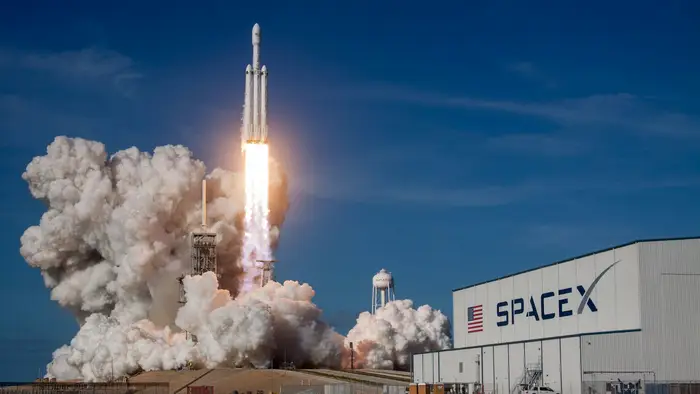
Ship 42 left Starbase on Friday afternoon, November 13, 2026, on the most ambitious Starship test flight yet attempted. Image: Unsplash.
The Catch Heard Around the World
The moment itself lasted seconds, but it was more than twenty-two hours in the making. Ship 42 fired its engines to leave orbit on Saturday afternoon, reentered the atmosphere over the Pacific, and flew back across the Gulf coast toward Starbase, where the launch tower known as Mechazilla waited with its arms open. At about 3:20 p.m. Central Time — 4:20 p.m. on the East Coast of the United States, and 04:20 on Sunday morning in Jakarta — the spacecraft descended through the clouds, maneuvered into position between the tower’s arms, and settled into the catch. The tower’s arms closed around it, the engines shut down, and the ship hung there, upright and intact, where hours earlier crowds had watched it leave.
The precise time of the catch was recorded as 21:20:03 UTC on November 14, 2026, and the landing site as Orbital Launch Pad 2 at Starbase, Texas — the same pad the vehicle had lifted off from the previous afternoon. The flight had lasted about 22 hours and 32 minutes from liftoff to catch, and the ship had circled the Earth roughly fourteen times in between. By any measure it was the longest Starship flight yet, breaking the duration record set by Flight 14, and it ended with a landing that no spacecraft had ever performed: a powered, upright arrival at a launch tower, caught rather than landed, after a full orbital mission.
What made the moment land so hard, beyond the spectacle, was that it had been planned in the open and attempted only after a long, careful day in orbit. SpaceX had said before launch that the ship would attempt the catch only if every system needed for re-entry and landing stayed healthy through a series of in-orbit checkpoints. The ship passed them. The final decision to bring it home was made in orbit, and the tower did the rest. For the engineers who had spent years arguing that catching a returning spacecraft with a tower was not only possible but practical, the sight of Ship 42 hanging between the chopsticks was the argument settled in steel.
The catch also carried a small, human signature. Ship 42 is inscribed with the words “Don’t Panic,” a nod to The Hitchhiker’s Guide to the Galaxy, and the phrase had been quoted back and forth by spaceflight watchers all day as the ship’s long orbit wore on. When the catch succeeded, the joke became a kind of mission statement: the most nerve-wracking part of the flight — the return — had been handled with the calm the inscription promised.
A Day in Orbit
The story of Flight 15 began on Friday, November 13, 2026, when Starship lifted off from Orbital Launch Pad 2 at Starbase at 22:47:36 UTC — 4:47 p.m. Central Time, and 05:47 on Saturday morning in Jakarta. The vehicle was the fourth pair of Block 3 vehicles to fly: Super Heavy Booster 22 below, Ship 42 above, both of them upgraded versions of the hardware that has been flying the Starship test programme. The launch came on the same day SpaceX obtained the regulatory approval it needed to fly, a last-minute clearance that kept the mission on schedule.
The ascent itself went as planned. The booster separated, the ship’s engines carried it onward, and Starship reached orbit at an altitude of about 170 miles — roughly 275 kilometres — only the second time a Starship has done so. Once in orbit, Ship 42 deployed all 26 of its next-generation Starlink V3 satellites, the payload for the mission, designated Starlink Group 31-2. SpaceX confirmed on Friday evening that the satellites were in orbit, and the ship settled into the long coast that would define the rest of the flight.
That coast was the point. Earlier Starship test flights had been measured in minutes or, at most, a few hours. Flight 15 was designed to last the better part of a day — planned at up to about fifteen laps of the Earth — so that SpaceX could test the ship’s endurance in orbit, its thermal and power systems across many day-night cycles, and its ability to wait, healthy, for a landing window a full day after launch. A spacecraft that can only fly for an hour is a test article. A spacecraft that can spend a day in orbit, deploy its payload, and then fly itself home is an operational vehicle. That was the transition Flight 15 was built to demonstrate, and the ship’s 22.5 hours in space, across roughly fourteen orbits, delivered it.
The long orbit also served a second purpose: it gave SpaceX time. The catch attempt was never guaranteed. Throughout the flight, the team monitored the ship through a series of orbital checkpoints, each one a go or no-go gate for the return. Had any of them failed, the ship would have been diverted to a splashdown instead — the safe, proven ending that earlier Starship flights had used. The checkpoints passed, one by one, and by Saturday afternoon the team committed to the catch. The ship then fired its engines to leave orbit, beginning a re-entry that lasted almost an hour, crossing the Pacific before the final approach to Starbase.
The flight’s duration also matters for what comes next. A Starship that can loiter in orbit for a day can wait for a tanker, rendezvous with another vehicle, or hold for a landing window at a different launch site. Those are not test-flight curiosities. They are the capabilities SpaceX needs for its two biggest promises: refuelling Starships in orbit for deep-space missions, and flying the vehicle as the lander that will return astronauts to the Moon under NASA’s Artemis programme. Flight 15 did not demonstrate refuelling or a lunar landing, and it would be wrong to claim otherwise. But it demonstrated the orbital endurance on which both of those ambitions depend, and it did so with a payload of 26 working satellites already delivered to orbit.
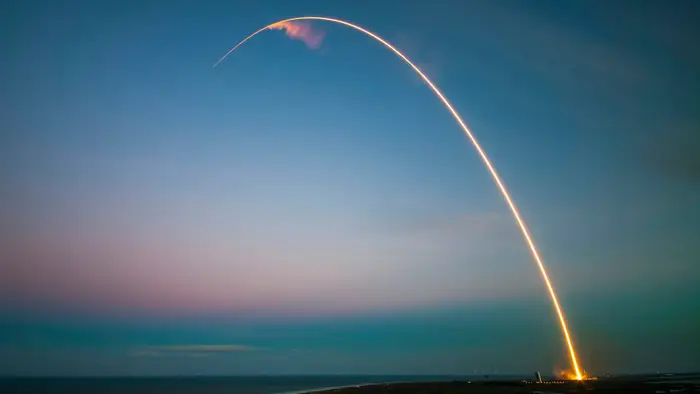
Flight 15 was designed to last the better part of a day, with Ship 42 circling the Earth roughly fourteen times before its return. Image: Unsplash.
The Booster That Did Not Come Home
If the ship’s day in orbit was the triumph of Flight 15, the booster’s seven minutes were its warning. The plan had called for the Super Heavy first stage — the upgraded booster stretching some 236 feet tall — to fly back to the pad about six minutes after launch and be caught by the tower’s arms, just as earlier boosters had been. Instead, the catch was aborted. The booster diverted to an offshore splashdown site in the Gulf of Mexico and was destroyed there, its flight termination system activated after the vehicle determined it could not guarantee a safe landing.
SpaceX spokesperson Dan Huot described the problem as a guidance, navigation and control issue detected by the booster itself — the vehicle’s own systems calling off the catch rather than risking the tower, the pad, or the people around it. That distinction matters. The booster did not tumble out of control or break apart in the air. It recognised a fault, aborted the manoeuvre it could not safely complete, and flew itself to a pre-planned safe area offshore. The flight termination system then did its job. It was a failure of the mission’s most ambitious goal, but it was also a demonstration of the safety logic that makes such goals attemptable at all: a rocket that can decide, on its own, not to come home is a rocket that can be trusted to try.
SpaceX has not specified a definitive cause for the abort, and the investigation is continuing. Elon Musk later suggested the booster may have been slightly low on fuel, but that remark is not a final conclusion, and it should not be treated as one. The company has said only that the catch was called off because of the guidance, navigation and control issue, and that the precise chain of events is still being examined. Until SpaceX publishes its findings, any account of the cause is speculation, and the honest version of this story is that the booster found a problem, protected the tower by staying away from it, and was lost in the Gulf.
The loss stings for a second reason. Booster 22 was planned to be the first Block 3 booster to return to Starbase and be caught by the tower, and the double catch — both stages recovered on the same orbital flight — would have been a first in the history of spaceflight. That record remains unclaimed. No orbital rocket has ever recovered all of its stages, and Flight 15, which came closer than any flight before it, will not be the one that does it. The ship’s catch does not erase that. It sits alongside it, in the same mission, as a reminder that progress in rocketry is rarely clean: one stage lost, one stage caught, and the programme moving forward on the strength of the one that came home.
There is a useful comparison close at hand. Two days before Flight 15, on November 12, SpaceX flew a Falcon 9 for the classified USSF-627 mission from Vandenberg, and booster B1103 landed on the droneship Of Course I Still Love You about eight and a half minutes after liftoff — a routine recovery of the kind Falcon 9 has performed hundreds of times. The contrast between that flight and Flight 15 is the contrast between a mature system and one still being invented. Falcon 9 lands its booster on a ship at sea because that is what Falcon 9 was designed to do. Starship is designed to be caught by its launch tower because landing legs and droneships cost mass and time, and because a rocket that can be caught can be stacked, refuelled and flown again in hours rather than weeks. The booster abort shows how far that design still has to go. The ship catch shows how far it has already come. Readers who want the fuller picture of the flight that preceded this one can revisit our report on Starship Flight 15 Booster Catch Aborted: Ship 42 Orbits With 26 Starlink V3 Satellites, which covered the launch and the booster loss in detail, and our earlier preview, Starship Flight 15 Double Catch: SpaceX’s Boldest Test Yet, which set out the double-catch plan before liftoff.
Flight 15 by the Numbers
The mission’s scale is easier to grasp in figures than in adjectives. The table below gathers the key facts of the flight from the mission’s official record and the reporting that followed it.
| Fact | Detail |
|---|---|
| Flight | Starship Flight 15 — 15th Starship launch, 2nd operational flight |
| Vehicles | Ship 42 (“Don’t Panic”) on Super Heavy Booster 22 — 4th pair of Block 3 vehicles |
| Launch site | Orbital Launch Pad 2, Starbase, Texas |
| Liftoff | November 13, 2026, 22:47:36 UTC (4:47 p.m. CST; 05:47 WIB, November 14) |
| Payload | 26 Starlink V3 satellites (Starlink Group 31-2), all deployed |
| Orbit altitude | About 170 miles (275 km) |
| Time in orbit | About 22.5 hours — longest Starship flight yet |
| Orbits completed | Roughly 14 |
| Ship catch | November 14, 2026, 21:20:03 UTC (3:20 p.m. CST; 04:20 WIB, November 15) |
| Catch site | Orbital Launch Tower 2, Starbase, Texas |
| Booster outcome | Catch aborted on guidance, navigation and control issue; diverted to Gulf of Mexico and destroyed |
The numbers that matter most are the ones in the middle of that table. Twenty-six satellites deployed is a real payload delivered on a test flight, not a mass simulator or an empty bay. Twenty-two and a half hours is a full working day in orbit, with the ship’s systems running the whole time. Fourteen orbits is a mission profile that looks less like a test hop and more like an operational flight. And the catch time — 21:20:03 UTC — is now a timestamp that belongs in the record books beside the first booster catch, the first orbital flight, and the other dates that mark the moments when reusable rocketry stopped being a proposal and became a practice.

Ship 42 spent more than 22 hours in orbit, circling the Earth roughly fourteen times before its return to Starbase. Image: Unsplash.
Flight 15 Timeline
November 12, 2026 — Ship 42 is rolled out to the launch site at Starbase, the final major move before launch.
November 13, 2026, 22:47:36 UTC — Starship lifts off from Orbital Launch Pad 2 at Starbase, Texas, on Flight 15, carrying 26 Starlink V3 satellites. Regulatory approval for the flight is obtained on launch day.
November 13, 2026, about T+6:35 — Booster 22 aborts its planned tower catch after detecting a guidance, navigation and control issue, diverts to an offshore site in the Gulf of Mexico, and is destroyed there.
November 13, 2026, Friday evening — Ship 42 reaches orbit at about 170 miles (275 kilometres) and deploys all 26 Starlink V3 satellites. SpaceX confirms the satellites are in orbit.
November 14, 2026, Saturday — Ship 42 coasts through roughly fourteen orbits over about 22.5 hours, passing a series of in-orbit health checkpoints that will decide whether the tower catch is attempted.
November 14, 2026, Saturday afternoon — Ship 42 fires its engines to leave orbit, reenters the atmosphere over the Pacific in a re-entry lasting almost an hour, and flies back toward Starbase.
November 14, 2026, 21:20:03 UTC — The launch tower’s mechanical arms catch Ship 42 at Orbital Launch Pad 2, completing the first-ever tower catch of a Starship upper stage returning from orbit. SpaceX posts: “Mechazilla catches Starship!”
How the Tower Catch Works
To understand why the catch matters, it helps to understand what the tower actually does. The structure SpaceX calls Mechazilla is the launch tower at Starbase, fitted with two enormous mechanical arms that spaceflight watchers have nicknamed the chopsticks. On launch day, the tower holds the rocket and feeds it propellant. On landing day, it becomes the landing pad — or rather, the landing cradle. A returning vehicle flies itself back to the tower, throttles down to a hover beside it, and slides into the gap between the arms. The arms close around the vehicle, take its weight, and the engines shut down. There is no landing leg, no runway, and no droneship. The rocket is caught where it launched, ready — in principle — to be lowered onto the pad, refuelled, stacked with a fresh payload, and flown again.
SpaceX had already proved the concept with the Super Heavy booster, catching the first stage on earlier flights. But catching a booster is a different problem from catching a ship. A booster comes home six minutes after launch, from just above the atmosphere, on a short, steep arc that the tower team can rehearse again and again. A ship comes home a day later, from orbit, at many times the speed of sound, after a re-entry that heats its skin to temperatures that would melt most metals and a flight across an ocean to reach the tower. The guidance has to be precise over thousands of kilometres rather than tens, the thermal protection has to survive an hour of re-entry rather than minutes of ascent, and the landing decision has to be made in orbit, with no chance to hold the vehicle on the pad for a fix. Flight 15 was the first time all of that had been attempted at once, and the first time it worked.
The engineering logic behind the catch is worth stating plainly, because it explains the whole Starship programme. Every kilogram of landing legs is a kilogram that cannot be payload. Every hour a rocket spends being recovered from a droneship, sailed back to port, and refurbished is an hour it cannot fly. A rocket that lands where it launches, on hardware that is already there, can in theory be turned around the way an aeroplane is turned around at a gate: refuel, reload, and go. That is the promise that has driven Starship from its first hop to this catch, and it is the promise that the ship’s recovery brings visibly closer. The tower did not merely catch a spacecraft on Saturday. It demonstrated a way of operating rockets that, if it can be repeated routinely, changes the economics of everything that flies on them — satellites, space stations, lunar landers, and eventually the crewed ships bound for Mars.
That promise is also why the booster loss matters so much, and why SpaceX will not shrug it off. The double catch was the goal because the economics only work when both stages come home. A programme that recovers its upper stage but loses its booster on every flight has halved its problem, not solved it. The investigation into the guidance, navigation and control issue will therefore be watched as closely as the catch itself was celebrated, and the next flight will be judged not only on whether the ship is caught again, but on whether the booster is caught too.
Why This Catch Matters
The most immediate consequence of the catch is practical. SpaceX president Gwynne Shotwell said last month that the Starship upper stage may fly again early next year, and Flight 15 is the flight that makes that statement credible. A ship that has been to orbit, survived re-entry, and been caught by its tower can be inspected, serviced, and — if the inspection goes well — flown again. That is the threshold between a test programme and a transport system, and Ship 42 has crossed it. The company has not announced a date for Flight 16, and it would be wrong to guess one, but the direction of travel is now clear: the flights ahead will be about repeating the catch, then about doing it quickly, and then about doing it with a ship that has flown before.
The second consequence is for NASA’s Artemis programme, under which a version of Starship is to carry astronauts from lunar orbit to the surface of the Moon and back. Every Starship milestone — orbital flight, payload deployment, long-duration coast, re-entry, catch — retires a risk on the path to that landing. Flight 15 retired several at once: the ship can reach orbit, work there for a day, and come home to the tower. The lunar lander will not be caught by a tower — there is no tower on the Moon — but the vehicle that lands on the Moon will be built from the same hardware, flown by the same guidance, and protected by the same heat shield that just brought Ship 42 home. Confidence in the lander is built flight by flight, and this was a large flight.
The third consequence is the simplest and the hardest to measure: the catch changes what people believe is possible. When SpaceX first caught a Super Heavy booster, in October 2024, the reaction was disbelief — a tower catching a rocket sounded like a stunt, and many observers expected it to work once and never again. It worked again. When the company said it would catch the ship too, the reaction was more cautious, but the same logic applied: an upper stage returning from orbit is faster, hotter, and further from home than a booster, and catching it would be harder by every measure. It worked on the first attempt. That record — first try, first catch, after a full orbital mission — will shape how seriously the rest of the industry takes SpaceX’s remaining claims, including the boldest one of all: that a fully reusable Starship can fly to Mars, land, refuel, and come back. The catch does not prove that claim. It proves that the people making it have a habit of delivering the step before the step they are promising.
There is also a quieter lesson in Flight 15, and it belongs to the booster. The abort showed that the system’s safety logic works as designed — a vehicle that cannot guarantee a safe landing stays away from the tower — but it also showed that the Block 3 booster still has failure modes the programme does not fully understand. The investigation will determine whether the guidance issue was a one-off fault, a design weakness, or a symptom of something deeper in the upgraded vehicle. Until that is known, the honest assessment is that Starship is now a system that can catch its upper stage and still lose its booster, and that the next flight must prove both halves of the recovery at once.

The catch changes what the industry believes is possible — and sets the bar for Flight 16, which must recover both stages at once. Image: Unsplash.
What Comes Next
SpaceX has not announced a date for Flight 16 as of Saturday afternoon, and there is no reliable way to predict one. What can be said is what the next flight must do. It must repeat the ship catch, because a milestone achieved once is a demonstration and a milestone achieved twice is a capability. It must catch the booster, because the double recovery is the goal the programme set for itself and the economics it promises depend on it. And it must do both with the lessons of the Booster 22 investigation built in, whatever those lessons turn out to be. If Flight 16 delivers on all three, the conversation about Starship will shift from whether full reusability is possible to how fast it can be made routine — and from test flights to the operational missions the vehicle was built for, including the Starlink deployments that are already flying on it and the lunar missions waiting further down the manifest.
The pace of the programme suggests the wait will not be long. Starship has now flown fifteen times, and the flights have grown steadily more ambitious: from short hops to orbital insertion, from splashdowns to booster catches, and now to a full day in orbit and a ship caught at the tower. Each flight has been built on the one before it, and each has answered a question the previous flight left open. Flight 15 answered the biggest one yet — can the ship come home? — and left the programme with a smaller, sharper one: can the booster come home too? The answer to that question is the next flight, and the whole spaceflight world will be watching for it.
For now, the image that will endure from Flight 15 is the one the cameras caught on Saturday afternoon: a spacecraft the size of a small building, fresh from orbit, hanging between the arms of a tower in South Texas, its engines silent, its mission complete. It had left the Earth on Friday, circled it fourteen times, delivered twenty-six satellites, survived re-entry, and come home to be caught — the first upper stage ever to do so. The booster was lost, and that loss will be investigated, argued over, and learned from. But the ship came home. And in the long story of reusable rocketry, that is the sentence that will be remembered.

Ship 42’s catch closed the longest Starship flight yet — and opened the next chapter of fully reusable spaceflight. Image: Unsplash.