NASA Astronaut Applications December 3 2026: Your Shot at the Moon Base Era
NASA has opened the door, and it will not stay open long. On November 7, 2026, the agency began accepting applications for its next class of astronaut candidates — the first such call in two years — and the window closes at 11:59 p.m. Eastern Time on Thursday, December 3. Anyone who has ever looked at the Moon and wondered what it would take to go there now has 26 days, from announcement to deadline, to answer that question with an application.
The timing is no accident. NASA’s human spaceflight program is moving faster than it has in a generation. The Artemis II crew flew around the Moon and home in April, the first crewed lunar voyage in more than half a century. A new crew is preparing to rehearse the docking maneuvers that will make a landing possible. And the agency is openly planning a permanent presence on the lunar surface — a Moon Base where astronauts will live and work — followed by the first crewed missions to Mars. The people selected from this round will be the ones who do that work.
“This is an extraordinary time to join NASA’s astronaut corps,” said NASA Administrator Jared Isaacman when the applications opened. “The people we select could walk on the Moon, live and work at the Moon Base, and help pioneer the systems and operations that will ultimately carry crews to Mars. Those missions will demand technical excellence, sound judgment, teamwork, and courage.”
It is, by any measure, the most consequential job posting in the world. It is also one of the most competitive. The last time NASA opened applications, in 2024, more than 8,000 people applied. Ten were selected. This article explains what the 2026 call asks for, who can realistically apply, how the selection works, and what the winners can expect — and why, even with odds that steep, the deadline on December 3 is worth taking seriously.
The Window Is Open — and Short
NASA announced the opening on Saturday, November 7, during the MAX POWER air show at Kennedy Space Center in Florida — a fitting stage, with the spaceport’s launch pads on the horizon and the Artemis program’s hardware in the background. Applications are submitted online through the federal government’s USAJOBS system, with full instructions at go.nasa.gov/astro2026. The agency expects to make its final selection in late 2027, and the new candidates will begin training soon after.
The application window runs for less than four weeks. That is short by design: NASA’s selection machinery is built to move quickly once the deadline passes. According to the agency’s published selection timeline, application review runs from December 2026 through April 2027, interviews and assessments follow at Johnson Space Center in Houston, the class is announced in the fall of 2027, and the new candidates report for duty in the winter of 2027–2028. The schedule is explicitly tentative — NASA says it may extend or accelerate the process depending on how many people apply — but the shape of it is clear. Apply by December 3, wait through the spring, and if you are chosen, you start training before the end of next year.
“The window is open. The mission is waiting. And the only thing missing from the greatest adventure humanity has ever embarked upon is you,” said NASA Deputy Administrator Matt Anderson in the agency’s announcement.
The position itself is a full-time federal job based at Johnson Space Center in Houston, Texas. It is not a remote job, and NASA lists an approximate annual salary of $164,395 under 2026 pay schedules. That figure will not make anyone rich by the standards of the private sector careers many applicants will be leaving behind — senior engineers, physicians, and test pilots routinely earn more — but nobody applies to be an astronaut for the salary. They apply because the job description includes walking on another world.
What NASA Is Actually Looking For
The formal requirements are demanding but narrower than the popular image of the “perfect astronaut” suggests. Flying experience and military service are not required for every candidate, NASA’s selection guidance makes clear, and civilian professionals are explicitly welcome. What is required is a combination of education, experience, health, and temperament that very few people possess all at once.
First, citizenship. Applicants must be United States citizens. There is no exception to this rule, and it is the first filter in the process.
Second, education. Candidates need a master’s degree in a STEM field — engineering, biological science, physical science, computer science, or mathematics — from an accredited institution. But NASA accepts three alternatives to the master’s degree: completion of at least two years of work toward a doctoral program in an appropriate technical field; completion of a Doctor of Medicine, Doctor of Osteopathic Medicine, Physician Assistant, Doctor of Nursing Practice, Family Nurse Practitioner, or related medical degree; or completion of, or current enrollment in, a nationally recognized Test Pilot School program, provided the program is completed by July 2027. If Test Pilot School is the candidate’s only advanced technical qualification, a bachelor’s degree in a STEM field is also required.
Third, experience. Candidates must have at least three years of related professional experience after completing their qualifying degree. For pilots, the experience requirement can be met through flight time: 750 hours of pilot-in-command time in high-performance jet aircraft; 1,500 total flight hours, including 750 as pilot in command, in other fixed-wing aircraft; or 1,000 total flight hours, including 300 as pilot in command, in rotary-wing aircraft. For medical doctors, residency training may count toward the experience requirement, and it must be completed by July 2027.
Fourth, health. Astronaut candidates must pass NASA’s long-duration flight physical — a thorough medical examination designed for missions that last months, in an environment where a hospital is a quarter of a million miles away. Vision, cardiovascular fitness, bone density, and psychological resilience are all assessed.
And finally, the qualities that cannot be measured on a form. Candidates must demonstrate strong leadership, teamwork, and communication skills. “For those who apply, becoming a NASA astronaut is more than a career opportunity,” said Scott Tingle, NASA’s chief astronaut and chair of the Astronaut Selection Board at Johnson Space Center. “It is a chance to join a legacy of explorers who have pushed the boundaries of discovery and play a role in the missions that will shape humanity’s future in space. The next generation of astronaut candidates could help write history while inspiring future scientists, engineers, and explorers.”
The application itself calls for a resume or curriculum vitae describing relevant experience, an online application and assessment questionnaire, and required supporting documents, all submitted through USAJOBS. Supporting materials can be updated while the announcement remains open. Roughly half of those interviewed are invited back for a second interview — a reminder that the process is as much about judgment under pressure as it is about credentials on paper.
By the Numbers: The 2026 Astronaut Class
The scale of NASA’s astronaut program is small, and that is part of what makes each selection round so significant. The figures below, all drawn from NASA’s announcement and its published selection guidance, put the 2026 call in perspective.
| Figure | Number | What it means |
|---|---|---|
| Astronaut candidates selected since the 1960s | 370 | Fewer people than fit in a single lecture hall — across more than six decades |
| Active astronauts in the corps today | 32 | The entire workforce the new class will join |
| Applications in the last round (2024) | More than 8,000 | The competition the new class must beat |
| Candidates selected in 2025 | 10 | The entire class now in training |
| Length of basic astronaut training | Nearly 2 years | Spacewalking, lunar geology, aircraft operations, and more |
| Application window | Nov 7 – Dec 3, 2026 | 26 days from announcement to deadline |
| Deadline | Dec 3, 2026, 11:59 p.m. EST | Submitted through USAJOBS |
| Final selection | Late 2027 | Class announced in fall 2027 |
| Report for duty | Winter 2027–2028 | Training begins soon after selection |
| Approximate annual salary | $164,395 | Under 2026 federal pay schedules |
| Professional experience required | 3 years | After the qualifying degree |
| Pilot route (high-performance jet) | 750 hours | Pilot-in-command time |
The number that matters most is 32. NASA has just 32 active astronauts. That is the smallest corps the agency has fielded in the middle of a major exploration program, and it is shrinking at the top. All four members of the Artemis II crew — commander Reid Wiseman, pilot Victor Glover, mission specialist Christina Koch, and Canadian Space Agency astronaut Jeremy Hansen — have stepped away from spaceflight since their April flight around the Moon. Wiseman, who announced in September that he would move to an emeritus role, will take up a dual post at Caltech and NASA’s Jet Propulsion Laboratory at the end of November. Glover announced his departure alongside Wiseman. Hansen stepped back from a full-time astronaut role in July, and Koch has also moved on. The crew that flew the first crewed lunar mission in more than 50 years has, within seven months of splashdown, left the flight roster entirely.
That is not a crisis — astronauts retire, and the corps has always renewed itself — but it is a measure of the moment. NASA is asking a corps of 32 people to fly a lunar landing rehearsal in 2027, attempt a landing near the lunar south pole in 2028, build a Moon Base, and prepare for Mars, all at once. The 2026 class is how the agency begins to close that gap.
From Application to Orbit: The Road Ahead
Selection is only the beginning. The path from applicant to astronaut is long, and the path from astronaut to the Moon is longer still. Here is how the road ahead is laid out.
Timeline: the 2026 astronaut selection
- November 7, 2026 — NASA opens applications for the next astronaut candidate class, announced at the MAX POWER air show at Kennedy Space Center.
- December 3, 2026, 11:59 p.m. EST — Application window closes. Completed materials must be submitted through USAJOBS by this deadline.
- December 2026 – April 2027 — NASA reviews applications and invites selected candidates to interviews and assessments at Johnson Space Center in Houston.
- Spring – summer 2027 — Interviews continue; about half of those interviewed are invited back for a second round.
- Fall 2027 — NASA announces the new astronaut candidate class.
- Winter 2027–2028 — The new candidates report for duty at Johnson Space Center and begin nearly two years of basic training.
- 2028 and beyond — Graduates become eligible for flight assignments, including lunar surface missions and, eventually, Mars preparation.
The timeline matters because of what it implies about timing. A candidate selected in late 2027 will finish basic training around 2030. That places them squarely in the window for the missions NASA is building toward: sustained operations at the Moon Base, and the early crewed missions to Mars that Isaacman described as the ultimate destination. Nobody selected in this round will fly Artemis III or Artemis IV — those crews are already named, and the flights are already scheduled. But the flights after those, the ones that turn a landing into a presence, will need crews. This class is being recruited for those flights.
Training itself is a two-year education in everything an astronaut needs to know. The new candidates will study spacewalking, lunar geology, and the operation of high-performance aircraft, alongside spacecraft systems, robotics, and survival training. It is, in effect, a second degree — one taught in simulators, vacuum chambers, neutral-buoyancy pools, and the cockpits of T-38 jets. The 10 candidates selected in 2025 are going through it right now, and the class of 2026 will follow them.
Why Now: A Corps of 32 Meets the Moon Base Era
To understand why NASA is recruiting now, it helps to look at what the agency is actually doing — and what comes next. The Artemis program has moved, in a single year, from preparation to flight, and the schedule ahead is the busiest in NASA’s human spaceflight history.
Artemis II flew on April 1, 2026, when the Space Launch System rocket carried the Orion spacecraft and its four astronauts off Launch Complex 39B at Kennedy Space Center. Over nine days, one hour, and 32 minutes, the crew looped around the Moon and returned to Earth, splashing down in the Pacific Ocean on April 10. Along the way they travelled 252,756 miles from Earth — farther from home than any humans in history, passing the record set by Apollo 13 in 1970 — and came as close as 4,067 miles above the lunar surface, looking down on the far side of the Moon with their own eyes. It was the first time humans had flown near the Moon in more than 50 years, and it proved that Orion and its crew could operate together in deep space.
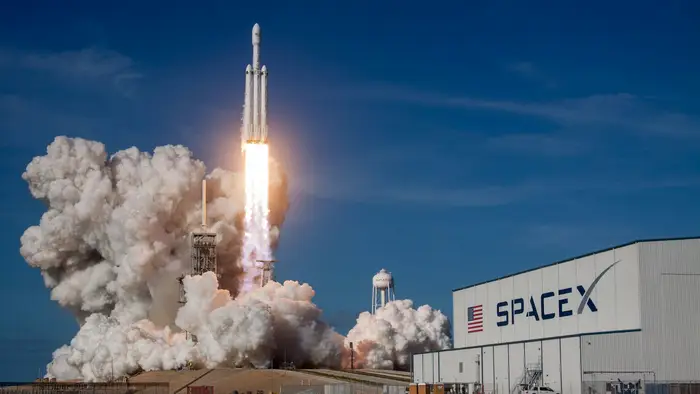
The next step is already crewed and scheduled. NASA has named the Artemis III crew — commander Randy Bresnik, Luca Parmitano, Frank Rubio, and Andre Douglas — and their mission will fly next summer as a dress rehearsal for the landing to come. The crew will stay close to Earth, but the work is the hard part: practicing the rendezvous and docking between Orion and the two lunar landers, one built by SpaceX and one by Blue Origin, that will eventually carry astronauts down to the surface. You can read about that crew in Meet the Artemis III Crew: NASA Names the Astronauts Who Will Rehearse the Moon Landing.
After the rehearsal comes the landing itself. NASA’s accelerated plan, laid out in an October briefing, targets 2028 for Artemis IV, which would put two astronauts down near the lunar south pole — the first Moon landing in more than half a century, and the first ever in the shadowed polar region where water ice hides in permanently dark craters. The full shape of that plan is described in NASA’s Artemis Acceleration: the 2028 Moon Landing Plan After the Big October Update. Underpinning it all is the Space Launch System rocket, which NASA is now working to standardize for a regular flight cadence, as described in Isaacman SLS Path 2030s: NASA’s Plan to Standardize the Moon Rocket.
That is the program the new astronaut class is joining. It is not a program of one-off flags and footprints. The stated goal, repeated in the agency’s announcement, is an enduring human presence on the lunar surface: a Moon Base where astronauts live and work, conducting science, testing the technologies Mars will demand, and learning how to keep people alive far from Earth for months at a time. The astronauts selected in late 2027 will be the generation that staffs that base. Some of them may be the first people to spend a full tour of duty living on another world.
The Mars thread runs through all of it. Every lunar mission in the Artemis program is, in NASA’s framing, a rehearsal for Mars: the same deep-space operations, the same life-support systems, the same long separations from Earth, tested first at a distance of three days’ travel rather than nine months’. Isaacman’s promise that the new class will “help pioneer the systems and operations that will ultimately carry crews to Mars” is not rhetoric. It is the job description.
The Odds — and Why They Should Not Stop You
None of this makes the arithmetic any friendlier. More than 8,000 people applied in 2024. Ten were chosen. That is a selection rate of roughly one in 800 — worse odds than admission to the most selective universities on Earth, and comparable to the odds of being drafted into professional sports. Most applicants who meet every formal requirement will still not be selected, and many superbly qualified people will be rejected without ever reaching an interview.
That is worth saying plainly, because the honest version of this story is not that anyone can become an astronaut. It is that a very specific kind of person can, and that the process rewards preparation more than it rewards dreaming. The candidates who make it through tend to share a pattern: deep technical competence in a field NASA needs, years of real responsibility in difficult environments, a record of working in teams under pressure, and the kind of judgment that shows up in the second interview, when the questions stop being about resumes and start being about character.
It is also worth saying that the application itself is free, the window is open now, and the cost of trying is a few hours of paperwork. The cost of not trying is never knowing. NASA’s own history is full of astronauts who applied more than once — the agency has never penalized a second attempt, and several of its most accomplished fliers were rejected the first time they tried. The class of 2026 is the first call since 2024; there is no guarantee about when the next one will come, and the missions it feeds are already on the calendar.
There is a broader point, too, about what an open call like this does for a country that is returning to the Moon. Each astronaut selection is a public moment: thousands of engineers, doctors, pilots, teachers, and scientists measure themselves against the standard and decide whether to try. Even the ones who are not selected carry something back into their work — a sharper sense of what excellence looks like, and of what the nation is asking its best people to do. A program that aims to keep humans on the Moon permanently needs more than a dozen new astronauts. It needs a pipeline, and a pipeline starts with a deadline.
What Happens After December 3
For applicants, the months after the deadline will be quiet. NASA will spend December through April reading applications — thousands of them, each one a life’s work compressed into a resume and a questionnaire — and the invitations to Houston will go out to a small fraction. Interviews and assessments will test not just knowledge but composure: the Astronaut Selection Board, chaired by Chief Astronaut Scott Tingle, has spent decades refining a process that looks for people who can be trusted with other people’s lives in a place where mistakes are permanent.
For everyone else, the story is worth following for what it reveals about NASA’s ambitions. The size of the applicant pool will be a rough measure of public appetite for the lunar program. The composition of the class, when it is announced in the fall of 2027, will show which skills the agency thinks the Moon Base era demands — how many pilots, how many physicians, how many geologists, how many engineers. And the training of the class, beginning in the winter of 2027–2028, will run in parallel with the most consequential flights in a generation: a docking rehearsal in 2027, a landing attempt in 2028, and the first long stays on the surface after that.
The applications opened on November 7 with a sentence that deserves to be quoted in full, because it captures what is actually on offer. “The window is open,” said Deputy Administrator Matt Anderson. “The mission is waiting. And the only thing missing from the greatest adventure humanity has ever embarked upon is you.” It is a line written for a recruitment poster, and it is also, unusually for a recruitment poster, true. The mission is waiting. The Moon is waiting. And for 26 days, the door is open.