Meet the Artemis III Crew: NASA Names the Astronauts Who Will Rehearse the Moon Landing
The four astronauts walked onto the stage at NASA’s Johnson Space Center in Houston on Tuesday morning to a standing ovation, and then the introductions began — the moment the Artemis program had been building toward for years. NASA Administrator Jared Isaacman named the prime crew for Artemis III: Commander Randolph “Randy” Bresnik, Pilot Luca Parmitano of the European Space Agency, and Mission Specialists Francisco “Frank” Rubio and Andre Douglas. Veteran NASA astronaut Bob Hines was named as the crew’s backup.
The mission they will fly, targeted for 2027, is one of the strangest and most consequential in the history of human spaceflight: a crew of four will launch aboard the Orion spacecraft, spend about two weeks in low Earth orbit — not at the Moon — and practice the rendezvous and docking maneuvers that will one day carry their successors to the lunar surface. Waiting for them in orbit will be test versions of not one but two commercial lunar landers: SpaceX’s Starship and Blue Origin’s Blue Moon.
“Artemis III will demonstrate the power of American innovation and international partnership as we test complex rendezvous and docking operations and advance the technologies that will one day carry us deeper into the solar system,” Isaacman said at the announcement, adding that the flight would demand an unprecedented coordination of heavy-lift launches across government and industry teams.
It was the most important crew announcement since the Artemis program began — and a signal that NASA’s long road back to the Moon, redrawn and reimagined after years of delays and redesigns, is finally taking the shape it will fly.
The commander: Randy Bresnik
If Artemis III is a mission about operational experience, its commander is the embodiment of the idea. Randy Bresnik, a retired U.S. Marine Corps colonel from Santa Monica, California, will be making his third trip to space.
Bresnik’s résumé reads like a catalog of everything NASA values in a commander. He flew to the International Space Station aboard the space shuttle Discovery on STS-129 in 2009, delivering critical spare parts to the outpost. He returned to the station in 2017 as commander of Expedition 52/53, logging months in orbit and conducting multiple spacewalks. He has spent a career making consequential decisions in unforgiving environments — first as a Marine aviator, then as an astronaut.
His assignment carries a particular symmetry. Bresnik was selected as a NASA astronaut in 2004, back when the agency’s human spaceflight program was still flying shuttles and dreaming of the Moon in PowerPoint presentations. More than two decades later, he will command the mission that rehearses the return.
The pilot: Luca Parmitano
The most historically significant name on the roster belongs to the pilot’s seat. Luca Parmitano, an Italian astronaut with the European Space Agency, becomes the first ESA astronaut ever assigned to an Artemis mission — a milestone two decades in the making for Europe’s space program.
Parmitano is no passenger. He has flown twice to the International Space Station, including a 2019 mission on which he became the first Italian — and only the third European — to command the station. A former Italian Air Force test pilot, he is known for cool precision under pressure: during a 2013 spacewalk, his helmet began filling with water from a spacesuit cooling-system leak, and he calmly worked his way back to the airlock, blind, in one of the most harrowing EVA emergencies in NASA history.
His presence on Artemis III is the payoff of Europe’s deep investment in the program. ESA built the European Service Module that powers Orion — the spacecraft’s propulsion, power, and life support — and flew it on Artemis I and Artemis II. Assigning a European to the crew of the mission that will wring out the landers is both a technical choice and a political one: Artemis is an international program, and Parmitano’s seat at the controls says so.
The mission specialists: Frank Rubio and Andre Douglas
Frank Rubio’s name is already in the record books. The NASA astronaut and former Army combat pilot from Miami, Florida, set the American record for the longest single spaceflight in 2023, spending 371 continuous days aboard the International Space Station after his ride home — a Russian Soyuz — was damaged by a micrometeoroid strike and his stay was extended by months. The ordeal made him a national figure and, by accident, the most endurance-tested astronaut in the corps. For a mission that will demand patience, adaptability, and long hours of systems testing, there may be no better-qualified specialist.
Andre Douglas, also of Miami, represents the program’s future. A member of NASA’s 2021 astronaut class, Douglas is preparing for his first spaceflight — and he arrives with unusual preparation: he served as a backup crew member for Artemis II, the crewed lunar flyby that flew this past April, which means he has already trained through an entire Artemis mission cycle. A former systems engineer at the Johns Hopkins Applied Physics Laboratory, where he worked on robotics and planetary defense missions, Douglas brings a builder’s understanding of the hardware he will now fly.
Rounding out the team, backup astronaut Bob Hines — a U.S. Air Force veteran who has flown once to the space station — will train alongside the prime crew and step in if any member is unable to fly.
A mission unlike any before it
To understand why Artemis III matters, you have to understand how radically NASA’s Moon plans have changed.
The original vision, inherited from the early 2020s, had Artemis III landing astronauts on the lunar surface. That plan did not survive contact with reality. Development of the commercial landers slipped; the lunar Gateway station was scrapped in February 2026; and NASA concluded that attempting a landing before the hardware was ready would be reckless. So the agency did something pragmatic: it turned Artemis III into a dress rehearsal.
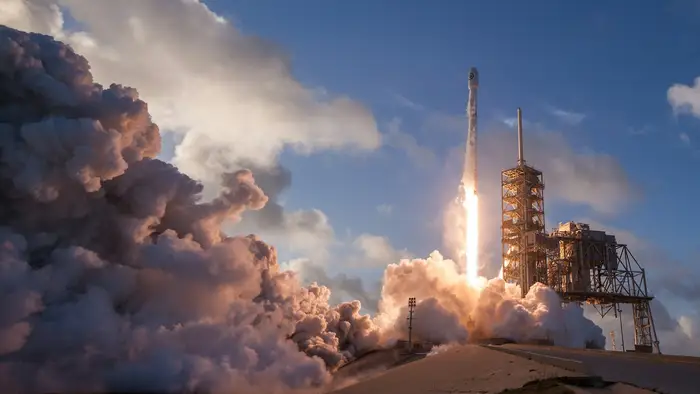
The mission profile is genuinely novel. The Space Launch System rocket will loft Orion and its four-person crew from Kennedy Space Center into low Earth orbit — not toward the Moon. After Orion’s systems are checked out, the spacecraft will, for the first time, demonstrate rendezvous and docking with test versions of the commercial human landing systems: SpaceX’s Starship and Blue Origin’s Blue Moon, or whichever of the two is ready. The crew will test the hardware interfaces between Orion and the landers — docking mechanisms, software, propulsion, communications — the unglamorous connective tissue on which every future landing depends.
They will also evaluate the Axiom Extravehicular Mobility Unit, the new lunar spacesuit, in the weightlessness of Earth orbit — wringing out a suit designed for the Moon in the safest possible proving ground.
The logic is straightforward: every rendezvous, every docking, every suit checkout that goes wrong in low Earth orbit is a problem that does not go wrong a quarter-million miles from home. NASA officials have described Artemis III as one of the most complex human spaceflight missions ever attempted — not because of where it goes, but because of how many vehicles, companies, and control centers must work in concert. Isaacman’s phrase — “the most awe-inspiring coordination of heavy-lift rocket launches in history” — was not hyperbole. Between SLS, the lander launches, and their refueling and support flights, Artemis III will require a choreography of heavy lift that no one has ever attempted.
And the stakes of the rehearsal are explicit. If only one lander is ready by the 2027 window, it will fly with Artemis III — and that lander will very likely be the one that carries astronauts to the lunar surface on Artemis IV, now targeted for 2028. In other words, Artemis III is not just a test. It is an audition, and both SpaceX and Blue Origin know it.

The new Artemis timeline
The crew announcement landed in the middle of a year that has already rewritten the Artemis story once. This past April, Artemis II carried four astronauts around the Moon and back — the first crewed lunar flyby in more than half a century — and returned them safely, restoring a momentum the program had been chasing for years. Then came the February decision to scrap the Gateway station, the small lunar-orbit outpost that had been central to NASA’s plans, in favor of a leaner architecture that puts landers, not waystations, at the center.
The timeline Isaacman laid out on June 9 reflects that new architecture. Artemis III is targeted for 2027 — the agency had already shifted the target from “early 2027” to “late 2027” as Starship and Blue Moon development slipped, though Isaacman has stressed he is aiming for mid-2027, telling reporters the mission would fly “by this time next year.” Artemis IV, the first crewed landing at the Moon’s south pole, is projected for 2028. Whether that date holds will depend on the landers: should neither be ready for the 2027 window, a 2028 landing becomes unlikely, and NASA’s plans for a permanent lunar base at the turn of the decade would slide further into the 2030s.
Looming over every schedule is China, which is developing its own crewed lunar program — the Long March 10 rocket, the Mengzhou crew spacecraft, and the Lanyue lander — with a stated goal of landing its astronauts on the Moon around 2030. The Artemis program was conceived, in part, as the American answer. The crew of Artemis III will train knowing that the rehearsal they fly may determine who gets there first.
Training for history
The four astronauts will now spend a year and a half or more in training — longer than most crews get, because the mission they are preparing for has never been flown. Much of it will happen in the Orion simulator at Johnson Space Center, where Bresnik, Parmitano, Rubio, and Douglas will drill procedures and real-time failure scenarios until the responses are reflexive. A full-scale Blue Moon training mockup recently installed at JSC will let them rehearse the docking and hatch operations they will perform in orbit.
They will also embed with the lander teams themselves, assisting in the development and operations of the test vehicles SpaceX and Blue Origin are building. That is a break from tradition: astronauts training not just on NASA hardware but inside the factories and design reviews of commercial partners, learning the quirks of vehicles that were conceived in Hawthorne and Kent rather than Houston.
The simulator work will be relentless. Docking two spacecraft that have never docked before — with flight software written by different companies, on timelines measured in seconds — leaves no room for improvisation. The crew will rehearse nominal approaches and every abort mode engineers can imagine: a thruster that fails to fire, a sensor that disagrees with its twin, a communications dropout at the worst possible moment. They will practice in the suits they will wear, on the timelines they will fly, until the choreography holds even when the script breaks.

The arrangement reflects how thoroughly the Artemis program has changed the relationship between NASA and industry. The agency no longer owns the landers; it buys the service. The astronauts are, in a real sense, the interface between two engineering cultures — and the crew NASA chose, mixing a Marine commander’s operational judgment, a test pilot’s precision, a record-holder’s endurance, and a rookie’s builder’s mind, looks designed for exactly that role.
Hardware taking shape
While the crew trains, the hardware is coming together across the country. Elements of the Artemis III Space Launch System are already taking physical shape: the main stage propellant tank arrived at Kennedy Space Center in April, and the final segments of the solid rocket boosters recently left Northrop Grumman’s manufacturing facility aboard a train bound for Florida, where they will be stacked and integrated with the vehicle.
Orion itself is at Kennedy, undergoing final assembly and testing inside the Neil Armstrong Operations and Checkout Building. Engineers plan to connect the crew module and service module this summer and integrate the spacecraft’s docking system — which will fly for the first time on Artemis III. Heat shield testing continues, with individual blocks undergoing ultrasonic inspection before installation onto the shield structure, a painstaking process born of the lessons of earlier flights.
Each of these milestones is, in its own way, a small bet that the 2027 date can hold. NASA officials have voiced confidence, but confidence in this program has always been a leading indicator rather than a guarantee.
The international dimension
Parmitano’s assignment deserves a final note, because it signals something larger than one crew slot. For decades, human expeditions beyond low Earth orbit were an American — and, briefly, Soviet — monopoly. Artemis was designed from the start to break that pattern, and the European Service Module was Europe’s down payment: without it, Orion does not fly.
Putting a European in the pilot’s seat of the mission that qualifies the landers is the program’s way of saying the partnership is real, not ceremonial. It also sets a precedent. If Artemis IV lands in 2028, the crew of the first landing will be chosen from a corps that now demonstrably includes Europeans — and the selection will be watched as closely in Paris, Rome, and Berlin as in Houston.
There is a symmetry worth savoring. When Apollo ended, the Moon belonged to flags and footprints. The program now preparing to go back speaks instead of bases, science, and “all of its scientific, its economic potential,” as Isaacman put it on June 9 — and of mastering, deliberately and carefully, the skills for wherever humanity goes next.
That is what Artemis III is: a rehearsal, a test, an audition, and a promise, flown by four people in low Earth orbit, watched by two lander companies, two space agencies, and one rival on the other side of the Pacific. Bresnik, Parmitano, Rubio, and Douglas will not land on the Moon. But if everything they are about to practice works the way it is supposed to, someone will — and soon. The countdown, in every sense, has begun.