Artemis II Crew Retire November 2026: All Four Astronauts Step Away After Historic Moon Flyby
Seven months after they flew farther from Earth than any humans in history, the four astronauts of Artemis II have all stepped away from active spaceflight. The crew that carried humanity back toward the Moon in April 2026 — commander Reid Wiseman, pilot Victor Glover, mission specialist Christina Koch, and Canadian Space Agency astronaut Jeremy Hansen — has now scattered into new careers in university leadership, agency engineering, and the laboratory that builds NASA’s robotic explorers. The last piece of the picture fell into place this week, when Wiseman’s next job was announced: on November 30 he will become associate vice president at Caltech and deputy director of NASA’s Jet Propulsion Laboratory in Pasadena, California.
It is a remarkable ending for a remarkable crew. Artemis II was NASA’s first crewed mission under the Artemis program and the first human flight around the Moon in more than half a century. The four astronauts rode the Orion spacecraft around the far side of the Moon and back without landing, testing the vehicle, the Space Launch System rocket, and the life-support systems that future lunar crews will depend on. They came home to a splashdown in the Pacific Ocean on April 10, 2026, having travelled 252,756 miles from Earth — farther than any humans had ever ventured, surpassing a record set by the crew of Apollo 13 in 1970. Now, barely seven months later, not one of them remains eligible for another flight. Their mission is complete, their retirements are announced, and the Moon program they reopened belongs to the next crew.

The flight that ended a 53-year wait
Artemis II lifted off on April 1, 2026, at 6:35 p.m. EDT from Launch Pad 39B at NASA’s Kennedy Space Center in Florida. The 322-foot Space Launch System, the most powerful rocket NASA has ever flown, carried the Orion spacecraft and its four astronauts into orbit and then pushed them on a trajectory toward the Moon. The mission lasted 9 days, 1 hour, and 32 minutes — about ten days from launch to splashdown — and it did exactly what it was designed to do: prove that Orion could carry people around the Moon and bring them home safely.
The crew did not land. That was never the plan. Artemis II was a flyby, a deliberate shakedown cruise for the hardware that will one day put astronauts back on the lunar surface. Orion looped around the Moon, using lunar gravity to slingshot back toward Earth, and along the way it gave engineers their first real data on how the spacecraft behaves with a crew aboard — how its life-support systems perform over ten days in deep space, how its heat shield handles the searing return through the atmosphere, and how four people live and work inside a capsule far beyond the reach of any rescue.
The numbers the mission produced still startle. At their farthest point, Wiseman, Glover, Koch, and Hansen were 252,756 miles from Earth, breaking the distance record Apollo 13 set during its crippled 1970 flight. During the lunar flyby they passed as close as 4,067 miles above the Moon’s surface, looking down on terrain no human eyes had seen directly — the far side, which never faces Earth. On April 6, 2026, at 6:41 p.m. EDT, Koch photographed an Earthset through Orion’s window: a muted blue Earth with bright white clouds sinking behind the cratered lunar surface, the dark half of the planet in night, swirling clouds visible over Australia and Oceania, and the terraced walls of Ohm crater in the foreground. It was one of the defining images of the mission, and one of the most widely shared photographs of the year.
The return was as precise as the departure. Orion splashed down in the Pacific Ocean off the coast of California on April 10, and the crew was extracted onto the deck of the USS John P. Murtha. Wiseman, photographed celebrating on the ship’s flight deck that day, looked like a man who had just finished the hardest job of his life. In a sense, he had. What nobody knew then was that the flight deck of the Murtha would be the last time the four of them stood together as active astronauts.
Four astronauts, four new chapters
The departures came one by one, in a sequence that now reads like a coordinated handover. In July, Jeremy Hansen said he would step back from a full-time astronaut role with the Canadian Space Agency. In September, Wiseman and Glover jointly announced that they would transition to NASA’s emeritus astronaut program. In October, NASA announced that Koch would become the agency’s acting deputy chief engineer, effective November 1. And on October 28, at a space-related event hosted at Caltech, a recorded video message from Wiseman revealed the final destination: Pasadena, and the Jet Propulsion Laboratory.
Each of the four has landed somewhere different, and each of the four moves tells its own story about where human spaceflight is heading.
Hansen, who became the first Canadian selected for a Moon mission, retired from active astronaut duty with the Canadian Space Agency. According to the CSA, he is now pursuing new professional opportunities while continuing to serve as a reservist in the Royal Canadian Air Force, and he will remain an ambassador for Canada’s space program and future exploration efforts. His flight was a national milestone for Canada — the first time a Canadian travelled to the Moon — and his retirement closes a chapter that began when he was selected as the crew’s fourth member.
Glover, the pilot of Artemis II, also became a NASA emeritus astronaut in September. He has taken on a full-time administrative leadership role at his alma mater, California Polytechnic State University in San Luis Obispo, where he will advise university leaders, help develop strategic partnerships, and support programs focused on engineering, aerospace, aviation, artificial intelligence, and other fields. He will also serve as an ambassador for the university and help inspire the next generation of STEM students. In an interview with the USA TODAY Network, Glover spoke about the work ahead in terms that sounded less like a retirement than a redeployment: “There are a lot of neat opportunities as we work to grow our science and industrial base, our partnerships with other universities, and our partnerships with corporate America.”
Koch’s move keeps her inside NASA, but on the other side of the flight line. Beginning November 1, she transitioned into a senior leadership role as NASA’s acting deputy chief engineer, where she will help oversee technical standards, mission readiness, and engineering efforts across the agency’s programs. The move places her in management astronaut status, which means she will no longer be eligible for future spaceflight assignments. It is a significant post — the deputy chief engineer helps set the engineering bar for every NASA mission — and it puts one of the most experienced astronauts of her generation in charge of making sure the next ones fly safely.
Wiseman’s destination is the most striking of all. Effective November 30, he will become associate vice president at Caltech and deputy director at NASA’s Jet Propulsion Laboratory in Los Angeles County, serving in a leadership role overseeing laboratory operations and “mission execution,” according to NASA and JPL. JPL, founded by Caltech, is NASA’s only federally funded research and development center — the laboratory that built the Voyager spacecraft, the Mars rovers, and the telescopes that now watch the distant universe. The commander of the first crewed lunar flyby in half a century will help run the laboratory that sends robots where humans cannot yet go.
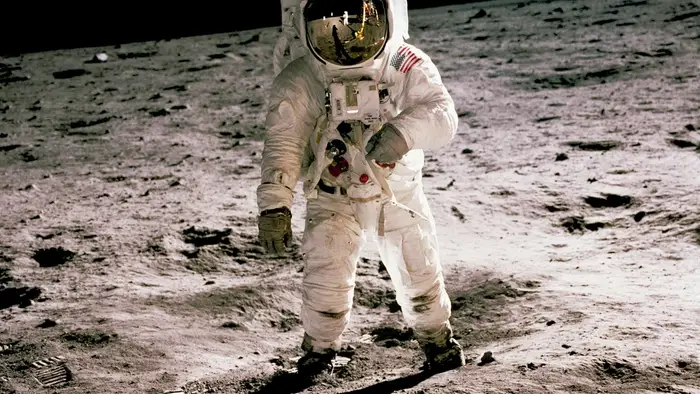
The commander heads to Pasadena
Wiseman’s appointment was announced on October 28 at a space-related event hosted at Caltech, where a recorded video message from the commander was shown to the crowd. In it, Wiseman framed his new job not as a departure from exploration but as a change of altitude — from flying the missions to building the machines that make the next ones possible.
“I’ve explored the furthest reaches of what a human can explore at NASA,” Wiseman said in the video. “But that experience was really the jumping-off point to go do the impossible things that Caltech and JPL dream, dare together, and do for NASA and the nation.”
The praise from the institutions he is joining was effusive. “Reid brings to Caltech and JPL a truly unprecedented view of what humanity can achieve when ingenuity and determination are matched with the courage to pursue the furthest frontiers,” Caltech President Ray Jayawardhana said in a statement. “His pioneering spirit coupled with unbounded curiosity make him a natural fit.”
NASA Administrator Jared Isaacman lauded Wiseman for a career spent “at the edge of what is possible,” adding: “Reid is joining a storied laboratory that has made an enormous amount of history, and there is a lot more ahead.”
Wiseman’s career makes the appointment easy to understand. A decorated veteran Navy aviator, the 50-year-old from Baltimore served on two deployments to the Middle East and trained as a test pilot before he was selected as a NASA astronaut in 2009. He had already been to space once before Artemis II: in 2014, he spent about six months at the International Space Station, completed two spacewalks, and helped the crew set a station record by completing 82 hours of research in a single week. He is a single father of two children, having lost his wife, Carroll Taylor Wiseman, in 2020 to cancer. His two spaceflights bookend a career that took him from carrier decks to the far side of the Moon — and now to the laboratory that has guided NASA’s robotic exploration of the solar system for decades.
The emeritus program he and Glover joined in September is designed precisely for this kind of transition. It allows former astronauts with specialized expertise to continue supporting the agency by training and mentoring current employees while pursuing other professional opportunities. Although Wiseman is no longer eligible for future spaceflight assignments, NASA said his knowledge will be especially valuable as the agency prepares for Artemis III and future lunar missions. The commander of the last lunar flyby will be teaching the crews of the next ones — even if his own classroom is now a laboratory in Pasadena rather than a spacecraft in orbit.
Artemis II by the numbers
The mission’s legacy can be measured in the figures it left behind. Each one comes from the flight itself and from the records NASA and its partners published as the crew’s retirements were announced.
| Artemis II key figure | Value |
|---|---|
| Launch date and time | April 1, 2026, 6:35 p.m. EDT |
| Launch site | Pad 39B, Kennedy Space Center, Florida |
| Rocket | Space Launch System, 322 feet tall |
| Spacecraft | Orion |
| Crew | 4 — Wiseman, Glover, Koch, Hansen |
| Mission duration | 9 days, 1 hour, 32 minutes |
| Farthest distance from Earth | 252,756 miles |
| Closest approach to the Moon | 4,067 miles above the surface |
| Splashdown | April 10, 2026, Pacific Ocean off California |
| Recovery ship | USS John P. Murtha |
| Years since last crewed lunar flight | More than 50 (since Apollo 17, 1972) |
| Wiseman’s new role begins | November 30, 2026 |
| Koch’s new role began | November 1, 2026 |
The distance figure deserves a moment of its own. Apollo 13’s record had stood for 56 years, set under the worst possible circumstances — a crippled spacecraft limping home around the Moon on a free-return trajectory. Artemis II broke it deliberately, on a planned trajectory, with a healthy spacecraft and a crew that spent the time doing science and testing systems. That is the difference between a record set by accident and a record set by design, and it is a fair summary of what the whole Artemis program is trying to do: turn the extraordinary into the routine.
A crew that made history
Beyond the records, the Artemis II crew carried a symbolic weight that no previous lunar crew had borne. Three of the four astronauts made individual history simply by being selected. Hansen became the first Canadian chosen for a Moon mission. Koch became the first woman assigned to a lunar mission. Glover became the first Black man assigned to one. The crew portrait — Koch, Wiseman seated, Glover, and Hansen — became one of the most reproduced images in NASA’s recent history, and it was no accident that it looked different from the all-male, all-American crews of Apollo. NASA has been explicit that Artemis is meant to represent a broader humanity than the program that first went to the Moon, and this crew was the proof.
That symbolism is part of why their collective departure feels significant. The four people who embodied the new face of lunar exploration will not fly again. The program moves on — new crews, new missions, new portraits — but the first crew of the new era is already history. Their retirements also underscore something about the pace of the program: Artemis II flew in April 2026, and by November its entire crew had moved on. The gap between Artemis II and Artemis III, scheduled for 2027, is short by the standards of human spaceflight, and the people who flew the test flight will be watching the next one from offices, classrooms, and laboratories rather than from inside Orion.
It is worth remembering, too, that the mission’s scientific footprint extends beyond the crew. The launch itself left a mark on the sky that researchers are still studying: the SLS ascent carved a disturbance in the ionosphere stretching about 5,000 kilometres across North America, with ground GPS stations recording positioning errors of several metres — a scar in the upper atmosphere up to ten times stronger than those left by SpaceX Starship test flights, according to a new preprint. Read more in Artemis II Ionosphere Hole: SLS Launch Carved a 5,000 km Scar in the Sky. The crew’s flight, in other words, is still generating science months after splashdown, even as the crew themselves move into new lives.

The view from the far side
For all the career news, the mission itself deserves to be remembered on its own terms. Artemis II was the first time humans had travelled beyond low Earth orbit since Apollo 17 returned in December 1972 — a gap of more than 53 years. For most of the people alive today, it was the first time anyone they knew, anyone from their generation, had left Earth’s neighbourhood at all. The International Space Station orbits about 250 miles up. Artemis II went a thousand times farther.
The crew’s work during the flight was deliberately unglamorous and deliberately essential. They tested Orion’s life-support systems over ten days, verified the spacecraft’s navigation and communication links at lunar distance, and rehearsed the procedures that will keep future crews alive on longer missions. They photographed the Moon’s far side from close range — terrain that had been mapped by robots but never seen directly by human eyes from that distance. And they brought back the Earthset image from April 6, a photograph that belongs in the small gallery of pictures that changed how humanity sees itself: Earth rising, or in this case setting, over another world, with the cratered Moon in the foreground and the whole of human history contained in a blue disc sinking toward the horizon.
The flight also proved something about the hardware. The Space Launch System, a rocket whose development was marked by years of delays and cost overruns, performed on the day it mattered. Orion’s heat shield survived the fastest re-entry of a crewed spacecraft in the program’s history. The ground systems at Kennedy, the recovery fleet in the Pacific, and the flight control teams in Houston all worked as designed. A test flight that finds no major problems is, paradoxically, the best possible result — it means the vehicle is ready for the harder missions ahead, and it means the crew’s ten days in deep space were spent confirming a design rather than improvising around its failures.
That is the context in which to understand the retirements. Artemis II was a test flight, and test flights are flown by the most experienced people available. Wiseman, Glover, and Koch were all veterans; Hansen was a first-time flyer but a seasoned test pilot and fighter pilot. Once the test is done, the test pilots hand the aircraft to the operational squadrons. In this case, the handover is literal: the next crew has already been named, and the test crew is dispersing into the institutions that will build, manage, and teach the missions to come.
What comes next: Artemis III and the road to 2028
The program the Artemis II crew is leaving behind has changed substantially since their flight. NASA has scrapped the Lunar Gateway station, repurposed Artemis III as an orbital dress rehearsal, and set two commercial landers racing toward a 2028 Moon landing. The full picture of that reworked plan is laid out in Six Months After Artemis II: Inside NASA’s Reworked Plan to Put Astronauts Back on the Moon.
Artemis III itself is scheduled to launch in 2027 with NASA astronauts Randy Bresnik, Andre Douglas, and Frank Rubio, along with European Space Agency astronaut Luca Parmitano. Meet them in Meet the Artemis III Crew: NASA Names the Astronauts Who Will Rehearse the Moon Landing. The mission will conduct a series of tests in low Earth orbit, including rendezvous and docking operations between NASA’s Orion spacecraft and the commercial lunar lander systems developed by SpaceX and Blue Origin. Artemis III will not land astronauts on the Moon. Instead, it will test the critical systems needed for Artemis IV, which NASA currently identifies as the mission intended to return astronauts to the lunar surface in 2028.
That timeline gives the Artemis II crew’s departures their final meaning. Wiseman will be at JPL when Artemis III flies, overseeing the laboratory that builds the robotic spacecraft. Koch will be in NASA’s engineering leadership, setting the technical standards the mission must meet. Glover will be at Cal Poly, training the engineers who will build the missions after that. Hansen will be in Canada, speaking for a space program that now has a lunar veteran of its own. None of them will be aboard. All of them will be part of it anyway — which is, in the end, how exploration works. The people who go first rarely go again. Their job is to make it possible for everyone who follows.

Timeline: from launch to new beginnings
- 2009 — Reid Wiseman is selected as a NASA astronaut after a Navy career as a fighter pilot and test pilot with two deployments to the Middle East.
- 2014 — Wiseman spends about six months aboard the International Space Station, completes two spacewalks, and helps his crew set a station record of 82 hours of research in a single week.
- April 1, 2026, 6:35 p.m. EDT — Artemis II launches from Pad 39B at Kennedy Space Center, carrying Wiseman, Glover, Koch, and Hansen around the Moon.
- April 6, 2026, 6:41 p.m. EDT — The crew photographs an Earthset through Orion’s window, with the Moon’s Ohm crater in the foreground.
- April 10, 2026 — Orion splashes down in the Pacific Ocean off California; the crew is recovered aboard the USS John P. Murtha.
- July 2026 — Jeremy Hansen steps back from a full-time astronaut role with the Canadian Space Agency.
- September 2026 — Wiseman and Glover jointly announce their transition to NASA’s emeritus astronaut program.
- October 2026 — NASA announces Christina Koch will become acting deputy chief engineer, effective November 1.
- October 28, 2026 — Caltech announces Wiseman will become its associate vice president and deputy director of NASA’s Jet Propulsion Laboratory.
- November 1, 2026 — Koch begins her role as NASA’s acting deputy chief engineer.
- November 30, 2026 — Wiseman officially begins his dual role at Caltech and JPL.
- 2027 — Artemis III is scheduled to launch with its four-person crew to test rendezvous and docking with commercial lunar landers.
- 2028 — Artemis IV is currently identified as the mission intended to return astronauts to the lunar surface.

The first crew is already history
There is a photograph from April 10, 2026, of Reid Wiseman celebrating on the flight deck of the USS John P. Murtha, minutes after being lifted out of the Pacific. He is soaked, grinning, and surrounded by the recovery team. It is the picture of a man who has just done the thing he spent his whole life preparing to do. Seven months later he is preparing to do something else entirely — to run a laboratory, to oversee missions he will never fly, to help build the machines that will go where he no longer can.
That is the bargain at the heart of every exploration program. The pioneers go first, and then they make way. Apollo’s crews scattered too — into business, into politics, into teaching, into quiet retirements — and the program went on without them, carried by the people they had shown the way. Artemis II’s crew is scattering faster than Apollo’s did, because the program is moving faster and because the work waiting for them is more urgent. A laboratory needs a deputy director. An agency needs a deputy chief engineer. A university needs a leader for its aerospace programs. A country needs an ambassador for its space program.
They flew farther than any humans in history, came home safely, and proved that the spacecraft works. Then, one by one, they hung up their spacesuits and went to work on what comes next. The Moon is still there, waiting. The next crew is already named. And the first crew of the new lunar age — the four who ended a 53-year wait — is already history, which is exactly what pioneers are for.