ESCAPADE Earth Flyby November 2026: NASA's Twin Probes Slingshot to Mars in a First-of-Its-Kind Maneuver
In a few days, NASA is about to attempt something no agency spacecraft has ever flown before — and then do it twice. The twin spacecraft of the ESCAPADE mission, Blue and Gold, will each swing past Earth, fire their engines at the moment of closest approach, and use our planet’s gravity to slingshot themselves toward Mars. The first spacecraft will make its move around 5 a.m. EST on Saturday, November 7, and the second will follow two days later, around 6 a.m. EST on Monday, November 9. If both burns go as planned, the pair will begin a ten-month cruise to the Red Planet, arriving in September 2027 as the first multi-spacecraft mission ever to fly in formation around another world.
NASA announced the maneuver in a November 2 update from the agency’s Goddard Space Flight Center, describing it as a “powered” flyby — a combination of Earth’s gravity and an engine burn that no Mars-bound spacecraft has successfully executed before. Spacecraft have used Earth flybys to reach other destinations for decades, but none has ever fired its engine at closest approach on the way to Mars. The maneuver is formally known as an Oberth maneuver, named for the physicist who showed that a rocket engine delivers its greatest benefit when fired at the fastest point of a trajectory, deep inside a planet’s gravity well. ESCAPADE will test that century-old piece of orbital mechanics in the most literal way possible: by lighting its engine while screaming past its own home planet.
A year in waiting, a nine-minute burn
The numbers behind the flybys are striking. As each spacecraft reaches its closest point to Earth, it will fire its engine for about nine minutes in what NASA calls a trans-Mars injection burn. That burn will raise each spacecraft’s speed by more than 1,000 miles per hour, from about 6.3 miles per second to about 6.7 miles per second — from roughly Mach 30 to Mach 31. At that final speed, NASA notes, a spacecraft could fly from Washington, D.C., to San Francisco in less than seven minutes.
At closest approach, the two spacecraft — each about the size of a standard refrigerator — will pass between 600 and 1,100 miles above Earth’s surface, higher than most Earth-orbiting satellites. The engine burns will take place as the spacecraft fly over southern Australia. The first spacecraft’s burn will begin at 4:51 a.m. EST on November 7, which is 8:51 p.m. Australian Eastern Daylight Time that evening; the second spacecraft’s burn will begin at 5:51 a.m. EST on November 9, or 9:51 p.m. AEDT. Skywatchers with telescopes in Australia should be able to spot the spacecraft during the burns, and observers in the western United States may catch them in the hours before: NASA says the first spacecraft will likely be brightest between midnight and 1 a.m. PST in the early morning of November 7, and the second between 1 and 2 a.m. PST on November 9. Both will appear as dim points drifting slowly across the sky, taking several hours to cross from east to west overhead. Anyone hoping to track them can get coordinates for their location from NASA’s Jet Propulsion Laboratory Horizons System.
Several days after the burns, the mission team will know how precisely the spacecraft are aimed at Mars. Trajectory correction maneuvers during the cruise will fine-tune the path, keeping the pair on course for their rendezvous with the Red Planet on September 7 and September 9, 2027, respectively. The two arrivals are staggered by two days because the two flybys are staggered by two days — Blue goes first, Gold follows, and the formation they will fly at Mars preserves that spacing.

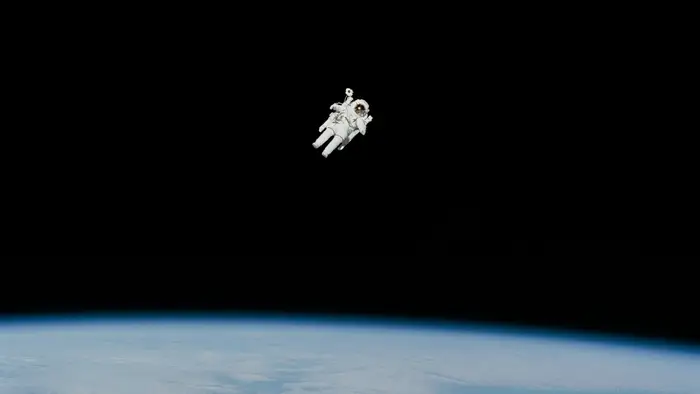
Earth’s gravity will accelerate the ESCAPADE spacecraft and redirect them toward Mars. Image: Unsplash.
Why ESCAPADE waited a year to leave
ESCAPADE’s strange route to Mars is the whole point of the mission’s design. The twin spacecraft launched on November 13, 2025, when Earth and Mars stood on opposite sides of the Sun — about the worst possible geometry for a trip to Mars. A conventional Mars mission launches only when the two planets line up, a window that opens roughly every 26 months, so that the spacecraft can fly a short, fuel-efficient transfer orbit. ESCAPADE deliberately broke that rule.
Instead of heading straight for Mars, the two spacecraft flew out to a kidney-bean-shaped loop around the Earth-Sun Lagrange point 2, a gravitationally balanced region about 1.5 million kilometers from Earth in the anti-sunward direction, and waited there in what the team calls a loiter orbit. For nearly a year they circled in Earth’s neighborhood while the planets drifted back into alignment. Now that alignment has arrived, the spacecraft are falling back toward Earth to steal a gravitational boost and fire their way onward.
The strategy, if it works, rewrites the launch calendar for Mars. Rather than waiting for a 26-month window, future missions could launch almost any time, park near Earth, and depart when the geometry is right. It is a trade: a longer total journey and a more complex flight plan in exchange for freedom from the tyranny of the launch window. ESCAPADE is the first mission built to prove that trade is worth making, and the November flybys are the moment of proof. The trans-Mars injection burn marks the end of the mission’s first phase and the start of its interplanetary cruise.
The detour has already paid scientific dividends. On their way around the Lagrange point, the two spacecraft flew through a distant region of Earth’s magnetotail — the part of Earth’s magnetic environment stretched away from the Sun by the solar wind — traveling roughly 2 million kilometers into the tail, several hundred thousand kilometers farther than any previous mission. No spacecraft had directly explored that part of the magnetotail before. Mission scientists report that ESCAPADE observed interesting activity and structure there, and they plan to share those findings soon. It is a fitting preview: a mission built to study how the solar wind interacts with a planet’s magnetic environment has already sampled one on the way to its real target.
What Blue and Gold will do at Mars
ESCAPADE stands for Escape and Plasma Acceleration and Dynamics Explorers, and its science goal is one of the oldest mysteries in planetary science: how Mars lost its atmosphere, and with it, its liquid water. Billions of years ago, Mars was warm and wet enough for rivers and lakes. Today its atmosphere is a thin wisp, less than one percent as dense as Earth’s. The prime suspect is the solar wind — the million-mile-per-hour stream of charged particles flowing from the Sun — which has spent eons stripping atoms from the top of the Martian atmosphere and carrying them away into space.
Mars makes an especially interesting case because its magnetic environment is unlike Earth’s. Earth has a global magnetic field that deflects much of the solar wind. Mars has no global field today, only patches of magnetism frozen into its crust, producing what scientists call a “hybrid” magnetosphere. Understanding exactly how the solar wind penetrates that patchwork, accelerates particles, and drives atmospheric escape requires measurements in two places at once — upstream in the solar wind and downstream near Mars — taken at the same time. A single spacecraft can only be in one place, so it can never tell whether a change it sees came from the Sun or from Mars itself.
That is why ESCAPADE flies two spacecraft. At Mars, Blue and Gold will fly in formation, initially in a “string of pearls” configuration that lets them sample the same region of the magnetosphere a few minutes apart. One spacecraft will measure the incoming solar wind while the other measures its effects near Mars, giving scientists the first stereo view of Martian space weather. The mission’s objectives are to investigate the hybrid magnetosphere, to study how the solar wind strips the atmosphere over time, to determine how the solar wind interacts with the magnetic environment, and to map the key features of that interaction in detail.
The two-spacecraft approach mirrors a broader shift in heliophysics toward multipoint measurements. Missions that study Earth’s magnetic environment have shown how much can be learned when two observers watch the same event from different positions, and ESCAPADE extends that logic to another planet for the first time. The data will feed directly into models of atmospheric escape, which in turn shape our understanding of how Mars evolved from a habitable world into the desert it is today — and of how other planets around other stars might lose their atmospheres too.
ESCAPADE launched aboard Blue Origin’s New Glenn rocket in November 2025. Image: Unsplash.
A mission that refused to die
ESCAPADE’s path to the launch pad was nearly as winding as its path to Mars. The mission was originally supposed to share a ride into space with NASA’s Psyche asteroid mission in 2022, which would have sent the twins directly to Mars on a conventional trajectory. When Psyche was switched to a different launch vehicle, ESCAPADE lost its ride. It was then moved to the first flight of Blue Origin’s New Glenn booster, but technical issues scuttled that plan as well.
What followed was a redesign that turned a setback into the mission’s defining feature. Rather than wait for another direct Mars window, the team embraced the loiter strategy: launch when a rocket was available, wait near Earth, and depart when the planets aligned. The spacecraft finally launched on November 13, 2025, aboard the second flight of Blue Origin’s New Glenn rocket from Space Launch Complex 36 at Cape Canaveral Space Force Station, lifting off at 3:55 p.m. EST after weather and space-weather delays earlier in the week. Minutes after stage separation, the rocket’s first stage — nicknamed “Never Tell Me the Odds” — touched down on Blue Origin’s autonomous landing ship Jacklyn in the Atlantic, the first sea landing for New Glenn and a reuse milestone on only the vehicle’s second orbital mission. Spacecraft deployment followed about 33 minutes after liftoff, and the twin probes began their precisely choreographed Earth-proximity phase.
The spacecraft themselves were built by Rocket Lab in approximately three and a half years — roughly half the timeline of a standard planetary mission — under NASA’s SIMPLEx program, which funds small, higher-risk interplanetary missions on compressed schedules. Key instruments were led by the University of California, Berkeley, and the mission’s project scientist is Shannon Curry. The informal names Blue and Gold nod to Berkeley’s colors, a fitting touch for a mission led scientifically from the university. The compressed build, the low-cost SIMPLEx framework, and the improvised trajectory together make ESCAPADE a test case for a faster, cheaper way to do planetary science — one that does not wait politely for the planets to cooperate.
That context matters for what happens next in Mars exploration. The agency’s Mars ambitions are being reshaped by cost pressure and competing priorities, and missions that can fly sooner and cheaper have an obvious appeal. ESCAPADE’s success or failure at the November flybys will therefore be watched well beyond its own science team: it is a demonstration that a small mission, built quickly, can rewrite its own route to Mars on the fly. For readers following the broader Mars program, the shifting economics of Red Planet missions are already visible in recent coverage of the cancelled Mars Sample Return effort and the race it left behind, and in the parallel story of New Glenn’s own comeback as a heavy-lift launcher — the very rocket that carried ESCAPADE off Earth. The twins’ original ride, meanwhile, went on to its own adventures, as chronicled in Psyche’s cruise to its metal asteroid target.
The physics of a powered flyby
To appreciate what ESCAPADE is attempting, it helps to understand why firing an engine at closest approach is so powerful. In orbital mechanics, a spacecraft moves fastest at the lowest point of its orbit around a body — its periapsis. The Oberth effect, described by Hermann Oberth in the 1920s, states that a rocket burn produces the greatest change in orbital energy when performed at the highest velocity, because the propellant’s kinetic energy adds to the energy the spacecraft already has. A burn at periapsis is therefore worth more than the same burn anywhere else on the trajectory.
A gravity assist adds a second benefit. As a spacecraft falls toward a planet, the planet’s gravity accelerates it; as it climbs away, gravity decelerates it by the same amount, so a pure flyby changes direction more than speed relative to the Sun. But combine the two — fire the engine at the bottom of the gravity well, where speed is highest and the Oberth effect is strongest — and the spacecraft leaves with more energy than either technique could deliver alone. That is the powered flyby: gravity supplies the speed, the engine cashes it in.
The catch is precision. The burn must begin at exactly the right moment, last exactly the right duration, and point in exactly the right direction, because the spacecraft is moving at more than six miles per second and the window for the maneuver is measured in minutes. A burn too early or too late, or a pointing error of a fraction of a degree, would send the spacecraft onto a trajectory that misses Mars entirely. The mission team will spend days after each burn measuring the result, and trajectory correction maneuvers during the cruise exist precisely to absorb small errors. But the first burn, on November 7, is the one that cannot be rehearsed: it is the first time any agency spacecraft has attempted it.
There is also a subtler risk. ESCAPADE’s two spacecraft must perform the maneuver independently, two days apart, and arrive at Mars two days apart in matching formation geometry. Each spacecraft is its own machine with its own navigation solution, and the formation flying at Mars depends on both arriving correctly. The staggered schedule gives the team a chance to learn from the first flyby before the second — a small but real advantage of flying twins.

Each ESCAPADE spacecraft is about the size of a refrigerator and will pass 600 to 1,100 miles above Earth. Image: Unsplash.
What to watch for this week
For the public, the flybys offer a rare chance to watch an interplanetary departure in real time. Because the spacecraft will pass relatively close to Earth and fire their engines over southern Australia in the local evening, telescopes in Australia have the best view of the burns themselves. In the western United States, the spacecraft should be visible in the hours before each burn, brightest in the small hours of the morning — midnight to 1 a.m. PST on November 7 for the first spacecraft, and 1 to 2 a.m. PST on November 9 for the second — before slipping below the horizon about an hour before the engine lights. They will be faint, and a telescope will most likely be needed, but they will move slowly enough to follow across the sky over several hours.
NASA’s update frames the event plainly: in a few days, a maneuver that no agency spacecraft has flown before, performed twice. The phrasing is deliberate. Gravity assists are routine; engine burns are routine; combining them at Earth on the way to Mars is not. If Blue’s burn succeeds on November 7, Gold’s on November 9 becomes a confirmation rather than a gamble. If either burn falters, the team still has options — trajectory corrections, and the long cruise in which to recover — but the mission’s signature demonstration will have lost some of its shine.
The stakes extend beyond one mission. A successful powered flyby validates the loiter-and-depart architecture for future small missions, loosening the 26-month constraint that has governed Mars launches since the dawn of the Space Age. It would mean that a spacecraft could be built, launched, and parked near Earth on a schedule set by engineering readiness rather than planetary geometry, then dispatched when the moment is right. For a space program trying to do more with less, that flexibility is worth more than any single science result.
After the flybys, the calendar turns to the long quiet of interplanetary cruise. Ten months of coasting, punctuated by correction burns and instrument checkouts, will carry Blue and Gold to Mars in September 2027. The mission’s later phases must be complete before late 2027, when solar conjunction — Mars passing behind the Sun as seen from Earth — interrupts communications. But that is next year’s problem. This week’s problem is a nine-minute burn, twice, at six miles per second, past the only planet we have ever called home.

At closest approach, ESCAPADE will be higher than most Earth-orbiting satellites. Image: Unsplash.
Why Mars lost its sky
The science waiting at the end of the journey deserves a final word, because it is the reason the maneuver matters at all. Mars today is cold, dry, and nearly airless, but the geological record says it was once warm enough for standing water. Something removed most of its atmosphere, and the solar wind is the leading suspect — but the case is not closed. Measuring exactly how fast Mars is losing atmosphere today, which particles escape, and how the loss rate changes with solar activity is the only way to run the clock backward and reconstruct what the planet used to be.
ESCAPADE’s twin measurements will let scientists separate cause from effect in a way no single orbiter can. When a solar storm hits Mars, one spacecraft will see the storm coming while the other watches the atmosphere respond. When the solar wind is quiet, both will measure the steady background leak. Over months of formation flying, those paired observations will build a picture of atmospheric escape as a dynamic process, not a static number — and that picture will inform not just Martian history but the search for habitable worlds elsewhere. Planets around other stars face stellar winds far fiercer than the Sun’s; understanding how a planet’s magnetism, or lack of it, shields its air is central to judging whether such worlds could hold onto the atmospheres life needs.
That is the deeper promise of this week’s flybys. Two small spacecraft, built in half the usual time, launched on a rocket’s second flight, parked for a year in a gravitational eddy a million miles from home, are about to thread a needle past Earth at six miles per second and set course for another world. They carry no astronauts, no lander, and no sample return capsule — just instruments, patience, and a new idea about how to get to Mars. On November 7 and again on November 9, that idea gets its first real test, in the form of a nine-minute engine burn over southern Australia and a slingshot toward the Red Planet. If it works, the road to Mars will never quite look the same again.

If the powered flybys succeed, future Mars missions could launch almost any time instead of waiting for a 26-month window. Image: Unsplash.