Curiosity Nazca Potato Chip Crystals November 2026: Mars Rover Drills a Drying World
Fourteen years after it landed in a crater on Mars, NASA’s Curiosity rover has found something that looks, at first glance, like a snack. On the slopes of Mount Sharp, inside Gale Crater, the car-sized robot has spent the past week drilling into bedrock studded with flat, disk-shaped crystal forms that the mission team has nicknamed “potato chip” crystals. The rover has now delivered powdered rock from the site to its onboard chemistry laboratory, and the results could sharpen one of the biggest questions in planetary science: how, exactly, did Mars lose its water?
The drill site is called Nazca, and the campaign there — sols 5063 through 5069, the Martian days covered in NASA’s mission update of November 11, 2026 — is the latest chapter in a climb that has already lasted more than a decade. Curiosity is not chasing a dramatic landscape or a famous landmark this time. It is chasing millimetres. The crystal discs are roughly 3 to 4 millimetres across and about 1 millimetre thick, about the size of a pencil eraser seen edge-on, and their shape may be a record of the last briny water that ever flowed through this rock. If the laboratory confirms what the shape suggests, these humble chips will join a growing body of evidence that Mars did not dry out in one sudden catastrophe, but in slow, repeating cycles of wet and dry that left their signature in stone.
That matters because the sulfate-rich rocks Curiosity is now climbing through were long treated as the marker of a dead planet — the layer where the water ended. The Nazca crystals, and the wave ripples the rover found a year ago in the same unit, suggest the story was more complicated, and more interesting, than that.
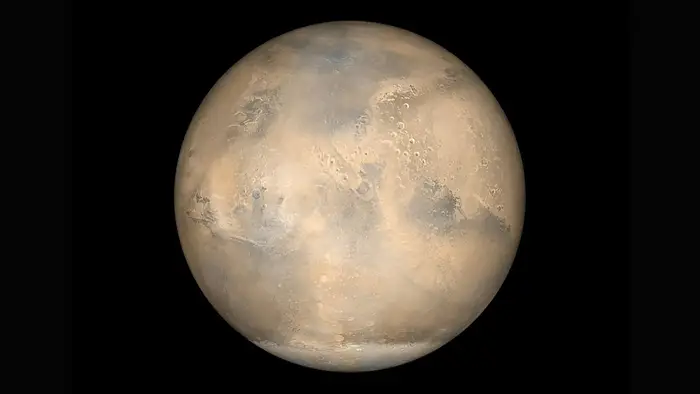
Mars, the rover’s home for more than 5,000 sols. Image: Unsplash.
The drill at Nazca
The mission update, written by William Farrand, a senior research scientist at the Space Science Institute, describes a week of careful, methodical work. Curiosity has been completing its drill campaign at the Nazca hole, in bedrock characterised by the disk-shaped crystal forms. A key objective, Farrand wrote, has been to better characterise these chip-shaped features — and characterising them meant drilling into them.
Drilling on Mars is not a casual act. The rover’s drill bites into rock, grinds it to powder, and delivers a small portion — about 85 milligrams, roughly the mass of a baby aspirin — to the instruments inside the rover’s body. At Nazca, the samples went to the Sample Analysis at Mars instrument, known as SAM, a suite that can heat powdered rock and analyse the gases it releases, identifying organic compounds and the chemistry of the minerals that once held them. While that analysis was under way, the rest of the rover kept working.
Monday’s plan, in the update’s account, included a laser observation by ChemCam — the rover’s Chemistry and Camera instrument — of another crystal form, a target the team named “Ahi Veremos.” ChemCam fires a laser at a rock from a distance and reads the spectrum of the tiny flash of plasma it produces, giving the elemental composition of a spot no wider than a pinhead. The same sol’s plan added more frames for a Mastcam mosaic of the Nazca area, from near field to mid-field, and environmental observations including a large dust devil survey and movies of the horizon and the zenith sky.
Wednesday brought two targeted science blocks: a laser depth profile of the “Colca” crystal form, in which ChemCam fires repeatedly at the same spot to peel the chemistry away layer by layer, and a laser observation of the “Bermejo” target. A long-distance mosaic from the Remote Micro-Imager looked at rock clusters below a ridge the team calls “Cordillera,” and Mastcam added more frames to its Nazca mosaic.
Friday’s planning covered three sols and three targeted science blocks, then a drive away from the Nazca drill site. The plan included a close-up mosaic by MAHLI, the Mars Hand Lens Imager — a macro camera on the end of the rover’s robotic arm — of the side of the block that hosts the Nazca drill hole. It also called for MAHLI to image the crystal forms at night, using its white-light and ultraviolet LED lamps, a technique that can make certain minerals fluoresce and reveal textures invisible in daylight. ChemCam laser observations were planned for each sol, including a cluster of crystal forms, a resistant layer in the side of the Nazca block, and a dark float rock — a loose stone that does not match the bedrock around it. Another long-distance mosaic was to record dark lens-shaped features beneath a flat surface on a ridge called “Mishe Mokwa.” And through it all, the rover kept its environmental watch: dust, sky, and horizon.
One item on the week’s list stood out for its sheer improbability. Mars’ moon Phobos was due to eclipse the Sun, and imaging that event was prioritised. A robot on the surface of another planet, pausing its geology to photograph its moon crossing the Sun, is the kind of thing that still stops you mid-sentence — and it is also real science, since the timing and shape of a Phobos eclipse help pin down the moon’s orbit.
When the drive finally came, it took Curiosity back toward its southerly trending route, where the rover would continue its trek of exploration and discovery. Nazca, for now, is behind it. The samples, though, are still inside the rover, and their chemistry will be pored over for weeks.
Why the shape of a crystal matters
A crystal’s shape is a kind of fossil of the conditions that made it. On Earth, flat, lens-shaped mineral forms grow in very particular settings: shallow brines evaporating slowly, leaving dissolved minerals behind in thin, tabular crystals. The mineral most often responsible is gypsum — calcium sulfate dihydrate, the same mineral that forms the plaster in a wall and the alabaster in a carving — which is known to produce exactly these flat, disk-like forms when it crystallises from brines in the presence of clay minerals, or as evaporation proceeds at a controlled rate. The discs Curiosity has imaged are consistent with what a Mars geologist would expect if ancient briny water evaporated here — not quickly and catastrophically, but slowly and systematically.
But there is a twist, and it is the reason the team drilled. In an update to the mission’s watchers, Farrand added a detail that reframes the whole find: Curiosity has been travelling through rocks containing magnesium sulfate minerals, and the site with the chips sits inside that terrain. The chips themselves, he wrote, seem to be pseudomorphs of the original crystals — meaning another mineral, or minerals, has replaced the original mineral, keeping its shape while changing its substance. As to how the original crystals formed, and what environment they formed in, he added, that is an area of ongoing research.
A pseudomorph is a geological costume change. The original crystal grows, is buried, and is later dissolved away and replaced, atom by atom, by something else — often a mineral that is more stable in the new conditions. The shape survives; the chemistry does not. That is why the drill matters so much. Cameras can see the shape. Only the laboratory can say what the chips are made of now, and from that, scientists can work backwards to what they were, and what kind of water made them.
If the discs turn out to be gypsum, or another sulfate that grew from evaporating brine, they become direct evidence of standing, salty water in this part of Mount Sharp — water that lingered long enough to evaporate slowly, concentrating its dissolved load until crystals fell out of solution. If they are pseudomorphs of something else entirely, they may record an even stranger history: a first generation of crystals, replaced by a second, in rock that has been soaked, dried, and soaked again. Either way, the chips are a page from a chapter of Martian history that no instrument has read from the inside before. The drill at Nazca is, in the mission’s own framing, the first sample taken from above a major geological boundary on Mount Sharp — the first mineralogical data from a layer whose story was previously only visible from the surface.
The find also fits a pattern that has been building across the mission’s recent years. Mars keeps producing mineralogical surprises in its high, dry rocks. Just days ago, on the other side of the planet, NASA’s Perseverance rover found corundum — the mineral behind rubies and sapphires — in three small rocks on the rim of Jezero Crater, the first time that mineral has ever been identified on Mars. Read about that discovery in Perseverance Finds Corundum on Mars: Rubies Hiding in Jezero Crater. Two rovers, two minerals, one message: the rocks of Mars still hold firsts, fourteen years into the surface era.

A red world in the sky, and a red world under the rover’s wheels. Image: Unsplash.
A week of sols, step by step
It is easy to read a mission update as a list of chores. It is worth slowing down, because the choreography is the science. A single sol on Curiosity is planned by a team on Earth, uplinked to the rover, executed autonomously on Mars, and downlinked through orbiters the next day. Nothing happens by accident, and the week’s plan at Nazca shows how many instruments have to agree before a rock is declared understood.
The drill itself is the centrepiece, but it is only one tool. ChemCam’s laser gives elemental chemistry at a distance — which elements are present, and in what proportions — without touching the rock. Its depth profiles, firing again and again at the same point, show whether a crystal’s chemistry changes from its surface to its interior, which is exactly the signature a pseudomorph would leave. MAHLI gives texture at a scale the human eye could never see on Mars: a macro lens that works centimetres from its target, resolving the edges, layering, and surface pits of features a few millimetres across. Mastcam gives context — the mosaic frames that place a single block of bedrock in its landscape, so the team knows whether the crystal-bearing rock is an isolated patch or part of a wider layer. The Remote Micro-Imager extends that context to distant ridges the rover may never reach. And the environmental observations — dust devil surveys, horizon and zenith movies — track the atmosphere that is, right now, the only moving thing on the mountain besides the rover itself.
Night imaging deserves a special note. MAHLI carries its own white-light and ultraviolet lamps, and it can work in the dark. Under ultraviolet light, some minerals fluoresce — they absorb the invisible light and re-emit it as a visible glow — and the pattern of that glow can distinguish minerals that look identical in daylight. Imaging the crystal forms at night was not a flourish. It was a diagnostic, a way of asking the chips a question that daylight cannot answer.
Even the Phobos eclipse fits the pattern. Curiosity’s cameras have watched the little moon cross the Sun before, and each observation tightens the measurement of Phobos’ orbit, which is slowly decaying — the moon is spiralling inward and will, tens of millions of years from now, either crash into Mars or be torn apart into a ring. A rover that can watch an eclipse while it drills is a rover that has mastered the art of doing two kinds of science at once: the geology under its wheels, and the astronomy over its head.
Nazca drill campaign at a glance
| Fact | Detail |
|---|---|
| Drill site | Nazca, on the lower slopes of Mount Sharp, Gale Crater |
| Sols covered | 5063–5069 (Earth planning date Friday, 6 November 2026) |
| Mission update published | 11 November 2026, written by William Farrand, Space Science Institute |
| Crystal forms | Disk-shaped, roughly 3–4 mm across and about 1 mm thick |
| Host rock | Bedrock containing magnesium sulfate minerals |
| Leading interpretation | Pseudomorphs — the original crystals replaced by another mineral, shape preserved |
| Sample destination | Sample Analysis at Mars (SAM) instrument |
| Sample size per drill delivery | About 85 milligrams of powdered rock |
| Laser targets | “Ahi Veremos”, “Colca” (depth profile), “Bermejo”, crystal cluster, dark float rock |
| Close-up imaging | MAHLI mosaics, including nighttime white-light and ultraviolet LED imaging |
| Context imaging | Mastcam Nazca mosaic; RMI mosaics of “Cordillera” ridge and “Mishe Mokwa” ridge |
| Astronomical observation | Phobos eclipse of the Sun, imaging prioritised |
| Rover status | Drove away from Nazca toward its southerly trending route |
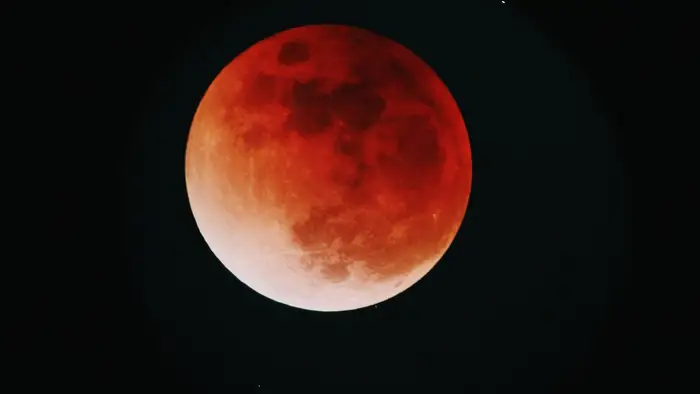
Eclipses are on Curiosity’s schedule too — the rover prioritised imaging Phobos crossing the Sun. Image: Unsplash.
Fourteen years up Mount Sharp
The Nazca drill only makes sense against the scale of the mission behind it. Curiosity has been climbing the same mountain for more than a decade, reading its layers the way a geologist reads a road cut — youngest at the top, oldest at the bottom — and each layer is a different chapter of Mars.
- 26 November 2011 — Curiosity launches from Cape Canaveral, Florida, aboard an Atlas V rocket, beginning an eight-month cruise to Mars.
- 6 August 2012 — The rover lands in Gale Crater, lowered to the surface by a rocket-powered sky crane, at a site later named Bradbury Landing. Its prime mission is planned to last about two Earth years.
- 2014 — Curiosity reaches the foothills of Mount Sharp, the 5.5-kilometre mountain rising from the centre of Gale Crater, and begins the climb that still defines the mission. The same year brings the first detection of organic molecules on Mars.
- October 2022 (Sol 3600) — The rover arrives in the sulfate-bearing unit, the high, dry layers long expected to mark the era when Mars’ surface water finally disappeared.
- May 2025 — Curiosity begins detailed exploration of the boxwork formations, a spectacular network of ridges on the lower slopes of Mount Sharp.
- 1 November 2025 — The rover photographs symmetrical wave ripples in the Marker Band, a sulfate-rich layer at about 3,700 metres elevation — textures made by water waves in a shallow lake, billions of years ago, in rock so hard the drill could not penetrate it on 27 and 31 October 2025.
- 26 August 2026 — Curiosity passes one kilometre of elevation gain above its landing site on the crater floor, after a journey of more than 23 miles (37 kilometres), all inside a single crater.
- 29–30 August 2026 — The rover marks its 5,000th sol on Mars — more than 5,137 Earth days, and more than fourteen Earth years, since landing. NASA releases a panoramic “postcard” from a sandy ridge called Chocolatal.
- 30 September 2026 — The mission blog for sols 5016–5021, written by planetary scientist Lucy Lim of NASA’s Goddard Space Flight Center, first reports the disk-shaped mineral features and the plan to drill them.
- 6–12 November 2026 — The Nazca drill campaign, sols 5063–5069, delivers the first samples from above a major geological boundary on Mount Sharp to the SAM instrument.
The mountain is doing what mountains do on Earth: preserving time. The lower layers Curiosity crossed years ago hold smectite clays, the signature of stable, neutral-pH lake water that could have supported microbial life. Higher up, the sulfates take over — magnesium sulfate, calcium sulfate — the minerals left behind when water evaporates and the chemistry turns harsh. The wave ripples of November 2025, and now the crystal chips of November 2026, complicate that tidy story. They say the “dry” layers were not always dry. Water came back, pooled, rippled, evaporated, and came back again. Mars did not switch off. It flickered.
What the rover’s laboratories can — and cannot — say
It is worth being precise about what happens next, because the gap between a drill sample and a discovery is where most space reporting goes wrong. SAM and CheMin, the two instruments that analyse drilled powder, measure different things, and neither of them simply announces an answer.
CheMin — the Chemistry and Mineralogy instrument — is an X-ray diffractometer, the first ever deployed on another planet. It fires X-rays at powdered rock and reads the diffraction pattern, which is effectively a fingerprint of the crystal structure. It can distinguish gypsum from anhydrite, one magnesium sulfate from another, and a dozen minerals that would look identical to every other instrument on the rover. Its calibration covers an angular range of 5 to 50 degrees, with a resolution finer than 0.35 degrees — enough, in practice, to identify and quantify virtually any mineral likely to be found on Mars. When the mission team says the drill is the only way to identify the minerals in the disc-shaped features, this is what they mean: not that the other instruments failed, but that they measure a different property — elemental abundance — which does not resolve the question being asked.
SAM works differently. It heats powdered samples, sometimes to hundreds of degrees, and analyses the gases that come off — water vapour, carbon dioxide, sulfur compounds, and, crucially, any organic molecules trapped in the rock. Over the mission, SAM has repeatedly found complex organic molecules preserved in sedimentary layers, including molecules identified in April 2026 that serve as precursors to the chemistry of DNA and RNA. Finding organics is not finding life — these molecules can form without biology — but it is finding the raw materials, preserved for billions of years in stone, and it is the reason the mission keeps drilling.
Neither instrument will settle the Nazca question overnight. The data must be downlinked, calibrated, argued over, and checked against the laser and camera observations that were made at the same time. The team has been careful to say what it does not yet know — that how the original crystals formed, and in what environment, is still an open question. That caution is the point. A rover that has worked for 5,000 sols has earned the right to be believed when it says “we don’t know yet,” and the history of this mission is full of early guesses that the laboratory later corrected.
There is a wider poignancy to the drilling, too. The samples Curiosity analyses on board are the only Martian rocks humanity will study up close for the foreseeable future. NASA’s Mars Sample Return programme — the plan to fly Perseverance’s sealed sample tubes back to Earth — was cancelled in the FY2026 spending package, a roughly 11-billion-dollar effort ended by Congress. The full story of that decision, and of China’s competing plan to fetch Martian rocks first, is in NASA Killed Mars Sample Return. China Is Coming for the Rocks Instead. For now, the laboratories that travel with the rovers are the laboratories we have, and the Nazca powder sitting inside SAM is the closest thing to a Martian sample return that exists.
A planet that dried out, one layer at a time
Step back, and the Nazca chips belong to the largest story Curiosity has told: the transformation of Mars from a world of lakes into a world of dust, and the discovery that the transformation was neither simple nor final.
When Curiosity landed in 2012, its prime goal was to determine whether Gale Crater had ever offered environmental conditions favourable to microbial life. Within the first year, the answer was yes: the crater floor held the chemistry and mineralogy of a lake that could have supported life. The rover then began its climb, and the mountain gave it a stratigraphic gift — a vertical timeline of a drying planet. Clay layers at the bottom, laid down in benign water. Sulfate layers above, laid down as the water turned salty and shallow and finally vanished.
The wave ripples found on 1 November 2025 cracked that timeline open. Ripples made by water waves, in the supposedly dry sulfate unit, at 3,700 metres elevation, in rock so hard the drill bounced off it twice. A study published in Science Advances argued that the Martian climate supported complex, recurring hydrological cycles — wet intervals returning long after the planet was supposed to have dried. The ripples were high in magnesium and calcium, the chemistry of evaporating brine. Now the crystal chips, in magnesium sulfate rock, a few hundred sols later, look like the same story written smaller: water, evaporation, crystals, replacement, and then — perhaps — water again.
This is why a few millimetres of rock can justify a week of a rover’s life and a 2,500-word article. The chips are not a curiosity. They are a test. If SAM and CheMin confirm a sulfate mineral grown from brine, the flickering-water model gains another line of evidence. If they find something else — a pseudomorph of a mineral that forms in a different setting entirely — the model will have to bend, and bending is how science moves. Either outcome is a result, and either outcome is worth the drill.
And there is a human dimension that the mission updates rarely state outright. Curiosity is fourteen years into a two-year mission. Its aluminium wheels are cracked and punctured from a decade of sharp Martian rock, managed by careful route planning rather than any repair. Its nuclear power source, a Multi-Mission Radioisotope Thermoelectric Generator, keeps delivering steady power — about 110 watts — year after year. The rover that drilled at Nazca is not the rover that landed in 2012; it is older, slower, and more careful, and it is still doing firsts. The 5,000-sol postcard from Chocolatal, released in September, showed the rover’s own shadow on a ridge it had never visited before. There are still ridges it has never visited. The mountain still has 14,720 feet of elevation left to climb, and the top is some 29 miles away.
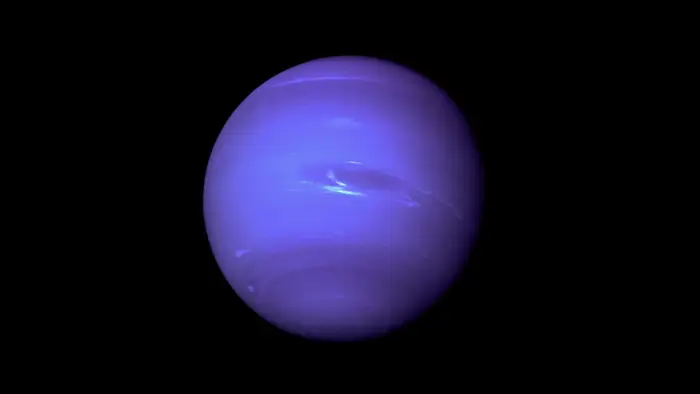
Fourteen years in, Curiosity is still doing firsts — the latest on a mountain it has climbed for a decade. Image: Unsplash.
What happens next
The immediate future is routine, and routine is what a fourteen-year-old rover does best. Curiosity has driven away from Nazca and back onto its southerly route, continuing the climb toward younger rock. The SAM analysis of the Nazca powder will be worked through in the coming weeks, and the results will arrive the way results arrive from Mars: not as a press conference, but as a mission update, a figure in a paper, a sentence in a blog post that the careful reader will recognise as the answer to a question asked months earlier.
The wider Mars fleet is moving, too. NASA’s twin ESCAPADE probes, Blue and Gold, used a powered flyby of Earth on November 7 and 9 to slingshot toward Mars, each firing its engines for about nine minutes — the first time any mission has used a powered Earth flyby to leave for the Red Planet. Their journey is covered in ESCAPADE Powered Earth Flyby November 2026: NASA’s Twin Probes Slingshot to Mars. When they arrive, they will study the Martian magnetosphere and atmosphere from orbit — the very systems that, billions of years ago, failed to hold on to the water that the Nazca crystals remember.
For now, the chips wait in the dark inside the rover, and the rover waits on a mountain under a thin pink sky, and the scientists on Earth wait for the data. A potato chip made of stone, three millimetres wide, drilled from a rock on a mountain on a planet that dried out — and it may be one of the most informative things Curiosity has ever picked up. The mountain is still talking. After 5,000 sols, the rover is still listening.
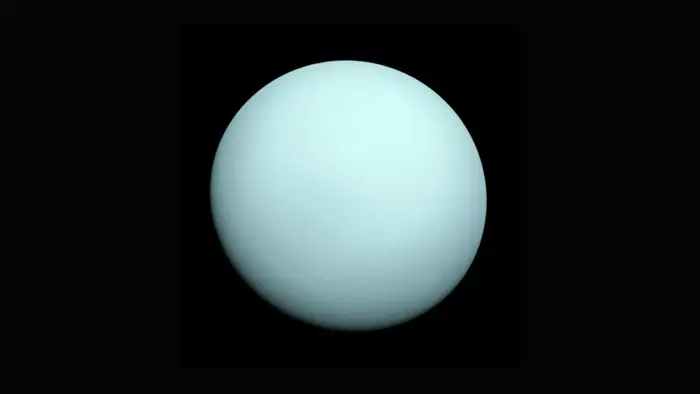
The outer planets keep their distance; Mars keeps its secrets in millimetres of stone. Image: Unsplash.
Sources
- NASA: Curiosity Blog, Sols 5063–5069 — Rocks and Chips
- Tech Times: Curiosity Rover Mars Discovery — Disc Minerals in Never-Drilled Terrain Signal Ancient Water
- Behind the Black: Martian minerals on Mount Sharp?
- Avid Space Flight: Curiosity Reaches 5,000 Sols on Mars as 14-Year Mission Keeps Climbing