Asteroid 2026 VA Close Approach: A City-Killer-Sized Rock Found Just Hours Before Its Flyby
Astronomers announced a previously unknown asteroid on the evening of 1 November 2026, and by the early hours of the next morning it had already swept past Earth. The object, designated 2026 VA, was estimated at somewhere between 22 and 49 metres across — large enough, at the upper end of that range, to devastate a city if it had been on a collision course instead of a flyby. It missed by roughly 1.24 million kilometres, a little more than three times the distance to the Moon, and nobody on the ground was ever in danger. But the timeline of its discovery has reignited an uncomfortable question for planetary defence: what happens when the warning is measured in hours rather than years?
The story of 2026 VA is not a story of a near miss. It is a story about a blind spot. The asteroid was found, tracked, catalogued, and cleared of any collision risk in less than a day — a routine success for the global asteroid-monitoring network, and at the same time a vivid demonstration of its limits. Objects in this size class are numerous, faint, and often discovered only when they are already close. The systems designed to protect Earth from asteroids work best for the largest threats, the ones hundreds of metres across that could cause regional or global catastrophe. For the smaller rocks that could still flatten a city, the warning may arrive with the object itself.
A discovery announced hours before closest approach
The Minor Planet Center, the international clearinghouse for asteroid observations, published the discovery announcement for 2026 VA at 22:38 UTC on 1 November 2026, in circular MPEC 2026-V02. Observations made earlier that day had revealed a new moving object against the background stars, and follow-up measurements allowed astronomers to compute a preliminary orbit. At approximately 06:48 UTC on 2 November — eight hours and ten minutes after the announcement — the asteroid reached its closest point to Earth.
At closest approach, 2026 VA passed at a distance of about 1.24 million kilometres, or roughly 3.2 times the Earth-Moon distance, while travelling at approximately 32,400 kilometres per hour relative to Earth, about 9 kilometres per second. NASA’s Jet Propulsion Laboratory included the object in its Asteroid Watch records, confirming that it posed no known threat of collision during its passage. Independent tracking data compiled by NASA’s Center for Near Earth Object Studies put the flyby at 3.23 lunar distances, consistent with the reported figure.
The asteroid’s orbit comes geometrically closer to Earth’s path than this flyby suggested. Its minimum orbit intersection distance, or MOID — the closest distance between the two orbital paths considered as curves in space, regardless of where each body happens to be at any given moment — is about 0.0015 astronomical units, roughly 224,000 kilometres, or just under 0.6 lunar distances. That distinction matters for understanding risk: the MOID describes how tightly the orbits interleave, while the flyby distance describes what actually happened on this particular pass. On this occasion, Earth and the asteroid were simply not at the crossing point at the same time, and the miss distance was comfortable.
What made the event notable was not the distance but the clock. The official announcement arrived less than a day before closest approach, and the object itself had only been observed for hours before that. For an asteroid of this size, that is not an anomaly. It is the normal pattern — and that is precisely the problem planetary defence researchers keep pointing to.

Asteroids like 2026 VA are faint and easily missed until they come close to Earth. Image: Unsplash.
How big was 2026 VA, and why the estimates vary
The first reports put 2026 VA at between 22 and 49 metres across. Other estimates circulating after the flyby placed it closer to 20 to 30 metres. The spread is not a contradiction; it reflects how asteroid sizes are actually measured. Telescopes do not photograph an asteroid’s silhouette. They measure its brightness, and brightness depends on both size and reflectivity. A small, shiny rock can look as bright as a larger, darker one.
Astronomers express this as absolute magnitude, a standardised brightness measure, and then convert it to a diameter range by assuming a plausible range of surface reflectivities, or albedos. Dark, carbon-rich asteroids reflect little sunlight and so must be larger to appear as bright as observed; brighter, stony asteroids can be smaller. Until an asteroid is observed in infrared light, where its heat glow reveals its size more directly, or visited by a spacecraft, its diameter remains a range rather than a number.
That range straddles an important threshold. At around 20 metres, an asteroid entering Earth’s atmosphere tends to break apart high above the ground, as the Chelyabinsk object did in 2013. At around 40 to 50 metres, the picture changes: the object can penetrate deeper, and the energy released in an airburst grows steeply. The upper estimate of 49 metres for 2026 VA places it close to the category that NASA considers capable of causing local devastation, with a potential energy release on the order of 10 megatons of TNT under certain impact conditions, depending on composition, speed, entry angle, and the altitude at which it breaks apart. The lower estimates place it closer to the Chelyabinsk class — still dangerous, but a different kind of danger.
Either way, 2026 VA was far too small to qualify as a Potentially Hazardous Asteroid under NASA’s official criteria, which require a diameter of at least about 140 metres and an orbit that can bring the object within 0.05 astronomical units of Earth’s orbit. That classification system is designed around the objects that could cause regional or continental damage. It was never meant to capture every rock that could hurt a city, and 2026 VA is a reminder of the gap between those two categories.
Why it was found so late
The late discovery of 2026 VA was not a failure of any single telescope. It was a consequence of how asteroid hunting works. Ground-based surveys such as the Catalina Sky Survey, Pan-STARRS, and ATLAS scan the night sky for moving points of light, night after night, and have dramatically expanded the known catalogue of near-Earth objects over the past two decades. But they share a structural limitation: they cannot observe the daytime sky. An asteroid approaching from the direction of the Sun is effectively invisible to them until it moves into darker skies, and by then it may already be close.
Small asteroids compound the problem. Many reflect very little sunlight and remain too faint to detect until they are comparatively near Earth. Some travel through regions of the sky where observations are difficult. Others are simply small targets in an enormous volume of space. Estimates suggest that more than 300,000 near-Earth asteroids larger than approximately 40 metres may exist, with most yet to be discovered. The known catalogue is heavily skewed toward the largest objects, which are the easiest to find and the most dangerous, while the population of city-sized rocks remains mostly unmapped.
The result is a discovery pattern that surprises the public but not astronomers: small asteroids are routinely found days, or hours, before their closest approach, and the list of upcoming flybys changes daily as new objects are spotted. In the days around 2026 VA’s passage, NASA’s close-approach tables listed it as the second-closest upcoming flyby in its window, behind only 2019 XF2, expected on 4 December 2026 at 3.10 lunar distances. The difference is that 2019 XF2 has been known since 2019. 2026 VA was known for less than a day.
There is also a subtler point about how discovery works. The announcement time is not the same as the first observation time. Observations made during the day on 1 November had to be processed, checked, submitted, and verified before the Minor Planet Center issued its circular at 22:38 UTC. Follow-up observations from other observatories then refined the orbit. The system worked as designed — the object was found, confirmed, and cleared within hours. But the speed of that pipeline is itself a measure of how little slack exists for anything larger or more threatening arriving on a similar timeline.
Tunguska and Chelyabinsk: what this size class can do
History provides two stark examples of what asteroids in the 2026 VA size range can do when they do not miss.
On 30 June 1908, an enormous explosion occurred above a remote region of Siberia near the Podkamennaya Tunguska River. The blast flattened approximately 2,000 square kilometres of forest, knocking down millions of trees across an area larger than many major cities. The object responsible is commonly estimated at around 40 to 60 metres across, although its exact dimensions remain uncertain. It broke apart violently in the atmosphere, releasing an estimated several megatons of energy, without leaving a confirmed impact crater. The explosion occurred over a sparsely populated region, avoiding the mass casualties that a comparable event above a major population centre would have caused. The Tunguska object sits at the upper end of, or just above, the estimated size range for 2026 VA.
A much smaller asteroid provided a more recent warning. On 15 February 2013, an object approximately 17 to 20 metres across entered Earth’s atmosphere above Chelyabinsk, Russia. Travelling at around 18 kilometres per second, it exploded roughly 23 kilometres above the ground, releasing energy equivalent to approximately 440,000 tonnes of TNT. The intense flash attracted widespread attention, but the shockwave that followed caused the greatest damage. Windows shattered across the city, buildings were damaged, and more than 1,600 people were injured, many by flying glass. The Chelyabinsk asteroid had not been detected before entering the atmosphere at all. It approached from the direction of the Sun, making it extremely difficult for conventional optical telescopes to identify against the bright sky.
Together, the two events bracket the risk posed by 2026 VA’s size class. A 20-metre rock can injure thousands in a city through its shockwave alone. A 50-metre rock can flatten a city centre. Neither event left a crater, and neither would have been stopped by any system currently in existence. The difference between a historical footnote and a catastrophe, in both cases, was geography and luck.

An airburst over a populated area could shatter windows and damage buildings across a wide area. Image: Unsplash.
What hours of warning would actually mean
If an asteroid like 2026 VA were discovered on a genuine collision course with only hours of warning, the response would look nothing like a Hollywood deflection mission. It would look like a civil emergency.
The first priority would be pinning down where it would hit. Early orbital calculations typically produce a wide corridor of possible impact locations rather than a precise point, and each additional observation narrows that corridor — but observations take time to collect and analyse. An impact corridor crossing several major population centres could leave emergency planners uncertain about which areas to evacuate first. Roads and public transport networks might become overwhelmed as residents attempted to leave, while hospitals, care homes, and other vulnerable facilities would require additional assistance.
Planetary-defence exercises have rehearsed exactly this scenario. In a 2014 exercise involving NASA, the Federal Emergency Management Agency, and other organisations, a hypothetical asteroid threat resulted in a roughly 50-metre fragment remaining on a collision course with Earth after a partially successful deflection mission. Although the fragment was identified almost two years before the predicted impact, the exercise concluded that there was insufficient time to launch another deflection campaign. Emergency response planning therefore became essential, including assessments of possible impact areas and preparations for the consequences of an atmospheric explosion. The exercise exposed difficult decisions authorities could face even with far more warning than was available before the close approach of 2026 VA.
That finding cuts both ways. It shows that even two years of warning may not be enough for a second deflection attempt, which makes the hours-long warning for an object like 2026 VA look even more unforgiving. But it also shows that the emergency-response side of planetary defence — evacuation planning, impact-corridor communication, medical preparedness — is not a fallback for failure. For the smallest threatening objects, it may be the only realistic response at all, and it deserves the same investment as the deflection technology that dominates public attention.
There is an important caveat. An object discovered hours before impact would not necessarily be a surprise in the same way Chelyabinsk was. Survey telescopes are improving, and the warning time for objects like 2026 VA, while short, is at least non-zero: hours are enough to issue public warnings, move people away from windows, and prepare emergency services, even if they are not enough to move the asteroid. The gap between zero warning and eight hours of warning is, for a city, the difference between thousands of injuries and a managed emergency.
DART proved deflection is possible, but it needs years
NASA has already established that asteroid deflection is possible. In September 2022, its Double Asteroid Redirection Test, known as DART, crashed into Dimorphos, a small asteroid moonlet orbiting the larger asteroid Didymos. The collision successfully changed Dimorphos’s orbit, shortening the time it took to complete one revolution around its companion by approximately 33 minutes. It was the first successful test of changing an asteroid’s motion through a spacecraft impact, providing an important foundation for future planetary-defence missions.
The catch is the timeline. DART required years of preparation and more than ten months of travel through space before reaching its target. Its success depended on detailed knowledge of the asteroid’s orbit, a carefully planned launch, and the ability to guide the spacecraft toward an object moving at enormous speed. Such a mission cannot simply be launched at a few hours’ notice. NASA has consistently emphasised that asteroid deflection requires years of advance warning, with decades offering the best opportunity to prevent a collision. Nuclear methods have also been examined as possible responses to threatening asteroids, but no operational system currently exists that could guarantee an emergency interception at extremely short notice.
That is why the follow-up to DART matters so much. ESA’s Hera mission is now approaching the Didymos system to study the aftermath of the impact in detail — the crater left behind, how Dimorphos was reshaped, and how efficiently the impact changed its motion. Those measurements will determine whether a kinetic impactor can be relied upon as a planetary-defence tool, or whether its effects are too uncertain to trust with a real threat. Hera’s first image of Didymos and Dimorphos marked the start of that close investigation, and the mission’s findings will feed directly into the design of any future deflection attempt.
The lesson of 2026 VA for deflection is therefore not that deflection failed, but that deflection was never in play. The object was found too late, and even a standing fleet of impactor spacecraft would have needed a precise orbit, a launch window, and months of cruise time that the timeline did not contain. Deflection is a strategy for objects found years in advance. For objects found hours in advance, the strategy is warning, evacuation, and resilience.
The surveys hunting the next one
Preventing the next short-warning surprise begins with finding threatening objects much earlier, and that means better surveys. NASA is developing the Near-Earth Object Surveyor, a dedicated space telescope designed to identify asteroids and comets that could pose a danger to Earth. Unlike conventional telescopes that depend primarily on reflected visible light, NEO Surveyor will use infrared detectors to observe heat emitted by asteroids. This will allow it to identify dark objects that are difficult to detect with optical telescopes and improve observations of asteroids approaching from directions close to the Sun — the exact blind spot that hid Chelyabinsk and that limits warning times for objects like 2026 VA.
Development of the mission reached another milestone in October 2026, when NASA reported progress on the spacecraft’s large sunshade and integrated solar arrays. The sunshade is designed to protect its sensitive infrared instruments from sunlight while the telescope searches for previously unknown objects. NASA’s NEO Surveyor sunshade tests are part of the preparation for a launch targeted no earlier than September 2027. Once operational, the telescope is intended to locate and characterise large numbers of potentially hazardous near-Earth asteroids, giving planetary-defence teams the advance warning needed to prepare an interception years before a threatening asteroid reaches Earth.
NEO Surveyor will not work alone. The Vera C. Rubin Observatory, whose wide-field Legacy Survey of Space and Time is already reshaping asteroid discovery, scans enormous areas of sky repeatedly and is expected to find vast numbers of small near-Earth objects, including some in the 2026 VA size class, much earlier than current surveys manage. Missions that visit asteroids up close also sharpen the science: NASA’s Lucy mission in the Trojan asteroid region is building the detailed picture of asteroid composition and structure that any future deflection plan would depend on. Ground-based networks such as ATLAS, Catalina, and Pan-STARRS continue to improve their coverage and cadence. The combination of a space-based infrared survey and wide-field ground surveys is the closest thing planetary defence has to a plan for closing the short-warning gap.
There is a measurement problem beneath all of this that 2026 VA illustrates well. The catalogue of known near-Earth objects is now above 42,000 asteroids, with more than 1,700 discovered since the start of 2026 alone, according to ESA’s Near-Earth Object Coordination Centre. But completeness falls steeply with decreasing size. For objects larger than a kilometre, the survey is thought to be more than 95 percent complete. For objects larger than 140 metres, the figure is roughly 40 percent. For objects around 20 to 50 metres — the 2026 VA class — the known fraction is far smaller, and the total population is estimated in the hundreds of thousands. Every flyby like this one is a reminder that the catalogue is a map with most of its territory still blank.
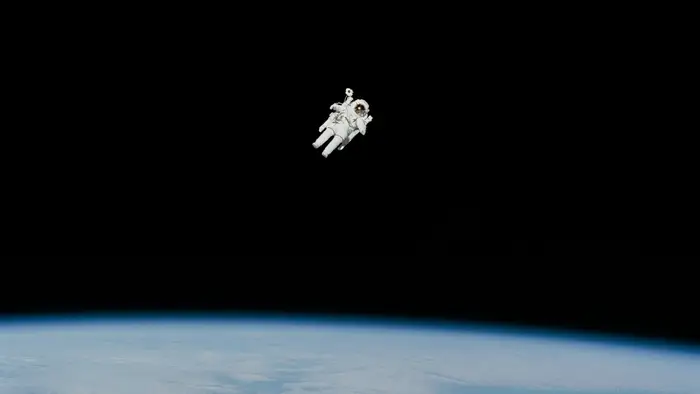
Ground-based surveys scan the night sky every clear night, but they cannot see objects approaching from the Sun’s direction. Image: Unsplash.
What 2026 VA changes, and what it does not
It is worth being precise about what 2026 VA does and does not prove. It does not prove that Earth is overdue for a city-destroying impact, or that a dangerous asteroid is slipping through undetected right now. The object missed by more than a million kilometres, and the monitoring system did its job: it found the object, computed its orbit, and ruled out a collision before closest approach. The system is not broken.
What 2026 VA does prove is narrower and more useful. It proves that the warning time for a city-sized asteroid can be less than a day, even in 2026, with the best survey network humanity has ever operated. It proves that the size estimates for such objects carry wide uncertainties, so the difference between a Chelyabinsk-class event and a Tunguska-class event may not be known until after the object is found. And it proves that the response to a short-warning threat will be a civil-protection problem, not a space-mission problem, which means the planning, communication, and evacuation work deserves attention now, before it is needed.
There is also a longer view. Asteroid impacts are one of the few natural disasters that are, in principle, preventable — the only one where the hazard can be detected decades in advance and physically deflected. That preventability is what justifies the investment in surveys and deflection tests. But preventability depends entirely on early detection, and early detection is exactly what 2026 VA’s timeline calls into question for the smaller end of the threat spectrum. The gap between “we can deflect asteroids” and “we will know about this asteroid in time” is the central challenge of planetary defence in the coming decade, and it will not be closed by a single mission. It will be closed by the slow accumulation of survey coverage, year after year, until objects like 2026 VA are found weeks or months before their flybys instead of hours.
For now, the next step is unglamorous but essential: keep watching. Every new survey, every infrared telescope, every wide-field camera chips away at the unknown population. The follow-up observations of 2026 VA itself will refine its orbit and may narrow its size estimate, turning a one-day wonder into a known object whose future encounters can be predicted years ahead. That is how the catalogue grows — one faint moving dot at a time, often found just in time, until eventually the surprises become rarer and the warnings become longer.
The sky gave Earth eight hours’ notice this time, and Earth did not need a single one of them. The next rock in this size class may not be so polite, and the work of making sure the notice arrives sooner is already under way — in the clean rooms where NEO Surveyor’s sunshade is being tested, in the observatories scanning the night, and in the emergency plans being written for a day nobody wants to see. 2026 VA passed quietly, at 32,400 kilometres per hour, a little more than three Moon-distances away. Its real legacy is not the flyby itself. It is the clock it started, ticking, in the minds of the people whose job it is to make sure the next one is found sooner.

Each newly catalogued asteroid makes the next close approach easier to predict. Image: Unsplash.

Infrared space telescopes like NEO Surveyor will spot dark asteroids by their heat, not just reflected sunlight. Image: Unsplash.