Orionids 2026: Halley's Comet Debris Peaks This Week — How to Watch October's Meteor Shower
Some time tomorrow night, in the dark hours before dawn, a grain of dust no bigger than a pebble will slam into the atmosphere above your head at roughly 150,000 miles per hour. It will flash white-hot, paint a glowing streak across the sky, and vanish in less than a second — and it will be, in a very literal sense, a piece of Halley’s Comet.
The Orionid meteor shower, one of the most elegant events in the autumn sky, reaches its peak overnight on October 21–22. Each year around this time, Earth plows through a ribbon of debris left behind by 1P/Halley, the most famous comet in history, and the particles it sweeps up light up the night sky as shooting stars. The meteors are famously fast — among the fastest of the year — and they are known for their brightness, for the glowing trails they leave behind, and, on good nights, for the occasional fireball.
This year, though, the show comes with a catch: a bright, nearly full moon will be up for much of the night. That does not mean the Orionids are a wash. It means you need a plan — and the plan is simple. Go out after the moon has set, in the deep hours before dawn, find dark sky, lie back, and wait. The universe will do the rest.

When to Look Up
According to the RASC Observer’s Handbook, the predicted peak of the 2026 Orionids falls around 18 UTC on October 21 — the middle of the night for much of the world. NASA’s skywatching guidance likewise puts the maximum overnight on October 21–22. The good news is that the Orionids are known for a broad, plateau-like maximum that lasts for several days rather than a single sharp spike. The mornings of October 21, 22, and 23 will all be worth your time, with activity tapering off gradually on either side of the peak. The shower as a whole stays active from late September into mid-November, so if clouds ruin one morning, the next will give you another chance.
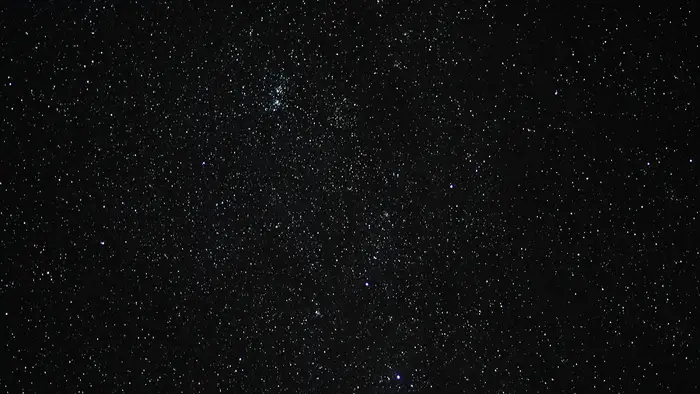
The radiant — the point in the sky from which the meteors appear to radiate — lies in the constellation Orion, the Hunter, which gives the shower its name. Orion rises before midnight in October and climbs higher through the night, sitting at its highest and most dramatic in the pre-dawn hours. That timing is convenient: it means the show is best after midnight and improves steadily toward morning. The shower is visible from both the Northern and Southern Hemispheres, though northern observers get the better view, with Orion riding higher in their sky.
There is one more practical detail worth knowing. Meteor rates climb as the radiant climbs, because the Earth’s rotation turns your location into the debris stream more head-on in the small hours. Astronomers sometimes describe this as running into the rain rather than having it fall on your head — after midnight, you are on the leading face of the planet, sweeping up more particles. That is one reason the pre-dawn hours are the prime window for almost every meteor shower, and it is doubly true this year.
The Moon Problem — and How to Beat It
No discussion of the 2026 Orionids is complete without talking about the Moon. During the peak, the Moon will be a waxing gibbous, roughly three-quarters to four-fifths illuminated, climbing higher and staying up longer with each passing night. Full moon — October’s Hunter’s Moon — arrives on October 26, with the exact moment falling at 4:12 UTC. Bright moonlight washes out the fainter meteors, and under a nearly full moon the effective count can fall to a fraction of what a dark sky would deliver.
But here is the saving grace. The Moon, being a few days short of full, will set several hours before dawn on the peak mornings. That opens a dark window — a stretch of genuinely moonless night in the hours just before sunrise, when Orion is at its highest and the Orionid radiant is best placed. This is the strategy skywatching guides recommend for 2026: ignore the bright evening sky entirely, sleep through the moonlit middle of the night, and set an alarm for the dark gap before dawn. Watch in the hours before dawn, or you will be watching in bright moonlight.
One more thing the moon cannot ruin: the Orionids’ brightest members. Moonlight hides faint meteors, but the Orionids have a well-earned reputation for fireballs — meteors bright enough to punch through even considerable sky glow. If you cannot get out before dawn, it is still worth a look.

What You’re Actually Watching
Every meteor shower is a comet’s autobiography, written in debris. The Orionids’ story belongs to 1P/Halley, the wanderer that has visited the inner solar system for millennia, trailing dust and ice in its wake.
Halley’s Comet takes about 76 years to orbit the Sun. On each approach, the Sun’s heat vaporizes frozen material from the comet’s nucleus, releasing bits of rock and dust into space. That debris does not stay clumped together. Over centuries, it spreads out along the comet’s entire orbit, forming a vast, thin stream of particles circling the Sun. Earth flies through Halley’s path twice a year — and each crossing produces a meteor shower. The Orionids, in October, are one; the Eta Aquariids, in May, are the other.
But the dust is not evenly spread, and this matters for how the shower behaves. With each pass around the Sun, Halley lays down a new “streamer” of debris, and the density of the stream varies from one ribbon to the next. The strength of the Orionids in any given year depends on which of these streamers Earth encounters and how deeply the planet passes through it. Most years, that means a respectable but modest display. In exceptional years, Earth threads a dense ribbon and the sky erupts.
The most famous example came in 2006, when the Orionids surged to around 100 meteors per hour — a genuine outburst. The American Meteor Society notes that in exceptional years like 2006–2009, peak rates were comparable to the Perseids, the great summer shower, at 50 to 75 per hour. StarDate, the University of Texas skywatching program, cautions that experts are not forecasting that kind of performance this year — recent displays have produced low to average activity. Still, 2006 stands as proof that the Orionids can surprise. And even in an ordinary year, there is something quietly astonishing about the fact that every streak you see is a relic of a comet last visible from Earth in 1986, not due back until 2061.

The Fastest Meteors of the Season
If you catch an Orionid, watch how it moves. These are some of the swiftest meteors of the year. NASA puts their atmospheric entry speed at about 41 miles per second; StarDate describes them as hitting the atmosphere at about 150,000 miles per hour. Either way, the numbers are staggering — roughly 66 kilometers every second, faster than the planet’s escape velocity several times over.
That speed shapes everything about the experience. Because the particles arrive so fast, they compress the air ahead of them into an incandescent shock wave, heating to thousands of degrees in a fraction of a second. The result is the classic Orionid: a sharp, brilliant streak, often whitish or greenish in color, frequently trailed by a glowing “train” — incandescent debris lingering in the meteor’s wake. According to NASA, these trains can persist anywhere from several seconds to minutes, slowly twisting and fading as high-altitude winds shear them apart. Binoculars will not help you here; the meteors move far too quickly. This is naked-eye astronomy at its most visceral.
Some Orionids go further and become fireballs — meteors of exceptional brightness that flash across the sky and can cast faint shadows on the ground. The Orionids’ speed makes them especially prone to this. Fireballs are rare in any given hour of watching, but they are the moments you will remember for years.
It is worth pausing on the physics for a moment, because the common story — that meteors glow from friction — is only half right. What really heats a meteor is ram pressure: the air ahead of the particle cannot get out of the way fast enough, so it piles up and compresses, superheating the gas until the particle itself vaporizes. An Orionid grain, arriving at 41 miles per second, experiences this compression with extraordinary violence. The flash you see is a speck of comet dust being annihilated — and the light comes mostly from the superheated air around it. Every Orionid is a tiny, natural reentry experiment, a preview of the same physics that spacecraft heat shields must survive.
Fireball Season: October’s Cosmic Chaos
The Orionids do not arrive alone. October has a reputation among skywatchers as something close to fireball season, and this year is living up to it. Mike Hankey of the American Meteor Society told Fox Weather this week that bright space rocks have been spotted over Michigan, California, Ohio, Pennsylvania, and Texas — a surge of celestial activity that has meteor cameras and skywatchers buzzing.
October is unusually rich in meteor activity because several minor streams overlap with the major ones this month, and the long autumn nights give observers more hours to catch them. The Orionids get the headlines, but patient watchers this month have also reported meteors from lesser showers, plus the sporadic background — random particles Earth sweeps up on any given night. If you set up to watch the Orionids, you are really setting up to watch all of October’s sky at once.
That is part of what makes the pre-dawn Orionid watch so rewarding. The hours before sunrise are the darkest of the night, the radiant is high, and the sky is doing its busiest work. Bring patience. A meteor shower is not a fireworks display on a schedule; it is more like fishing. There will be long quiet stretches, and then — suddenly — a streak will tear across half the sky, and you will be glad you stayed.
How to Watch: The Field Guide
The best equipment for the Orionids is nothing at all. Do not bring a telescope or binoculars — they narrow your field of view, and meteors can appear anywhere in the sky. Your eyes, given time to adapt, are the perfect instrument. Here is the field-tested recipe that NASA, EarthSky, and veteran observers all recommend:
First, get dark. The single most important variable is light pollution. Head away from city lights, streetlamps, and house lights — a suburban backyard is dramatically better than a city balcony, and a rural field or park is dramatically better than that. Give the site a scouting visit in daylight if you can, so you are not fumbling in the dark.
Second, lie back. A reclining lawn chair is ideal; a blanket or ground mat works too. Fox Weather’s viewing guide suggests lying flat on your back with your feet pointing southeast if you are in the Northern Hemisphere, or northeast in the Southern Hemisphere, and simply taking in as much sky as possible. Look up at an altitude of about 60 degrees — most of the way toward overhead, but not directly at the zenith, where your neck will protest. You can look in any direction; meteors will appear across the whole sky, though due south is often the most interesting. Do not stare fixedly at the radiant in Orion. Meteors that appear near the radiant have short trails; the long, dramatic streaks appear farther away, sometimes halfway across the sky.
Third, wait out the darkness. Allow your eyes 20 to 30 minutes to fully adapt to the dark. This is non-negotiable — your night vision improves enormously over that time, and a single glance at a phone screen can reset the clock. If you must check the time, use a red flashlight or a red-screen mode; red light preserves dark adaptation far better than white. Dress warmly — October nights are cold, and nothing ends a meteor watch faster than shivering. Bring a sleeping bag, a thermos, and layers you think you will not need.
Fourth, time it right. This year, that means the dark window after moonset and before dawn on the mornings of October 21, 22, and 23. The moon will be up for most of the night; do not be fooled into watching at midnight. Sleep first, then rise for the last hours of darkness. The radiant climbs highest in the hours before dawn, the sky is at its darkest, and Orion — the Hunter, with bright Betelgeuse and Rigel flanking the radiant — will be riding high.
For photographers, the same rules apply, with a camera added. A tripod, a wide-angle lens, and a long exposure — tens of seconds — pointed at a dark patch of sky will stack up meteors over the night. Many of the most striking Orionid photographs are composites, layered from hours of exposures. Even a phone on a tripod, running a long-exposure or night mode, can catch the brightest fireballs. But do not let the camera become the mission. The best seat in the house is the one where you are simply looking up.
How Many Meteors Will You Actually See?
Set expectations honestly. Under a truly dark sky with no moon, the Orionids typically deliver 10 to 20 meteors per hour at peak — that is the realistic baseline for 2026, and it is what NASA’s figures suggest. From a suburban backyard with moderate light pollution, expect fewer. With this year’s waxing gibbous moon washing out the fainter half of the display before it sets, the visible count in the moonlit hours will be lower still — perhaps half that, depending on your sky.
Those numbers describe zenithal hourly rates, the theoretical count an ideal observer would see with the radiant directly overhead under perfect skies. Real observers see fewer. But rates are not the whole story. The Orionids are prized less for their quantity than for their quality: fast, bright, often leaving persistent trains, with a real chance of a fireball. A dozen brilliant Orionids with glowing trails can be more memorable than a hundred faint streaks from a richer but duller shower.
And then there is the 2006 precedent. Nobody is forecasting an outburst this year — recent displays have been low to average, and the streamers Earth is threading in 2026 are not the dense ribbons that produced the great shows of 2006–2009. But the Orionids’ history is a reminder that meteor streams are lumpy, and surprises happen. The only way to be sure you miss an outburst is to stay inside.
A Week Packed With Sky Events
The Orionid peak is the headline, but the last week of October 2026 is unusually generous to skywatchers, and it is worth planning around the whole stretch.
On the night of October 24, the much fainter Leonis Minorid shower reaches its peak — a minor stream, but one more reason to be outside. The same evening brings a lovely planetary grouping: the Moon will pass near Neptune in the evening sky, and, more conspicuously, near Saturn. Saturn is the real prize here — bright, golden, and unmistakable to the naked eye, with its rings visible through even a small telescope. On October 25, the Moon, Saturn, and the star Algenib will form a triangle in the evening sky, a photogenic arrangement worth a look with binoculars or a camera.
Earlier in the week, the Moon grows rounder and brighter each night on its way to the full Hunter’s Moon of October 26. That brightening is the enemy of meteor watching — but the Moon is a beautiful object in its own right, and the evenings around the 24th and 25th, when it keeps company with the planets, are the time to admire it rather than fight it. The strategy for the week writes itself: admire the Moon and planets in the evening, sleep through the moonlit hours, and rise before dawn for the meteors.
The Kicker
There is a particular pleasure in knowing what a meteor is while you watch it. A satellite crossing the sky is human. An airplane is human. But an Orionid is older than humanity, older than the species, older than the mammals — a fragment of ice and dust shed by a comet on one of its long loops around the Sun, wandering the dark for centuries until, on an October morning in 2026, its orbit and ours intersected for a fraction of a second.
Halley’s Comet last visited the inner solar system in 1986 and will not return until 2061. Most of us will never see it with our own eyes. But this week, we do not need to. Every Orionid that streaks overhead is a piece of it — delivered free, burning bright, asking only that you look up in the dark hours before dawn. Set the alarm. Bring a blanket. The comet is waiting.