SPHEREx V572 Velorum Nova Dust Shell Cooled from 1,030 K to 480 K in a Year
A telescope that was never built to watch exploding stars has just delivered one of the cleanest measurements ever made of how a nova manufactures dust. The SPHEREx V572 Velorum nova dust shell, born in the aftermath of a brilliant stellar eruption in the southern constellation Vela in June 2025, cooled from 1,030 kelvin to 480 kelvin over the course of a year, while the mass of dust it contained grew tenfold. The result, reported on October 29, 2026, in The Astronomer’s Telegram by a team led by D. P. K. Banerjee of the Physical Research Laboratory in Ahmedabad, India, is a quiet triumph for a mission whose primary job is cosmology — and a reminder that the sky’s best stories are sometimes the ones nobody asked a telescope to tell.
Nova Velorum 2025, formally designated V572 Velorum, was one of the standout celestial events of last year for observers in the Southern Hemisphere. Discovered on June 25, 2025, by Australian observers John Seach and, independently, Andrew Pearce, it erupted at visual magnitude 5.7 and within two days had brightened to magnitude 4.8 — bright enough to see with the naked eye from a dark site. Amateur astronomers rushed outside with binoculars. But above the atmosphere, a NASA spacecraft was already watching, and it had been watching for five days before any human noticed the outburst at all.
That spacecraft is SPHEREx, the Spectro-Photometer for the History of the Universe, Epoch of Reionization and Ices Explorer. Launched from Vandenberg Space Force Base aboard a SpaceX Falcon 9 on March 11, 2025, and in science operations since May 2025, SPHEREx is a joint project of NASA’s Jet Propulsion Laboratory and the California Institute of Technology. Its job is to map the large-scale structure of hundreds of millions of galaxies, probe the epoch of reionization, measure the signature of inflation in the galaxy power spectrum, and characterize water ice and other biogenic molecules in the interstellar medium. Watching novae was not on the agenda. Yet because SPHEREx sweeps the entire sky continuously, recording a spectrum for every source bright enough to register, the nova left its infrared fingerprint in the mission’s archive without anyone requesting an observation. The science came free.

A brilliant new star appearing in a familiar constellation is how a nova announces itself. Image: Unsplash.
A nova with an unusual past
V572 Velorum is no ordinary nova, and its backstory is almost as interesting as the dust it made. A classical nova is a thermonuclear explosion on the surface of a white dwarf — the dense, Earth-sized remnant of a Sun-like star — that is stealing hydrogen-rich gas from a close companion star. When enough stolen fuel piles up on the white dwarf’s surface, the pressure and temperature at the base of the layer ignite a runaway fusion reaction, and the accumulated envelope is blown off into space in a brilliant flash. The system survives the explosion, and the cycle of accretion and eruption can repeat on timescales of thousands to millions of years.
A spectrum taken on June 30, 2025, confirmed V572 Velorum as an Fe II-type classical nova, a common category named for its iron spectral lines and associated with a well-documented tendency to form dust. But the pre-eruption record told a stranger story. Analysis of archival photometry from the OGLE survey revealed that the progenitor system had undergone multiple smaller outbursts between 2017 and 2024, identifying it as a dwarf nova of the SU Ursae Majoris subtype — a compact binary in which a white dwarf accretes material from a low-mass companion through periodic instabilities in its accretion disk. Classical novae arising from SU Ursae Majoris-type progenitors are, according to the research team, extremely rare. Previously known cases are limited to V1213 Centauri and V392 Persei. V572 Velorum is only the third confirmed instance.
The system is otherwise well characterized. Its orbital period has been measured at 2.96 hours — the two stars whirl around each other in less than an afternoon — and an 11-minute periodicity has been identified in X-ray observations. The Fermi-LAT gamma-ray telescope detected gamma-ray emission from the event in June 2025, a reminder that nova shocks can accelerate particles to high energies. What made V572 Velorum extraordinary for infrared astronomers, though, was what happened before anyone knew a nova existed. SPHEREx images taken on June 20, 2025 — five days before Seach and Pearce spotted the nova optically — clearly showed the object already in outburst, captured automatically during standard survey operations. Banerjee and colleagues reported this SPHEREx precovery in January 2026, establishing June 20, 2025, as the accepted reference epoch, t-zero, for the eruption’s timeline. The nova, in other words, was caught in the act before it was discovered.
The telltale dip, and the dust it formed
The key evidence that V572 Velorum had condensed dust came from a sharp and sudden plunge in its optical brightness. Monitoring by the American Association of Variable Star Observers recorded a deep optical dust dip starting around 25 days after discovery: the nova dropped from approximately magnitude 5.5 all the way to roughly magnitude 12 before recovering. Such optically thick dips are the classic signature of dust condensing in nova ejecta. Freshly formed grains absorb optical and ultraviolet radiation from the hot central source and re-radiate it at longer, infrared wavelengths, dimming the visible brightness while brightening the infrared glow. The mechanism requires the expanding ejecta to cool below approximately 1,500 kelvin, at which point grain nucleation becomes chemically favorable.
Ground-based infrared monitoring has documented this pattern in many past novae. But SPHEREx offered something the ground cannot: continuous all-sky spectrophotometric coverage from 0.75 to 5.0 microns, including wavelengths that Earth’s atmosphere blocks entirely. By mining the mission’s archival data products, Banerjee’s team extracted two distinct spectral epochs of the evolving dust shell and traced its thermal history across more than a year.
The first SPHEREx spectral dataset, spanning wavelengths from 0.75 to 2.36 microns, was accumulated between approximately 178 and 225 days after t-zero — roughly December 2025 through January 2026. The nova had recently emerged from its deep optical dust dip, but dust persisted in the expanding shell. Fitting a single blackbody curve to the infrared spectral energy distribution yielded a dust temperature of 1,030 kelvin. Assuming a carbonaceous grain composition — a standard assumption for Fe II-type nova dust — the inferred dust mass at this epoch was on the order of one billionth of a solar mass: tiny in absolute terms, but measurable from space, and a firm number where previously there had been only models.
The second dataset, covering the fuller range of 0.75 to 5.0 microns, was accumulated between 334 and 393 days after t-zero — roughly June through August 2026. By this point the dust shell had expanded substantially. The spectral energy distribution fit at this longer-wavelength epoch returned a dust temperature of 480 kelvin, less than half the earlier value, and an inferred dust mass of one hundred-millionth of a solar mass, a tenfold increase over the first epoch. The pattern is consistent with established models of nova dust evolution: as the shell expands and cools, conditions remain favorable for continued grain nucleation and growth over months. A final dust mass on the order of 10⁻⁸ solar masses is typical of classical nova dust studied at comparable epochs.
Both SPHEREx spectra showed prominent emission features from hydrogen, helium, and oxygen — standard elements in nova spectra. The team also noted a possible detection of coronal emission lines. However, SPHEREx’s spectral resolution — about R40 at 0.75 to 3.8 microns and R110 at 3.8 to 5.0 microns — is too low to identify individual emission species with confidence. The authors called for higher-resolution follow-up spectroscopy to confirm whether coronal lines are present. That limitation matters, and it is worth stating plainly: SPHEREx can measure the dust shell’s temperature and mass with unusual completeness, but it cannot resolve the fine spectral detail that reveals the hottest, innermost gas.

Galaxies are built, in part, from dust forged in stellar explosions like novae. Image: Unsplash.
A survey telescope built for something else
To understand why this result is notable, it helps to understand what SPHEREx actually is. The spacecraft performs its survey using six 2048 by 2048 mercury cadmium telluride detector arrays, each covered by a linear variable filter that creates a smooth wavelength gradient across the detector face. Each pixel therefore samples a slightly different wavelength, and by combining data from all six arrays, SPHEREx produces spectra across 102 spectral survey channels at a spatial resolution of 6.2 arcseconds per pixel. By the end of its 25-month prime mission, the instrument is projected to accumulate spectra across roughly 14 billion individual sky pixels, surveying the full sky approximately four times over.
Its primary science goals are cosmological, and nova dust was not on the original agenda. But that is precisely the point. SPHEREx’s survey cadence sweeps the full sky continuously, accumulating spectrophotometric data on every source bright enough to register — including transient events like novae that happen to occur in its field of view. No target-of-opportunity interrupt is required; no observing time is spent on the nova. The data simply accumulates in publicly archived calibrated image products at NASA’s Infrared Science Archive, where any research team can later extract transients through forced photometry.
This architecture creates a structural advantage that targeted infrared observatories cannot replicate: a passively growing archive of spectrophotometric observations for every bright transient in the sky, covering wavelengths that Earth’s atmosphere blocks. An independent team at Caltech, Columbia, and associated institutions confirmed this emerging utility in a 2026 preprint: by applying forced photometry to SPHEREx transient detections, they identified two new candidate FU Orionis stellar outbursts, reclassified three classical novae, and recovered one nova that had gone unnoticed in optical surveys entirely. The V572 Velorum result and those findings are independent demonstrations of the same principle: a space-based all-sky spectrometer generates transient science value as a byproduct of its primary survey mission.
The comparison with other cosmic explosions puts the nova in context. The most extreme stellar deaths, like the record-breaking early-universe supernova confirmed by the James Webb Space Telescope, are covered in Webb Earliest Supernova GRB 250314A 730 Million Years After the Big Bang, a collapse that happened when the universe was only 730 million years old. Closer to home, the winds and radiation of supernovae shape their surroundings in ways explored in Hubble Supernova Winds and Reionization Escape. And the white dwarf at the heart of every nova is itself a fascinating object, as shown by the strange case examined in First Green Star White Dwarf WDJ1330-6435. Novae sit between these extremes: less violent than supernovae, but far more common, and uniquely able to manufacture dust in real time where astronomers can watch it happen.
Why ground-based telescopes cannot fill this gap
The second SPHEREx dataset — the one that revealed the dust had cooled to 480 kelvin and grown to 10⁻⁸ solar masses — covered wavelengths from 0.75 to 5.0 microns. This matters more than it might seem. Earth’s atmosphere is opaque to infrared radiation in several key wavelength ranges, including a strong water-vapor absorption band centered around 2.7 microns and a carbon dioxide band near 4.3 microns. Ground-based near-infrared observatories can access atmospheric windows around 1.25, 1.65, 2.2, and 3.5 microns, but cannot observe continuously across 2.5 to 5.0 microns. For nova dust spectral energy distribution fitting, the longer wavelengths are critical: as dust cools below about 600 kelvin, its blackbody peak shifts to wavelengths beyond 5 microns, but the rising long-wavelength tail of the emission — which constrains the temperature fit — falls squarely in the range that SPHEREx covers and the ground cannot.
At the first epoch, when the dust was still at 1,030 kelvin, ground-based near-infrared photometry could in principle have constrained the spectral energy distribution adequately. By the second epoch, with dust at 480 kelvin, the space-based 3 to 5 micron coverage provided by SPHEREx was not merely convenient — it was the only practical source of that data. No ground-based observatory currently covers the continuous 0.75 to 5.0 micron range that SPHEREx’s second-epoch spectra span. This is the quiet, technical heart of the result: the measurement exists at all because the telescope was above the atmosphere, looking at the whole sky, all the time.
That completeness also has a cost, and the authors are candid about it. SPHEREx’s low spectral resolution smears adjacent spectral lines into broad, unresolved features. Coronal emission lines in nova spectra are diagnostically important: they indicate very high plasma temperatures, millions of degrees, in the innermost ejecta and carry information about shock physics and white-dwarf-mass evolution. Confirming or ruling out coronal emission in V572 Velorum requires ground-based medium-resolution spectroscopy — instruments like IRTF/SpeX or similar near-infrared spectrographs operating at resolving powers of around 2,000 or higher. SPHEREx fills a gap in sky coverage and wavelength access that no ground-based observatory can fill. But it works alongside, not instead of, targeted spectroscopic follow-up. For the nova science community, the practical implication is a new division of labor: SPHEREx identifies and characterizes the dust shell passively; ground-based and space-based targeted facilities provide the spectral detail that SPHEREx cannot.

Fresh dust grains glow in infrared light long after the visible explosion fades. Image: Unsplash.
Does nova dust matter to the galaxy?
The short answer is: less than you might expect — but in a distinctive way. Classical novae occur across the Milky Way at an estimated rate of 25 to 75 per year, though only a fraction of these are optically detected because dust in the Galactic plane obscures many of them. A subset of these novae — predominantly Fe II-type events associated with carbon-oxygen white dwarfs, like V572 Velorum — condense dust in their ejecta. Each event deposits a small but measurable quantity of grains into the interstellar medium.
In aggregate, the Galactic dust budget is dominated by asymptotic giant branch stars and supernova remnants, which together account for the vast majority of interstellar grain mass. Classical novae’s total cumulative contribution over the Milky Way’s history has been estimated at only a few solar masses — modest compared to the hundreds of solar masses that asymptotic giant branch stars inject per billion years. If the question is simply where most cosmic dust comes from, novae are a footnote.
But nova grains are isotopically distinctive. They carry the nucleosynthetic fingerprints of the thermonuclear runaway that produced them — isotopes of carbon, nitrogen, oxygen, neon, and magnesium in non-solar ratios that differ measurably from asymptotic giant branch and supernova grains. These signatures are recoverable in presolar grains found in primitive meteorites, making nova dust a forensic record of past Galactic chemical enrichment. In other words, a grain of nova dust is not just dust; it is a tiny, durable witness to a specific explosion, carrying an isotopic signature that can be read billions of years later in a laboratory on Earth. That is why astronomers care about measuring the temperature and mass of a single nova’s dust shell with precision: each well-measured event calibrates the forensic toolkit.
The V572 Velorum observations do not resolve the standing question of exactly what fraction of novae form dust, or how that fraction varies with white dwarf mass and progenitor system. But they add a space-based, multi-epoch spectrophotometric benchmark to what had previously been mostly ground-based multiband photometry — and they do so from a mission that was never designed for this purpose. The next time a bright nova erupts in SPHEREx’s sky, the archive will capture it the same way, whether or not anyone files a proposal. Over the mission’s lifetime, that passive harvest could build a statistical sample of nova dust shells measured with uniform, space-based infrared coverage — the kind of sample that turns individual case studies into population science.
Is V572 Velorum finished?
Probably not in the longest sense. V572 Velorum’s progenitor system — a white dwarf in a close binary with an orbital period of 2.96 hours — is still accreting. The classical nova eruption expelled the hydrogen that had built up on the white dwarf’s surface, but the companion star continues to transfer material. Over thousands of years, enough fuel will accumulate again for another eruption, though no one alive today will see it. In the meantime, the ejected shell will keep expanding, cooling, and thinning, its dust grains drifting outward to join the interstellar medium, where they may one day be incorporated into a new star, a new planet, or a grain of dust in a meteorite that falls to Earth.
For observers, the immediate future is follow-up. Higher-resolution infrared spectroscopy can settle the question of coronal lines and refine the composition of the dust. Continued photometric monitoring can track the fading central source as the white dwarf cools back toward quiescence. And the SPHEREx archive itself will keep growing: the mission’s repeated full-sky sweeps mean that future visits to the Vela field will add later epochs to the nova’s light curve, extending the thermal history of the shell further into its cold, diffuse old age.
There is also a broader lesson in how this result arrived. Modern astronomy increasingly runs on surveys — instruments that watch everything, all the time, and let discovery happen in the archive. The Vera Rubin Observatory, the Roman Space Telescope, and SPHEREx itself are all built on this philosophy, and each will generate discoveries its designers never specifically planned. The V572 Velorum dust shell is an early, elegant proof of that philosophy working in practice: a cosmology telescope, sweeping the sky for galaxies, accidentally recorded the birth and cooling of a dust shell around a stellar explosion, and a team willing to dig through the archive turned that accident into a measurement.
It is worth pausing on the human scale of the story, too. The nova was discovered by amateur observers in Australia, its light curve tracked by volunteer variable-star observers around the world, its pre-eruption history recovered from a survey archive, and its dust shell measured by a space telescope’s public data products. No single institution owned this discovery. It was assembled, piece by piece, from a chain of observers, archives, and instruments, each contributing something the others could not. That collaborative texture is how much of modern astronomy actually works, and it is easy to miss behind the press-release version of events.

Amateur astronomers were among the first to spot Nova Velorum 2025. Image: Unsplash.
The quiet power of watching everything
A year ago, a star that had been quietly siphoning gas from its companion for millennia suddenly blazed into naked-eye visibility, then dimmed by a factor of hundreds as fresh dust condensed around it, then slowly recovered as the shell expanded and thinned. From the ground, that story was visible in outline. From SPHEREx’s archive, it can now be told in temperature and mass: 1,030 kelvin and a billionth of a solar mass in the winter after the eruption; 480 kelvin and ten times more dust by the following summer. Those two numbers, and the cooling curve between them, are the nova’s dust shell rendered in the language of physics rather than poetry.
That the numbers came from a telescope built to study the history of the universe is not a coincidence to be shrugged at. It is the point. The universe does not organize its phenomena by the science goals written into a mission proposal. A survey that watches the whole sky will inevitably watch explosions, outbursts, and collisions alongside the galaxies it was designed to map, and the archives it builds will reward anyone patient enough to look. SPHEREx was launched to answer questions about inflation, reionization, and cosmic ices. It is now also, quietly, a nova observatory — not because anyone redesigned it, but because the sky refused to stay within the lines of its job description.
V572 Velorum will fade. Its dust shell will cool further, expand further, and eventually dissolve into the background glow of the Milky Way. But the measurement remains: a dust shell born in fire, weighed and thermometered from orbit, its growth charted across a year by a telescope that never meant to look. In a field that celebrates the biggest explosions and the most distant galaxies, there is something fitting about one of the year’s neatest results coming from a modest, patient instrument that simply kept watching — and from the dust that a small, violent star left behind.
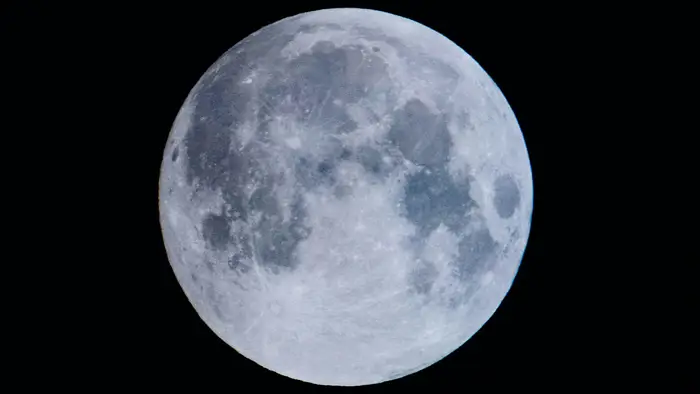
The Milky Way’s dust, grain by grain, is enriched by events like V572 Velorum. Image: Unsplash.