Webb's Earliest Supernova GRB 250314A: A Star That Died 730 Million Years After the Big Bang
A death notice from the universe’s childhood
Somewhere in the deep sky, a massive star died when the universe was still a child. Its light set out on a journey that would last more than 13 billion years, crossing an expanding cosmos, stretching from searing gamma rays into the infrared, and finally arriving at telescopes on and around a small blue planet that did not yet exist when the explosion happened. When astronomers pieced the story together, they found something they had not quite expected: the oldest stellar death ever seen looks, in its essential features, like the stellar deaths happening around us today.
That is the central surprise of GRB 250314A, the supernova identified by NASA’s James Webb Space Telescope. Webb observed a supernova that exploded when the universe was only 730 million years old, the earliest detection of its kind to date. In the language of cosmology, that is a universe only about five percent of its current age, a time when the first galaxies were still assembling, when heavy elements were far rarer than they are now, and when the gas between galaxies was still largely opaque to high-energy light.
The record matters not because astronomers enjoy collecting superlatives, although they do, but because it tests an assumption. The first stars, the reasoning went, should have been different: more massive, poorer in the elements forged by earlier generations of stars, and shorter lived. Their explosions, therefore, might also have been different, shaped by chemistry and conditions that no longer exist. Webb’s answer, at least for this one star, is more unsettling and more exciting than a simple confirmation. It looks familiar. The tools astronomers use to understand nearby supernovae, it turns out, may reach much further back in time than anyone had a right to expect.
That familiarity is not the same as identity. Researchers are careful to say that more data are needed before they can determine why such an early supernova resembles nearby ones, and what tiny differences might be hiding in the light. But the very fact that the comparison can be made, across such an abyss of time, changes what the next observations can do. If a supernova from the first billion years can be read with familiar models, then every future flash from that era becomes a potential laboratory, not just a curiosity.

A flash in the dark sky can carry news from the universe’s first billion years. Image: Unsplash.
Ten seconds that changed the observing plan
The story did not begin with Webb. It began, as so many modern astronomy stories do, with an alarm. On March 14, 2025, the Space-based multi-band astronomical Variable Objects Monitor, known as SVOM, detected a powerful gamma-ray burst. SVOM is a Franco-Chinese telescope, launched in 2024, designed precisely for this kind of work: to catch fleeting, violent events and tell the rest of the world where to look, quickly.
Gamma-ray bursts are the most luminous explosions known, brief flashes of high-energy radiation that can, for a few seconds, outshine everything else in the observable universe. They come in different flavours. Bursts lasting only a few seconds are often linked to collisions involving neutron stars. Longer bursts, like this one, which lasted around ten seconds, are frequently linked to the explosive deaths of massive stars. That distinction mattered immediately. A ten-second burst was a hint, not a proof, that a massive star had just died, and that a supernova might follow.
Within an hour and a half, NASA’s Neil Gehrels Swift Observatory pinpointed the X-ray source’s location on the sky. That precision is the unglamorous hero of time-domain astronomy. A gamma-ray burst, on its own, is a direction with a large uncertainty. Swift’s localisation turned a patch of sky into a target, and enabled the observations that would pin down the distance. Eleven hours later, the Nordic Optical Telescope on the Canary Islands revealed an infrared-light afterglow, an indication that the burst might be associated with a very distant object. Four hours after that, the European Southern Observatory’s Very Large Telescope in Chile estimated that the object existed 730 million years after the Big Bang.
Think about that chain for a moment, because it is a portrait of how astronomy now works. No single telescope, however powerful, could have told this story alone. SVOM heard the shout. Swift found the address. A ground-based telescope in the Canary Islands saw the fading glow. A giant telescope in Chile measured the distance. And Webb, the most sensitive infrared observatory ever flown, was called in to do the thing only it could do: to show, directly, that the light was from a supernova, a collapsing massive star, rather than from something else that merely looked similar from far away.
“Only Webb could directly show that this light is from a supernova — a collapsing massive star,” said Andrew Levan, the lead author of one of two new papers on the event in Astronomy and Astrophysics Letters, and a professor at Radboud University in Nijmegen, Netherlands, and the University of Warwick in the United Kingdom. “This observation also demonstrates that we can use Webb to find individual stars when the universe was only 5% of its current age.”
That last sentence deserves to sit for a while. Individual stars. Not just galaxies, not just smudges of blended light, but individual stars, at a time when the universe was five percent of its present age. For most of the history of astronomy, that sentence would have sounded like science fiction. Webb has made it a research programme.
Why the supernova took months to brighten
One of the strangest features of GRB 250314A, to anyone familiar with nearby supernovae, is its tempo. A gamma-ray burst typically lasts for seconds to minutes. A supernova, by contrast, rapidly brightens over several weeks before it slowly dims. This supernova, however, brightened over months.
The reason is not that the star exploded in slow motion. The reason is that the universe itself stretched the signal on its long journey to us. As light travels across an expanding cosmos, its wavelength is stretched, shifting it toward the red and infrared end of the spectrum. Time, too, is stretched. An event that unfolds over weeks in its own rest frame can appear to unfold over months when seen from 13 billion years away, because the expansion of space dilates the arrival times of the photons.
Webb’s observers understood this, and they planned accordingly. The telescope’s observations were intentionally taken three and a half months after the gamma-ray burst ended, because the underlying supernova was expected to be brightest at that time, in our stretched-out view. Webb took those quick-turn observations on July 1, 2025, using its Near-Infrared Camera, the instrument best suited to catching light that has been reddened by cosmic expansion into the infrared.
That timing is a small masterpiece of prediction. Astronomers did not simply point Webb at the sky and hope. They calculated, from the burst’s distance and the physics of expanding space, when the supernova’s light should peak as seen from Earth, and they scheduled one of the world’s most oversubscribed telescopes to look at exactly that moment. When Webb looked, the supernova was there.
“Webb provided the rapid and sensitive follow-up we needed,” said Benjamin Schneider, a co-author and a postdoctoral researcher at the Laboratoire d’Astrophysique de Marseille in France. Rapid, in this context, does not mean instantaneous. It means a global network, spanning satellites and mountaintops, moving fast enough that a months-long cosmic event could still be caught at its peak.
The follow-up also revealed the supernova’s host galaxy, faint and distant, blended into a few pixels in Webb’s images. That may sound like a disappointment, a smudge where a spiral should be, but in context it is a breakthrough. Seeing the host galaxy at all, at this distance, tells astronomers about the environment in which this early massive star lived and died. And it sets up the next step, which is to use the afterglows of gamma-ray bursts themselves as probes, letting Webb read the fingerprint of distant galaxies from the light that passes through and around them.

Webb’s infrared vision can pick out a faint host galaxy from light that left it billions of years ago. Image: Unsplash.
The previous record, and why breaking it by so much matters
Before GRB 250314A, Webb’s own record for the earliest supernova stood at a supernova that exploded when the universe was 1.8 billion years old. The new record does not merely edge past that mark. It leaps more than a billion years further back, into the first billion years of cosmic history, a period from which only a handful of gamma-ray bursts have been detected in the last fifty years.
“There are only a handful of gamma-ray bursts in the last 50 years that have been detected in the first billion years of the universe,” Levan said. “This particular event is very rare and very exciting.”
Rarity has a scientific consequence. When events are rare, each one carries disproportionate weight. A single well-observed supernova from 730 million years after the Big Bang can challenge, or confirm, models that were built from thousands of nearby explosions. It can tell astronomers whether the physics of massive stars, the way they burn, collapse, and expel their outer layers, was already settled in the early universe, or whether it was still finding its form.
The comparison the researchers made was deliberately conservative. They took what they know in great detail, modern, nearby supernovae, and they compared the ancient explosion to that template. The two turned out to be very similar, which surprised them. That surprise is worth unpacking, because it is not a shrug. It is a clue.
Early stars likely contained fewer heavy elements, were more massive, and led shorter lives than the stars exploding around us today. Heavy elements, in astronomy’s broad usage, means everything heavier than hydrogen and helium, the elements forged in stars and scattered by supernovae. A star born in a universe that had barely begun to forge those elements would have started life with a different chemical recipe. Its interior, its winds, its final collapse, might all have been expected to behave differently.
They also existed during the Era of Reionization, when gas between galaxies was largely opaque to high-energy light. This was the epoch when the first stars and galaxies were beginning to ionise the hydrogen that filled the universe, turning a dark, foggy cosmos transparent. A supernova exploding in that fog is not just a dying star. It is a lamp switched on in the fog, a source of energy and heavy elements injected into an environment that was still being transformed.
And yet, the light looks modern. “We went in with open minds,” said Nial Tanvir, a co-author and a professor at the University of Leicester in the United Kingdom. “And lo and behold, Webb showed that this supernova looks exactly like modern supernovae.”
That word, exactly, should be read with a scientist’s caution. It means that, within the precision of the current data, the spectrum and brightness evolution match the modern template remarkably well. It does not mean that the ancient star was identical to a modern star in every respect. Before researchers can determine why such an early supernova is similar to nearby supernovae, more data are needed to pinpoint tiny differences, the subtle fingerprints that might reveal a different mass, a different composition, or a different explosion mechanism hiding beneath a familiar shape.
One co-author, Antonio Martin-Carrillo of University College Dublin, put the modelling surprise plainly in reporting on the study, noting that the team’s model worked remarkably well. That is the kind of sentence that, in science, is both a triumph and a provocation. A model that works where it was not expected to work is a model that can now be pushed further, tested against more events, and used to ask sharper questions.
A galaxy in a few pixels
If the supernova is the headline, the host galaxy is the quiet revolution underneath it. Webb’s crisp near-infrared images allowed astronomers to locate the supernova’s faint host galaxy, a galaxy that, in Webb’s view, appears as a reddened smudge blended into a few pixels.
“Webb’s observations indicate that this distant galaxy is similar to other galaxies that existed at the same time,” said Emeric Le Floc’h, a co-author and an astronomer at the CEA Paris-Saclay in France. “Since the galaxy’s light is blended into a few pixels, making the galaxy look like a reddened smudge, what we can learn about it is still limited. Seeing it at all is a breakthrough.”
There is a humility in that statement that is easy to miss, and important to keep. Astronomy at the edge of the observable universe is, in large part, the science of smudges. A galaxy that would contain billions of stars, if seen up close, is reduced by distance and by the limits of optics to a handful of pixels. And yet, from those pixels, astronomers can infer a great deal: the galaxy’s approximate brightness, its colour, which tells them something about the ages of its stars and the dust within it, and its relationship to the supernova that exploded inside it.
The host galaxy matters because supernovae do not happen in a vacuum. They happen in galaxies, in star-forming regions, in environments shaped by previous generations of stars. A massive star that explodes 730 million years after the Big Bang must have formed in a galaxy that was itself young, probably small by modern standards, and actively forming stars. Its explosion would have enriched that galaxy with newly forged elements, blowing a bubble of hot gas into its surroundings, and perhaps triggering or suppressing the formation of neighbouring stars.
When astronomers say the host galaxy is similar to other galaxies from the same time, they are saying something reassuring and something profound at once. Reassuring, because it means this galaxy is not a freak, an outlier that would make the supernova hard to interpret. Profound, because it suggests that by the time the universe was 730 million years old, galaxies had already settled into recognisable patterns, with star formation proceeding in ways that would not look entirely alien to a modern astronomer.
That is also why the team’s next plan matters. The researchers have already laid plans to reenlist Webb in the international effort to learn more about gamma-ray bursts from the early universe. The team has been approved to observe events with Webb, and now has a new aim: to learn more about galaxies in the distant universe by capturing the afterglow of the gamma-ray bursts themselves. “That glow will help Webb see more and give us a ‘fingerprint’ of the galaxy,” Levan said.
A fingerprint, in this metaphor, is a spectrum, a detailed breakdown of light by wavelength that reveals chemical composition, motion, and physical conditions. A gamma-ray burst afterglow, shining through its host galaxy, can act as a backlight, illuminating gas that would otherwise be too faint to see. Webb, with its infrared sensitivity, is ideally placed to read that fingerprint, even when the galaxy itself is only a smudge.
For readers who have followed Webb’s other work, this is a familiar pattern. The telescope has repeatedly turned what looked like a limit, faintness, distance, redness, into a tool. Its earlier discoveries showed how infrared vision could reveal structures hidden to visible-light telescopes, and its studies of supernova-driven winds in the early universe helped explain how the first galaxies cleared the fog around them. GRB 250314A extends that pattern to individual stars, and to a time even closer to the beginning.
What kind of star dies like this?
To understand why GRB 250314A looks the way it does, it helps to picture the kind of star that produces a long gamma-ray burst. It is not a star like the Sun. It is a massive star, many times the Sun’s mass, that has burned through its fuel in a relatively short life, millions of years rather than billions, and has reached a point where no further nuclear burning can support it against its own gravity.
In the standard picture, the core collapses, in a fraction of a second, into a neutron star or a black hole, while the outer layers are expelled in a supernova explosion. If the collapsing core forms a rapidly spinning black hole, or a highly magnetised neutron star, jets of material can be launched along the rotation axis at close to the speed of light. When those jets punch through the star and into space, they produce a gamma-ray burst, a beam of high-energy radiation that, if pointed toward Earth, we see as a brief, brilliant flash.
That is the model, in broad strokes, and it fits the ten-second duration of GRB 250314A. Longer bursts like this one are frequently linked to the explosive deaths of massive stars, as opposed to the shorter bursts linked to neutron star mergers. The supernova that follows, brightening over weeks in its own frame and months in ours, is the expanding debris of the star itself, heated by radioactive decay and by the energy of the collapse, glowing as it expands and cools.
What Webb adds to this picture is a direct confirmation at an unprecedented distance. Before Webb, astronomers could infer, from a gamma-ray burst and its afterglow, that a supernova was probably present. With Webb’s near-infrared images, they could show that the light itself matched a supernova, a collapsing massive star, and not some other phenomenon mimicking it. That distinction, inference versus direct observation, is the difference between a strong suspicion and a measurement.
It also opens a question that will occupy astronomers for years. If a massive star in the early universe, poor in heavy elements, explodes like a modern massive star, what does that say about the role of heavy elements in stellar death? One possibility is that the explosion mechanism is robust, driven more by gravity and by the physics of the collapsing core than by the details of the star’s outer chemistry. Another possibility is that this particular star was not as metal-poor as expected, perhaps because its host galaxy had already been enriched by earlier generations of stars, faster than models assumed. A third possibility is that the similarities are real but superficial, and that finer observations will reveal differences in, for example, the exact mix of elements ejected, the speed of the ejecta, or the shape of the explosion.
All three possibilities are interesting, and they lead to different predictions for the next early supernova Webb observes. That is why a single event, however spectacular, is not the end of the story. It is the calibration point for a new kind of survey, one in which gamma-ray bursts act as signposts, pointing Webb toward the earliest stellar deaths, and Webb, in turn, reads their light with a precision that was impossible a generation ago.

The first stars lived fast and died young, seeding their galaxies with new elements. Image: Unsplash.
How Webb sees what other telescopes cannot
Part of the story of GRB 250314A is a story about wavelength. The James Webb Space Telescope is the world’s premier space science observatory for infrared astronomy, an international programme led by NASA with its partners, the European Space Agency and the Canadian Space Agency. Its mirrors and instruments are designed to collect infrared light, the kind of light that, after billions of years of cosmic expansion, is what remains of the visible and ultraviolet light emitted by the earliest stars and galaxies.
That is why Webb could do what other telescopes could not, in this case. A supernova at a redshift of about 7.3, a measure of how much its light has been stretched by the expansion of the universe, has its visible light shifted far into the infrared by the time it reaches us. A telescope working only in visible light would see, at best, a faint, reddened ghost, or nothing at all. Webb, working in the near-infrared, sees the supernova near the peak of its shifted brightness.
The choice of instrument matters, too. Webb’s Near-Infrared Camera, used for the July 1 observations, combines a wide field of view with sharp resolution, allowing astronomers to separate the supernova’s light from the light of its host galaxy, even when both are faint and close together on the sky. That separation is essential. Without it, the supernova’s spectrum would be contaminated by the galaxy’s light, and the comparison to modern supernovae would be far less clean.
There is also a lesson here about time. Webb is often described, correctly, as a telescope that looks back in time, because the light it collects left its sources billions of years ago. But GRB 250314A shows a second kind of time travel. Webb also had to wait, in a sense, for the supernova to brighten in our frame, and to schedule its observations for a moment three and a half months after the burst, when the time-dilated explosion would be at its peak. Looking back in time, in practice, requires exquisite timing in the present.
That timing was made possible by the Director’s Discretionary Time programme, a mechanism that allows Webb to respond rapidly to unexpected, high-priority events, rather than waiting for the next regular observing cycle. Without such a mechanism, a supernova that peaks months after its burst might still be observable, but the chance to catch it at its brightest, with the best signal, could be lost. The programme is a recognition that the universe does not always respect observing schedules, and that the most interesting events are often the ones nobody predicted.
For the wider field, the success of this rapid response is a template. The team has been approved to observe future gamma-ray bursts with Webb, and the goal is no longer just to confirm individual supernovae, but to build a sample. A sample of early supernovae, each with a measured spectrum and a host galaxy, would allow astronomers to ask statistical questions: Do early supernovae, on average, look like modern ones, or was GRB 250314A an exception? Do their host galaxies follow the same patterns as later galaxies? Do the elements they eject match the enrichment history inferred from other observations?
Those questions cannot be answered with one event. They require patience, and a network of telescopes that can keep listening for the next ten-second shout from the early universe.
The first billion years, in context
To place GRB 250314A in context, it helps to recall what the first billion years of the universe were like. After the Big Bang, the universe expanded and cooled, and for hundreds of millions of years, there were no stars, no galaxies, only dark, cooling gas. Then, somewhere, the first stars ignited, massive, hot, and short-lived, ending the cosmic dark ages and beginning the process of reionisation, in which their ultraviolet light ionised the hydrogen around them.
By 730 million years after the Big Bang, that process was well under way, but not complete. Galaxies were forming, merging, and forming stars at a furious pace by modern standards, in small, dense systems that would eventually grow into the galaxies we see today. Heavy elements, forged in the first stars and scattered by their supernovae, were beginning to accumulate, but they were still rare compared to the present day.
A supernova in that era is therefore not just a dying star. It is a moment in the chemical history of the universe, a point at which a new batch of heavy elements was injected into a young galaxy, and a burst of energy was released into gas that was still being ionised. The supernova’s light, travelling to us, carries information about all of that: about the star, about its galaxy, and about the intervening gas it passed through.
That is why astronomers are so interested in the afterglow, as well as the supernova itself. The afterglow, the fading light that follows a gamma-ray burst, can be absorbed and re-emitted by gas in the host galaxy and along the line of sight, leaving fingerprints in its spectrum. Those fingerprints, read by Webb, can reveal the composition and motion of gas that is otherwise invisible, and can help astronomers map the progress of reionisation in different parts of the early universe.
It is also why the similarity to modern supernovae is so thought-provoking. If the physics of stellar death was already settled by 730 million years after the Big Bang, then the first stars may have been less exotic than some models suggested, or the transition from exotic first stars to more familiar stars may have happened faster than expected. If, on the other hand, the similarity is only apparent, and finer data reveal systematic differences, then GRB 250314A will have pointed the way to a new understanding of how the first stars died, and how their deaths shaped the galaxies that followed.
Either way, the record will not stand forever. Webb is still observing, and new gamma-ray bursts from the early universe are still being detected by SVOM, Swift, and their successors. The next record-breaking supernova may already be on its way to us, its light travelling across billions of years, waiting for a telescope sensitive enough, and a team quick enough, to catch it at its peak. When it arrives, astronomers will compare it to GRB 250314A, just as they compared GRB 250314A to the supernovae that came before it, and the story of the first stars will become a little clearer.
That is the slow, patient work of astronomy, and it is also its romance. A star dies, in a galaxy we will never visit, at a time we can barely imagine, and billions of years later, its light falls on a mirror in space, and we learn, from a smudge and a spectrum, that the universe’s childhood was both stranger and more familiar than we thought.

Every early supernova is a lamp in the fog of the young universe. Image: Unsplash.
What to watch next
The immediate future of this research is already taking shape. The team behind GRB 250314A has been approved to observe future gamma-ray bursts with Webb, with the aim of using their afterglows to learn more about distant galaxies. That programme will not produce results overnight. Gamma-ray bursts from the first billion years are rare, and each one requires the same relay race that made GRB 250314A possible: a detection, a localisation, a distance measurement, and a carefully timed Webb observation.
But the infrastructure for that relay is better than it has ever been. SVOM, launched in 2024, is designed to detect fleeting events and alert the world quickly. Swift, despite its age and its recent end of operations after more than two decades, demonstrated how a rapid-response satellite could transform time-domain astronomy. Ground-based telescopes, from the Canary Islands to Chile, have shown they can measure distances within hours. And Webb has shown it can respond, with discretionary time, to catch a supernova at its time-dilated peak.
For readers following Webb’s work more broadly, GRB 250314A sits alongside a growing collection of early-universe results, from the telescope’s surveys of distant galaxies to its studies of tiny brown dwarfs and planet formation in much nearer star-forming regions. The common thread is infrared vision, and the ability to separate faint, distant light from the glare of nearer objects. Whether Webb is looking at a planet-forming disc or at a supernova from the first billion years, it is doing the same thing: reading light that has been stretched, reddened, and dimmed by distance, and extracting a story from it.
There is also a broader lesson, for anyone who follows space news, about how records are made and broken. The record for the earliest supernova was broken not by a single telescope, but by a network, and not by a single observation, but by a chain of observations, each building on the last. The next record will likely be broken the same way, by a team that is ready to move fast when the next alarm sounds, and by a telescope that can look in the infrared, at the right moment, for a star that died before Earth existed.
For now, GRB 250314A stands as a milestone. It is the earliest, farthest supernova ever detected, a star that died when the universe was 730 million years old, observed by Webb on July 1, 2025, after a gamma-ray burst on March 14, 2025, that set telescopes around the world in motion. Its light looks, to our surprise, like the light of modern supernovae. Its host galaxy, a reddened smudge in a few pixels, looks like other galaxies from its time. And its story, told in two papers and in NASA’s account of the observation, reminds us that the early universe, for all its strangeness, was already building the familiar physics that still governs the deaths of stars today.
That is a kicker worth ending on, not because it closes the question, but because it opens it. If a star that died in the universe’s childhood can look so modern, what else from that era is waiting, in the dark, to look familiar? The only way to find out is to keep listening for the next ten seconds that change everything, and to keep Webb ready to look, three and a half months later, when the light finally peaks.
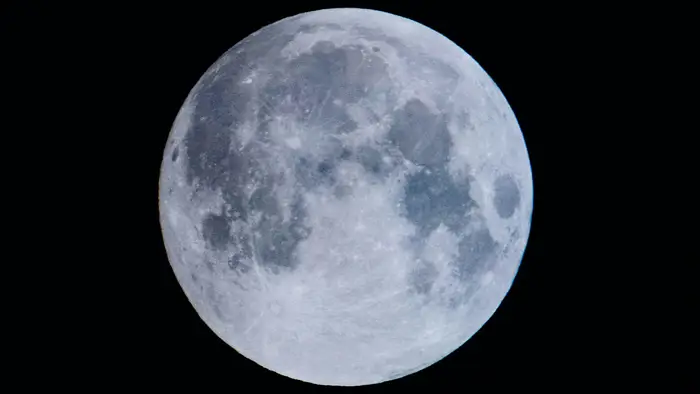
The next record-breaking supernova may already be on its way to us. Image: Unsplash.