Starlink 15-16 Launch: SpaceX's 700th Falcon 9 Flight Sends 27 Satellites Skyward
SpaceX is set to open a busy week of launches with a midnight flight from the California coast. The Starlink 15-16 mission is scheduled to lift off from Space Launch Complex 4 East at Vandenberg Space Force Base at 10:46 p.m. Pacific Time on Monday, October 26, which is 05:46 UTC and 12:46 WIB on Tuesday, October 27. A Falcon 9 rocket will carry 27 Starlink V2 Mini satellites toward low Earth orbit on a southeasterly trajectory, and if all goes to plan, the mission will become the 700th flight of a Falcon 9 rocket overall.
The launch window extends until 1:45 a.m. Pacific Time on Tuesday, or 08:45 UTC and 15:45 WIB, giving SpaceX roughly three hours of margin if the countdown needs to pause for weather, range, or technical reasons. As with every Falcon 9 flight, the published time is a target rather than a promise, and the team can hold or recycle the countdown inside the window.
This is a mission that has already waited once. Starlink 15-16 was originally scheduled to launch on October 23, but it slipped after delays to the preceding mission from the same pad, Starlink 15-15. That flight eventually lifted off on October 23, and the ripple effect pushed 15-16 to the early hours of Tuesday. The delay is a reminder of how tightly SpaceX sequences its West Coast manifest: two missions sharing one pad cannot fly back to back without turnaround time for refurbishment, propellant loading, and range clearance.
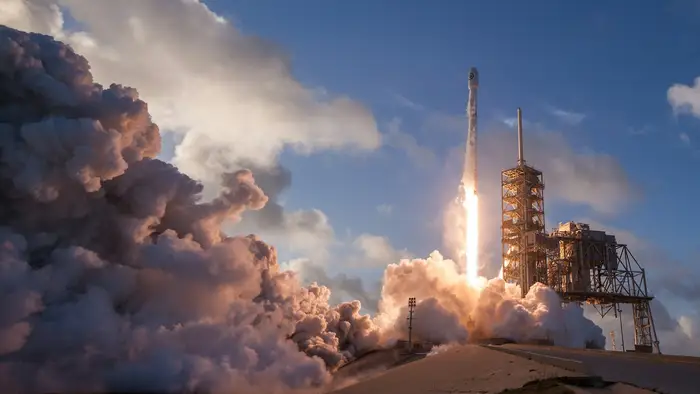
A rocket climbs away from its launch pad into the night sky. Image: Unsplash.
A midnight flight with a veteran booster
The first stage assigned to Starlink 15-16 is booster B1082, which will be making its 26th flight. That number alone tells a story about how far reusability has come. When SpaceX first landed an orbital-class booster in 2015, recovering a rocket at all was a novelty. A decade later, a single booster flying 26 times is routine enough that it barely makes the headline, yet it remains an extraordinary engineering achievement: the same aluminum-lithium structure, the same nine Merlin engines, and the same grid fins returning from the edge of space again and again.
B1082 has had a varied career. According to the mission preview published by NASASpaceFlight, its previous flights include the USSF-62 mission carrying the Weather System Follow-on Microwave satellite, the OneWeb 20 mission, the classified NROL-145 mission, the Transporter 18 rideshare flight, and 21 Starlink missions. That mix of national-security, commercial, and constellation work is typical of the modern Falcon 9 fleet, where boosters rotate between customers rather than being dedicated to one kind of payload.
After stage separation, B1082 is planned to land on the droneship Of Course I Still Love You, stationed in the Pacific Ocean downrange from Vandenberg. The droneship landing is now the standard recovery mode for West Coast Starlink missions, since the southeasterly trajectory does not allow a return to the launch site. If the landing succeeds, B1082 will be towed back to port, inspected, and prepared for a 27th flight, continuing a cycle that has made Falcon 9 the most-flown orbital rocket in history.
The Falcon 9 itself is a two-stage, 70-metre-tall vehicle. Its first stage is powered by nine Merlin 1D engines burning RP-1 kerosene and liquid oxygen, while the second stage uses a single vacuum-optimized Merlin engine. Both stages use the same propellant combination, and both the first stage and the payload fairings are recovered and reused. That reusability is the foundation of SpaceX’s launch cadence: without it, flying several times a week would be economically impossible.
The 700-flight milestone
If Starlink 15-16 flies as scheduled, it will be the 700th mission of a Falcon 9 rocket. The milestone is worth pausing on. The Falcon 9 first flew in June 2010, and for its first several years it launched a handful of times annually. The cadence accelerated sharply once booster landings became reliable, and in recent years SpaceX has flown more Falcon 9 missions in a single year than most rocket families manage in a decade.
The 700th flight is not a record that SpaceX set out to chase; it is a byproduct of a launch rate driven overwhelmingly by Starlink. Building and replenishing a constellation of thousands of satellites requires a relentless tempo, and Falcon 9 has become the workhorse that makes that tempo possible. Each Starlink launch adds another batch of satellites to the largest constellation ever flown, and each flight adds another data point to the reusability record.
For context on how quickly the numbers have been climbing, SpaceX passed its 100th Falcon launch of 2026 earlier this year, a milestone covered in One Hundred Falcons: SpaceX Hits Triple-Digit Launches in 2026 as Booster B1067 Flies a Record 37th Time. The 700-flight mark for the rocket family as a whole is the cumulative version of the same story: a vehicle that was once an upstart challenger is now the backbone of global orbital access.
What 27 more satellites mean
Starlink 15-16 will be the 426th batch of Starlink satellites launched, according to launch trackers, and it will push the total number of Starlink satellites launched past 12,984. Not every satellite launched remains in service — some have been deorbited at the end of their lives, and a small number have failed — but the operational constellation is now measured in the thousands, serving customers on every continent.
The satellites on this flight are V2 Mini spacecraft, the current workhorse design for Falcon 9 Starlink launches. The V2 Mini is larger and more capable than the earlier V1.5 satellites, with more bandwidth per spacecraft and improved propulsion. They are deployed into low Earth orbit and then raise themselves to their operational altitude using onboard electric propulsion, a process that takes weeks. Once in position, they join the constellation’s mesh, relaying internet traffic between ground stations and user terminals.
The pace of Starlink expansion has drawn both admiration and scrutiny. On one hand, the constellation has brought broadband to remote communities, ships at sea, aircraft in flight, and disaster zones where terrestrial networks have failed. On the other, astronomers have raised concerns about satellite brightness and its effect on observations, and regulators have wrestled with questions about orbital congestion and spectrum use. SpaceX has responded with design changes, including darker coatings and visor-like shades on earlier designs, and it now coordinates with astronomers on brightness mitigation.
The commercial stakes are also growing. The constellation is no longer just a consumer broadband service; it is expanding into direct-to-cell connectivity, aviation, maritime, and government markets. Regulatory decisions continue to shape that expansion, including the recent decision covered in FCC Clears SpaceX’s 15,000 Starlink Mobile Satellites, a Direct Carrier Challenge, which cleared the way for thousands of additional satellites intended to connect ordinary mobile phones directly from space. Each new batch of satellites, including the 27 on Starlink 15-16, adds capacity to a network whose ambitions keep widening.
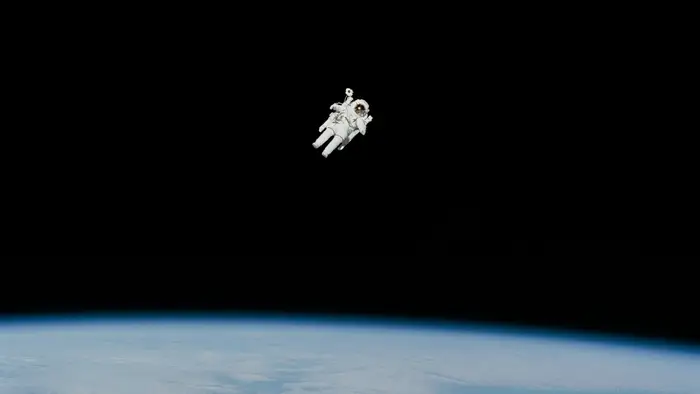
Earth seen from orbit, where thousands of Starlink satellites now relay internet traffic. Image: Unsplash.
A crowded week at Vandenberg and beyond
Starlink 15-16 is only the first of several launches scheduled this week. SpaceX is set to launch three Falcon 9 rockets in the coming days, including two Starlink batches and a classified payload for the United States Space Force. The next Starlink mission, Starlink 15-18, is scheduled for October 30, again from Vandenberg’s SLC-4E, and will carry another batch of 27 satellites.
Internationally, the week also features India’s GSLV-F18 mission carrying the NVS-03 navigation satellite, which we covered in a separate article earlier today. The clustering of launches is no coincidence: launch windows, range availability, and satellite production schedules all conspire to create busy weeks followed by quieter ones, and late October 2026 happens to be a busy stretch.
The immediate predecessor to this mission, Starlink 15-15, is a useful reference point for what to expect. That flight lifted off from the same pad on October 23 after multiple attempts, carrying 27 satellites and marking the 36th flight of booster B1063. The full story is told in Fourth Time’s the Charm: SpaceX Launches 27 Starlinks as Veteran Booster B1063 Flies for the 36th Time. The fact that 15-15 needed four attempts before it got off the ground is a reminder that even the most routine-looking Starlink launch can be delayed by weather, technical checks, or range conflicts, and that patience is part of the job for launch watchers.
For Vandenberg itself, the pace is historic. The base, established in 1941 and operated by Space Launch Delta 30, has become one of the busiest spaceports on the planet, hosting SpaceX, the United States Space Force, NASA, and other operators. Its coastal location makes it ideal for polar and Sun-synchronous orbits, which is why so many Starlink missions fly southeasterly from its pads, arcing over the Pacific rather than over populated land.
How the flight will unfold
The sequence for a Starlink mission from Vandenberg is well rehearsed. About 35 minutes before liftoff, the Falcon 9 begins loading RP-1 and liquid oxygen. The countdown proceeds through a series of automated holds and checks, and the nine Merlin engines ignite in the final seconds before liftoff. The rocket climbs away from the pad, pitches onto its southeasterly trajectory, and passes through maximum aerodynamic pressure about a minute into flight.
Roughly two and a half minutes after liftoff, the first stage shuts down its engines and separates. The second stage ignites its single Merlin vacuum engine and continues toward orbit, while the booster performs a flip maneuver, a boostback burn, and a controlled descent toward the droneship. The payload fairings, which protect the satellites during ascent, separate and fall back toward the ocean under parachutes for recovery.
About an hour after liftoff, the second stage deploys the 27 satellites in a single batch. The satellites then begin their slow climb to operational altitude, unfurling their solar arrays and checking out their systems. SpaceX typically confirms a successful deployment on its social media channels shortly after the event, and the satellites become trackable by amateur observers within days as they spread out along their orbital plane.
For viewers, the best way to watch is through SpaceX’s official webcast, which typically begins 15 to 30 minutes before liftoff and covers the full flight through satellite deployment. Because this launch takes place in the middle of the night in California, the plume may be visible across a wide area of the western United States if skies are clear, and the first stage’s re-entry burn can produce a distinctive glow over the Pacific.
Why this launch matters beyond the numbers
It is easy to treat a Starlink launch as routine. SpaceX flies them so often that each one can blur into the next, and the headlines rarely change: another Falcon 9, another 27 satellites, another droneship landing. But the routine is itself the story. A launch system that can fly its 700th mission, land its booster for the 26th time, and slot another batch of satellites into the largest constellation in history — all before lunch in Jakarta — represents a transformation in what access to space costs and how often it happens.
That transformation has consequences far beyond SpaceX’s own business. Cheaper, more frequent launches have enabled a boom in small satellites, Earth observation, and scientific missions that would have been unaffordable a decade ago. They have also forced competitors, from established aerospace giants to national space agencies, to rethink their own launch strategies. Europe’s new rockets, America’s next-generation heavy lifters, and China’s rapidly growing commercial sector are all, in part, responses to the cadence that Falcon 9 made normal.
There are also open questions that no single launch will settle. How many satellites can low Earth orbit safely hold? How should regulators balance constellation growth against astronomy and orbital debris? How will direct-to-cell services reshape the telecom industry? Each Starlink launch adds weight to those questions, and each one makes the answers more urgent.
For now, though, the immediate question is simpler: will B1082 fly for the 26th time, will 27 more satellites join the constellation, and will Falcon 9 notch its 700th flight? The answers will come in the early hours of Tuesday, first as a flash of light over Vandenberg, then as a booster touching down on a droneship in the Pacific, and finally as a batch of new satellites spreading out across the sky.
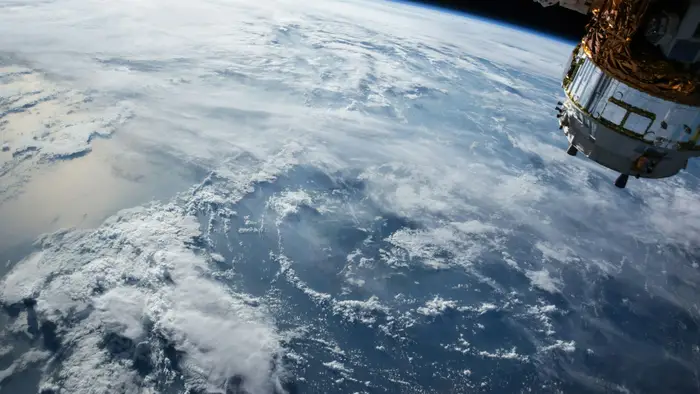
A satellite in orbit above Earth, similar to the Starlink spacecraft joining the constellation. Image: Unsplash.
The view from the pad
For the teams at Vandenberg, the final hours before launch follow a familiar rhythm: weather briefings, range checks, propellant loading, and the quiet tension of a countdown that has already slipped once. The original October 23 date came and went, and the revised window gives engineers a clean run at the target, but as with every launch, the usual caveats apply. A technical issue, a stray boat in the hazard area, or a gust of wind above limits can move a liftoff at short notice.
The timing of the launch, late on a Monday night in California, means much of the United States will be asleep when the Falcon 9 climbs into the dark. But the audience that matters most will be awake: the flight dynamics teams tracking the ascent, the recovery crews aboard the droneship, and the satellite engineers waiting for the first signals from the newly deployed batch. For them, the night is the moment when months of preparation either pay off or start over.
There is also a distinctly human side to a milestone like the 700th flight. The Falcon 9 team has spent sixteen years refining this vehicle, from its first uncertain flights through the landing breakthroughs, the Block 5 upgrade, and the relentless Starlink cadence. Each flight carries the accumulated knowledge of the ones before it, and each landing makes the next one a little more routine. The 700th flight is not a finish line; it is a checkpoint on the way to a thousand.
And for the people who will use the satellites, the launch is almost invisible. A farmer in a remote valley, a sailor crossing the Pacific, a student in a village far from any fibre cable — none of them will watch the webcast or track the booster. They will simply find, one day, that their connection is a little faster or a little more reliable, because 27 more satellites joined the mesh overhead. That invisibility is the point of infrastructure: it works best when nobody has to think about it.
Stars over a dark landscape, a reminder of the satellites passing overhead each night. Image: Unsplash.
What to watch for next
If Starlink 15-16 launches on schedule, the next milestones will arrive quickly. SpaceX will confirm satellite deployment about an hour after liftoff, and the booster landing will be visible on the webcast within minutes of stage separation. In the days that follow, the satellites will raise their orbits and begin service, while trackers will publish passes for observers hoping to spot the new train of satellites crossing the evening sky.
The next Starlink mission, 15-18, is already lined up for October 30, and the classified Space Force payload will add another dimension to the week’s manifest. Together, the three Falcon 9 flights will underline just how busy the West Coast range has become, and how central SpaceX’s cadence is to the global launch market.
For SpaceNews readers, the story does not end at liftoff. We will follow the outcome of this mission, the booster recovery, and the satellite deployment, and we will keep tracking the Starlink constellation as it grows toward its next milestones. The sky above us is getting busier every week, and every launch is another chapter in that story.
When the Falcon 9 lifts off from Vandenberg in the small hours of Tuesday, it will carry more than 27 satellites and one veteran booster. It will carry the 700th flight of a rocket that changed the economics of spaceflight, the next batch of the largest constellation ever built, and a reminder that the most extraordinary thing about modern spaceflight is how ordinary it has become — a rocket that flies, lands, and flies again, while the rest of us sleep.
Earth’s horizon glowing against the darkness of space. Image: Unsplash.