Spacewalk 101 IROSA November 5 2026: Menon and Kutryk Install the Final Wing
Tonight, two astronauts will step out of the International Space Station and finish a job that has taken more than five years, eight spacewalks, and one of the most patient construction campaigns ever attempted in orbit. NASA astronaut Anil Menon and Canadian Space Agency astronaut Joshua Kutryk are scheduled to leave the station’s Quest airlock at 8:30 a.m. EST on Thursday, November 5 — 8:30 p.m. in Jakarta — to install the eighth and final International Space Station Roll-Out Solar Array, known as an iROSA, on the station’s 3B power channel. When the wing unrolls and locks into place, the orbiting laboratory’s long power upgrade will be complete, and the station will carry the full electrical capacity it needs for its final years of science — and for its carefully planned farewell at the end of the decade.
NASA counts the outing as U.S. spacewalk 101, the 101st American spacewalk conducted from the station, and the 286th spacewalk devoted to station assembly, maintenance, and upgrades. It is the second spacewalk in a week for the same two astronauts. On October 29, Menon and Kutryk spent 7 hours and 11 minutes outside the station installing the seventh iROSA on the 2A power channel, an outing NASA designated U.S. spacewalk 100. Tonight they go back out to finish what they started.
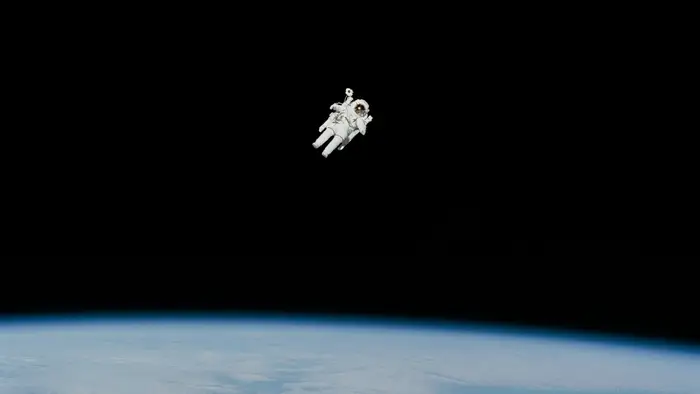
The job tonight
The plan for the evening is straightforward to describe and extraordinarily difficult to execute. Menon and Kutryk will work on the station’s starboard truss, at the far right end of the structure, where the eighth and final iROSA must be mounted on the 3B power channel. The array itself is a rolled-up wing of solar cells, compact enough to be carried into position by hand, that unfurls once it is bolted down and released — a design that lets a wing far more powerful than its size suggests be delivered to orbit folded up like a carpet and then unrolled in space.
Each iROSA measures about 60 feet long by 20 feet wide once deployed. The station’s original solar wings, by comparison, measure 112 feet long by 39 feet wide — roughly twice as long and twice as wide. The new arrays are smaller because their cells are far more efficient than the technology flown when the station was built, and because they are mounted in front of the original wings, partially shading them while adding their own output on top. Eight of them, working together, will raise the station’s available power from 160 kilowatts to about 215 kilowatts, a gain of roughly 30 percent that NASA says will support critical operations through the outpost’s final years, including its safe and controlled deorbit after retirement in 2030.
The final installation poses a different challenge from the seven that came before it. Its mounting site sits at the far right end of the station’s main truss, beyond the reach of the Canadarm2 robotic arm that has carried the earlier arrays into position. There is no mechanical shortcut for this one. Instead, the two astronauts will pass the rolled-up array between foot restraints, handing it along the truss by hand in a maneuver the flight team has rehearsed in detail. Flight director Garrett Hehn described the approach at an October 20 briefing at NASA’s Johnson Space Center in Houston, where the spacewalk team laid out the choreography for both outings: the arm does the heavy lifting where it can reach, and the astronauts do the rest themselves.
Inside the station, NASA astronauts Jessica Watkins and Luke Delaney will support the spacewalkers, helping them into and out of their spacesuits, monitoring their progress, and operating Canadarm2. The spacewalk is expected to last about seven hours, which would bring Menon and Kutryk back inside at around 3:30 a.m. Jakarta time on Friday, November 6. NASA+ coverage is scheduled to begin at 7 a.m. EST — 7 p.m. in Jakarta — with live coverage continuing through the outing on NASA’s streaming platforms, including X, YouTube, and Amazon Prime.
A week ago, spacewalk 100
Tonight’s outing is the second half of a pair, and the first half went about as well as a spacewalk can go. On Thursday, October 29, Menon and Kutryk spent 7 hours and 11 minutes outside the station installing the seventh iROSA on the 2A power channel. NASA counted the outing as U.S. spacewalk 100 and the 285th spacewalk for station assembly, maintenance, and upgrades, and Mission Control in Houston described the work as essentially flawless. The array deployed cleanly, and the station’s power system took the new wing into service without incident.
The pictures from that day were striking. A photograph released by the station’s official account on November 3 showed Kutryk floating in his bulky extravehicular mobility unit with a bright Earth filling the background, the newly installed array visible behind him. Days later, Menon shared a video of the new array rotating against a star-studded sky as seen from the station’s Japanese module, a slow, silent turn that made the scale of the machine — and the fragility of the people working on it — impossible to miss. The video, posted on November 1, was a reminder of what the crew had accomplished in a single outing: a wing 60 feet long, installed by two people in suits, in vacuum, moving at 17,500 miles per hour.
For readers following the campaign, the October 29 outing was covered in depth in our report on the ISS Seventh Solar Array Spacewalk October 29: Menon and Kutryk Deploy the Penultimate iROSA, which traced the 7-hour, 11-minute spacewalk from airlock exit to the final deployment. The preview published before that spacewalk, ISS Final Solar Array Spacewalk October 29: Menon and Kutryk to Finish the Station’s Power Upgrade, laid out the two-spacewalk plan that tonight’s outing completes. And the groundwork for both outings was set months earlier, when One More Step: Meir and Menon’s 6.5-Hour Spacewalk Completes the ISS Solar Upgrade Puzzle described the August 6 spacewalk that installed the final set of mounting hardware for the last two wings.
It will be Kutryk’s second spacewalk and Menon’s fifth. The pairing matters: the two men have now worked outside together for a full spacewalk, they know each other’s pace and habits in the suits, and they go into tonight’s outing with the most recent possible rehearsal — the real thing, six days ago, on the same truss, with the same hardware, in the same configuration. In a job where the difference between a smooth installation and a long, cold struggle is often familiarity, that counts for a great deal.
Five years in the making
The power upgrade that ends tonight began in June 2021, when the first iROSA was installed outside the station. The problem it was built to solve was simple and unavoidable: the station’s original solar wings, which have spent more than two decades in orbit, have degraded. Solar cells lose efficiency with age and with exposure to the radiation and micrometeoroid environment of low Earth orbit, and the station’s eight original wings — the vast, golden panels that have defined its silhouette since the early 2000s — no longer produce what they once did. The station’s appetite for power, meanwhile, has only grown, as new modules, new experiments, and new visiting vehicles have added loads the original designers never planned for.
The roll-out array was NASA’s answer: a wing that could be delivered folded, mounted in front of an existing wing, and unrolled to add capacity without replacing the structure that was already there. The design, developed with Redwire Space, uses a composite boom that stores strain energy — the wing is held rolled tight, and when the restraint is released, the boom unwinds and pulls the blanket of solar cells out flat behind it. No motor is needed to deploy it. The mechanism is elegant, and after seven installations, it is proven: every iROSA flown so far has deployed as designed.
The campaign has unfolded in pairs, two arrays at a time, across five years and multiple crews. Each pair arrived aboard a SpaceX Dragon cargo spacecraft, and each installation demanded its own spacewalk, its own choreography, and its own long day in the suits. The seventh and eighth arrays — the pair that closes the program — arrived on a Dragon last month, and their installation was split across the two spacewalks of October 29 and November 5, the final two outings of the upgrade. When the eighth wing deploys tonight, the station will have eight new arrays working alongside its eight original wings, and the augmentation of its power system will be complete.

What the extra power buys
Thirty percent more power sounds abstract until it is translated into what the station actually does with electricity. The International Space Station is, among other things, a power-hungry laboratory: its experiments run heaters, freezers, centrifuges, and spectrometers around the clock; its life-support systems scrub carbon dioxide, recycle water, and generate oxygen; its communications systems keep a constant link to the ground; and its visiting vehicles — Crew Dragon, Cargo Dragon, Cygnus, and the occasional Soyuz — draw power while docked. Every kilowatt the arrays produce is a kilowatt that does not have to be rationed between competing demands.
The upgrade matters most in the station’s final years. NASA plans to retire the station in 2030, and the end of its life is not a matter of simply switching it off. The station must be guided through a safe and controlled deorbit, a carefully sequenced operation that requires power for propulsion, guidance, and communications right up to the end. NASA has said explicitly that the additional power from the iROSA arrays supports critical operations including that deorbit — the new wings are, in a real sense, part of the plan for bringing the station home safely.
There is also the science. The station’s research program has grown steadily more power-intensive, with experiments in materials science, biotechnology, and Earth observation that run for months at a time and cannot tolerate interruption. A station with 215 kilowatts available can run more of them simultaneously, and can run them through the parts of each orbit when the station passes through Earth’s shadow and the arrays produce nothing. The station’s batteries carry it through those 45-minute eclipses, and they charge from the arrays in sunlight; more array capacity means fuller batteries, longer margins, and fewer compromises about which experiments run when.
The numbers tell the story in miniature. Before the upgrade, the station’s available power stood at about 160 kilowatts. With all eight arrays installed, NASA expects about 215 kilowatts — a gain of roughly 55 kilowatts, or about a third more than the station had. To put that in everyday terms, 55 kilowatts is roughly what a small neighborhood draws at peak, or what a dozen average homes use at once. It is a meaningful increase for a machine that is, after all, a house, a laboratory, and a spacecraft all at once, flying 250 miles above the Earth.
The hardest yard
If there is a single reason to watch tonight’s spacewalk closely, it is the final installation’s location. The 3B power channel sits at the far starboard end of the station’s main truss, the long backbone that carries the solar arrays, radiators, and most of the station’s external hardware. The truss is more than 100 meters long, and its far end is a long way from the Quest airlock — and, crucially, beyond the reach of Canadarm2, the 17-meter robotic arm that has been the crew’s extra pair of hands for most of the campaign.
The arm’s limitation shapes the entire plan. For the earlier installations, the arm carried the rolled-up array from its stowage point to the worksite, and the spacewalkers guided it into place. Tonight, the array must travel the last stretch by hand, passed between the astronauts as they move along the truss on foot restraints — the stirrup-like fittings that anchor a spacewalker’s boots to the structure and leave both hands free. It is slow, deliberate work, and it is the kind of task that looks routine on a diagram and feels anything but routine in a pressurized suit, where every movement is an effort and every tool must be tethered against the risk of floating away.
The flight team has planned for the difficulty. The spacewalk’s timeline, built around the roughly seven-hour window, sequences the work so that the array is carried, mounted, and deployed with margin for the unexpected. Spacewalks rarely run exactly to plan — a bolt sticks, a tether snags, a connector needs a second look — and the team’s experience from October 29, when the seventh array went in smoothly, is the best possible preparation. But the 3B site is new ground, and the hand-off along the truss is a maneuver the crew has not performed before on this campaign. It is the last hard part of a five-year job, and it is the part most likely to make tonight interesting.
There is a larger symbolism, too. The station’s truss has been assembled piece by piece across 26 years and hundreds of spacewalks, and the far starboard end is one of the last places on the structure where major new hardware has never been installed. Tonight’s work closes that chapter: when the eighth array deploys, every planned mounting point on the truss will be occupied, and the station’s external configuration will be, for practical purposes, complete. What remains is operation, science, and the long, careful wind-down toward 2030.
How to watch
NASA+ coverage of the spacewalk begins at 7 a.m. EST on Thursday, November 5 — 7 p.m. Western Indonesia Time — with the spacewalk itself scheduled to start at 8:30 a.m. EST, or 8:30 p.m. in Jakarta. The coverage will be carried live on NASA’s streaming platforms, including NASA+, YouTube, X, Amazon Prime, and Discovery+, and NASA will carry the spacewalk at nasa.gov/live. Spacewalk times can shift — NASA already revised the start time once this week, moving it from an earlier plan to the 8:30 a.m. EST start confirmed in its November 2 station blog update, which declared the crew “go” for the final power upgrade spacewalk — so viewers should check NASA’s schedule on the day.
What to watch for: the opening hour, as Menon and Kutryk exit the Quest airlock and make their way along the truss to the worksite; the hand-off of the rolled-up array between foot restraints at the far starboard end, the maneuver that sets this spacewalk apart from the seven before it; the mounting of the array on the 3B channel and the careful bolting-down that precedes deployment; and the deployment itself, the slow unrolling of a 60-foot wing that will catch the sun and begin generating power within minutes. The deployment is the moment the whole campaign has been building toward — a wing unfolding in silence, 250 miles up, with the Earth turning beneath it.
For viewers in Indonesia, the timing is unusually friendly: the spacewalk begins in the evening, runs through the night, and should conclude at around 3:30 a.m. Jakarta time on Friday. It is a long night for anyone watching start to finish, but the key moments — the exit, the hand-off, and the deployment — will fall in the first few hours, well before midnight in Jakarta.

The crew behind the visors
Anil Menon, 43, is a NASA astronaut flying his first long-duration mission aboard the station as part of Expedition 75. Before joining NASA, he was a flight surgeon — a doctor for astronauts — and he has served as a crew member on missions that gave him a ground-level view of spaceflight’s human demands before he ever flew himself. Tonight’s outing will be his fifth spacewalk, and his second in six days, a pace that speaks to both his stamina and the trust Mission Control places in him for the campaign’s most demanding installation.
Joshua Kutryk, 44, is a Canadian Space Agency astronaut and a Royal Canadian Air Force fighter pilot, a background that shows in the methodical, unflappable way he has approached the two spacewalks of this campaign. The October 29 outing was his first spacewalk; tonight’s will be his second. Canada’s contribution to the station is most often associated with Canadarm2, the robotic arm that has done so much of the station’s heavy lifting, and there is a neat symmetry in a Canadian astronaut closing out a power upgrade that the arm helped build — and finishing, by hand, the one installation the arm cannot reach.
The two men have spent the days since October 29 reviewing the first spacewalk, reconfiguring tools, and rehearsing tonight’s sequence. The spacewalk team in Houston, led by flight director Garrett Hehn, has walked through the timeline again, and NASA’s station blog confirmed on November 2 that mission managers had given the crew the go-ahead. The preparation is the unglamorous bulk of spacewalking — hours of procedure review for every minute outside — and it is what makes a seven-hour outing in vacuum look, from the ground, almost routine.
The station’s final chapter
It is worth stepping back from tonight’s timeline to notice what the completion of the power upgrade means for the station as a whole. The International Space Station is 26 years old, a machine that has been continuously inhabited for more than a quarter of a century and that has outlived every expectation set for it at its design. Its retirement in 2030 is now a matter of planning rather than speculation: NASA has contracted for the vehicles and the procedures that will guide it through a controlled reentry, and the station’s remaining years are being spent on the science it was built for, at full power, with the last of its major upgrades complete.
The iROSA campaign is the last great construction project on the station, and its completion tonight marks a transition. There will be more spacewalks — maintenance, repairs, the occasional surprise — but there will be no more new wings, no more additions to the truss, no more chapters of assembly. The station is, after tonight, finished in the sense that matters: everything it was designed to become, it now is. What follows is the long, productive epilogue — the experiments, the crews, the commercial vehicles coming and going — and then, at the decade’s end, the careful, powered descent that the new arrays will help make possible.
That is the deeper story of spacewalk 101. It is not only about a solar array, or about two astronauts, or about a number — 101 — that will look tidy in a record book. It is about a machine that has been built, wing by wing, across a generation, and about the people who built it by hand, in suits, in vacuum, one long night at a time. Tonight, the last wing goes on. The station will be a little brighter, a little more powerful, and a little closer to the end of its working life — and that, after 26 years and 286 spacewalks, is exactly as it should be.

What happens next
If tonight goes to plan, the story moves quickly to verification. NASA will confirm the array’s deployment and measure the station’s new power capacity, and the station’s power system will take the eighth wing into service alongside the other seven. The station’s operators will watch the numbers over the following days, confirming that the 3B channel is delivering as expected and that the full set of eight arrays is producing the roughly 215 kilowatts the upgrade was designed to deliver.
The next spacewalk on the station’s calendar will be a different kind of outing — maintenance rather than construction, the steady work of keeping a 26-year-old machine running. And the crew’s attention will turn to the next arrivals and departures: cargo vehicles, crew rotations, and the science that the upgraded power system exists to support. The power upgrade will fade quickly into the background, which is precisely what a successful upgrade does: it becomes invisible, part of the station’s everyday capability, noticed only if it were ever to fail.
But tonight, for seven hours, it will be anything but invisible. Two astronauts will be outside, at the far end of the truss, finishing by hand what five years of work began. The coverage starts at 7 p.m. Jakarta time. The airlock opens at 8:30 p.m. And by the time the night is over, the International Space Station will have its final wing — and the long story of its construction will be, at last, complete.
