One More Step: Meir and Menon's 6.5-Hour Spacewalk Completes the ISS Solar Upgrade Puzzle
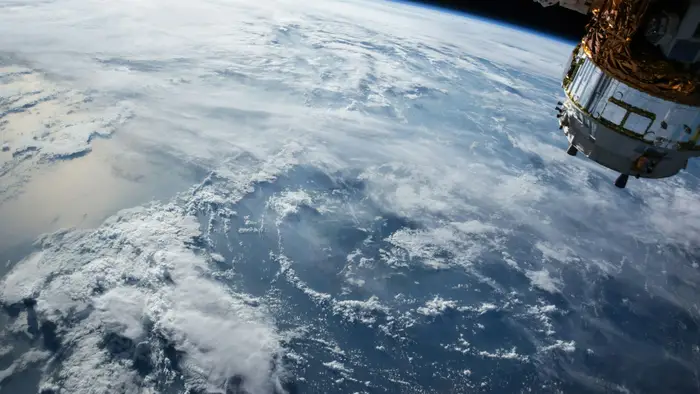
At 8:33 on the morning of August 6, 2026, two figures in bulky white spacesuits pushed out of the International Space Station’s Quest airlock and into the vacuum. For NASA astronaut Anil Menon, it was the first time he had ever floated free in space with nothing but a tether between him and eternity. For his crewmate Jessica Meir, the station’s commander, it was old territory — her sixth spacewalk. Together, over the next six hours and twenty-seven minutes, they would assemble what one space journalist aptly described as a giant erector set on the far starboard tip of the station’s backbone truss: the seventh and final set of mounting brackets that will one day hold the International Space Station’s last new solar wings.
When Meir and Menon re-entered the airlock at 3:00 p.m. EDT, they had completed the 281st spacewalk in the history of station assembly, maintenance, and upgrades — and they had finished the last piece of preparatory construction for the orbiting laboratory’s power system overhaul. The modification kit they bolted onto the 3B power channel means that every one of the station’s eight power channels is now either already augmented or structurally ready to receive an ISS Roll-Out Solar Array, the iROSA wings that have been steadily rejuvenating the station’s electricity supply since 2021.
The Erector Set in Orbit
The day’s primary worksite sat at the extreme starboard end of the station’s integrated truss structure, on the S6 segment — the far right tip of the 109-meter backbone that carries the station’s solar arrays, radiators, and logistics hardware. There, on power channel 3B, Meir and Menon built the modification kit: a lattice of triangular brackets that will serve as the foundation for a future iROSA wing.
The work was methodical, physical, and performed in conditions no construction crew on Earth will ever know. Menon anchored himself to an articulating portable foot restraint — a sort of space-grade work platform that locks an astronaut’s boots in place — mounted atop a worksite interface fixture on the truss. From that stable perch, he could use both hands to maneuver the bulky bracket segments into position while Meir assisted, passed hardware, and managed tethers and tools. Piece by piece, bolt by bolt, the triangular support structure took shape against the mast canister that houses the channel’s existing solar array rotary joint.
Once the skeleton of the mount was secured, the two astronauts routed electrical cabling through the structure — the wiring that will one day carry electricity generated by the new roll-out array into the station’s 3B power channel. Then they wrapped the struts in multi-layer insulation, the familiar gold-and-silver blanketing that shields station hardware from the brutal thermal swings of orbit and from the sandblasting hazard of micrometeoroids. Every step had been rehearsed in NASA’s Neutral Buoyancy Laboratory, the giant swimming pool in Houston where astronauts train for spacewalks, but performing it in the actual vacuum, with the Earth wheeling silently below, is another matter entirely.
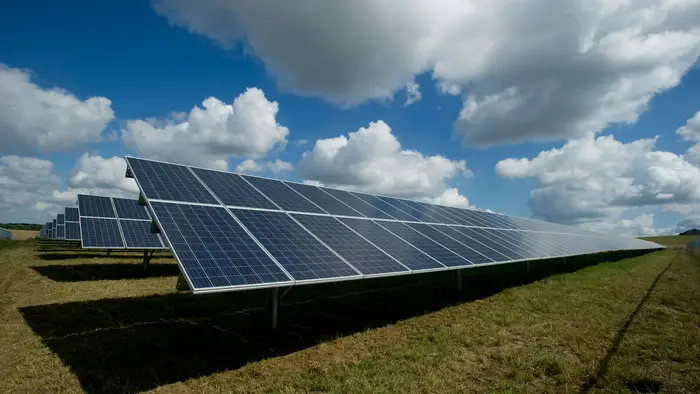
The elegance of the iROSA concept is that the new arrays do not replace the old ones. The station’s original solar wings — eight of them, unfurled during the station’s assembly between 2000 and 2009 — were designed for a 15-year operational life. They have now been working well past that design horizon, and their power output has been gradually degrading as years of atomic oxygen exposure, micrometeoroid impacts, and thermal cycling take their toll on the photovoltaic cells. Rather than removing the aging wings, which would be enormously complex and wasteful, engineers devised the roll-out arrays to be installed directly in front of them, partially shadowing the old arrays while adding fresh generating capacity on top. The paired old-and-new arrays work together, and the combined system is expected to boost the station’s available electrical power by roughly 20 to 30 percent.
Six iROSA wings have already been deployed on prior spacewalks stretching back to 2021, when the first pair was unrolled outside the station. With Thursday’s installation, the mounting hardware is now complete for the seventh array — and, pending the arrival of the final two flight units later this year, the eighth. Only power channel 2A, on the port side of the truss, still awaits its deployed wing.
Why the Station Is Hungry for Power
To understand why two astronauts spent a summer morning bolting brackets to a truss, it helps to appreciate what electricity means aboard the International Space Station. The station is, at its heart, a machine for turning sunlight into science. Its solar arrays feed the life-support systems that scrub carbon dioxide and generate oxygen, the thermal control loops that keep the modules habitable, the communications gear, the robotic arm, and — crucially — the hundreds of experiments running at any given time in the station’s laboratories.
As the original arrays aged, power margins tightened. NASA and its partners have had to manage the station’s electrical budget ever more carefully, scheduling power-hungry activities around orbital daylight and eclipse periods and deferring some upgrades. The iROSA augmentation program, developed with solar array manufacturer Redwire, restores those margins. Each iROSA is a 60-foot-long flexible blanket of advanced solar cells that arrives at the station rolled up like a yoga mat inside a compact canister, then unfurls once its mounting bracket is in place. The technology descends from the Roll-Out Solar Array flown on NASA’s DART asteroid-deflection mission, and its compact stowed volume is exactly what makes it possible to deliver big new wings on cargo vehicles without requiring a dedicated heavy-lift flight for each one.
There is a second, less obvious reason the power upgrade matters: the station’s end of life. NASA’s current plan calls for the International Space Station to be retired around 2030 with a controlled, targeted deorbit — a carefully choreographed reentry that will send the 420-ton complex into a remote stretch of the South Pacific. Executing that maneuver safely requires a healthy, fully powered station right up to the end: the deorbit vehicle will need station systems — attitude control, communications, thermal management — operating at full capability during the final descent campaign. The iROSA wings are, in a very real sense, part of the station’s retirement plan as much as its working life. NASA’s own mission summary for the August 6 spacewalk made the connection explicit, noting that the additional power supports critical systems and the safe, controlled deorbit of the space station.
A Rookie and a Veteran
Spacewalks are among the most demanding things astronauts do, and the pairing on August 6 told its own story about how NASA builds spacewalking expertise. For Anil Menon, a physician and former SpaceX flight surgeon selected as a NASA astronaut in 2021, the EVA was a debut — his first time working outside a spacecraft. There is a particular intensity to a first spacewalk: the suit is a personal spacecraft with its own life support, the training is exhaustive, and yet nothing fully prepares a person for the moment the airlock hatch opens onto the black.
Menon’s crewmate could not have been better chosen for a rookie’s first outing. Jessica Meir, the Expedition 75 commander, was making her sixth career spacewalk. Meir first flew to the station in 2019, and she has since become one of NASA’s most experienced spacewalkers; by one agency tally she has now logged more than 42 hours working outside in the vacuum. On August 6 she served as the steady hand, guiding the choreography of the excursion while Menon found his space legs — or rather, his space boots, locked into the foot restraint.
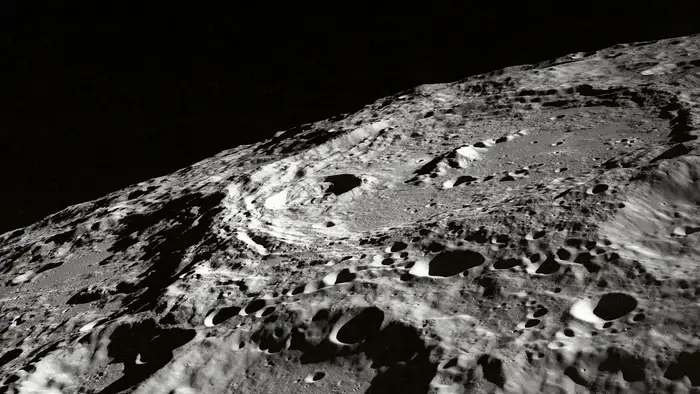
The human moments leaked through even in NASA’s terse operational updates. At one point during the work, Meir drew Menon’s attention to the Moon hanging in the black sky ahead of them. Menon, taking in the view, remarked that he could see a future human moon base there — a small, unscripted exchange that connected the maintenance work at hand to the Artemis program’s goal of returning astronauts to the lunar surface. Meir, in turn, recalled watching the Curiosity rover’s landing on Mars back in 2012, and the two reflected on the day when humans will follow robotic scouts onto the Martian surface themselves. It was a reminder that the people doing this grueling construction labor are, simultaneously, the vanguard of the exploration enterprise — and that they know it.
Back inside, their crewmates had been watching. Russian cosmonaut Anna Kikina captured video of the two spacewalkers from a window in the station’s Russian segment — footage in which Meir and Menon, in Meir’s later words, looked “like tiny little worker bees at the hive given the massive scale of the station.” The image is worth holding onto: the station is longer than a football field, and the humans servicing it are very small, very careful, and very far from home.
281 and Counting
The August 6 excursion was the 281st spacewalk conducted in support of station assembly, maintenance, and upgrades — a running tally that stretches back to the first ISS assembly EVA in December 1998. That number represents one of the great sustained engineering achievements of the space age: nearly three decades of humans routinely leaving the safety of pressurized modules to build, repair, and improve a structure the size of a football field traveling at 28,000 kilometers per hour.
It is also a tally with a finite future. With the station’s retirement planned for around 2030, every spacewalk now carries a faint valedictory quality — each one is among the last that will ever be performed on this particular spacecraft. The iROSA installation campaign, which began in 2021, will likely be remembered as one of the station’s signature late-life upgrades, alongside the commercial airlock, the upgraded batteries, and the docking adapters that opened the station to commercial crew vehicles.
For Expedition 75, the August 6 EVA was the first spacewalk of the increment, and more were already on the manifest. Agency planning documents pointed to additional excursions later in August, including work to replace station antenna hardware — the kind of unglamorous, essential maintenance that keeps a 28-year-old spacecraft healthy.
Powering the Final Chapter
There is something quietly profound about the image of astronauts installing solar panels on a space station that is, itself, scheduled for destruction within a few years. It would be easy to read as paradoxical. It is not. The station’s remaining years are among its most scientifically productive: the National Lab, the commercial research, the technology demonstrations for Artemis and Mars — all of it runs on electricity. And the controlled deorbit, when it comes, will demand a fully capable spacecraft.
Meir and Menon’s morning of bracket assembly was, in the end, an act of stewardship. They left behind a structure that no one will ever see up close again — a lattice of struts and insulation on the far starboard truss, waiting patiently for a solar wing that will arrive on a cargo flight months from now, unfurl in the sunlight, and feed power into a station that has been humanity’s continuous outpost in orbit for more than a quarter century. One more step, as the headlines put it. The station has been built one spacewalk at a time, and on August 6, 2026, it took one more.
The Wings Themselves: How iROSA Works
The hardware Meir and Menon spent their morning preparing for deserves a closer look, because the ISS Roll-Out Solar Array represents one of the cleverest pieces of space engineering of the last decade. Built by Redwire Space, each iROSA is a flexible blanket of high-efficiency solar cells, roughly 60 feet long when fully extended, mounted on a composite boom. Its party trick is in the name: it launches rolled up, like a yoga mat, inside a canister barely a tenth of its deployed length. Once the mounting bracket — the very structure assembled on August 6 — is in place, a future crew will bolt the canister down, release the restraints, and let a motor unroll the wing across the face of the aging array beneath it.
The design descends directly from the Roll-Out Solar Array demonstrated on NASA’s DART mission, the spacecraft that deliberately crashed into the asteroid Dimorphos in 2022. DART proved the unrolling mechanism in deep space; the station program adapted it for the punishing thermal and micrometeoroid environment of low Earth orbit. Each wing is designed to generate more than 20 kilowatts of power — and because the old arrays beneath them still produce electricity, the overlapping pairs yield considerably more than either generation could alone.
The installation campaign has been running since the summer of 2021, when Shane Kimbrough and Thomas Pesquet — the latter flying for the European Space Agency — installed the first pair during a series of June spacewalks. Two more followed in late 2022, installed by Josh Cassada and Frank Rubio, and a third pair went up in June 2023 courtesy of Steve Bowen and Woody Hoburg. Each campaign followed the same rhythm established on August 6: one spacewalk to build the mounting kit, a later one (after the wing arrives on a cargo flight) to install and unfurl the array itself. It is a patient, multi-year construction project conducted in six-hour increments, 400 kilometers above the Earth.
The Long Goodbye: Power for the Deorbit
It is worth dwelling on the deorbit connection, because it reframes the entire iROSA program. In June 2024, NASA awarded SpaceX a contract worth up to $843 million to develop the U.S. Deorbit Vehicle — the spacecraft that will, around 2030, push the International Space Station out of orbit and into a controlled reentry over a remote stretch of the South Pacific, near the oceanic pole of inaccessibility sometimes called Point Nemo. The maneuver will be the largest controlled reentry ever attempted: guiding 420 metric tons of hardware, including modules launched as far back as 1998, into a precise ocean target.
That final campaign will demand a fully functional station. Attitude control, communications, thermal regulation, and the command interfaces with the deorbit vehicle all run on electricity. A station limping along on degraded arrays would be a liability during the most safety-critical weeks of its existence. The iROSA wings are therefore not just about squeezing more science out of the station’s remaining years — though they certainly do that — but about guaranteeing that the outpost can be retired without endangering anyone below. Every bracket Meir and Menon torqued into place on August 6 is, in a very literal sense, part of the plan to bring the station home safely.
Expedition 75: The Crew Behind the Visors
The spacewalk was also a window onto the human fabric of Expedition 75. Commander Jessica Meir, a marine biologist turned astronaut, leads a crew that reflects the station’s international character: Roscosmos cosmonauts Andrey Fedyaev, Anna Kikina, and Pyotr Dubrov; ESA astronaut Sophie Adenot of France; and NASA flight engineers Jack Hathaway and Anil Menon alongside Meir.
Menon’s path to the airlock hatch was an unusual one. A physician by training, he served as a flight surgeon for SpaceX — the doctor responsible for the health of astronauts flying on Crew Dragon missions — before being selected as a NASA astronaut candidate in 2021. He has spoken in past interviews about watching the crews he medically cleared go to space while he remained on the ground; on August 6, he finally joined them outside. For a first-time spacewalker, the reviews from the ground were glowing: the EVA ran like clockwork, all primary objectives completed, no major anomalies.
Meir, meanwhile, continues to build one of the most distinguished spacewalking careers in NASA’s astronaut corps. Her first flight in 2019–2020 included the historic first all-female spacewalk with Christina Koch. Now, with six EVAs and more than 42 hours of vacuum time to her name, she is the veteran that rookies dream of being paired with — the calm, precise presence who can talk a first-timer through a balky bolt while the planet turns beneath them.