NASA Swift Reentry November 4 2026: Final Hours for the 22-Year Burst Hunter
After nearly 22 years of watching the universe flash, blink, and explode, NASA’s Neil Gehrels Swift Observatory is down to its final hours in orbit. The spacecraft that spent two decades spinning toward cosmic explosions within about a minute of their discovery is now falling, uncontrolled, toward the atmosphere it has brushed against for years. Forecasters expect it to re-enter on Wednesday, November 4, 2026, most of its roughly 1.5-tonne frame burning up on the way down, with a small chance that a few dense fragments survive to reach the ground.
This is not a controlled disposal, and it is not an emergency. It is the ending that Swift’s team has been preparing for since the observatory slipped below the altitude at which it could still do science, and it is an ending shaped by two forces no engineer could fully control: an unusually active Sun that puffed up the upper atmosphere and dragged the spacecraft down faster than forecast, and a daring commercial rescue mission that came within miles of saving it before its own hardware failed. What follows is what forecasters know, what they still cannot pin down, why a telescope with no engine cannot simply be parked safely, and why astronomers are treating these final hours as a farewell rather than a failure.
The final forecast: Wednesday, with a wide window
The headline number has moved several times in recent days, and readers should treat every version of it as a forecast with a margin, not an appointment. The United States Space Force prediction cited by NASA on Monday, November 3, put re-entry at around 3:30 a.m. Eastern Time on November 4, with an uncertainty of about 11 hours either side. That central time converts to about 8:30 UTC and about 15:30 Western Indonesian Time on November 4. Other trackers have published slightly different central estimates: EarthSky reported an estimate of 05:31 UTC on November 4, plus or minus 12 hours, while The Aerospace Corporation was cited with a central estimate of around 9:11 UTC on November 4, also with a window of about 12 hours on either side.
Those numbers look different, but they are telling the same story. All of them cluster on the morning of November 4 in universal time, and all of them carry an uncertainty window so wide that the actual plunge could come many hours earlier or later. In practical terms, the re-entry window stretches from late on Tuesday, November 3, through much of Wednesday, November 4, depending on which forecast and which time zone a reader is using. NASA and the Space Force have said they will keep updating the prediction as Swift descends, and the forecast is expected to narrow sharply only in the last few orbits, when the spacecraft is so low that drag begins to dominate everything else.
That uncertainty is not a sign that forecasters are guessing. It is a direct consequence of how uncontrolled re-entry works. A spacecraft at Swift’s altitude is flying through the outermost wisps of the atmosphere, and the density of that air changes with solar activity, with the time of day, and with the spacecraft’s own tumbling attitude. A small change in density, compounded over dozens of orbits, shifts the re-entry time by hours. The final orbit also matters enormously: Swift circles the Earth roughly every 90 minutes, so a shift of a single orbit moves the ground track by thousands of kilometres. Until the spacecraft is in its last handful of orbits, no model can say with confidence which continent, ocean, or stretch of empty land will lie beneath it at the moment it breaks apart.
Where debris could fall, and how much risk it carries
Because Swift’s orbit is inclined at only about 20 degrees to the equator, any surviving debris is confined to a band of latitudes roughly 20 degrees north and south of the equator. That is why the published ground-track discussion keeps naming the same broad regions: parts of Central and South America, Africa, India, Southeast Asia, and Australia all lie within the possible band. It does not mean debris will fall on any particular city or country in that band. It means that, until the final orbits, the entire band remains possible, and the overwhelming majority of that band is ocean or uninhabited land.
NASA has put the risk to any individual person at roughly 1 in 2,100 for the mission as a whole, a figure that sounds large until it is placed in context. It is the estimated probability that anyone, anywhere on Earth, is harmed by surviving debris — not the risk to a person in a particular place, which is vanishingly small. Most of Swift is expected to burn up completely. The spacecraft weighs about 1,450 kilograms, or roughly 3,200 pounds, about the size of a minibus with prominent solar-panel wings. At re-entry speeds of around 7.8 kilometres per second, the heating is ferocious, and aluminium structures, electronics, and solar panels are expected to disintegrate high in the atmosphere.
What might survive are the parts built to withstand extremes in the first place. NASA mission chief scientist Brad Cenko has pointed to a small number of dense components, including hardware made from tungsten — a metal denser than lead — and some mirror elements, as the most likely survivors. Tungsten is used precisely because it is heavy and hard to melt, which makes it useful inside a gamma-ray instrument and stubbornly persistent during re-entry. Mirror segments, similarly, are made from materials chosen for stability rather than for burning up neatly. If any fragments do reach the ground, they are expected to be small, scattered, and most likely to land in the ocean.
The standard public guidance for any suspected space debris applies here, and it is worth stating plainly before the event rather than after it: do not handle a fragment you believe may have fallen from orbit, keep a safe distance, note the location, and report it to local authorities so that it can be identified and recovered safely. A fragment that has just survived re-entry may be sharp, hot, or contaminated, and its scientific and legal ownership is not a matter for a finder to settle on the spot. The chance that any reader will ever need this advice is extremely low. The advice exists because, on the rare occasions when debris does survive, the safest response is also the simplest one.

Swift spent nearly 22 years watching distant galaxies for the universe’s most powerful explosions. Image: Unsplash.
Why Swift is falling at all
Every satellite in low Earth orbit lives on borrowed time unless it can push back against atmospheric drag. The air at 600 kilometres altitude, where Swift began its mission in 2004, is so thin that a spacecraft can fly there for decades with only a gentle, persistent drag. Swift had no propulsion system designed to raise its orbit over a mission of this length, and for most of its life it did not need one. The drag was a slow leak, not a crisis.
The Sun changed that arithmetic. The Sun runs on a roughly 11-year cycle of activity, and in recent years intense solar activity heated the upper atmosphere and caused it to expand outward. A spacecraft flying at a given altitude suddenly found itself ploughing through denser air than it had at the same altitude a few years earlier. Drag increased, the orbit decayed faster, and the forecast for Swift’s remaining life shortened dramatically. This is the same mechanism that has shortened the lives of other low-orbit spacecraft in this solar cycle, and it is why a mission that might once have had years of margin found itself, in 2026, with months.
NASA had long identified a point of no return for any rescue at around 300 kilometres altitude. Below that line, a servicing spacecraft could not safely reach Swift, rendezvous, capture it, and boost it in the time remaining. By October 20, 2026, Swift had fallen below 275 kilometres, or about 171 miles. At that height the drag was too strong for its telescopes to hold steady on their targets, the observatory slipped into safe mode, and the operations team at Penn State University in University Park sent the command that effectively ended Swift’s scientific operations and prepared the spacecraft for re-entry. That date — October 20 — is now recorded as Swift’s final observation, the last data point in a catalogue that spans more than two decades.
It is worth pausing on what that final command meant. Swift was not switched off because its instruments had failed. Its Burst Alert Telescope, X-ray Telescope, and Ultraviolet/Optical Telescope had, between them, already outlived a two-year primary mission by more than a factor of ten. The spacecraft was retired because the environment around it had changed faster than any plan had assumed, and because the physics of pointing a telescope precisely while being dragged through thickening air had become impossible. The observatory that had spent 22 years holding perfectly still to catch the faintest flashes could no longer hold still at all.
The rescue that almost worked
If Swift’s fall feels abrupt, it is partly because, only months ago, there was a credible plan to prevent it. In September 2025, NASA contracted Katalyst Space Technologies, a Flagstaff, Arizona-based startup, to attempt a rescue valued at about 30 million dollars. The plan was audacious in the best sense: a commercial robotic spacecraft called LINK would chase down a 22-year-old observatory that had never been designed to be serviced, capture it with robotic arms, and boost it back to a higher, safer orbit where it could keep doing science for years.
LINK launched on July 3, 2026. For a short while, the plan looked feasible. Then, within the first few weeks of the mission, the rescue spacecraft ran into trouble with its attitude control system. Two of LINK’s three reaction wheels — the spinning devices a spacecraft uses to point itself without firing thrusters — failed, sending LINK into an uncontrolled spin and making communication intermittent. A spacecraft that cannot control its orientation cannot rendezvous safely with anything, let alone capture a delicate telescope. LINK came no closer than about 7 to 9 miles from Swift, according to contemporary reporting, and never attempted a capture.
On August 19, 2026, NASA and Katalyst announced jointly that LINK would not capture or boost Swift as planned. The rescue mission was formally abandoned, and LINK itself was left to its own orbital decay. It re-entered the atmosphere on September 25, 2026, about two months after it had launched with such high hopes. The failure was not a failure of ambition. Rendezvous with a non-cooperative, tumbling, decades-old target is among the hardest tasks in orbital mechanics, and LINK’s attitude-control failure struck at the one capability the mission could not do without. Without stable pointing, there was no approach, no capture, and no boost.
What happened next is a small, human detail that says a great deal about the Swift team. After the rescue was called off, operators commanded Swift to resume scientific observations while it still could. The observatory went back to work, catching more gamma-ray bursts and other high-energy events even as drag continued to pull it downward. It was not a reprieve — everyone involved knew the orbit was still decaying — but it was a decision to use every remaining week of a remarkable instrument rather than to park it early and wait for the end. Swift’s final weeks, in other words, were spent doing exactly what it had always done: watching the sky.
A telescope built to be fast
To understand why Swift’s loss is being felt so widely, it helps to remember what made it different. Before Swift, gamma-ray bursts were among the most frustrating objects in astronomy. A burst could blaze for a fraction of a second or a few minutes and then fade, leaving astronomers with little more than a rough direction in the sky and no fading afterglow to study. The most powerful explosions in the universe were, paradoxically, among the hardest to examine in detail.
Swift solved the problem with speed and choreography. Its wide-field Burst Alert Telescope watched a large patch of sky for flashes. The moment it spotted one, it broadcast the burst’s position to observatories on the ground and swung its own X-ray and ultraviolet-optical telescopes around to catch the fading afterglow. That slew typically took about a minute. A minute sounds unremarkable until it is compared with the hours or days that older observatories needed to respond. In the study of objects that fade in minutes, a minute is the difference between a measurement and a missed opportunity.
Swift launched on November 20, 2004, and NASA renamed the observatory in 2018 after its first principal investigator, Neil Gehrels, who had died in 2017. It was built for a two-year primary mission. It kept working for nearly 22 years — more than ten times as long — and in doing so it became something larger than its designers had planned: a general-purpose emergency telescope for the whole sky. Astronomers could request urgent observations that were commanded from the ground within minutes, and Swift’s daily schedule could juggle dozens of separate targets. It studied more than 1,400 supernova explosions, watched stars being torn apart by the gravity of black holes, monitored active galaxies powered by supermassive black holes, conducted an all-sky X-ray survey, and even turned its telescopes on asteroids and comets in our own solar system.

The night sky Swift patrolled was full of targets that could flare without warning. Image: Unsplash.
The bursts that rewrote textbooks
Swift’s catalogue is so large that any short list of highlights is necessarily unfair, but a few catches changed the field outright. The earliest came in May 2005, barely six months after launch, when Swift caught a burst catalogued as GRB 050509B that lasted just three hundredths of a second. Swift detected only 11 X-ray photons from its afterglow, a whisper of a signal, but it was enough to pin the burst down well enough for other telescopes to study. Until then, short gamma-ray bursts had never been located precisely enough for their afterglows to be seen. GRB 050509B gave astronomers their first real foothold on the idea that short bursts come from collisions between neutron stars, the city-sized remains of exploded stars.
The confirmation of that idea would come more than a decade later, in August 2017, when the gravitational-wave detectors LIGO and Virgo caught the ripples from a neutron-star merger and telescopes around the world — Swift among them — watched the aftermath glow across the electromagnetic spectrum. That event, a merger of two neutron stars 130 million light-years away, became one of the most studied events in modern astronomy, and Swift’s rapid X-ray and ultraviolet observations were central to understanding how the fading light evolved. The road to that triumph, however, began with a 30-millisecond flash in 2005 that only a telescope built to react in a minute could have caught at all.
If GRB 050509B showed Swift’s delicacy, another burst showed its range. On October 9, 2022, Swift joined NASA’s Fermi telescope in detecting GRB 221009A, nicknamed the BOAT — the “brightest of all time.” It was the most energetic gamma-ray burst ever recorded, erupting from a galaxy about 2.4 billion light-years away, and it sent astronomers scrambling to telescopes on every continent. Swift’s rapid observations of its fading afterglow were central to that effort, and the burst became one of the most studied explosions in history. That a single observatory could contribute decisively to both the faintest short burst of its early years and the brightest burst ever seen 18 years later is a measure of how durable Swift’s design turned out to be.
Beyond individual bursts, Swift’s lasting contribution may be its archive. The mission’s data has contributed to about 7,000 published scientific papers. Its archive holds more than 1.5 million images from its ultraviolet-optical telescope alone, and about 12 terabytes of data in total, all of it public. That openness matters. A graduate student today can download Swift observations of a burst from 2006 and re-analyse them with tools that did not exist when the data were taken. The observatory may be falling, but its data will keep producing science for years, and perhaps decades, after the hardware is gone.
Readers who want the full story of that farewell should start with After 22 Years Chasing Cosmic Explosions, NASA’s Swift Observatory Takes Its Final Bow, which covers the final observation and the decision to end operations in detail. The same rapid-response tradition is visible in more recent work, including GRB 260310A Off-Axis Jet Hid a Monster Explosion Behind a Modest Flash and Webb’s earliest supernova from GRB 250314A, both of which show how modern observatories still chase the fading light that Swift taught the field to catch quickly.
What re-entry actually looks like
For most people, re-entry will be invisible. Swift is small, it will be falling in daylight over much of its possible track, and the breakup itself lasts only minutes. For a lucky few, under a dark sky and along the right stretch of ground track, it could be visible as a bright, slow-moving fireball that breaks into several glowing fragments before fading. Such sightings are often mistaken for meteors, and the distinction is worth knowing: a natural meteor typically crosses the sky in a second or two, while a re-entering spacecraft, travelling more slowly across the sky and breaking apart as it goes, can remain visible for tens of seconds, sometimes with fragments visibly separating and trailing behind one another.
The physics of the breakup follows a familiar sequence, even if the exact altitudes vary from spacecraft to spacecraft. As Swift descends below about 120 kilometres, the air becomes dense enough to heat its leading surfaces dramatically. Solar panels, which are large, light, and fragile, are expected to tear away early. The main body then begins to break apart, typically around 70 to 80 kilometres altitude for a spacecraft of this size, as aerodynamic forces exceed what its structure can withstand. Individual pieces continue to heat, melt, and fragment as they fall, and only the densest, most heat-resistant components have any realistic chance of reaching the ground intact. By the time any survivor reaches the lower atmosphere, it will have slowed to a fraction of its orbital speed and will fall more like a dropped object than a speeding projectile — still dangerous to handle, but no longer a hypersonic threat.
This uncontrolled profile is, notably, different from how larger or more hazardous spacecraft are retired. The International Space Station, for example, is planned for a controlled de-orbit into a remote stretch of the Pacific Ocean, using propulsion to aim the breakup at an uninhabited area. Swift has no such option. It has no engine to aim with, and its orbit was never designed for a targeted disposal. The uncontrolled re-entry of a 1.5-tonne observatory is therefore not a sign that something went wrong with the disposal plan. It is the disposal plan for a spacecraft of Swift’s era and design, and it is a plan that has been used, safely, for hundreds of satellites before it.
The bigger question Swift leaves behind
Swift’s fall also arrives at a moment when the sky is busier than ever, and its ending raises a question that will outlive the spacecraft itself: how should the space community retire scientific instruments that were never designed to be serviced or disposed of? When Swift launched in 2004, the orbital environment was far less crowded, mega-constellations did not exist, and the idea of a commercial company chasing down a dying telescope with a robotic arm would have sounded like science fiction. By 2026, that idea had been tried — and had failed for want of a working reaction wheel, not for want of ambition.
The LINK rescue attempt, even in failure, demonstrated something important. A commercial spacecraft did launch, did approach the vicinity of a decades-old observatory, and did attempt a rendezvous that would have been unthinkable a generation earlier. The fact that it failed because of an attitude-control fault, rather than because the concept was impossible, suggests that future rescue or servicing missions may succeed where LINK did not. For the next generation of observatories, designers are already thinking harder about grapple fixtures, servicing interfaces, and end-of-life disposal, precisely because Swift showed both what a long-lived observatory can achieve and how awkward its ending can be when no servicing was ever planned.
There is also a scientific gap to consider. Swift was not only a gamma-ray burst detector. It was the observatory astronomers called when the sky did something unexpected, at any wavelength it could reach, on timescales of minutes. No single successor replaces all of that. Future ultraviolet and high-energy missions, including NASA’s UVEX telescope, which is now in development for a launch by January 2031, will carry parts of Swift’s legacy forward in new forms — wide-field ultraviolet surveys, rapid response to gravitational-wave events, and the study of the hottest, youngest, and most violent things in the cosmos. But UVEX is a survey telescope with its own mission, not a one-for-one replacement for a rapid-response burst hunter. The field will, for a time, feel Swift’s absence most keenly on the nights when something flashes and no single telescope can swing to it in a minute.
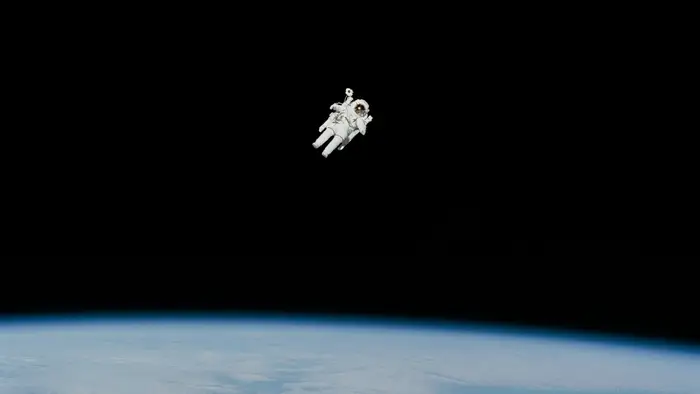
Swift’s rapid response turned fleeting flashes into lasting science. Image: Unsplash.
What to watch in the final hours
For readers following the event live, the most useful thing to watch is not a single predicted time but the shrinking uncertainty window. Early forecasts carried uncertainties of 11 to 12 hours. As Swift descends, each new tracking update should narrow that window, and the final predictions — issued in the last few orbits — will be far more precise about both time and ground track than anything available on November 3. NASA and the Space Force have said they will continue monitoring the descent and updating their predictions, and independent trackers will publish their own refinements in parallel. If the forecasts converge, the convergence itself is news. If they keep shifting, the shifting is also informative: it tells readers how sensitive the final plunge is to the last wisps of atmosphere.
It is also worth keeping expectations realistic about confirmation. With an uncontrolled re-entry over a band that is mostly ocean, there may be no immediate visual confirmation, no recovered fragment, and no precise impact point announced for hours or even days. Tracking organisations can often confirm that a spacecraft has re-entered by noting that it no longer appears on radar, but pinpointing where any surviving fragments landed is a different and much harder task. The absence of a dramatic photograph or a recovered piece of hardware should not be mistaken for missing information. For most uncontrolled re-entries, a quiet disappearance from tracking, followed by a confirmation that the object is no longer in orbit, is the normal ending.
For astronomers, the confirmation that matters most has already arrived in a different form: the archive. Swift’s 12 terabytes of data, its 1.5 million ultraviolet images, and its catalogue of more than 2,000 gamma-ray bursts are not falling with the spacecraft. They remain, public and searchable, for anyone who wants to ask a new question of an old flash. The observatory’s hardware will burn; its science will not.
A farewell, not a failure
It is tempting, in the final hours of any mission, to frame its ending as a tragedy. Swift’s ending deserves a different framing. A spacecraft designed for two years worked for nearly 22. A telescope built to study one kind of explosion became the emergency room of the entire high-energy sky. A rescue mission that failed still proved that commercial servicing of a dying observatory is a serious engineering proposition, not a fantasy. And a final observation on October 20, taken while the spacecraft was already sinking through air too thick for steady pointing, was a fitting last act for an instrument that had always worked at the edge of what was possible.
When Swift re-enters on November 4, most of it will become a brief streak of light — if it is seen at all — and then nothing. The flashes it chased, however, will keep being studied, cited, and re-analysed for years. The bursts it caught in its first months and its last weeks alike are now part of the permanent record of the universe, and the field it helped create — the study of a sky that changes in seconds, not aeons — will continue with or without it. That is the measure of a mission that succeeded far beyond its design life, even as its hardware finally comes home.
Swift watched the universe explode for 22 years. On Wednesday, it will make its own final flash, unobserved by most of the planet it served, and then it will be gone. The sky it leaves behind is better mapped, better understood, and better watched because it was there — and that, more than any fragment that may or may not survive the fall, is the legacy that will not burn up.

Ground telescopes will keep watching the sky Swift patrolled for more than two decades. Image: Unsplash.
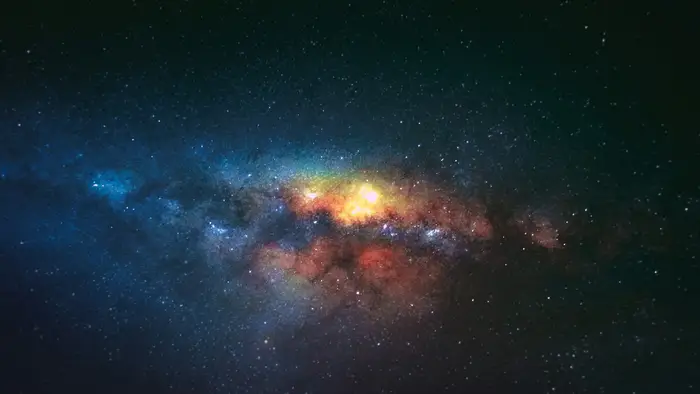
The Milky Way’s crowded star fields were among Swift’s many targets beyond gamma-ray bursts. Image: Unsplash.