NASA Swift Reentry Confirmed November 4 2026: The Burst Hunter's Fiery Farewell Over Indonesia
It is over, officially and at last. NASA’s Neil Gehrels Swift Observatory, the small spacecraft that spent nearly 22 years spinning toward the universe’s most violent explosions within about a minute of their discovery, has come home in the most literal way possible: as a streak of fire over Indonesia. The United States Space Force confirmed that Swift re-entered Earth’s atmosphere at 7:39 a.m. Eastern Time on Wednesday, November 4, 2026 — 12:39 UTC, or 7:39 p.m. Western Indonesian Time — over the North Sumatra region, at approximately 3.4 degrees north latitude and 98.6 degrees east longitude. NASA updated its Swift blog on Wednesday afternoon with the confirmation, ending days of forecast windows, tracking-model revisions, and waiting.
The announcement closed a mission that was never supposed to last this long and that nobody wanted to end this way. Swift was built for two years. It worked for nearly 22, observing more than 2,000 gamma-ray bursts, studying more than 1,400 supernovae, and contributing data to roughly 7,000 scientific papers, according to NASA figures cited by Spaceflight Now. Its final observation came on October 20, 2026, from an orbit so low — about 171 miles, or 275 kilometres, above Earth — that the spacecraft could no longer hold steady enough to do science. Three days later, NASA formally ended operations. Twelve days after that, gravity and the thin upper atmosphere finished the job.
For astronomers, the confirmation is both an ending and a relief. An uncontrolled re-entry is an event that can only be predicted, never scheduled, and Swift’s final days were spent inside a forecast window measured in hours, not minutes. The actual re-entry time landed almost exactly in the centre of the Space Force’s final-day prediction window. Nobody on the ground was reported hurt, and NASA said it expected most of the roughly 3,200-pound (1,452-kilogram) spacecraft to burn up on the way down, although some dense components may have survived to reach the surface somewhere in the remote waters or forests near the re-entry point. What fell, where exactly it fell, and whether anything reached the ground at all may never be fully known — and for a spacecraft whose entire purpose was to catch things that vanish in seconds, that is a strangely fitting epitaph.

Swift spent nearly 22 years watching the night sky for flashes that last only seconds. Image: Unsplash.
The moment it came down
The confirmed re-entry point sits just north of the equator, roughly 200 miles (322 kilometres) north of it, according to Reuters — and, as it happens, not far from the coast of the Indonesian island of Sumatra, whose northern province gives the location its name. The spacecraft was travelling at roughly 22 times the speed of sound when it hit the upper atmosphere, a speed at which the air itself becomes a wall. At that velocity, friction turns aluminium, electronics, and solar panels into vapour high above the ground; only the densest, most heat-resistant hardware has any chance of surviving to the surface.
Confirmation took hours, and the delay itself tells a story about how space tracking works. Swift’s orbit was inclined at only about 20 degrees to the equator, which confined any possible debris to a band stretching roughly 20.6 degrees north and south of the equator — a band that covers much of the equatorial ocean, parts of South America, Africa, South and Southeast Asia, and northern Australia. Much of that band is sparsely covered by the radar and optical sensors that track objects in orbit, and an object that is breaking apart and tumbling is harder to follow than one flying straight and level. The Space Force’s confirmation, relayed by NASA on Wednesday afternoon, arrived only after analysts had pieced together enough tracking data to pin down the time and place with confidence.
That sequence — a morning re-entry, an afternoon confirmation — is normal for an uncontrolled object, and it is worth saying plainly because the gap between the two is where rumours breed. There were no reports of damage or injuries on the ground, NASA said, and that is consistent with the odds the agency published before the event: roughly a 1-in-2,100 chance that anyone, anywhere on Earth, would be harmed by surviving debris. That figure describes the risk across the whole planet, not the risk to any one person in any one place, which is vanishingly small. The overwhelming majority of Swift’s ground track was ocean, and the likeliest outcome, then as now, is that whatever survived the fireball splashed into water far from anyone.
The public guidance, repeated by NASA before the re-entry, still stands for anyone who thinks they may have found a fragment: do not handle it, keep a safe distance, note the location, and report it to local authorities. A piece of spacecraft that has just survived re-entry can be sharp, hot, or chemically unpleasant, and its ownership is a matter for governments, not finders. The chance that any reader will need that advice is extremely low. It exists because, on the rare occasions when debris does survive, the safest response is also the simplest one.
A forecast that narrowed to a single morning
Swift’s final descent was watched more closely than most, because for days it was possible to say roughly when it would fall but not where — and because the “when” kept moving. As recently as Monday, November 3, the Space Force prediction cited by NASA put re-entry at around 3:30 a.m. Eastern Time on November 4, with an uncertainty of about 11 hours on either side. Other models differed: The Aerospace Corporation’s central estimate was cited at around 10:12 GMT, plus or minus eight hours, and earlier forecasts had clustered anywhere from the small hours to the middle of the day in universal time. Our own earlier coverage of the run-up, NASA Swift Reentry November 4 2026: Final Hours for the 22-Year Burst Hunter, laid out those competing estimates and why they disagreed.
They disagreed for a reason that has nothing to do with carelessness. A spacecraft at Swift’s altitude flies through the outermost wisps of the atmosphere, and the density of that air changes with solar activity, with the time of day, and with the spacecraft’s own tumbling attitude. A small change in density, compounded over dozens of orbits, shifts the re-entry time by hours. Swift circles Earth roughly every 90 minutes, so a shift of a single orbit moves the ground track by thousands of kilometres. Only in the last handful of orbits, when drag begins to dominate everything else, does the forecast narrow sharply — and that is exactly what happened on Wednesday morning, when the Space Force’s final-day window tightened to 6:42–8:42 a.m. Eastern Time. Swift came down, as Spaceflight Now noted, pretty much in the centre of that window.
Two forces conspired to bring the date forward in the first place. The first was the Sun. Recent solar activity puffed up the upper atmosphere, increasing the drag on Swift and pulling it down faster than earlier forecasts had assumed. The second was the absence of any way to fight back. Swift carried no propulsion system designed to raise its orbit over a mission of this length, and for most of its life it did not need one: at its starting altitude of around 600 kilometres, the drag was a slow leak, not a crisis. But a slow leak, left for two decades, eventually becomes a flood, and once Swift sank below about 275 kilometres, the air grew thick enough that its telescopes could no longer point steadily. That was the moment the mission ended as a scientific instrument, on October 20, even though the spacecraft itself kept flying for two more weeks.

Swift’s final orbits skimmed the upper atmosphere, where drag grows stronger with every pass. Image: Unsplash.
The rescue that almost worked
What makes Swift’s ending sting, for the people who operated it, is how close it came to not ending at all. In September 2025, NASA paid the Arizona company Katalyst Space Technologies 30 million dollars to send a robotic tug, called LINK, to rendezvous with Swift, grab it, and push it into a higher, safer orbit. It was a genuinely novel idea: the first commercial attempt to rescue a working NASA science spacecraft in orbit rather than watch it fall, and a proof of concept for a future in which satellites are serviced and saved instead of abandoned.
LINK launched on July 3, 2026. Within weeks, an electrical power system failure disabled two of its three reaction wheels — the spinning devices a spacecraft uses to control its orientation — critically impairing the precise attitude control a rendezvous demands. LINK burned fuel trying to regain control, never got close enough to capture Swift, and on August 19, NASA called the attempt off. LINK itself re-entered Earth’s atmosphere on September 25, after 85 days in space, a month before the spacecraft it was sent to save. Swift, which had been sinking all along, was left to its fate.
The failure is instructive in a way that goes beyond one spacecraft. Rendezvous with an uncooperative, tumbling target that was never designed to be grabbed is one of the hardest manoeuvres in spaceflight, and doing it with a small, low-cost commercial vehicle made it harder still. Katalyst’s LINK was not a large flagship spacecraft; it was a demonstrator, and demonstrators fail. The lesson the industry is likely to take is not that rescue missions are impossible — the physics is sound, and the prize, measured in saved observatories, is large — but that they need more margin: more redundancy in attitude control, more fuel, and more time. Swift ran out of all three at once, and the window for a second attempt never opened, because by the time LINK’s failure was clear, Swift was already too low and too unstable to wait for another rescuer.
There is also a policy lesson hiding in the wreckage, and it is one that will matter for every observatory launched in the next decade. When Swift was designed in the early 2000s, nobody planned for its disposal: it was a small spacecraft in a low orbit, and low orbits clean themselves up. That logic still holds, but the timescale has changed. A Sun more active than forecast can turn a decades-long decay into a months-long one, and a spacecraft with no engine cannot dodge a bad forecast. Future missions are increasingly expected to carry a disposal plan — propulsion, a controlled re-entry capability, or a design that guarantees a complete burn-up — and Swift’s fiery, uncontrolled end over a populated latitude band is exactly the kind of event that strengthens the case for those requirements. The risk this time was small and the outcome was harmless. The next spacecraft to fall uncontrolled may be bigger, and the argument for designing the ending in from the start will be harder to ignore.
What Swift actually did for 22 years
To understand why astronomers are mourning a 1.5-tonne box of electronics, it helps to remember what the sky looked like before it. Gamma-ray bursts are the most luminous explosions in the universe: in a few seconds, a single burst can outshine everything else in the observable universe at gamma-ray energies. They were discovered by accident in the 1960s, by American satellites built to watch for nuclear weapons tests, and for three decades they were a mystery without addresses. Detectors could say that a burst had happened, but not where, and a cosmic explosion without a location cannot be studied: by the time a telescope slews to the rough patch of sky, the afterglow has faded.
Swift changed that, and the way it changed it was automation. Its Burst Alert Telescope watched a huge swath of sky for the initial flash, computed a position within a few arcminutes — a patch small enough to be useful — and then, without waiting for a human decision, swung the whole spacecraft around in about a minute to point its X-ray Telescope and Ultraviolet/Optical Telescope at the same spot. The X-ray telescope narrowed the position to a few arcseconds, precise enough for the world’s largest ground-based telescopes to take over. Within minutes of a burst, observatories on every continent knew where to look, and the era of the gamma-ray burst afterglow — the fading light that reveals what exploded and how far away it is — began in earnest.
The harvest was extraordinary. Swift’s catalogue of more than 2,000 bursts includes both great families of the phenomenon: the long bursts, lasting more than two seconds, now understood as the death cries of massive stars collapsing into black holes, and the short bursts, lasting less than two seconds, now linked to the mergers of neutron stars — the same events that ripple spacetime as gravitational waves. Swift watched the afterglows that let astronomers measure burst distances across the universe, including bursts from the first billion years of cosmic history, and it caught the rare, strange cases that rewrote textbooks: bursts that lasted for hours, bursts that repeated, and bursts whose light carried the fingerprints of freshly forged heavy elements. Its data fed into the multi-messenger era, in which a gravitational-wave chirp, a gamma-ray flash, and a glowing kilonova are three views of a single collision, and into studies far from its original brief — supernova shock breakouts, flaring stars, erupting comets, and the X-ray flicker of supermassive black holes in active galaxies. As NASA put it in the blog post announcing the re-entry: “Swift has broadened our understanding of a wide variety of cosmic objects and events, from active galaxies powered by supermassive black holes and stars undergoing X-ray flares, to supernova explosions and comets and asteroids in our own solar system.”
The spacecraft’s own biography is part of the story. It launched from Cape Canaveral on a Delta II rocket on November 20, 2004, as a mission with a two-year design life and a deliberately modest budget — NASA’s own account has called it a roughly 500-million-dollar mission, small by flagship standards. It was renamed in 2018 for Neil Gehrels, the mission’s founding principal investigator, who died in 2017. And it kept working, year after year, through reaction-wheel troubles of its own, through a funding environment that repeatedly had to decide whether an ageing burst hunter was still worth operating, and through a sky that never stopped flashing. Astronomers who built careers on Swift data — graduate students who are now senior researchers — have spent their entire professional lives with the spacecraft overhead, and its loss is, for them, less like retiring an instrument than like losing a colleague. Our earlier farewell piece, After 22 Years Chasing Cosmic Explosions, NASA’s Swift Observatory Takes Its Final Bow, traced that human side of the mission: the operators who nursed it through its final low orbits and the scientists who planned their last observations knowing there would be no more.
The numbers only partly capture the scientific reach. Roughly 7,000 papers have drawn on Swift data, a figure that keeps growing because the archive stays open: every burst position, every X-ray light curve, every ultraviolet image remains available through NASA’s High Energy Astrophysics Science Archive Research Center, and researchers will be mining it for years. That is the quiet consolation of a mission like this. Spacecraft fall; data do not. A graduate student in 2036 will still be able to download Swift’s observations of a burst that flared when she was a child, and to ask questions its builders never thought to ask. The telescope is gone. Its sky is not.

Swift’s bursts came from the deaths of massive stars and the collisions of neutron stars — the most violent events in the cosmos. Image: Unsplash.
What survives, and what comes next
The question everyone asks after an uncontrolled re-entry — did anything reach the ground? — has, for Swift, an answer that is both specific and unsatisfying: probably a little, and probably in the ocean. NASA said before the event that most of the spacecraft would burn up, but that some components might survive, and the agency’s pre-re-entry briefings singled out the likeliest survivors: dense hardware built from tungsten, a metal denser than lead and chosen precisely because it is hard to melt, and some mirror elements made from materials selected for stability rather than for burning up neatly. Those are the parts that were engineered to withstand extremes, and re-entry is simply another extreme. If any of them reached the surface, they would be small, scattered along a track that begins over the atmosphere above North Sumatra and extends downrange, and most likely resting on the seabed.
That uncertainty is normal, and it is worth being honest about why. An object breaking apart at hypersonic speed does not leave a single crash site; it leaves a debris footprint that can stretch for hundreds of kilometres, and when the footprint lies over ocean or remote terrain, nobody goes looking for every piece. The confirmation that matters — the time, the place, the fact of re-entry itself — comes from tracking data, not from recovered hardware. No damage or injuries were reported, and as the days pass without any report from Indonesia’s authorities or residents, the likeliest picture hardens: Swift ended as a brief fireball over the sea and the coast, witnessed, if at all, by a handful of people who may not even have known what they were seeing.
The harder question is what replaces Swift, and here the answer is genuinely uncomfortable. No single current satellite fully covers what Swift did. The French-Chinese SVOM mission, launched in 2024, and China’s Einstein Probe, launched the same year, both hunt cosmic transients and both will carry part of the load, and ground-based survey telescopes now catch optical transients faster than ever. But Swift’s particular combination — a wide-field gamma-ray monitor, an autonomous rapid slew, and co-aligned X-ray and ultraviolet telescopes on one nimble spacecraft — was unique, and its loss leaves a gap in rapid-response high-energy astronomy that astronomers have been warning about for years. The bursts will keep coming; the question is how quickly, and how precisely, the world will hear about them. The study of bursts themselves continues, of course — recent work on events such as GRB 260310A Off-Axis Jet Hid a Monster Explosion Behind a Modest Flash shows how much a single well-observed burst can still teach us about jets, progenitors, and the physics of relativistic outflows — but the watchtower that found so many of those bursts is dark now.
There are also practical consequences that will unfold quietly over the coming months. Swift’s alert stream fed robotic telescopes, amateur observers, and space missions around the world; its absence will force changes in observing strategies and in the software pipelines that listened for its notices. Mission planners designing the next generation of transient hunters — and there are concepts, though none yet funded at Swift’s scale and speed — will study both its success and its ending. The success argues for keeping a rapid-response observatory in orbit at all times. The ending argues for building the disposal plan into the design, for funding a servicing or deorbit capability alongside the science, and for never again letting a flagship-class data stream depend on a spacecraft with no engine and no way home.
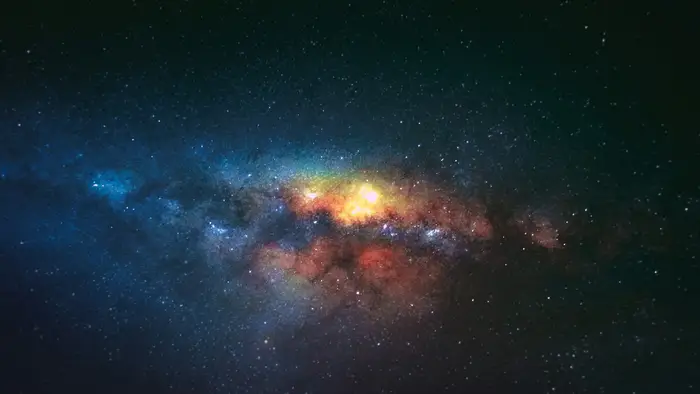
The bursts Swift chased came from across the universe, including the first billion years of cosmic history. Image: Unsplash.
A farewell written in fire
There is something appropriate, even poetic, about the way Swift ended. This was a spacecraft devoted to flashes: to light that appears without warning, outshines galaxies, and is gone in seconds. It spent 22 years teaching humanity to look up quickly, to move fast, to catch the light before it faded. And in its final seconds, it became a flash itself — a brief, brilliant streak over the equator, visible to almost no one, unrecorded by any telescope, gone before anyone could point an instrument at it. The universe, which Swift watched so faithfully, did not return the favour with an audience.
But perhaps that is the wrong way to measure it. Swift’s real monument is not a fireball over Sumatra. It is the archive: 2,000 bursts with addresses, 1,400 supernovae studied, 7,000 papers and counting, and a generation of astronomers who learned their trade by chasing its alerts. It is the proof that a modest, cleverly designed spacecraft, given the freedom to react on its own, can outlive its design life tenfold and rewrite a field. And it is the warning, written in its ending, that even the most beloved observatory needs a plan for its last day — because the sky does not grant extensions, and gravity, in the end, collects every debt.
At launch, NASA said, Swift “was a first-of-its-kind multiwavelength observatory designed to study the most powerful explosions in the cosmos using its three telescopes.” It did that, and more, for nearly 22 years. On Wednesday morning over North Sumatra, it made its final observation in the only way left to it: by becoming, for one brief moment, the brightest thing in the sky. Goodbye, Swift — and thank you for teaching us to look up fast.
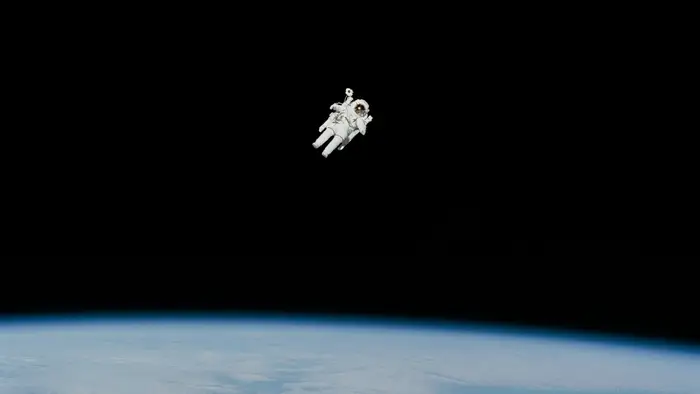
Swift’s archive remains open to researchers, and its data will be mined for years after the spacecraft itself is gone. Image: Unsplash.