NASA Moon Base $10 Billion CLPS 2 Awards: Nuclear Rover PROMISE Targets 2028
NASA has put a price tag and a delivery schedule on its plan to stay on the Moon. On Saturday, November 7, 2026, the agency announced a sweeping package of awards and mission updates that turns the Moon Base programme from a long-term ambition into a set of signed contracts: a new ten-year lunar cargo framework worth up to $10 billion, a nuclear-powered rover called PROMISE heading for the lunar South Pole in late 2028, roughly $1.3 billion in launch and orbital transport orders, and the first purchases for a power-and-communications tower that will keep the outpost running through the two-week lunar night.
The announcements were made at the MAX POWER aerospace expo and air show at NASA’s Kennedy Space Center in Florida, and they were delivered with a message the agency clearly wanted heard. “We are building the Moon Base mission by mission,” NASA Administrator Jared Isaacman said in a statement. “When our astronauts return to the Moon, they will arrive with the first elements of the Moon Base already waiting for them on the surface.”
That framing matters, because it is a deliberate break from the way lunar programmes have traditionally been sold. Instead of one giant spacecraft and one giant launch, NASA is buying the Moon Base the way a logistics company builds a supply chain: many small contracts, many suppliers, many flights, each one teaching the next. The Saturday package touched nearly every link in that chain at once — the landers that will carry cargo down, the freight trucks that will haul it across cislunar space, the rover that will scout the ground, and the power and communications gear that will keep it all alive.

Eight companies, one $10 billion cargo framework
The headline award is the second round of NASA’s Commercial Lunar Payload Services programme, known as CLPS 2. Eight companies have been selected to compete for lunar surface delivery missions under a new ten-year, multiple-award, indefinite-delivery/indefinite-quantity master contract with a combined maximum value of $10 billion. The companies are Blue Origin, Firefly Aerospace, Intuitive Machines, ispace-U.S., Lockheed Martin Space, Northrop Grumman Space Systems, SpaceX and Voyager Technologies.
Under the CLPS 2 framework, the companies will provide lunar delivery services that cover the whole job: managing, building and operating the landers that transport NASA science, technology and infrastructure payloads to the Moon. The emphasis, according to NASA and to the companies’ own announcements, is on lander reliability, larger cargo landers and the delivery of the critical infrastructure a permanent base requires — a step up from the first CLPS round, which was built around smaller science payloads.
The $10 billion figure needs the same careful reading that every contract ceiling deserves. It is a maximum combined value for future task orders over the ten-year ordering period, not money already awarded or already spent. No company receives that sum simply for being selected. Being named a vendor positions a company to compete for individual delivery task orders; funds flow only when NASA awards a specific delivery and the work is performed. That distinction is not a footnote — it is the whole point of the indefinite-delivery model, which lets NASA order missions when they are ready rather than committing the full sum up front.
NASA also raised the ceiling on the existing CLPS 1.0 contract, from $2.6 billion to $4.2 billion, to support the initial Phase One objectives of the Moon Base programme. The original contract will remain in place through November 2028, with an additional five-year period to complete awarded lunar deliveries through November 2033. The two frameworks will overlap for the next two years, giving the agency a long runway of commercial cargo flights to the lunar surface while the larger CLPS 2 landers are developed.
The eight-way split is itself a statement of intent. It mixes the two companies building NASA’s crewed lunar landers — SpaceX for Artemis III and Blue Origin for Artemis V — with the smaller commercial lander companies that have already flown under CLPS 1, and with the big aerospace primes, Lockheed Martin and Northrop Grumman, whose deep-space heritage stretches back decades. Scientific American reported that the programme is to include next-generation landers able to carry loads of up to six metric tons, a payload class far beyond the landers that have flown so far.
The track record behind the selection
CLPS 2 does not arrive out of nowhere. The first round of the programme has already produced real landings, and the companies selected on Saturday include the ones that delivered them. Firefly Aerospace’s Blue Ghost Mission 1 landed on the Moon in March 2025 and completed all of its mission objectives, a success the company cites as the basis for its standing with NASA. Since that landing, Firefly has won four additional missions under CLPS 1, as well as a contract to deliver NASA’s MoonFall mission — the drone scouts described below.
That record is why the Saturday announcement reads less like a gamble and more like a scaling-up. The first CLPS round proved that commercial companies could land on the Moon at all. The second round asks them to do it bigger, more often, and with cargo that a permanent base actually needs: habitats, power systems, rovers and the infrastructure that turns a landing site into an outpost. The agency’s own language reflects the shift — from buying deliveries of science instruments to buying the freight network for a base.
The competitive structure matters too. With eight vendors eligible for every task order, NASA can run each delivery as a competition, compare prices and schedules, and keep flying even if one company’s lander is delayed or fails. It is the same playbook the agency used for commercial cargo and crew flights to the International Space Station, and the same logic that has kept the station supplied for more than a decade: redundancy through competition, rather than dependence on a single vehicle.
PROMISE: a nuclear rover for the dark corners of the Moon
The most concrete piece of hardware in the Saturday package is PROMISE, the Polar Rover for Observation, Mapping, and In-Situ Exploration. NASA announced it is moving forward with development of the six-wheeled, nuclear-powered rover, which will land at the Moon’s South Pole to characterise the surface and subsurface, assess resource potential, and provide the data needed to choose landing sites and plan future infrastructure and exploration activities.
PROMISE is designed for the places on the Moon that sunlight never reaches. Because it is nuclear-powered, the rover can operate during the long lunar nights and inside permanently shadowed regions thought to harbour water ice — exactly the terrain a sustained human presence depends on, and exactly the terrain solar-powered rovers cannot survive. A lunar night lasts about fourteen Earth days, and the floors of polar craters can sit in permanent darkness at temperatures far below anything a battery can endure. Nuclear power is what makes a rover useful there at all.
The rover will carry a drill to extract regolith — lunar dust and broken rock — from approximately 3 feet (1 metre) below the surface, to characterise ice and other resources buried there. It will also carry spectrometers for analysing the chemical composition of surface material, temperature and radiation sensors, and visible-light cameras. On top of the science payload, PROMISE will demonstrate a next-generation, radiation-tolerant computing system, NASA’s High Performance Spaceflight Computing, along with advanced autonomy sensors and algorithms — technology that future rovers and habitats will rely on to operate without constant direction from Earth.
NASA’s Jet Propulsion Laboratory in Southern California, a division of Caltech, will manage the mission and build the rover from a combination of spare flight components and engineering test models from NASA’s Curiosity and Perseverance Mars rovers. Reusing proven hardware, software and Mars rover operating approaches significantly reduces cost and shortens the integration and testing schedule for a complex vehicle, according to the agency — and NASA says it has assessed the hardware’s compatibility with the lunar environment and determined it can tolerate the harsh conditions found near the Moon’s South Pole. The reuse is a pragmatic choice: the Mars rovers’ wheels, suspension and computing heritage are already flight-proven, and adapting them is faster than designing a lunar rover from a blank sheet.
NASA is targeting late 2028 to launch PROMISE and planning an 18-month mission for the rover. Blue Origin has been awarded a $94 million base contract, with an option period worth an additional $140 million based on performance, to deliver PROMISE to the lunar South Pole. Blue Origin will use its Mark 1 lander to deliver and deploy the rover as part of the Moon Base’s first phase. The award expands a task order awarded in May 2026 to deliver two lunar terrain vehicles to the Moon, folding the rover delivery into an existing relationship rather than starting a new one.
The eighteen-month mission length is significant. It means PROMISE is expected to survive multiple lunar nights, drive across the south polar terrain, drill in more than one location, and build up a map of where the ice actually is — not just confirm that it exists. That map is the deliverable the rest of the Moon Base programme is waiting for: you cannot choose where to put a habitat, a power tower or a landing pad until you know where the water is, how deep it sits, and how much of it there is.
The freight network: $1.3 billion in launch and orbital transport
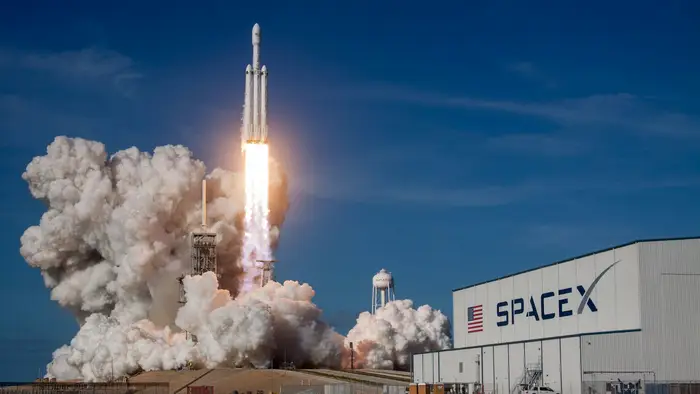
Getting cargo to the Moon takes more than a lander. Somebody has to carry the big loads from Earth orbit to lunar orbit first, and NASA’s Saturday package addressed that gap with six task orders worth approximately $1.3 billion combined, awarded as part of the agency’s Venture-Class Acquisition of Dedicated and Rideshare (VADR) launch services contract. The awards went to Arrow Science and Technology, Blue Origin and Impulse Space to integrate and transport Moon Base cargo.
Orbital Transfer Vehicles, or OTVs, are the freight trucks of this architecture: spacecraft that carry large loads across cislunar space, the region between Earth and the Moon, while lunar landers handle the final delivery down to the surface. The distinction matters because a lander sized to carry cargo from lunar orbit to the ground does not need to be sized to make the whole journey from Earth — splitting the trip lets each vehicle do the part it is best at, and lets NASA move heavier cargo than any single lander could carry on its own.
The six task orders fall into three mission types, and each one tests a different piece of the network. The first type covers missions to reduce the risks of future long-term human spaceflight for lunar exploration: verifying that communication and navigation methods work properly during the journey from Earth orbit to the Moon, and proving that an OTV can deliver a CLPS lunar lander to a desired orbit. This mission type will deliver the CAPSTONE-02 spacecraft to deep space to test proximity manoeuvres, navigation and communications around the Moon.
The second type prepares the lunar South Pole for human exploration by sending a group of highly mobile drones to survey the surface before astronauts arrive, enabling safer and better-informed human missions while demonstrating advanced robotic capabilities. These missions will include the agency’s MoonFall drones, designed to scout areas beyond the reach of traditional rovers — the steep crater walls and shadowed floors where wheeled vehicles cannot go — as well as the delivery of additional Moon Base assets needed to support Phase One objectives.
The third mission type tests navigation technologies and demonstrates operations in multiple cislunar orbits, proving out the commercial orbital transfer capabilities intended to increase the amount of cargo future landers can deliver to the lunar surface. Together, the three types amount to a rehearsal of the whole supply chain before astronauts depend on it.
The task orders fall under the ten-year VADR indefinite-delivery/indefinite-quantity contract, which has a maximum total value of $5 billion across all contracts. The VADR contracts are managed by NASA’s Launch Services Program Office at Kennedy Space Center as part of the agency’s Commercial Access to Space Program. By buying multiple launch and in-space transportation services together, NASA says it gives industry a more predictable set of mission opportunities while gaining access to a broader range of commercial capabilities for future lunar exploration.
Some of the missions will launch aboard Blue Origin’s New Glenn, Relativity Space’s Terran R and SpaceX’s Falcon 9 rockets. The in-space transportation spacecraft for these missions will be provided by Blue Origin, Firefly Aerospace, Impulse Space and Quantum Space. Quantum Space is part of a team led by Arrow Science and Technology that won a $185 million award under the programme; Quantum Space will receive approximately 25 percent of the contract value and will serve as a subcontractor, providing its Ranger orbital transfer vehicle to deliver NASA’s two CAPSTONE-2 spacecraft.
A communications link for the far side of the trip
Complementing the transport demonstrations, NASA selected SpaceX for the Cislunar Communications Deployment Demonstration under an existing lunar logistics contract. Through a Specialized Delivery Mission task order, SpaceX will launch communications satellites aboard a Starship to cislunar space in 2028. The demonstration will help inform the development of future lunar communications networks that keep astronauts, mission controllers and the Moon Base connected.
The choice of Starship for the demonstration is notable. The vehicle can carry far more mass to cislunar space than any rocket currently flying, which makes it a natural fit for deploying a communications constellation in one flight rather than several. It also ties the Moon Base programme directly to the vehicle NASA has already chosen as the Artemis III human landing system — the same rocket that will carry astronauts to the surface will also carry the satellites that let them phone home. For readers following the Artemis programme, the link is direct: the Artemis III Blue Moon First Launch 2027: NASA Will Not Commit SLS Until the Lander Is in Orbit story covered how the crewed lander fits into the same schedule these cargo missions are now joining. The earlier Artemis II flight also left its mark on the space environment around Earth, as covered in Artemis II Ionosphere Hole: SLS Launch Carved a 5,000 km Scar in the Sky — a reminder that every heavy launch now has measurable effects on the ionosphere the new communications network must work through.

Power and light: the miniCAST tower
A base that cannot survive the lunar night is not a base at all, and the Saturday package included the first hardware purchases for solving that problem. To extend infrastructure capabilities on the lunar surface, NASA plans to purchase commercial components for a Mini-Communications and Solar Tower — miniCAST — including solar arrays, batteries and wireless power-transfer hardware. The agency awarded Honeybee Robotics, a Blue Origin company, for energy storage capability, Redwire for power generation, and Yank Technologies for wireless power transfer in support of miniCAST.
The miniCAST will combine power and communications capabilities to support future Moon Base activities, doing two jobs at once from a single structure: generating and storing electricity, and relaying communications between the surface and orbit. Engineers at NASA’s Marshall Space Flight Center in Huntsville, Alabama, will assemble and test the systems before they are delivered to the lunar surface.
NASA expects work to begin within months, and the initial effort will involve components rather than a major integrated system. The agency also plans a separate solicitation for fully integrated power systems, anticipated in early 2027 — a signal that miniCAST is the first step, not the final design, and that the power architecture for the base will be competed and iterated like everything else in the programme. A tower that can beam power wirelessly to rovers and habitats working in shadowed craters would change what is possible at the South Pole, where the best ice deposits sit in the darkest places and the best sunlight falls on the crater rims above them.
The Moon Base awards at a glance
The Saturday package is large enough that the numbers deserve to be laid out plainly. Every figure below comes from NASA’s announcement or from the companies’ own releases the same day; the $10 billion and $5 billion figures are contract ceilings for future orders, not money already spent.
| Award or mission | Value | Key facts |
|---|---|---|
| CLPS 2 lunar cargo framework | Up to $10 billion over 10 years | 8 companies eligible to compete for delivery task orders; next-generation landers up to ~6 metric tons reported |
| CLPS 1.0 ceiling raised | $2.6 billion → $4.2 billion | Contract runs through November 2028; awarded deliveries can complete through November 2033 |
| PROMISE nuclear rover delivery | $94 million base + $140 million option | Blue Origin Mark 1 lander; launch targeted late 2028; 18-month mission at the South Pole |
| VADR launch and transport orders | ~$1.3 billion combined (6 task orders) | Arrow Science and Technology, Blue Origin, Impulse Space; launches on New Glenn, Terran R, Falcon 9 |
| VADR contract ceiling | Up to $5 billion over 10 years | Managed by NASA Launch Services Program at Kennedy Space Center |
| Quantum Space / Arrow team award | $185 million (Quantum Space ~25%) | Ranger orbital transfer vehicle to deliver two CAPSTONE-2 spacecraft |
| SpaceX cislunar communications demo | Task order under existing contract | Starship to launch communications satellites to cislunar space in 2028 |
| miniCAST power and comms tower | Component awards to 3 companies | Honeybee Robotics (storage), Redwire (power), Yank Technologies (wireless power); assembly at Marshall Space Flight Center |
Timeline: the road to a Moon Base
The awards announced on Saturday slot into a schedule that is now concrete enough to follow year by year. Nothing here is speculation: each date is one NASA has stated publicly, in the announcement or in the programme’s earlier releases.
The road to a permanent lunar presence
- March 2025 — Firefly Aerospace’s Blue Ghost Mission 1 lands on the Moon and completes all mission objectives, the first fully successful commercial lunar landing under CLPS 1.
- May 2026 — NASA awards Blue Origin a task order to deliver two lunar terrain vehicles to the Moon; the PROMISE delivery award announced on Saturday expands this order.
- November 7, 2026 — NASA announces the CLPS 2 framework, the PROMISE rover, the VADR transport orders, the SpaceX communications demonstration and the miniCAST component awards at the MAX POWER expo at Kennedy Space Center.
- Within months (late 2026 – early 2027) — Work begins on miniCAST components; NASA plans a separate solicitation for fully integrated power systems in early 2027.
- 2027 — Artemis III’s Blue Moon lander is targeted for its first launch, on the schedule NASA has described for the crewed return to the lunar surface.
- Late 2028 — PROMISE targeted to launch aboard Blue Origin’s Mark 1 lander for an 18-month mission at the South Pole; SpaceX’s Starship targeted to deploy communications satellites to cislunar space the same year.
- November 2028 — The CLPS 1.0 contract period ends, with awarded deliveries able to complete through November 2033 under the five-year extension.
- 2033 and beyond — The CLPS 2 ten-year ordering period runs on, with cargo deliveries continuing through the framework’s full term.
That 2028 convergence is the date to watch. If PROMISE launches on schedule, the same year will see the first nuclear-powered rover drilling for ice at the South Pole, the first Starship-deployed cislunar communications satellites, and the crewed Artemis missions moving toward the surface — the cargo, the communications and the crew arriving in the same window, which is exactly how a base gets built rather than merely visited.

Why the South Pole, and why water ice is the whole game
Every element of the Saturday package points at the same patch of ground: the lunar South Pole. The reason is water. Ice trapped in permanently shadowed craters can be turned into drinking water, into oxygen to breathe, and — split into hydrogen and oxygen — into rocket propellant. A base that can make its own water and fuel from local ice does not need every litre shipped from Earth at enormous cost, and that changes the economics of staying on the Moon from impossible to merely difficult.
That is why PROMISE’s drill matters more than its cameras, why the MoonFall drones are designed to scout terrain rovers cannot reach, and why the miniCAST tower’s wireless power transfer is aimed at the shadowed craters where the ice sits. The programme is not exploring the South Pole for the sake of it; it is prospecting. The rover’s eighteen months of drilling and spectrometry are meant to answer the practical questions a base-builder needs: where the ice is, how deep it is, how concentrated it is, and whether it can be extracted at a useful scale.
The same logic explains the rush. China has stated its own plan to land astronauts on the Moon by 2030, using the Long March 10 rocket and a lunar-orbit rendezvous profile — a competing timeline covered in China Moon Landing 2030 Long March 10 Plan: Two Rockets, One Rendezvous, One Deadline. NASA’s Saturday package does not mention that competition, but it does not need to: a $10 billion cargo framework, a nuclear rover and a 2028 launch date are the answer in hardware form. The two programmes are now racing on parallel tracks toward the same polar ice, and the side that maps the resources first will have a decisive advantage in choosing where to build.
What “Ignition” means, and why the pace changed
Carlos García-Galán, manager of the Moon Base Program, gave the clearest statement of the programme’s new tempo in the announcement. “In the eight months since Ignition, we’ve made incredible strides in accomplishing the near impossible: establishing a permanent outpost on the lunar surface,” he said. “We’ve consolidated numerous efforts into a streamlined program, evolving our human exploration architecture into an iterative and sustained campaign for Moon Base technology development and implementation. Most importantly, we’ve taken action, awarding new contracts and forging new partnerships to accelerate development.”
The reference to “Ignition” — the programme’s internal starting point eight months ago — frames the Saturday awards as the output of a deliberate consolidation: many separate efforts folded into one streamlined programme, then pushed out the door as contracts. That is also why so many different kinds of awards arrived on the same day. Cargo landers, a rover, orbital transport, communications and power are not five separate programmes; under the Moon Base umbrella they are five parts of one campaign, awarded together because they have to work together.
NASA also intends to release a directed call under its Next Space Technologies for Exploration Partnerships, or NextSTEP-3 B, solicitation to help close architecture-driven, high-priority data gaps for Moon Base development. The effort will gather information the agency needs to plan future missions, reduce risk and support the technologies and infrastructure for sustained operations at the South Pole — work that could include small spacecraft missions, payloads on future Moon Base flights, or the purchase of data collected by commercial partners. It is the programme’s way of admitting, openly, that it does not yet know everything it needs to know — and of paying others to find out.
What to watch next
The Saturday announcement sets up a sequence of verifiable milestones, and each one is worth watching on its own terms. The first is the miniCAST work beginning within months, and the separate solicitation for fully integrated power systems expected in early 2027 — the moment the power architecture stops being a set of component awards and becomes a system design. The second is the CAPSTONE-02 and MoonFall missions under the VADR task orders, which will show whether the orbital transfer network works in practice before astronauts depend on it.
The third is the most visible: the first CLPS 2 task orders themselves. Which companies win the first deliveries, what cargo they carry, and whether the larger landers fly on schedule will tell us whether the $10 billion framework is a real pipeline or a paper ceiling. And the fourth, in late 2028, is PROMISE itself — a rover built from Mars hardware, drilling for ice in the dark at the bottom of the world, while Starship deploys the communications satellites that will carry its data home.
There is a temptation, with announcements of this size, to treat the contract values as the story. They are not. The story is the schedule: cargo landers competing for deliveries, a rover drilling for ice, freight trucks crossing cislunar space, a power tower going up, and a communications network being deployed — all before the end of 2028, all aimed at the same patch of polar ground. NASA’s own administrator put it as a promise about arrival: astronauts will find the first elements of the Moon Base already waiting for them. On Saturday, for the first time, the agency could point at the contracts that make that sentence true — and at the dates when the hardware has to show up.
The programme’s history gives the claim a fair hearing. A decade ago, commercial cargo to the space station was an experiment; today it is routine. The Moon Base awards bet that the same thing can happen at a quarter of a million miles, with landers instead of capsules and a nuclear rover instead of a supply ship. The next two years will show whether the bet pays off — one task order, one launch and one landing at a time.