Artemis III Docking Test 2027: NASA's 14-Day Orbital Rehearsal With Blue Moon and Starship
NASA has redrawn the shape of its next crewed deep-space mission, and the new plan reads less like a dash to the Moon than like a dress rehearsal staged close to home. Under a detailed plan published on October 23, 2026, Artemis III will spend about 14 days in low Earth orbit in 2027, during which the crewed Orion spacecraft will dock with two different commercial lunar lander test vehicles, one after the other, before splashing down in the Pacific Ocean. There will be no lunar landing on this flight. Instead, NASA intends to prove, in the comparatively forgiving environment of Earth orbit, the docking systems, cabin hardware, software, and crew procedures that a landing in 2028 will depend on.
The reshaping is one of the most consequential decisions in the Artemis programme in years. Artemis III was long planned as the mission that would return astronauts to the lunar surface for the first time since Apollo 17 in 1972. That goal has now slipped to a later flight, Artemis IV, targeted for 2028. The intervening mission has been recast as a risk-reduction exercise, and the reasoning is straightforward: the two landers that NASA has contracted for its return to the Moon, Blue Origin’s Blue Moon and SpaceX’s Starship, have never flown with a crew, and their docking interfaces have never been exercised with astronauts aboard. Testing both in Earth orbit, where a problem can be answered with an early return rather than a quarter of a million miles from home, is the cautious way to buy down the risk.
The plan calls for three heavy-lift rockets to launch within roughly two weeks from Florida. Blue Origin’s New Glenn will carry the Blue Moon Mark 2 test article first, NASA’s Space Launch System will carry Orion and its four-person crew, and SpaceX’s Starship will carry the Starship Version 3 test article later in the sequence. Three launches, three vehicles, two docking tests, and one crew: it is an unusually choreographed mission, and its success will depend as much on scheduling and sequencing as on any single piece of hardware.
A crew of four, and a mission in three acts
The crew named for Artemis III brings a mix of deep experience and fresh perspective. NASA astronauts Randy Bresnik, Frank Rubio, and Andre Douglas will fly alongside European Space Agency astronaut Luca Parmitano. Bresnik and Parmitano are veterans of long-duration stays aboard the International Space Station, Rubio holds the record for the longest single spaceflight by an American astronaut, and Douglas, a former Coast Guard officer and engineer, represents the newer generation of the astronaut corps. Their assignment was covered in our earlier Artemis III crew announcement, and the new plan gives that crew a concrete job list for the first time.
The mission opens with Blue Origin’s act. New Glenn will place the Blue Moon Mark 2 test article into a circular orbit about 237 nautical miles, roughly 439 kilometres, above Earth. The test article is designed to remain in orbit for up to 30 days, which gives NASA a generous window: the lander does not have to be chased the moment it reaches orbit, and the rest of the sequence can wait until the vehicle is confirmed healthy. That patience is deliberate. Only after Blue Moon is checked out will NASA commit its crew to launch.
The second act belongs to Orion. The Space Launch System will lift the spacecraft and its crew into an elliptical orbit of 16 by 975 nautical miles, and Orion will then manoeuvre into a circular orbit of about 300 nautical miles, roughly 555 kilometres, for thermal stabilisation. The crew will spend about two days checking Orion’s systems before beginning rendezvous operations with Blue Moon. A rendezvous brings two spacecraft together in the same orbit; docking connects them physically, and it is the connection that this mission exists to test.
The docking itself will exercise a specific piece of hardware. Orion is to connect to a port beside Blue Moon’s crew cabin, a side-mounted arrangement that differs from the nose-to-nose docking familiar from International Space Station operations. Once docked, the crew will enter the Blue Moon test article and spend about two days inside it, assessing the cabin environment, the controls, the atmosphere, the pressure, and the life-support systems, along with the software and flight-control systems that will one day guide the vehicle to the lunar surface. Two days is a long time to live inside a test article, and that is the point: a lunar landing will ask astronauts to live inside a lander for days at a time, and the first time they do so should not be on the Moon.

A heavy-lift rocket climbs away from its launch pad, the first step in a mission sequence that will require three separate launches. Image: Unsplash.
The Starship test: shorter, sharper, and hands-off
The third act is shorter and deliberately different. After the Blue Moon phase, SpaceX will launch a Starship Version 3 test article, and Orion will rendezvous and dock with it in an orbit about 206 nautical miles above Earth. This time the geometry changes: Orion’s forward docking system will align with a nose-mounted system on Starship, the forward-facing arrangement that a lunar Starship would present. The test is planned to last up to two hours, and the astronauts will remain aboard Orion rather than entering Starship.
The contrast between the two docking tests is the heart of the mission’s design. The Blue Moon phase tests a side port, crew entry, and two days of living and working inside a lander. The Starship phase tests a nose-mounted interface, a short-duration docking, and the dynamics of two very different vehicles joining and separating, all with the crew watching from Orion. NASA plans to evaluate how the spacecraft handle control, communications, integrated software, and docking and undocking dynamics during the Starship test. Together, the two demonstrations exercise Orion against two separate docking configurations rather than repeating one connection unchanged, and they do so against two landers built by two different companies with two different engineering cultures.
That breadth is also the mission’s risk. Docking is one of the most demanding manoeuvres in human spaceflight. It requires precise relative navigation, thrusters that can make centimetre-scale corrections, sensors that can measure closing rates reliably, and software that can abort cleanly if anything drifts out of tolerance. The history of the field is reassuring in one respect and cautionary in another: docking has been routine at the International Space Station for more than two decades, but every new vehicle pairing has had to prove itself, and the pairings on Artemis III are both new. Orion has docked with nothing since its uncrewed Artemis I flight around the Moon in 2022, and neither Blue Moon nor Starship has ever docked with a crewed spacecraft at all.
Five extra days of homework
After the two docking tests, the mission still has work to do. NASA plans up to five additional days of Orion activities, a block of time that reads like a checklist of everything else a lunar mission must get right. The crew will evaluate spacesuits for crew survival, test docking sensors, and take acoustic and thermal measurements inside the cabin. They will carry out human-factors assessments, run science and technology demonstrations, and assess astronaut health during periods when direct communication with mission control is unavailable, a condition that lunar missions will face when spacecraft pass behind the Moon or when communications are deliberately delayed.
The spacesuit work deserves particular attention. Lunar surface suits are among the least mature pieces of the Artemis architecture, and the suits the Artemis III crew will wear inside Orion and, potentially, inside Blue Moon are not the same garments that will one day walk on the Moon. Even so, testing suit fit, mobility, and life-support interfaces in a real spacecraft with a real crew is a step that cannot be replicated in a laboratory. The same logic applies to the acoustic and thermal measurements: a spacecraft cabin that is too loud or too hot for two days in Earth orbit will be worse for a week on the way to the Moon, and finding out now is cheap compared with finding out later.
The communications-blackout health assessment is a quieter but telling detail. Lunar missions will routinely lose direct contact with mission control, and crews will need to monitor their own health and manage their own workload without ground support. Practising that independence in Earth orbit, where help is minutes rather than days away, is a sensible rehearsal for the isolation of deep space.
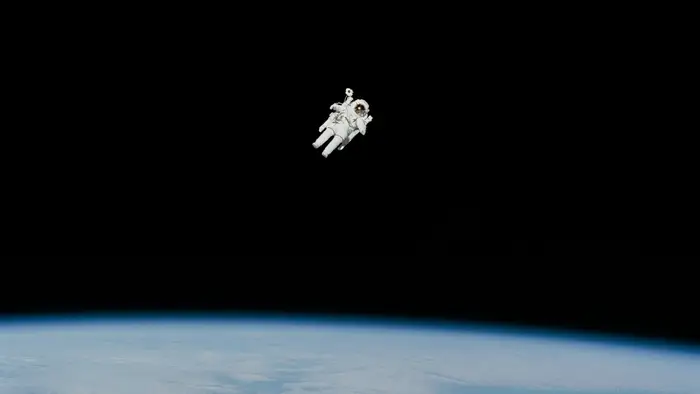
The Moon, the mission’s eventual destination, will have to wait until Artemis IV while Artemis III rehearses in Earth orbit. Image: Unsplash.
Why NASA changed the plan
The decision to convert Artemis III from a landing into a rehearsal did not come out of nowhere. The programme’s schedule has been under pressure for years, from both the landers and the launch vehicles. Blue Origin has been restoring its launch facilities after an explosion during a ground burn test of New Glenn in May 2026, a setback that underlines how much of the Artemis architecture is still proving itself on the ground before it can be trusted in flight. SpaceX’s Starship, for all its flight-test progress, has yet to demonstrate the orbital refuelling and long-duration cryogenic storage that a lunar landing version would require. NASA’s own schedule, which aims for a launch in the summer of 2027, remains explicitly unfinalised, with lander development and launch vehicle preparation both listed as variables.
Against that background, the rehearsal plan is a way of keeping the programme moving without betting the crew on hardware that has not yet earned that trust. It preserves the political and programmatic momentum of a crewed flight in 2027, it gives both lander providers a crewed docking test on a timeline they can plausibly meet, and it retires risk for the landing that follows. NASA’s stated aim is a crewed Moon landing for Artemis IV in 2028, and everything in the Artemis III plan is framed as preparation for that flight. The agency’s accelerated schedule for the lunar return, covered in our report on NASA’s accelerated 2028 Moon landing plan, makes the rehearsal not a delay but a deliberate step in a compressed timeline.
There is also a strategic dimension that NASA rarely states outright. The Artemis programme is a competition as well as an exploration effort, and other nations are pursuing their own lunar timelines. A successful crewed docking rehearsal in 2027, demonstrated openly with two commercial landers, would signal that the American architecture works as a system, even if no boot has yet touched lunar soil. A failed landing attempt would signal the opposite. The rehearsal trades a headline for a foundation, and foundations are what make later headlines possible.
What the two landers must prove
Blue Moon and Starship approach the lunar landing problem from opposite directions, which is precisely why testing both matters. Blue Moon is a more conventional lander: a vehicle designed from the start to carry crew from lunar orbit to the surface and back, with a cabin, a propulsion system, and a life-support system sized for that job. The Mark 2 version is the crewed variant, and the Artemis III test article will let astronauts judge whether its cabin is a place they can live and work in, not merely a vehicle they can ride in. Cabin atmosphere, pressure control, controls layout, and life support are the unglamorous systems that determine whether a landing mission is survivable, and they are exactly the systems the two-day Blue Moon stay is designed to evaluate.
Starship is a different animal altogether: a fully reusable, enormously capable vehicle whose lunar variant would be the largest crewed lander ever flown. Its challenge is less about cabin comfort than about vehicle dynamics, software integration, and the sheer scale of docking a capsule to a vehicle many times its size. The two-hour Starship test, with the crew staying aboard Orion, reflects that difference. NASA does not need astronauts to tour Starship yet; it needs to know that Orion and Starship can find each other, connect, communicate, and separate safely, and that their combined software behaves as one system rather than two. If that test goes well, it de-risks the most novel part of the Starship architecture without asking the crew to enter a vehicle that is still early in its crewed development.
Both landers also share a launch-vehicle story that the mission will test in its own way. New Glenn’s role as Blue Moon’s ride makes the mission a proving ground for Blue Origin’s heavy lifter as well as its lander, and the company’s recovery from the May ground-test explosion will be watched closely in the run-up to launch. Our earlier coverage of Blue Origin’s New Glenn comeback traced that recovery, and Artemis III will be its most demanding assignment yet. Starship, meanwhile, must demonstrate that it can launch a test article on schedule and place it precisely enough for Orion to find, a task that sounds simple and is anything but.
The orbits tell the story
The mission’s orbital choreography is worth reading closely, because it reveals how much engineering thought has gone into a flight that never leaves Earth orbit. Orion begins in an elliptical orbit of 16 by 975 nautical miles, a lopsided loop that lets the spacecraft and its crew shake down systems before committing to rendezvous. It then circularises at about 300 nautical miles for thermal stabilisation, a holding altitude chosen to let the spacecraft settle into a stable thermal state before the delicate work of docking begins. Only then does it descend, in orbital terms, to Blue Moon’s 237-nautical-mile orbit, and later to Starship’s 206-nautical-mile orbit. Each step down is a separate rendezvous, a separate set of manoeuvres, and a separate opportunity for something to go wrong and be corrected.
The choice of three different altitudes is not arbitrary. Different orbits mean different thermal environments, different communications geometries, and different lighting conditions for the docking sensors. By testing at three altitudes, NASA gets three data points instead of one, and it forces the mission planning team to solve the rendezvous problem three times rather than once. It also mirrors, in miniature, the orbital mechanics of a real lunar mission, where Orion would rendezvous with a lander in lunar orbit after a multi-day transit, not in the tidy, well-tracked environment of low Earth orbit.
The final act of the mission is the most familiar: Orion returns to Earth and splashes down in the Pacific Ocean, closing a roughly two-week flight that will have tested more new hardware pairings than any crewed mission in recent memory. Splashdown is the one part of the plan that Orion has already proven, on Artemis I and in its capsule design heritage, and it is a fittingly routine ending for a mission whose purpose is to make the extraordinary routine.

Earth orbit is the proving ground where new spacecraft pairings earn the trust a lunar mission will demand. Image: Unsplash.
What success looks like, and what failure would cost
Success for Artemis III will not be measured in distance travelled or records broken. It will be measured in checklists completed: two dockings, two interfaces, two days inside Blue Moon, two hours attached to Starship, five days of additional tests, and a safe splashdown. If all of those boxes are ticked, NASA will head into Artemis IV with something it does not have today, which is evidence that Orion can dock with both of its contracted landers, that astronauts can live inside Blue Moon, and that the integrated software of three different spacecraft can work together. That evidence is the currency that buys a landing attempt.
Failure, or even partial failure, would be instructive rather than catastrophic, and that is the virtue of the rehearsal design. A docking problem in Earth orbit can be aborted, analysed, and fixed, with the crew safe aboard Orion or back on Earth within hours. The same problem in lunar orbit could strand a crew or end a mission. The rehearsal therefore converts the most dangerous unknowns of the landing architecture into testable, recoverable events, and it does so on a timeline that still allows a landing attempt in 2028. The cost is a year of waiting for the headline, and the benefit is a landing that is more likely to succeed when it finally happens.
It is also worth noting what the rehearsal does not test. It does not test lunar orbit rendezvous, lunar descent and ascent, surface operations, or the long transit to and from the Moon. Those remain for Artemis IV and beyond, and no Earth-orbit rehearsal can fully substitute for them. What Artemis III offers is a foundation: the docking interfaces, the cabin systems, and the crew procedures that every later step will build on. A house is not finished when its foundation is poured, but it cannot stand without one.
The bigger picture for Artemis
The Artemis programme has always been an exercise in managing ambition against reality. It promises a sustainable human presence at the Moon, a lunar Gateway station, and eventually a springboard to Mars, and it pursues those goals with a mix of government and commercial hardware that no previous lunar programme attempted. The recasting of Artemis III fits that pattern: it is an admission that the original timeline was too aggressive, and simultaneously a refusal to let the programme stall while the hardware catches up. By flying a meaningful, demanding mission in 2027, NASA keeps its astronauts flying, its contractors accountable, and its international partners engaged, all while retiring the specific risks that stood between it and a landing.
For the crew, the mission is a particular kind of honour. They will not be the first to land on the Moon in more than half a century, and they know it. What they will be is the first to dock Orion with both of its future landers, the first to live inside Blue Moon, and the first to prove that the Artemis architecture works as a system rather than as a collection of promising parts. History remembers landings, but it is built on rehearsals, and the astronauts of Artemis III will have flown one of the most consequential rehearsals in the history of human spaceflight.
When Orion splashes down in the Pacific in 2027, after two weeks, two dockings, and three launches, the question facing NASA will no longer be whether its landers can meet its capsule in orbit. It will be whether everything else is ready for the Moon. That is a better question to be asking, and it is the question Artemis III exists to earn the right to ask.

Earth from orbit, where Artemis III will rehearse the dockings that a 2028 lunar landing will depend on. Image: Unsplash.
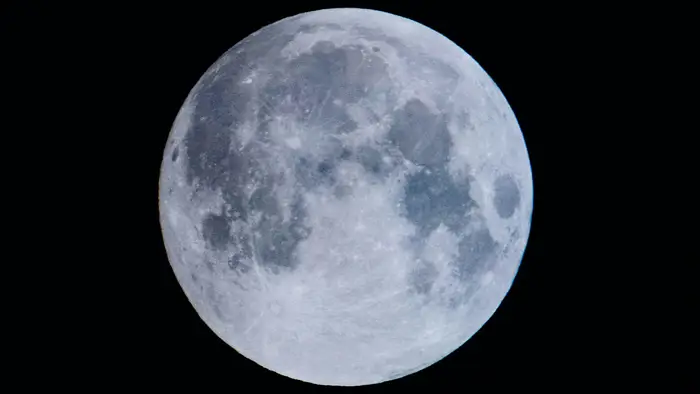
The lunar surface awaits the crew of Artemis IV, whose landing will rest on the lessons of the Artemis III rehearsal. Image: Unsplash.