Artemis III Blue Moon First Launch 2027: NASA Will Not Commit SLS Until the Lander Is in Orbit
NASA has made the order of operations for Artemis III a hard rule rather than a preference, and the rule puts Blue Origin first. In an interview published November 1, 2026, NASA Administrator Jared Isaacman said the agency will not commit its Space Launch System rocket and Orion crew capsule to launch until Blue Origin’s Blue Moon lander is already in orbit and checked out. The lander goes up first, loiters for roughly a month, and only then does the crew follow. It is a sequencing decision that reveals where NASA believes the real risk in its return-to-the-Moon program now sits: not in the rocket that carries astronauts, but in the lander that is supposed to keep them alive.
“We’re not going to launch without Blue Origin in it,” Isaacman said. “That’s why they’re going to launch first. Like they need to be up there, do some checkouts, and then we commit SLS.”
The statement, given to NASASpaceflight, sharpens a flight plan NASA laid out at its Artemis Acceleration briefing on October 23, 2026, at Kennedy Space Center. Artemis III is no longer a Moon landing mission. It is a crewed dress rehearsal in low Earth orbit, targeted for summer 2027, in which three of the most powerful rockets in the world will fly in sequence, two commercial landers will be visited in turn, and the lessons learned will decide how astronauts finally return to the lunar surface. Artemis program manager Jeremy Parsons called it “likely the most complicated launch campaign ever undertaken.” Isaacman’s latest remarks explain why the campaign is sequenced the way it is, and they name, bluntly, the element most likely to hold it up.

NASA’s Artemis III plan sequences three rocket launches, starting with Blue Origin’s New Glenn. Image: Unsplash.
A mission that changed its destination
To understand why the launch order matters, it helps to recall what Artemis III was supposed to be. The original plan, inherited from the program’s early architecture, was straightforward in outline: four astronauts would launch on the Space Launch System, meet SpaceX’s Starship lunar lander in orbit around the Moon, and two of them would descend to the lunar south pole. It would have been the first crewed landing since Apollo 17 in 1972, and the first ever at the Moon’s south polar region, where water ice in permanently shadowed craters is a prize for future exploration and for making rocket propellant in place.
That plan changed in February 2026, when Isaacman announced that Artemis III would stay in Earth orbit and the first Artemis landing would move to a later mission. Artemis I had already sent an uncrewed Orion capsule around the Moon in 2022. Artemis II carried four astronauts on a lunar flyby in April 2026, the first crewed mission beyond Earth orbit since Apollo 17. Artemis III, under the revised plan, became the bridge between those achievements and an actual landing: a crewed demonstration in low Earth orbit, currently targeted for no earlier than June 2027, designed to exercise the flight elements together before anyone stakes a landing on them.
The ride for the crew is unchanged. NASA’s Space Launch System will lift off from Launch Complex 39B at Kennedy Space Center, carrying four astronauts inside the Orion capsule. The reported crew is NASA astronauts Randy Bresnik, Frank Rubio and Andre Douglas, alongside European Space Agency astronaut Luca Parmitano. But instead of heading for the Moon, Orion will settle into an orbit roughly 290 miles above Earth, a little higher than the International Space Station. Waiting there, or arriving in sequence, will be test versions of the two commercial lunar landers: SpaceX’s Starship human landing system and Blue Origin’s Blue Moon. The whole mission runs about 14 days, roughly twice the length of Artemis II’s flight.
The October briefing filled in the choreography. It is a three-rocket campaign, and the order is the point. First, Blue Origin launches a Blue Moon Mark 2 test lander on its New Glenn rocket from Launch Complex 36A at Cape Canaveral Space Force Station. The lander can loiter in orbit for up to a month, waiting for the crew. Then the astronauts launch on SLS from Pad 39B, and on day three Orion docks with Blue Moon; the crew climbs aboard to test its life-support systems and controls. SpaceX then launches a Starship test lander from Launch Complex 39A, and on day eight Orion docks with the Starship’s nose for about two hours, docking only, with no crew transfer into Starship. Isaacman’s November 1 interview adds the dependency that turns this choreography into a gate: Blue Moon must be in orbit and checked out before NASA will commit SLS and the crew to launch.
Why Blue Moon goes first
The reason Blue Moon carries most of the mission’s learning is that the crew will actually live aboard it. The day-three docking is not a wave through a hatch. The astronauts will climb into the lander and test the systems that would one day keep them alive on the lunar surface: life support, controls, habitability, the interfaces between a NASA crew and a commercially built spacecraft. As Isaacman framed it in the interview, the Blue Moon visit is where the mission earns its keep, because it is Blue Origin’s first spacecraft built to keep people alive beyond suborbital flight. Blue Origin’s experience to date with people in space is New Shepard, a suborbital vehicle that carries passengers briefly above the atmosphere and brings them straight back down. Blue Moon is a different class of machine entirely: an orbital spacecraft, designed to operate for days with a crew aboard, in an environment where a life-support failure cannot be solved by coming home in ten minutes.
Starship’s role, by contrast, is narrower by design. The day-eight docking tests rendezvous, docking mechanics, controllability and high-definition imagery, but the crew will not transfer into the Starship test lander. That asymmetry is deliberate. SpaceX’s Starship has flown repeatedly and reached orbit; its systems, while still maturing, are further along the test curve. Blue Moon has not yet flown in its crewed configuration at all, and Isaacman identified the lander as the primary remaining schedule bottleneck, noting that Blue Origin does not yet have a fully assembled test article. In other words, the least mature element gets the longest checkout and the first launch slot, so that its problems surface before the crew is committed rather than after.
There is a second, quieter logic to launching the lander first. A lander that can loiter in orbit for roughly 30 days gives NASA schedule slack in exactly the place it needs it. If Blue Moon launches and its checkouts uncover an issue, the SLS launch can wait while engineers work the problem, because the lander is already safely in orbit and the crew is still on the ground. If the order were reversed, and the crew launched first, every day spent troubleshooting the lander would be a day the crew spent waiting in orbit, consuming consumables and schedule margin. Isaacman said NASA would trade roughly a month of schedule to get more out of the Blue Moon checkout, a statement that reads as a deliberate signal to both providers and to Congress: the agency would rather slip the calendar than fly a crew to a lander it has not yet proven.
Three rockets, three providers, one campaign
The three-launch, three-provider profile is, as Isaacman noted, unprecedented for a NASA crew mission, and it is a reflection of the multi-launch campaigns expected for future large-scale space infrastructure. Apollo was a single-launch model: one Saturn V carried the command module, the service module and the lunar module to the Moon in a single stack. Artemis III inverts that logic. The SLS carries the crew. New Glenn carries one lander. Starship carries the other. Each flies from a different pad on Florida’s Space Coast, each is operated by a different organization, and the mission only works if all three arrive, on time, in the right order, and dock successfully.
That complexity is the price of the program’s commercial structure. NASA is not building its own landers. It is buying landing services from two companies that are developing very different vehicles, and Artemis III is the mission that proves both can work with Orion before either is trusted with a crew on the lunar surface. The agency’s plan is to use the data gathered in Earth orbit to decide which company’s lander carries the Artemis IV crew to the surface in 2028, with a possible second landing on Artemis V the same year. That decision, Isaacman made clear, remains open: NASA has not decided whether SpaceX’s Starship or Blue Origin’s Blue Moon will carry the Artemis IV crew. Artemis III is, in effect, a head-to-head test conducted in the safest place available, close enough to Earth that a problem is an embarrassment rather than a catastrophe.
The plan also carries a deliberate risk-reduction philosophy that Isaacman has pushed since taking over the agency. By testing both landers close to home, NASA reduces technical and operational risk before sending astronauts 238,855 miles away. The 14-day Earth-orbit campaign exercises rendezvous and docking with two different vehicles, crew transfer into a new lander, and multi-vehicle operations, all within reach of ground support and, if necessary, a quick return. It is the opposite of the old approach, in which the first meeting between crew and lander would have happened in lunar orbit, a quarter of a million miles from help. The new approach costs time and launches, and it delays the landing, but it buys down the risk of the landing itself.
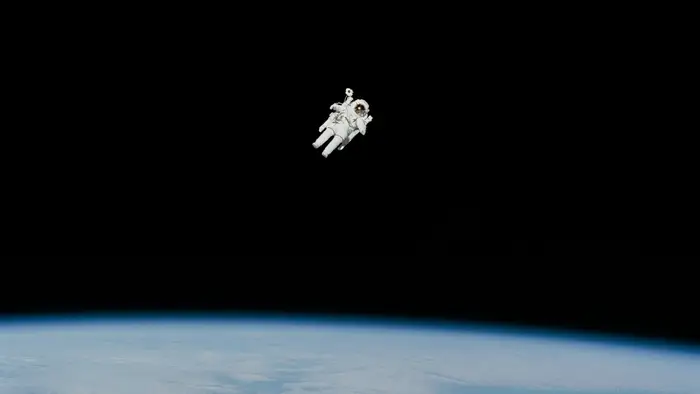
Artemis III will stay in low Earth orbit, about 290 miles up, rather than heading for the Moon. Image: Unsplash.
The bottleneck is the schedule
The most consequential thing Isaacman said may be the least dramatic: the lander is the bottleneck, and the schedule will bend around it. That framing matters because Artemis III is already under schedule pressure. In September 2026, an internal memo from Isaacman told agency employees that Artemis III was about 90 days behind schedule. The summer 2027 target leaves little margin, and the sequencing decision means the mission’s critical path now runs through Blue Origin’s factory floor rather than through NASA’s own rocket. The SLS Block 1 for Artemis III is a known quantity, Orion has flown around the Moon and carried a crew around it, and Starship is flying regularly. Blue Moon Mark 2, the crewed test article, is the element that has the furthest to go, and Isaacman’s public insistence that it fly first is both a technical judgment and a management tool: it puts the bottleneck in plain sight and makes its resolution the precondition for everything else.
Blue Origin’s own roadmap shows why the timing is tight. The company plans to fly its uncrewed Mark 1 cargo lander, named Endurance, to the lunar surface in 2027, launch an uncrewed Mark 2 demonstration in late 2027, and attempt an uncrewed Mark 2 landing in the first quarter of 2028. The Artemis III test lander must be ready well before those milestones, in time for a summer 2027 Earth-orbit campaign, which means the crewed test article has to come together on a faster track than the uncrewed landing demonstrations that follow it. That ordering, test article before landing demonstrator, is unusual, and it underlines how much NASA is asking Blue Moon to prove, and how quickly, before the agency commits a crew.
The willingness to trade roughly a month of schedule for a better Blue Moon checkout is also a statement about what NASA has learned from its own history. The agency’s worst days have come from schedule pressure overriding engineering caution, and Isaacman’s public framing of the trade, a month for a checkout, is the kind of statement that is easy to make in an interview and hard to sustain under political pressure if the summer 2027 target starts to slip. But it is also the statement that gives engineers cover: if Blue Moon needs more time in orbit before the crew launches, the plan already allows for it, because the lander is designed to loiter for up to a month. The slack is built into the architecture, not bolted on afterward.
What this means for the 2028 landing
Everything about Artemis III points toward Artemis IV, the mission now slated to carry astronauts to the lunar surface in 2028. That target, as even sympathetic coverage notes, is highly ambitious and leaves almost no margin for error. Before either lander can carry a crew to the surface, both still have to prove themselves uncrewed. SpaceX is targeting an uncrewed Starship Moon landing, and Blue Origin’s uncrewed Mark 2 landing attempt is planned for early 2028, which means the Artemis IV decision, and the landing itself, will follow hard on the heels of those demonstrations. The Earth-orbit rehearsal of Artemis III is supposed to de-risk that compressed timeline by answering the crew-operations questions early, in orbit, where the answers are cheaper to obtain.
The choice between Starship and Blue Moon for Artemis IV is not merely technical. It is also a choice about industrial strategy, about which provider’s architecture becomes the backbone of the lunar program, and about how NASA balances two very different approaches to landing people on the Moon. Starship is the larger, more ambitious vehicle, designed to be fully reusable and to carry far more cargo and crew than any previous lander. Blue Moon is smaller, more conventional in outline, and designed around a different set of trades. Artemis III tests both against the same crew, the same Orion capsule, and the same mission profile, which gives NASA a comparison grounded in flight data rather than in viewgraphs. That is the point of flying both landers on one mission, even though it makes the mission, in Parsons’ phrase, the most complicated launch campaign ever undertaken.
It is worth remembering how much of this architecture was already visible in earlier Artemis III planning. The mission’s crew announcement and its docking test plans, reported earlier this year, sketched the same shape: a crew, two landers, and a rehearsal before a landing. What Isaacman’s November 1 remarks add is not a new shape but a new hardness to the sequence, and a new candor about the constraint. The lander goes first because the lander is the risk. The crew waits because the crew is the thing that cannot be risked. And the schedule, for once, is explicitly subordinate to both.

The first Artemis landing now moves to Artemis IV in 2028, after both landers prove themselves. Image: Unsplash.
The view from the launch pads
There is a ground-level consequence to the three-launch plan that is easy to overlook in the strategy discussion: three rockets, three pads, three providers, all operating on Florida’s Space Coast in a compressed window. Launch Complex 36A for New Glenn, Launch Complex 39B for SLS, and Launch Complex 39A for Starship are all within a few miles of each other, and the campaign will require range coordination, airspace management, and ground support for three very different vehicles in sequence. The logistics are part of why Parsons described the campaign as the most complicated ever undertaken, and they are part of why the sequencing matters operationally as well as technically. A delay to any one launch ripples into the others, and the 30-day loiter capability of Blue Moon is the shock absorber that keeps a ripple from becoming a cascade.
That operational picture also explains why NASA briefed the plan in such detail at Kennedy Space Center in October, with Isaacman, Associate Administrator Amit Kshatriya and Parsons all presenting. The Artemis Acceleration briefing was not just a status update; it was a public commitment to a specific choreography, made at the place where the rockets will actually fly. The November interview then added the dependency rule on top of that choreography. Taken together, the two events give the program a plan that is specific enough to be held accountable: Blue Moon first, SLS second, Starship third, with the crew boarding one lander and docking with the other, over 14 days, in the summer of 2027.
For readers who have followed the Artemis program’s long history of restructurings, the candor about the bottleneck may be the most encouraging part of the story. Programs that hide their critical path tend to discover it late, in public, and at great cost. Programs that name it early, and build slack around it, at least give themselves a chance to manage it. Isaacman has named the critical path for Artemis III, and it runs through a Blue Origin factory and a New Glenn launch pad. Whether that path clears in time for summer 2027 will determine whether the most complicated launch campaign ever undertaken flies on schedule, slips by the month Isaacman is willing to trade, or slips by more. The lander, as of November 1, is the mission.

Blue Origin’s lander is now the pacing item for NASA’s return to the Moon. Image: Unsplash.
A rehearsal with the stakes of a landing
It is tempting to read Artemis III’s demotion from landing to rehearsal as a retreat, and in one sense it is: the mission will not put boots on the Moon. But the rehearsal framing understates what the mission actually has to accomplish. It must prove that Orion can dock with two different commercial landers, that a NASA crew can live and work inside a Blue Origin spacecraft, that three providers can operate as one campaign, and that the data from all of it is sufficient to choose a lander for the first landing in more than half a century. Those are not consolation prizes. They are the prerequisites for the landing, and they are being tested in the only place where failure is survivable.
The sequencing rule is the clearest expression of that philosophy. By refusing to commit SLS until Blue Moon is in orbit and checked out, NASA is saying that the crew’s safety is not a variable to be traded against the calendar, and that the least mature element sets the pace for the whole program. It is a discipline that will be tested, because summer 2027 is close, the lander is not yet fully assembled, and the political pressure to fly on time will only grow. But it is a discipline with a built-in mechanism, the 30-day loiter, that gives it room to work. If Blue Moon launches, checks out, and waits, the campaign proceeds. If it struggles, the crew stays on the ground, and the program learns what it needs to learn without risking four astronauts to learn it.
That is the kicker of Isaacman’s November 1 statement, and it is larger than one launch order. The Artemis program spent years debating which rocket, which lander, and which architecture would return Americans to the Moon. The answer, as of now, is all of them, in sequence, with the least proven element going first and the crew going only when the element has proven itself. It is a plan that accepts complexity in exchange for safety, that trades a landing date for a rehearsal, and that names its bottleneck out loud. The Moon will wait. Blue Moon, for the moment, is the mission’s clock, and NASA has just told the world it will not start that clock until the lander is already ticking in orbit.
Earlier coverage on this site: the Artemis III crew announcement, the Artemis III docking test plans for 2027, and the Artemis acceleration update and the 2028 Moon landing plan.

Artemis III’s crew will test both commercial landers in Earth orbit before either carries astronauts to the surface. Image: Unsplash.