Northrop Grumman CRS-25 Cygnus XL Launch November 29: 11,000 Pounds of Science Headed to the Space Station
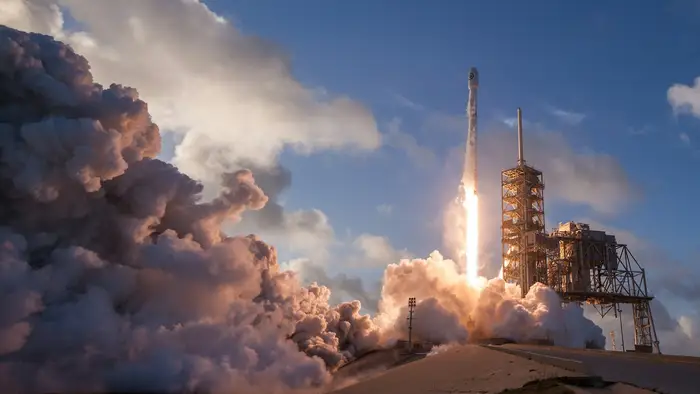
On Sunday, November 29, a SpaceX Falcon 9 rocket will lift off from Cape Canaveral carrying a cargo ship named for one of the most famous astronauts in history. The Northrop Grumman Cygnus XL spacecraft, flying as mission CRS-25, will deliver about 11,000 pounds of supplies, equipment, and science experiments to the International Space Station, where two astronauts will pluck it out of orbit with the station’s robotic arm.
NASA, Northrop Grumman, and SpaceX are targeting no earlier than 10:47 a.m. EST for liftoff from Space Launch Complex 40 at Cape Canaveral Space Force Station in Florida, the agency announced on November 18. The launch window opens a ten-day countdown to arrival: the spacecraft is expected to reach the station on Tuesday, December 1, when NASA astronauts Jessica Watkins and Luke Delaney will use the Canadarm2 robotic arm to capture it, and ground controllers will then install it on the Earth-facing port of the Unity module for unloading.
The mission matters for more than its cargo manifest. CRS-25 is the third flight of the enlarged Cygnus XL, a stretched version of Northrop Grumman’s workhorse freighter that carries nearly a fifth more cargo than the standard Cygnus. It is also the 25th Cygnus spacecraft built to resupply the station under NASA’s Commercial Resupply Services contract, a program that has quietly kept the orbiting laboratory stocked for more than a decade. And the payload it carries reads like a preview of the commercial space economy NASA hopes will follow the station: radiation shielding that could protect future spacecraft, rubber compounds tested in the raw space environment, a power system that can reconfigure itself by software command, a third free-flying Astrobee robot, and an experiment that tries to assemble a structure in orbit from 32 separate tiles with no outside help.
For the crew aboard the station, the flight is also a matter of routine made remarkable. The Cygnus will stay berthed at the Unity module until May 2027, serving as a storage room, a laboratory annex, and eventually a trash truck, departing with several thousand pounds of disposal items before burning up harmlessly during re-entry. It is the kind of unglamorous, indispensable logistics that makes everything else in orbit possible.
The mission at a glance
CRS-25 is a cargo flight, and cargo flights live or die on their numbers: how much mass, how much volume, when it launches, when it arrives, and how long it stays. Here are the key figures for the mission, drawn from NASA’s coverage advisory, the ISS National Lab, and the mission’s flight plan.
| Item | Detail |
|---|---|
| Mission | Northrop Grumman Commercial Resupply Services 25 (CRS-25 / NG-25) |
| Spacecraft | Cygnus XL, named S.S. James “Jim” Lovell |
| Launch vehicle | SpaceX Falcon 9 Block 5 |
| Launch site | Space Launch Complex 40, Cape Canaveral Space Force Station, Florida |
| Launch target | Sunday, November 29, 2026, 10:47 a.m. EST (15:47 UTC; 10:47 p.m. WIB) |
| Launch coverage begins | 10:25 a.m. EST, November 29 |
| Cargo mass | About 11,000 pounds (5,000 kilograms) |
| Arrival and capture | Tuesday, December 1, 2026, 2:35 a.m. EST (2:35 p.m. WIB), by Canadarm2 |
| Berthing port | Unity module, Earth-facing (nadir) port |
| Crew capturing the spacecraft | NASA astronauts Jessica Watkins and Luke Delaney |
| Planned stay at the station | Until May 2027 |
| End of mission | Departure with disposal cargo, destructive re-entry |
All dates are targets and can move. NASA notes that the launch date remains subject to change, with updates posted on the agency’s space station blog, and the agency will hold a prelaunch media teleconference on Monday, November 23, at 12 p.m. EST, streamed on NASA’s YouTube channel.
What is flying to the station
A resupply ship carries three kinds of cargo: food and supplies for the crew, equipment that keeps the station running, and science. CRS-25’s science load is unusually rich, because the flight carries more than 35 payloads sponsored by the ISS National Laboratory alongside NASA’s own research. The highlights NASA lists for the mission cover some of the most practical questions in spaceflight: how to deliver drugs better, how to predict whether cancer will spread, how to slow the muscle loss that comes with living in weightlessness, how to sense radiation more effectively, and how to grow food for crews on future long-duration missions far from Earth.
The drug-delivery work is among the most striking. One investigation will use equipment for making very small particles modeled on DNA in orbit, research that could lead to better ways of delivering drugs for cancer and osteoarthritis. In microgravity, fluids behave differently and particles can form more uniformly than they do on Earth, which is why researchers keep returning to orbit to manufacture things that are hard to make well under gravity’s pull.
A second strand of the medical research looks at cancer from the other direction. A study aboard CRS-25 aims to forecast whether a given patient’s cancer will spread elsewhere in the body, a capability that could help doctors choose treatments earlier and with more confidence. A third strand targets muscle wasting, testing human muscle cells plus medications in orbit to develop therapies for the muscle loss that comes with spaceflight and with aging on the ground. The same biology that weakens astronauts over months in orbit weakens older adults over years on Earth, and the station has become one of the few places where that process can be studied in fast-forward.
Beyond medicine, the spacecraft carries technology demonstrations aimed squarely at the future of commercial activity in low Earth orbit. The ISS National Lab’s release for the mission, published November 17, describes investigations focused on advanced materials, autonomous robotics, and next-generation spacecraft systems, and frames them as laying the foundation for a sustainable commercial economy in orbit after the station era.
A bigger Cygnus
CRS-25 is the third flight of the Cygnus XL configuration, following NG-23, and the enlarged freighter is the quiet engineering story of the mission. Northrop Grumman stretched the spacecraft’s pressurized cargo module to 7.89 meters (25.9 feet) long, raising its payload capacity to 5,000 kilograms (11,000 pounds) and its pressurized cargo volume to 36 cubic metres (1,300 cubic feet). Compared with the standard Cygnus, that is a payload increase of 19.5 percent and a volume increase of 15.5 percent.
The comparison is worth spelling out, because it shows what the stretch actually bought:
| Feature | Standard Cygnus | Cygnus XL (CRS-25) |
|---|---|---|
| Pressurized cargo module length | Shorter, original design | 7.89 m (25.9 ft) |
| Payload capacity | About 4,200 kg (about 9,200 lb) | 5,000 kg (11,000 lb) |
| Capacity increase | — | +19.5% |
| Pressurized cargo volume | About 31 cubic metres | 36 cubic metres (1,300 cu ft) |
| Volume increase | — | +15.5% |
The standard-Cygnus figures above are derived from Northrop Grumman’s stated percentage increases for the XL; the XL figures are the manufacturer’s stated numbers. The extra room matters because the station’s appetite keeps growing: more crew, more experiments, and more commercial payloads all compete for the same cargo space, and every additional kilogram a freighter can carry is a kilogram that does not need a second launch.
The XL’s predecessor flew the same route only months ago. The Cygnus XL that flew CRS-24 launched on April 11, 2026, also carrying about 11,000 pounds of cargo, and stayed at the station for nearly six months before its release from the Unity module on October 9, 2026. CRS-25 will follow the same pattern, with a stay planned through May 2027.
There is also a change of launcher behind the mission that is easy to miss. Cygnus missions now fly on SpaceX’s Falcon 9 rather than on Northrop Grumman’s own Antares rocket, which is being redesigned. The arrangement is a small irony of the commercial cargo program: a Northrop Grumman spacecraft, built with a pressurized module from Thales Alenia Space, riding a competitor’s rocket to reach a station that both companies help supply. It works because the CRS program was designed from the start around commercial providers rather than a single government rocket, and the Falcon 9 has become the reliable truck of low Earth orbit.
The science: materials, robots, and self-assembling structures
The ISS National Lab’s payload list for CRS-25 reads less like a single mission and more like a portfolio of bets on what the orbital economy will need next. Several of the projects will use Aegis Aerospace’s MISSE Flight Facility, a platform mounted outside the station that exposes materials and hardware to the raw space environment: radiation, atomic oxygen, and extreme temperature cycling, all at once, for months at a time.
One MISSE investigation, from a company called Melagen Labs, will test a radiation-shielding technology by comparing shielded and unshielded dosimetry sensors against traditional aluminum shielding controls. The goal is a lighter-weight, scalable alternative to the shielding that protects spacecraft and satellite systems today, and the project is notable for another reason: it is the first to launch that was selected through the ISS National Lab’s Orbital Edge Accelerator program, a pipeline meant to move early-stage space companies onto the station faster.
A second MISSE project comes from an unexpected corner of industry. Dunlop Tires will evaluate the durability of newly developed rubber compounds by exposing them to the space environment outside the station. The results could show how the materials withstand radiation and temperature extremes, informing future spacecraft and spaceflight systems. Tires in orbit sound like a curiosity, but seals, gaskets, and flexible materials are everywhere in spacecraft, and rubber that survives space is rubber that can be trusted in the machines that must survive space.
A third investigation, from Amplified Space, will test a software-defined spacecraft power system that can adapt to changing mission requirements through software commands. Traditional space power architectures are tailored to specific applications, with voltage and current characteristics fixed by hardware. The Amplified Space approach lets those characteristics be modified in flight, which could give future spacecraft and commercial platforms far more flexibility and make it possible to scale power systems across different designs instead of rebuilding them for every mission.
The robotics demonstrations may be the most visible part of the payload. Through ISS National Lab Commercial Service Provider Arkisys, a third Astrobee free-flying robot named Queen will rejoin the Honey and Bumble robotic platforms already operating aboard the station. Astrobees are cube-shaped robots that float through the station’s modules using fans, helping astronauts with experiments and chores. Adding a third robot expands the opportunities for research into multi-robot coordination, swarm behavior, cargo movement, autonomous assembly, and other robotics applications that could support future in-space operations and servicing. Three robots can do things one cannot: they can hand objects to each other, divide a workspace, and test the coordination software that future orbital construction crews, human or robotic, will depend on.
The most ambitious demonstration aboard CRS-25 is TESSERAE, a technology demonstration developed by the Aurelia Institute, with mission management transferred to the company’s spinout, Rendezvous Robotics, and supported by ISS National Lab Commercial Service Provider Axiom Space. The experiment will investigate autonomous assembly in microgravity, testing whether 32 individual tiles can assemble into a larger structure without external guidance or control. If it works, the idea scales: future spacecraft and stations could be built from modular pieces that find each other and lock together on their own, instead of requiring astronauts to bolt them together during long, risky spacewalks. Rendezvous Robotics is already advancing the research into a new generation of modular spacecraft designed to autonomously assemble and reconfigure in orbit.

A ship named for Jim Lovell
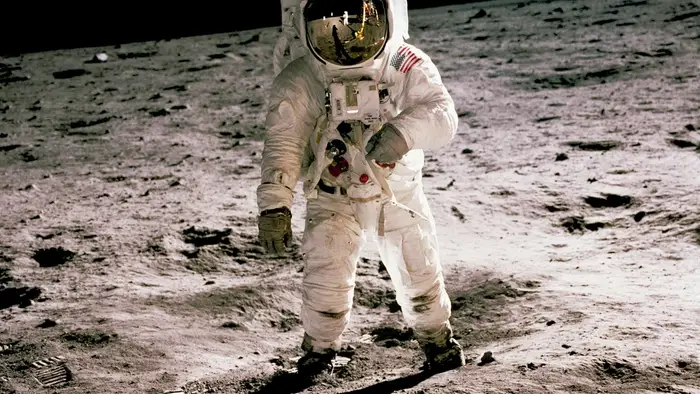
Northrop Grumman named the spacecraft the S.S. James “Jim” Lovell, in honor of the former NASA astronaut. Lovell flew four missions: Gemini VII, Gemini XII, Apollo 8, and Apollo 13, the flight around the Moon that became one of the most famous survival stories in spaceflight history when an oxygen tank exploded en route and the crew, with the ground team, improvised their way home.
The naming tradition is one of the program’s quieter customs. Cygnus spacecraft are named for people who advanced human spaceflight, and the names turn each freighter into a small memorial flying to the station and back. Lovell’s name fits the mission in a way that goes beyond biography. Apollo 13 was a mission that survived because a crew and a ground team solved problems nobody had planned for, using the materials they had on hand. A cargo ship named for Lovell will deliver experiments about shielding, materials, and autonomous assembly: the practical arts of keeping people and machines alive in space, which is the same problem Lovell’s crew faced, in a different form, in April 1970.
There is also a symmetry in the timing. The station Lovell’s successors built has been continuously occupied for a quarter of a century, and the cargo program that keeps it alive is now naming its ships for the astronauts who made that permanence thinkable. The S.S. James “Jim” Lovell will spend about six months attached to the station, a span Lovell himself would have recognized as the slow, patient work of living in orbit.
How the rendezvous will work
Unlike SpaceX’s Dragon, which docks with the station on its own, Cygnus is captured by the crew. The sequence for CRS-25 follows the pattern used by every Cygnus flight. After launch from Cape Canaveral, the spacecraft will spend about two days raising its orbit and phasing in behind the station. On Tuesday, December 1, NASA’s live arrival coverage will begin at 1:10 a.m. EST. Watkins and Delaney will then take control of the Canadarm2 robotic arm and grapple the spacecraft as it holds position near the station, with capture scheduled for 2:35 a.m. EST. Ground controllers will then guide the arm to install Cygnus on the Unity module’s Earth-facing port, where the crew can open the hatch and begin unloading.
Watkins is the station’s commander and one of its most experienced hands, having arrived aboard Crew-13’s record-breaking flight to the station, which docked just 7 hours 55 minutes after launch. Delaney is her crewmate on the current expedition. The capture will be their first chance to handle a Cygnus together, and it is one of the most delicate maneuvers in station operations: a 5,000-kilogram spacecraft, moving at orbital speed, caught by a robotic arm operated by astronauts watching through windows and cameras.
The station the Cygnus is flying to has itself been changing. The crew completed a long power upgrade this year, installing the last roll-out solar arrays during a series of spacewalks, including the final solar array spacewalk on October 29, which finished a modernization program that began in 2021. A cargo ship arriving in December will dock at a station with more power, more experiments, and more demands on its logistics than ever before.
The other cargo vehicle in the current rotation is SpaceX’s Dragon. Dragon CRS-35 docked at the station in October carrying the final pair of roll-out solar arrays, artificial-retina hardware, lab-grown heart tissue, and brain organoids, and its return to Earth with science samples has been delayed by weather at the splashdown sites off California. The two cargo systems complement each other: Dragon can bring experiments home intact, splashing down with samples that need a gentle return, while Cygnus carries more upmass in its enlarged XL form and disposes of trash by burning up on re-entry. Together they are the station’s supply line, and CRS-25 is the next truck in the convoy.
Timeline: CRS-25 from briefing to departure
The mission’s public milestones stretch from mid-November to next May, with the busiest stretch coming in the final week of November.
| Date | Milestone |
|---|---|
| April 11, 2026 | Cygnus XL flies CRS-24, carrying about 11,000 pounds of cargo to the station |
| October 9, 2026 | The CRS-24 Cygnus is released from the Unity module after a stay of nearly six months |
| November 2, 2026 | NASA invites media to cover the CRS-25 launch |
| November 17, 2026 | ISS National Lab details the 35-plus sponsored payloads flying on CRS-25 |
| November 18, 2026 | NASA sets launch coverage: liftoff targeted for November 29 at 10:47 a.m. EST |
| November 23, 2026 | Prelaunch media teleconference, 12 p.m. EST, streamed on NASA’s YouTube channel |
| November 29, 2026 | Launch: Falcon 9 lifts the S.S. James “Jim” Lovell from SLC-40; coverage from 10:25 a.m. EST |
| December 1, 2026 | Canadarm2 capture at 2:35 a.m. EST; berthing to Unity’s Earth-facing port |
| May 2027 | Cygnus departs with disposal cargo and burns up during re-entry |
The timeline also carries a quiet warning that applies to every launch date in it. NASA describes the November 29 target as “no earlier than,” and the history of the cargo program is full of slips for weather, technical checks, and range availability. The CRS-25 date has already been public since early November, when NASA invited media to cover the launch, and the coverage advisory on November 18 confirmed the same target. If the date moves, NASA will post updates on the station blog, and the arrival date will move with it.
Why this flight matters
It is easy to treat cargo flights as background noise. They do not carry astronauts, they do not land on the Moon, and they rarely make headlines. But CRS-25 illustrates why the resupply program is the foundation everything else stands on. The station’s science output, its commercial experiments, and its role as a testbed for the Moon and Mars all depend on a supply line that delivers on schedule, and each Cygnus flight is a rehearsal for the logistics that future deep-space missions will need at far greater distances.
The mission also shows how the station’s purpose is shifting. The payload list is dominated not by pure science but by technology demonstrations aimed at a commercial economy: materials that could shield future spacecraft, power systems that reconfigure by software, robots that coordinate in swarms, structures that assemble themselves. NASA’s plan is to retire the station around 2030 and hand low Earth orbit to commercial stations, and flights like CRS-25 are where the technologies those stations will need are being proven. The ISS National Lab describes the work as laying the foundation for a robust and sustainable low Earth orbit economy, and that is not marketing language: it is the reason the lab exists.
There is a third reason the flight matters, and it is the simplest. The station is a machine that must be fed. Every experiment, every spacewalk, every crew rotation depends on ships like the S.S. James “Jim” Lovell arriving with food, water, spare parts, and new science. When a cargo ship is delayed, experiments wait and crews ration. When it arrives, the station’s work continues. CRS-25 carries about 11,000 pounds of that continuity, and its arrival on December 1 will keep the laboratory running into the new year.
The launch itself will be visible well beyond Florida. NASA’s live coverage begins at 10:25 a.m. EST on November 29, with liftoff at 10:47 a.m. EST, and the agency will stream the flight on its website, NASA+, and its YouTube channel. Members of the public can register to attend virtually, with launch resources and a stamp for NASA’s virtual guest passport. For viewers in Indonesia, liftoff falls at 10:47 p.m. WIB on Sunday evening, and capture comes at 2:35 p.m. WIB on Tuesday, December 1.
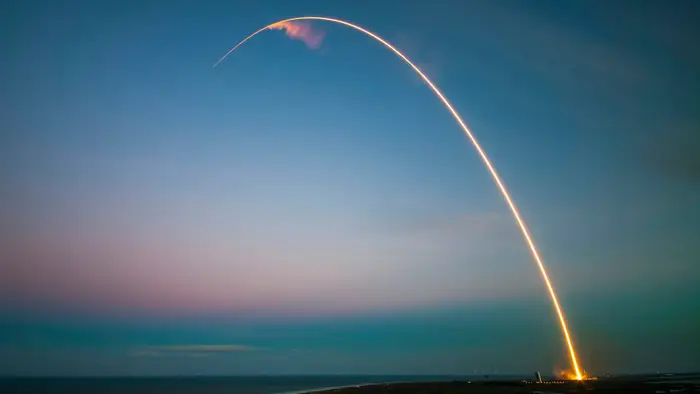
On November 29, a Falcon 9 will climb out of Cape Canaveral carrying a spacecraft named for a man who once looped around the Moon in a crippled ship and came home. The Cygnus will chase the station for two days, be caught by a robotic arm in the hands of two astronauts, and spend six months as the station’s pantry, laboratory, and trash truck. Then it will burn up over the ocean, and the next freighter will take its place. That is the rhythm of the station now: unglamorous, indispensable, and, for the people who keep it flying, routine in the way that only hard things become routine after you have done them twenty-five times.