Crew-13 Reaches the Space Station in Record Time as Watkins Becomes First Black Woman to Command a Crew in Orbit
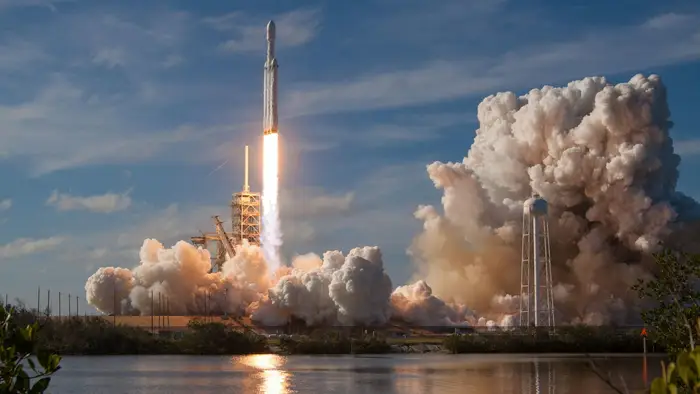
Fifteen years into the era of commercial crew flight, the trip to orbit is still an event. But on the morning of October 1, 2026, it became the fastest commute in the history of the International Space Station. NASA astronauts Jessica Watkins and Luke Delaney, Canadian Space Agency astronaut Joshua Kutryk, and Roscosmos cosmonaut Sergey Teteryatnikov lifted off from Cape Canaveral, Florida, at 11:10 a.m. EDT aboard a SpaceX Falcon 9 rocket — and just under eight hours later, they were floating through the hatch of the space station.
At 7:05 p.m. EDT that same evening, their Crew Dragon spacecraft docked autonomously with the forward port of the station’s Harmony module. The elapsed time from launch pad to docking port: seven hours and 55 minutes. No American spacecraft has ever made the journey faster, according to NASA. The previous Crew Dragon record, set by Crew-11, was just under 15 hours.
The flight also carried a milestone of a different kind. Commander Jessica Watkins, a geologist who previously spent six months aboard the station on the Crew-4 mission in 2022, became the first Black woman to command a crew into orbit — a first she added to her earlier distinction as the first Black woman to serve on a long-duration ISS expedition.
A textbook launch, then a sprint to the station
The countdown unfolded at Space Launch Complex 40 at Cape Canaveral Space Force Station, the same complex that has become SpaceX’s workhorse pad for crew flights. The mission’s Falcon 9 first stage, booster B1101, was making its third flight, and it returned to Landing Zone 40 roughly eight minutes after liftoff — a routine landing that has become so commonplace it barely registers anymore, yet underpins the economics of everything SpaceX flies.
Riding on top was Crew Dragon C213, a capsule with a name — Grace — and a resume. Grace first flew in June 2025 as the ride for the Axiom-4 private mission, spending just over 20 days in space. Crew-13 marked its second flight and its first long-duration expedition, a demonstration of how SpaceX’s reusable fleet keeps cycling hardware through NASA’s crew rotation program.
“Thanks for an amazing ride,” Watkins radioed to mission control after the capsule reached orbit, a short, bright transmission that capped the ascent.
From there, the choreography of a fast rendezvous took over. Dragon executed a series of carefully phased orbital maneuvers, closing the gap to the station in less than eight hours of free flight. SpaceX flight controllers monitored the automatic maneuvers from Hawthorne, California, while NASA watched station operations from Johnson Space Center in Houston. Docking was fully autonomous — the crew and ground teams remained ready to take manual control if needed, but the spacecraft did its job without intervention.
At 9:19 p.m. EDT, after post-docking checks and pressure equalization, the hatch opened. Watkins, Delaney, Kutryk, and Teteryatnikov floated into the station, where they were greeted by the Expedition 75 crew. The arriving quartet will spend roughly six months aboard the orbiting laboratory, with their return to Earth planned for no earlier than March 2027 and a splashdown targeted for the Pacific Ocean.
The sprint to the station matters for reasons beyond bragging rights. Shorter transit times mean less time in a cramped capsule, lower exposure to the risks of launch and early flight, and quicker relief for the crew waiting above. The Crew-13 flight — designated USCV-13, the 13th operational crew rotation mission flown by SpaceX under NASA’s Commercial Crew Program — showed that the fast-rendezvous techniques once pioneered by Russian Soyuz vehicles are now firmly in the American repertoire.

The crew: a veteran commander and three rookies
Crew-13 is an unusual mix: one seasoned spacefarer leading three first-time flyers, the standard pattern of NASA crew rotation missions, where experience is deliberately paired with fresh perspective.
Watkins, the commander, is the veteran of the group. A geologist by training, she worked with NASA’s Mars rover Curiosity science team a decade ago and flew to the station in 2022 aboard Crew-4, serving as mission specialist. This flight is her second, and her first as spacecraft commander — and it makes her the first NASA astronaut to fly twice aboard a Crew Dragon spacecraft. NASA announced the Crew-13 crew assignments on April 23, 2026.
Luke Delaney, the pilot, is a NASA astronaut and former naval aviator making his first trip to space. Joshua Kutryk, a Canadian fighter pilot flying for the Canadian Space Agency, is the first Canadian to launch to orbit under NASA’s Commercial Crew Program — a milestone that Canadian officials and space advocates have highlighted as a moment of national pride for the country’s space industry. Kutryk spoke with media from aboard the station on October 13, framing his mission as a symbol of what Canada’s space sector can achieve.
Sergey Teteryatnikov, a Roscosmos cosmonaut and submariner by background, rounds out the crew as a mission specialist. His presence continues the seat-swap arrangement between NASA and Roscosmos that has persisted even as geopolitical tensions on the ground have strained relations elsewhere — American and Russian crew members still fly on each other’s vehicles to ensure both nations always have a trained presence aboard the station.

A launch delayed, then delivered
Crew-13 did not leave on schedule. The mission was delayed roughly three weeks while SpaceX engineers fixed a leaking fuel system on the Dragon capsule — a reminder that even mature programs with hundreds of flights behind them still stop the countdown when the hardware says something is off.
That caution is a feature of the modern commercial crew system, not a flaw. Before quarantine began in mid-September, the crew completed their training at SpaceX’s facility in Hawthorne, California, and ran a Crew Equipment Interface Test at Cape Canaveral — a daylong exercise in which they donned their spacesuits, climbed into Dragon, ran suit leak checks, verified seat fit, and familiarized themselves with the spacecraft’s interior, communications, and the hum of its fans and pumps. In mid-September, the four entered prelaunch quarantine at Johnson Space Center in Houston, a practice dating back to the Apollo program that limits in-person contact and requires medical screening for anyone who meets the crew, reducing the risk of preflight illness.
The Crew-13 mission patch carries a nod to another story of a mission that didn’t go as planned: it honors Apollo 13, the 1970 lunar mission that suffered an oxygen tank explosion en route to the Moon and returned its crew safely to Earth. NASA administrator Jared Isaacman, who praised the crew’s work in a statement, said the launch “is another demonstration of America’s unmatched capability in human spaceflight and the strength of our commercial partnerships.”
Dr. Lori Glaze, associate administrator of NASA’s Human Spaceflight Mission Directorate, framed the steady cadence of crew rotations as essential infrastructure: “Our steady cadence of commercial crew launches demonstrates the essential role the International Space Station plays in sustaining our presence in Earth’s orbit and sharpening the tools we’ll take forward to the Moon and Mars.”
Science for six months: tissues, crops, and blood flow
A six-month expedition is primarily a research tour, and Crew-13’s science agenda spans the themes that now define ISS research: biology, botany, and the human body’s strange adaptations to weightlessness.
One of the headline investigations uses human stem-cell-derived tissues grown in microgravity. Researchers will study these tissues to advance personalized medicine, disease modeling, and pharmaceutical testing — with specific applications aimed at heart disease and Parkinson’s disease. In microgravity, cells organize into three-dimensional structures more like those in the human body than they do in a petri dish on Earth, which is why scientists increasingly treat orbit as a laboratory for studying how tissues form and how drugs act on them.
“During the mission, the crew will help researchers treat heart disease and Parkinson’s disease by studying human stem-cell derived tissues,” said Dana Weigel, manager of NASA’s Low Earth Orbit Program at Johnson Space Center.
The crew will also test a new, mostly autonomous plant growth system to explore crop production — research that matters enormously for any future mission that takes humans far from Earth’s supply chains. If astronauts are to live on the Moon or travel to Mars, they will need to grow food on the way and once they arrive. A system that largely tends itself is a step toward that self-sufficiency. The crew will also test how plants grow outside dedicated facilities, a small experiment with big implications.
Two other lines of research are more personal. Crew-13 will continue studies of blood-flow abnormalities observed in microgravity — a line of investigation that matters for astronaut health on long missions, since the cardiovascular system remodels itself in weightlessness in ways scientists are still working to fully understand. And the crew will test a new inflight diagnostic device designed to monitor astronaut health in orbit, part of a broader push to give crews more medical capability independent of ground-based doctors.
Together, the research portfolio reflects what the ISS has become in its final years of operation: not just a destination, but a testbed for the technologies and knowledge that will underpin lunar and Martian exploration, and a platform whose discoveries regularly filter back into medicine, agriculture, and materials science on Earth.

The mechanics of a seven-hour sprint
To appreciate what Crew-13 pulled off, it helps to understand how a fast rendezvous works. When Dragon separated from the Falcon 9 upper stage, it entered an orbit roughly 200 kilometers above Earth — but below and slightly behind the station. From there, the spacecraft performed a choreographed sequence of engine burns, each one raising and circularizing its orbit, until it had matched the station’s altitude and velocity and was trailing just behind it on the same orbital track. Final approach was handled by Dragon’s Draco thrusters and automated guidance, with lidar and thermal imaging feeding data to the flight computer as it closed the last few hundred meters.
Until recently, this kind of rapid transit was almost exclusively the domain of Russian Soyuz capsules, which have flown three-and-a-half-hour rendezvous profiles since 2020. Crew Dragons typically took 15 to 20 hours, partly because the trajectory margins gave teams more time to evaluate spacecraft systems after launch. The Crew-11 flight had already cut that to under 15 hours. Crew-13’s sub-eight-hour flight demonstrates that SpaceX and NASA have gained enough confidence in Dragon’s autonomous navigation and post-launch checkout cadence to compress the timeline dramatically.
That confidence is built on a fleet that has now flown 21 crewed orbital missions. Every Dragon flight contributes data to the next, and the vehicle’s autonomy has improved steadily since the Demo-2 test flight in 2020. The record matters for the people who will fly on it: in an emergency, getting to the station — with its air, food, medical equipment, and life support — faster is unambiguously better. And as commercial stations come online later this decade, the same fast-rendezvous techniques will define crew transport across the industry.
The commander: from geologist to history-maker
Jessica Watkins’s path to the commander’s seat is one of the more remarkable arcs in the astronaut corps. A geologist who earned her doctorate from UCLA, she worked on NASA’s Mars Science Laboratory — the Curiosity rover — helping to study the stratigraphy of Gale Crater and reconstructing the ancient environments that shaped it. When she flew to the station in 2022 as a mission specialist on Crew-4, she became the first Black woman to serve on a long-duration expedition — a milestone that drew international attention.
This flight makes her the first Black woman to command a crew in orbit, and the first NASA astronaut to fly twice on a Crew Dragon. Her trajectory — from studying the rocks of Mars remotely, to living and working in orbit, to commanding a spacecraft — mirrors the career arcs of an astronaut corps that increasingly values scientific depth alongside piloting skill.
The significance is not lost on the communities watching. When Watkins flew in 2022, she spoke about representation as a practical matter: seeing someone who looks like you do the job makes the job feel possible. Commanding Crew-13 extends that message from participation to leadership — from being aboard to being in charge.

A patch with a story
Look closely at the Crew-13 mission emblem and you’ll notice its design honors Apollo 13. That may seem like a strange tribute — Apollo 13 is famous precisely because it didn’t reach its destination. But in NASA culture, the 1970 mission is revered as the finest example of mission control and crew resourcefulness under pressure: an oxygen tank explosion crippled the spacecraft, and NASA’s engineers improvised a survival plan that brought Jim Lovell, Jack Swigert, and Fred Haise home alive.
For Crew-13, the nod carries layered meaning. The mission is the 13th crew rotation flight, a number that would make a superstitious organization nervous. Naming the patch after the original “successful failure” turns the number into a badge. It also reflects the reality that every crewed mission operates in the shadow of Apollo 13’s lesson: the plan is only the beginning, and what matters is what you do when it breaks.
Canada’s moment and the continuing partnership
Joshua Kutryk’s presence aboard Crew-13 is more than a crew slot — it is a milestone for the Canadian Space Agency, which secured the flight through its partnership agreements with NASA. He is the first Canadian to fly to orbit as part of NASA’s Commercial Crew Program, a distinction that matters because the commercial program represents the new architecture of human spaceflight: government astronauts flying on privately built and operated spacecraft.
Speaking from the station on October 13 during a news conference at the Canadian Space Agency headquarters, Kutryk framed his mission as a signal to Canada’s space industry — proof that the country’s astronauts and hardware providers belong in the era of commercial spaceflight, not just as guests but as participants.
His flight also extends a tradition of Canadian presence on the ISS that stretches back to the station’s earliest days, from the Canadarm robotic systems to astronauts like Chris Hadfield, whose command of Expedition 35 in 2013 became a cultural phenomenon. Kutryk represents the next generation of that lineage, flying in a vehicle class that didn’t exist when he joined the astronaut corps.
The crew’s international composition also keeps alive one of the most durable diplomatic instruments in space: the crew swap. Since the program began, NASA and Roscosmos have traded seats on each other’s vehicles so that each agency always has at least one trained crew member aboard the station. Teteryatnikov’s flight on a SpaceX vehicle, like the American astronauts who have flown on Soyuz capsules, keeps that mutual insurance policy intact.
Handover and the road ahead
Crew-13 joins an Expedition 75 crew that already includes NASA astronaut Anil Menon and Roscosmos cosmonauts Pyotr Dubrov and Anna Kikina. After a handover period of direct crew-to-crew instruction — the quiet, essential work of passing along six months of hard-won station knowledge — the outgoing Crew-12 mission will return to Earth. That crew includes NASA astronauts Jessica Meir and Jack Hathaway, ESA astronaut Sophie Adenot, and Roscosmos cosmonaut Andrey Fedyaev.
The handover is the heartbeat of the ISS program: one crew teaches the next, and institutional memory is preserved across the boundary of a single flight. With the station’s future now mapped toward a managed deorbit and the rise of commercial successors in low Earth orbit, every expedition carries a little extra weight. The research, the maintenance, and the lessons about how humans live and work in space all feed into what comes next.
For Canada, the mission is a first — Kutryk’s flight under the Commercial Crew Program opens a lane that future Canadian astronauts may follow. For Roscosmos, the continued seat swaps keep international partnership alive in orbit even as it falters elsewhere. For NASA, Crew-13 is one more rotation in a program that has settled into a reliable rhythm: spacecraft built by a contractor, commanded by an astronaut, docking in record time.
And for Jessica Watkins, the mission is a homecoming with a difference. Four years ago she arrived at the station as a mission specialist, the first Black woman on a long-duration expedition. This time she arrived as commander, having taken the station’s helm in the most literal sense. “We are so excited to be here,” she said in a livestream after arriving. “It’s amazing and kind of ironic to think that it’s such a short trip to get here because the journey to get here has been long.”
The journey from launch pad to docking port took seven hours and 55 minutes. The journey to this moment — for Watkins, for commercial crew, for a station entering its final chapter — took much longer. Crew-13 will spend the next six months doing the work that journey made possible.