NASA VIPER Rover 2027 Lunar South Pole Water Hunt Enters Final Testing
In a clean room in Houston, a four-wheeled robot the size of a golf cart is running through its final exams. It has no driver on board, no steering wheel, and no GPS to guide it. What it does have is a one-meter drill, three scientific instruments, and a one-way ticket to the darkest, coldest corners of the Moon. NASA’s VIPER rover is built, it is being tested, and — after years of detours — it is finally on its way to the lunar south pole.
NASA confirmed the rover’s status in an October 20, 2026 progress update from its Moon Base Program, the most detailed public accounting yet of the agency’s lunar rover fleet. The Volatiles Investigating Polar Exploration Rover, known universally as VIPER, is fully assembled at Johnson Space Center in Houston and is undergoing final testing before it moves to Kennedy Space Center in Florida for launch preparations. The mission is scheduled to launch in 2027 — late 2027, according to NASA’s update — aboard a Blue Origin Blue Moon Mark 1 lander, and to spend about 100 days roaming the Moon’s south polar region in search of water ice and other resources that future astronauts could use.
“VIPER is built and waiting for a ride,” is how the update was summarized by NASA’s surface mobility team, and the phrasing captures both the excitement and the long history behind this machine. Few NASA missions have traveled a stranger road to the launch pad. VIPER was designed, built, nearly cancelled, and then rescued — and it now stands as the robotic vanguard of NASA’s plan to build a permanent presence on the Moon.
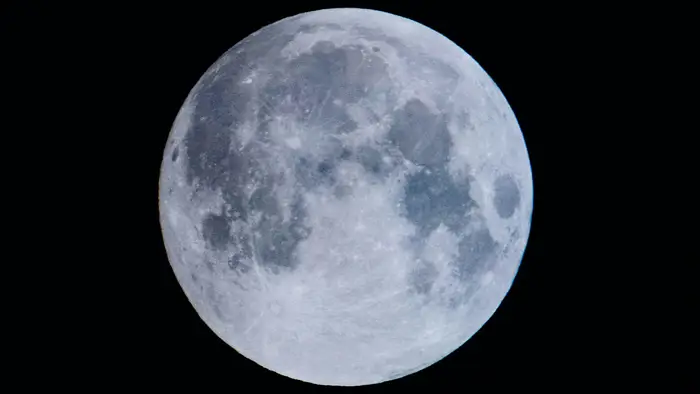
The Moon’s south polar region, where VIPER will hunt for water ice. Image: Unsplash.
A prospector, not a tourist
VIPER is not a general-purpose explorer. It is a prospector, built for a single, specific job: to find out where the Moon’s water is, how much of it there is, and what form it takes. That distinction matters, because NASA’s ambitions for the Moon now depend on the answer.
Water on the Moon is not just a scientific curiosity. Split it into hydrogen and oxygen and it becomes rocket propellant and breathable air. Melt it and it becomes drinking water. Shield with it and it becomes radiation protection. If astronauts are going to live and work at the lunar south pole for months at a time — the stated goal of NASA’s Moon Base Program — they will need to know whether they can live off the land or whether every drop must be hauled up from Earth at enormous cost.
Earlier observations have already established that ice exists at the lunar poles. Orbiters have detected hydrogen signatures consistent with water ice in permanently shadowed craters, and impact experiments have kicked up water vapor from the lunar soil. But orbital data cannot answer the questions that matter for a base: how deep is the ice, how concentrated is it, is it mixed with soil or locked in pure deposits, and does it sit at the surface or hide a meter down? Those are questions only a rover on the ground can answer, and VIPER is the rover built to answer them.
The mission plan calls for VIPER to cover more than 30 kilometers — more than 18 miles — during its roughly 100-day surface mission, a pace NASA characterizes as fast for a planetary rover. It will drive into and out of permanently shadowed regions, places NASA describes as having seen no sunlight for billions of years, where temperatures approach absolute zero and ice can accumulate and survive. Its instruments will remain on continuously while it drives, pausing in places where scientists expect water-ice signatures for closer investigation, including eventually inside the shadowed craters themselves.
Three instruments and a drill
VIPER carries three scientific instruments and a drill that together form a kind of mobile field laboratory. A neutron spectrometer will sense hydrogen — the telltale signature of water — in the soil beneath the rover, mapping deposits as VIPER drives. A near-infrared spectrometer will analyze the composition of the surface, identifying minerals and volatiles in the light reflected from the lunar soil. A mass spectrometer will sniff out gases released from the soil as samples are heated, identifying water and other compounds molecule by molecule. And the one-meter drill, the rover’s most dramatic tool, will bore into the lunar surface to pull up samples from depths where sunlight never reaches and temperatures stay brutally cold.
The combination is deliberate. Orbital measurements see only the top skin of the Moon. VIPER’s drill reaches below it, where ice that has survived for eons may be preserved in a very different state than the frost that coats the surface. By sampling at different depths and temperatures, scientists can connect the rover’s measurements to the local environment — and build the first real map of a lunar resource, rather than a blurry orbital hint of one.
Mission operations will be run from NASA’s Ames Research Center in California, while a mission control team in Houston — including flight controllers, planners, a driver and co-driver, and a navigator — will direct the traverse. Driving on the Moon presents a challenge no Earth driver ever faces: there is no GPS. Scientists and drivers will have to work together to interpret the rover’s camera views, star-tracker readings, and instrument data to figure out exactly where VIPER is and where it should go next, adjusting the route as the mission proceeds. The rover will operate in some of the most difficult lighting conditions in the solar system, swinging between blazing sunlight and pitch-black shadow in a single drive. To cope, VIPER carries its own headlights — the first rover headlights ever sent to the Moon — so it can see into craters where the Sun has never shone. Its drivers, sitting in control rooms on Earth more than a second of light-travel time away, will command it in careful steps rather than real-time steering, sending a drive plan, watching the results come back, and then planning the next move. Every meter VIPER covers in the dark will be a meter no machine has ever driven before, mapped by headlight and instrument in terrain that has been frozen, silent, and untouched for eons.

VIPER will ride to the Moon aboard Blue Origin’s Blue Moon Mark 1 lander. Image: Unsplash.
The long road to the launch pad
VIPER’s journey to this point has been anything but smooth, and that history is part of why the October update mattered. The rover was originally assigned to fly aboard Astrobotic’s Griffin lander under NASA’s Commercial Lunar Payload Services program, the agency’s scheme for buying delivery services to the Moon from private companies rather than building its own landers. That arrangement changed. In September 2025, NASA awarded Blue Origin a task order worth up to 190 million dollars under the same commercial program to deliver VIPER to the surface aboard its Blue Moon Mark 1 lander.
The switch is significant for more than one reason. Blue Moon Mark 1 is Blue Origin’s cargo lander, a vehicle designed to carry payloads to the lunar surface without a crew aboard. Its uncrewed demonstration flight is planned for 2027, the same year VIPER is scheduled to launch, and NASA’s update notes that the agency and Blue Origin are still defining the interfaces between rover and lander and planning exactly how VIPER will be offloaded onto the lunar surface. Deep Space Network compatibility testing — making sure the rover can talk to NASA’s globe-spanning antenna network — was scheduled for December 2026, after which the rover is to be shipped to the lander facility.
NASA has not announced a specific landing date beyond the late-2027 launch window, and that caution is understandable. Lunar landings remain unforgiving. In recent years, private landers have tipped over, lost power, and crashed; even well-tested designs have struggled with the Moon’s airless, uneven terrain. But VIPER’s own hardware is no longer the question. The rover exists. It is assembled. It is being tested. The remaining work is the ride, the interfaces, and the operations — the unglamorous connective tissue that turns a machine into a mission.
Why the south pole, why now
The choice of the lunar south pole is not an accident of geography. It is the centerpiece of NASA’s return-to-the-Moon strategy, and VIPER’s findings will feed directly into decisions about where to build, what to build, and how to sustain a human presence there. The same south polar region is the target of the Artemis program’s crewed landing plans, and the same water VIPER is hunting is the resource those crews would hope to use.
The timing is equally deliberate. NASA’s October 20 update framed VIPER as one element of a much larger surface mobility strategy, presented by Robert Pickle, director of the Surface Mobility Office within the Moon Base Program. “Lunar rovers are central to our surface mobility strategy,” Pickle said, and the update laid out a fleet of vehicles designed to work together: VIPER first, scouting the ground, and then crewed rovers that will carry astronauts across the same terrain.
Two crewed lunar terrain vehicle designs — from Astrolab and Lunar Outpost — are approaching design reviews this fall and winter, with flight hardware due by the end of 2027. Each is meant to carry astronauts on excursions of several miles a day across the south polar region. Both companies are also sending smaller robotic scouts ahead of their crewed vehicles. Astrolab’s FLIP rover is set to fly on Voyager Technologies’ Griffin Mission One in late 2026 to test tires, batteries, radios, and cameras like those planned for its crewed rover. Lunar Outpost’s MAPP rover already operated at the south pole in 2025, and a second MAPP is scheduled to launch in early 2027. NASA has also released footage of astronauts testing Lunar Outpost’s Pegasus vehicle as the program’s ground hardware matures.
The picture that emerges is a choreography: robotic scouts map the ground and test the hardware, VIPER maps the resources, and then astronauts arrive with vehicles built on everything the robots learned. It is the same logic that has governed Mars exploration for decades — robots first, humans later — applied to a destination far closer to home and far more demanding of its water.
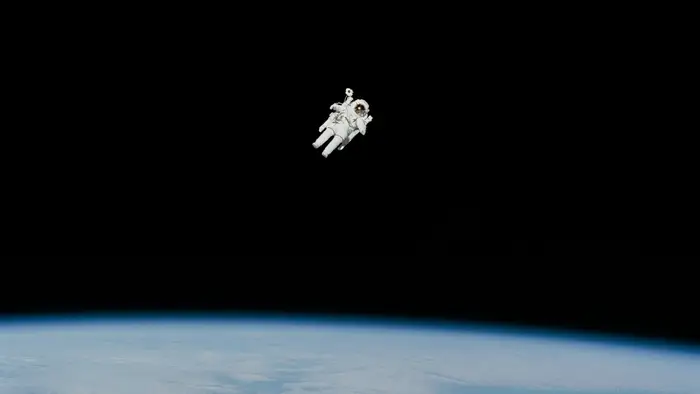
Earth seen from lunar orbit. VIPER’s findings will shape where astronauts live and work on the Moon. Image: Unsplash.
What VIPER’s map will decide
The stakes of VIPER’s survey are easy to understate and hard to overstate. If the rover finds abundant, accessible ice near the surface, the case for a sustainable south polar base strengthens dramatically: propellant, water, and oxygen could be produced on site, cutting the mass that must be launched from Earth and making longer stays feasible. If the ice proves sparse, deeply buried, or locked in difficult forms, mission planners will have to rethink base locations, supply chains, and even the architecture of the Artemis program’s surface phase.
That is why NASA is careful to describe VIPER’s job as mapping a resource, not merely confirming its existence. The rover’s traverse is designed to cross varied terrain — sunlit highlands, shadowed crater floors, and the boundary zones between them — so that scientists can distinguish isolated deposits from broad patterns of distribution. Measurements from multiple locations, at multiple depths, will let researchers build resource maps that future missions can actually plan around, rather than a single point measurement that proves only that ice exists somewhere.
The mission also carries a quiet scientific prize beyond its practical goals. The permanently shadowed regions VIPER will enter are among the most pristine environments in the solar system, cold traps that may have preserved volatiles delivered by comets and asteroids over billions of years. The water and other compounds trapped there are a frozen record of the early solar system, and VIPER’s samples — analyzed in place, molecule by molecule — could reveal where that material came from and how it survived. In that sense the rover is both a prospector and a historian, reading a record written in ice.
The months ahead
Between now and launch, VIPER’s calendar is full. Final testing at Johnson Space Center continues. Deep Space Network compatibility testing is scheduled for December 2026. The rover will then ship to the lander facility, where Blue Origin and NASA teams will rehearse the offloading sequence — the careful choreography of getting a wheeled robot down a ramp and onto the lunar soil without a human hand to guide it. Meanwhile, the Blue Moon Mark 1 lander itself must prove its own design in flight, and the broader Artemis program’s schedule — including the NASA’s Artemis Acceleration: the 2028 Moon Landing Plan After the Big October Update — will set the context in which VIPER’s launch window sits.
There is also a competitive clock running. China has its own south polar ambitions, with its Chang’e program targeting the same region and the same resource questions; NASA officials have repeatedly framed the race to the south pole as one of the defining contests of this decade, as covered in China’s Moon Program 2030. And within NASA’s own program, VIPER’s findings will arrive just as the agency finalizes plans for the crewed surface missions described in Six Months After Artemis II: Inside NASA’s Reworked Plan to Put Astronauts Back on the Moon. The rover is not an isolated science mission. It is a load-bearing piece of the architecture.

The permanently shadowed craters VIPER will explore have seen no sunlight for billions of years. Image: Unsplash.
A rover built for the dark
There is something fitting about VIPER’s destination. The rover is headed for places sunlight has not touched in billions of years, armed with instruments that see in the dark — neutron detectors that sense hydrogen invisible to cameras, spectrometers that read composition from faint reflected light, and a drill that reaches beneath the surface where the Sun’s influence ends. It will drive where no rover has driven, into shadows that have kept their secrets since before life existed on Earth.
When VIPER rolls off its lander in late 2027, it will not be the first machine on the Moon, nor the most famous. It will not carry astronauts, plant a flag, or take the photograph that defines a decade. What it will do is quieter and, in the long run, possibly more important: it will tell humanity whether the Moon can support us, or whether we must bring everything we need with us. Every base, every long stay, every plan to turn the Moon from a destination into a home will rest, in part, on what this small robot finds in the dark.
For now, it sits in a clean room in Houston, running through its final exams. The drill turns. The instruments hum. The tests pass, one by one. And somewhere in the schedule, a launch window in late 2027 waits — the moment when the most patient prospector in NASA’s fleet finally gets to go to work.

Future astronauts will depend on the water maps VIPER creates. Image: Unsplash.