NASA Solar Flare Alert System November 2026: The Five-Minute Race to Catch a Flare Before It Fades
For the first time in the history of solar physics, scientists have flown a rocket into a solar flare while it was still happening — not by luck, and not by guessing, but because a new alert system told them exactly where to look and how long the flare would last. The achievement, described in a paper published on November 4, 2026, in The Astrophysical Journal, solves a problem that has frustrated heliophysicists for decades: the most revealing light from a solar flare never reaches the ground, and the rockets that can climb above the atmosphere to catch it have only about five minutes to work with.
A solar flare is one of the most violent events in the solar system. In a matter of minutes, a tangled knot of magnetic field above the Sun’s surface snaps into a new configuration, releasing energy equivalent to billions of hydrogen bombs and accelerating particles to near the speed of light. The burst floods the solar system with X-rays, ultraviolet light, and charged particles. On Earth, that radiation can disturb radio communications, degrade the accuracy of navigation signals, damage satellite electronics, and — during the most extreme events — threaten power grids. The same physics matters far beyond our planet: astronauts working outside a spacecraft have almost no shielding from a flare’s radiation, and the planners of future lunar and Martian missions need to understand exactly how flares evolve, minute by minute, to keep crews safe.
That is why scientists want to watch a flare up close, in wavelengths the atmosphere blocks. And that is why, until now, they almost never could.

The five-minute problem
Sounding rockets are the workhorses of upper-atmosphere science. They are relatively small, relatively inexpensive, and relatively fast to prepare — a team can keep a rocket on a launch rail for days, waiting for the right moment, and then send it above the atmosphere on short notice. For solar physics, that combination is uniquely valuable. Much of the light a flare emits, especially in the X-ray and extreme ultraviolet bands, is absorbed by Earth’s atmosphere before it can reach a ground-based telescope. A sounding rocket carries its instruments above that absorbing layer and looks directly at the Sun.
The catch is the clock. A sounding rocket is a suborbital flight: it goes up, it observes, and it falls back to Earth. The observing window lasts roughly five minutes. A solar flare can rise, peak, and fade on a similar timescale. Launch too early and the rocket arrives before the flare has developed; launch too late and the instruments stare at a cooling ember. Worse, the alert systems scientists relied on for years could say that a flare had happened, but they could not say whether it would still be there when the rocket reached space. Every launch decision was a gamble, and the stakes were high: a sounding rocket campaign takes years of preparation, and a missed flare means a wasted flight.
The new system, described in the November 4 paper, changes the calculation. Instead of merely announcing that a flare has occurred, it pinpoints the flare’s location on the Sun and predicts how long the event is likely to last — and it does so within minutes of the flare’s detection by spacecraft. That extra information is the difference between launching on a hope and launching on a plan.
The system works by reading the Sun’s warning signs. It analyzes X-ray and ultraviolet emission from active regions — the magnetically complex areas on the solar surface where flares are born — as observed by NASA’s Solar Dynamics Observatory, the National Oceanic and Atmospheric Administration’s Geostationary Operational Environmental Satellites, known as GOES, and ground-based observatories. By tracking how an active region brightens and evolves in those wavelengths, the software can estimate both where a flare is erupting and how much life the eruption has left in it. The result arrives fast enough for a launch team standing by at a range in Alaska to make a go or no-go call while the flare is still in progress.
April 17, 2024: two rockets, one flare
The system earned its reputation on April 17, 2024, at the Poker Flat Research Range outside Fairbanks, Alaska — a launch facility owned by the University of Alaska Fairbanks Geophysical Institute and operated under contract with NASA’s Wallops Flight Facility. Two Black Brant IX sounding rockets stood on their rails at the end of a twelve-day launch window, the product of more than four years of preparation. The teams behind them had been waiting for the right kind of solar flare. On the last day of the window, just after 2 p.m. local time, the wait ended: the alert system gave the go-ahead, and the rockets flew one minute apart.
The first rocket, launched at 2:13 p.m. Alaska time, carried the Focusing Optics X-ray Solar Imager, or FOXSI-4, led by Lindsay Glesener, an associate professor at the University of Minnesota’s Institute for Astrophysics. FOXSI-4 was built to do something no earlier version of the instrument had attempted: stare directly at a large solar flare with focusing X-ray optics, capturing high-energy X-rays in sharp detail. The mission carried new high-resolution optics developed at NASA’s Marshall Space Flight Center and at Nagoya University, with highly polished Wolter-I mirrors offering about twice the resolution of the optics flown on previous FOXSI campaigns. A set of perforated attenuators developed at NASA’s Goddard Space Flight Center let the instrument measure low- and high-energy X-ray spectra simultaneously, even during a medium or large flare.
The second rocket, launched at 2:14 p.m., carried the High Resolution Coronal Imager, or Hi-C Flare, led by Sabrina Savage at NASA’s Marshall Space Flight Center. Hi-C Flare observed the same flare in extreme ultraviolet light, at a wavelength of 12.9 nanometers, with a high-resolution, low-noise imager, an extreme ultraviolet slitless spectrometer, soft X-ray imaging, and high-cadence flux measurements. It was the third flight of the Hi-C instrument, but the first to carry ride-along instruments, including COOL-AID, CAPRI-SUN, and SSAXI, the Swift Solar Activity X-ray Imager.
Both rockets climbed to altitudes of up to 168 miles, about 271 kilometers, and both observed the flare — an M1.6-class event, a moderate flare on the scale that runs from the smallest C-class events through M-class to the most powerful X-class. FOXSI-4 caught the flare in its decay phase; Hi-C Flare observed the extended phase of the same event. Together, the two payloads captured coordinated, simultaneous views of a flare in progress, in X-rays and extreme ultraviolet light, at resolutions no previous sounding rocket campaign had achieved. Several spacecraft and ground-based observatories joined the effort with coordinated data of their own.
The campaign was a first in more than one sense. It was the first time a solar flare had been the dedicated target of a rocket launch campaign, and the first solar launch campaign ever flown from Poker Flat. The head of NASA’s sounding rocket program called the twin launches a perfect example of cooperation among facilities. For the scientists involved, the message was simpler: both launches were perfect, and both experiments observed the same region at the same time. A gamble that had defined the field for decades had been replaced by a plan that worked.
The timing mattered beyond the science. The April 2024 campaign flew during solar maximum, the phase of the Sun’s roughly eleven-year activity cycle when major flare activity occurs. Flares were plentiful — the challenge was never finding one, but being ready at exactly the right moment when the right one appeared. The alert system turned that waiting game into a timed operation.
May 2026: three flares, one rocket
The April 2024 success was a proof of concept. The May 2026 campaign was the encore that showed the idea could scale. Using an enhanced version of the alert system, the team launched another rocket that observed not one but three flares during a single campaign. The improvement matters because it answers the obvious question about any new forecasting tool: was the first success luck, or was it repeatable? Three flares in one campaign is the system’s answer. Each additional flare observed is another dataset for understanding how magnetic energy is released, how particles are accelerated, and how the hot plasma of the corona responds — and each one was caught because the alert system predicted, minutes after detection, that the flare would still be burning when the rocket arrived.
The work continues. The team is refining the system further under a NASA Early Career Investigator Program grant, and the same early warning that now serves rocket campaigns could support future solar observatories and operational space weather forecasting. The logic is straightforward: any instrument that needs to point at a flare, or any operator who needs to know what a flare will do next, benefits from knowing where the flare is and how long it will last. A sounding rocket team uses that knowledge to decide when to launch. A satellite operator could use it to decide when to safe a sensitive instrument. A forecaster could use it to sharpen warnings for airlines, power grid operators, and spacecraft controllers.
Why chasing a flare matters
To understand why scientists go to such lengths to catch a flare in the act, it helps to picture what a flare actually is. The Sun’s outer atmosphere, the corona, is threaded with magnetic field lines that emerge from sunspots, loop through the corona, and sink back into the surface. In an active region, those loops are twisted and stressed by the churning plasma below. When the stress becomes too great, the field lines snap and reconnect into a simpler shape, and the energy stored in the twisted field is released in a flash. Plasma is heated to tens of millions of degrees. Electrons and ions are accelerated to a large fraction of the speed of light. The radiation that results spans the spectrum from radio waves to gamma rays, and it reaches Earth in about eight minutes.
That radiation is only half the story. Flares are often accompanied by coronal mass ejections, vast clouds of magnetized plasma hurled into space, which can arrive at Earth a day or two later and disturb the magnetosphere. The combination is the core of space weather: the set of solar-driven disturbances that can disrupt the technologies modern life depends on. High-frequency radio communications, the kind used by aircraft crossing oceans and polar regions, can fade during a flare. Global navigation signals can lose accuracy. Satellites can suffer charged-particle damage or be dragged lower by an atmosphere that swells in response to solar heating. During severe geomagnetic storms, currents induced in the ground can stress power transformers.
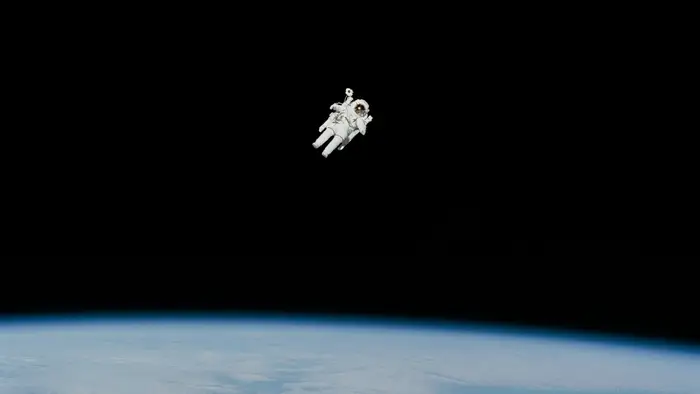
For astronauts, the stakes are personal. Outside the shielding of Earth’s atmosphere and magnetic field, a crew member on a spacewalk has little protection from flare radiation. Mission planners already watch the Sun closely, but the difference between a general warning and a precise forecast — where the flare is, how strong it is, how long it will last — is the difference between a precaution and a plan. The same is true for the crews who will one day live and work on the Moon, where there is no atmosphere at all and the only shelter is whatever the habitat provides. Learning to predict a flare’s lifetime is, in a very direct sense, learning to protect people who work in space.
There is also a deeper scientific prize. Flares are the most accessible example of a universal process: magnetic reconnection, the same mechanism that powers explosions around distant stars, drives the auroras of other planets, and shapes the jets of black holes. Yet for all its importance, reconnection is poorly understood in detail. How exactly does a magnetic field convert its stored energy into heat and particle motion so quickly? Which particles get accelerated, and to what energies? How does the flare’s energy divide itself between light, heat, and motion? These questions can only be answered by watching a flare evolve with instruments fast enough, sharp enough, and sensitive enough to resolve the details — and that means catching the flare while it is happening, in the wavelengths that carry the most information. That is precisely what the new alert system makes possible.

A long road to a five-minute window
The April 2024 campaign did not appear out of nowhere. Sounding rocket science is a discipline of patience. A payload like FOXSI-4 or Hi-C Flare takes years to design, build, test, and calibrate. The teams must ship their instruments to a remote range in Alaska, integrate them onto rockets, and then wait — sometimes for nearly two weeks — for the Sun to cooperate. The April campaign’s twelve-day window and its last-day launch are typical of the genre: the scientists knew what kind of flare they needed, they knew how long they could wait, and they knew that if the right flare never came, the campaign would end without a launch.
What the alert system changed was the quality of the waiting. Before it existed, the team could watch a flare begin and hope it would persist. With it, they could watch a flare begin and know, within minutes, whether it was worth launching for. That knowledge is what let two separate teams, running two separate payloads on two separate rockets, coordinate launches one minute apart and observe the same event simultaneously. Coordination like that is not a luxury; it is the science. A flare observed in X-rays alone tells one story; the same flare observed in extreme ultraviolet at the same moment tells another; together, they reveal how energy moves between the hot plasma and the accelerated particles, and how the flare’s structure changes second by second.
The May 2026 result, three flares from one rocket, hints at what that coordination can become. A single campaign that captures multiple events multiplies the scientific return without multiplying the cost. Each flare is a natural experiment, and the alert system is the instrument that lets scientists choose which experiments to run.
The instruments behind the idea
Part of what makes this story interesting is how much of it depends on telescopes that never leave Earth orbit. The Solar Dynamics Observatory, which has watched the Sun continuously since 2010, provides the high-cadence images in multiple ultraviolet wavelengths that reveal how an active region is evolving. The GOES satellites, operated by NOAA, monitor the Sun’s X-ray output constantly and classify flares by their peak brightness. Ground-based observatories add their own views. The alert system fuses these streams, looking for the signatures — in X-ray and ultraviolet emission — that mark a flare’s location and betray how long it will burn.
That fusion is the quiet innovation. None of the individual data sources is new. What is new is the pipeline that turns them, within minutes, into a launch decision: a location, a duration, and a recommendation a team on a frozen range in Alaska can act on. The November 4 paper in The Astrophysical Journal documents how that pipeline was built and tested, and the two campaigns are the evidence that it works in the field, not just in a simulation.
The instruments on the rockets matter just as much. FOXSI-4’s focusing X-ray optics concentrate high-energy X-rays onto a detector the way a camera lens concentrates light, producing images far sharper than the pinhole-style imagers of earlier missions. The improved Wolter-I mirrors, polished at Marshall and Nagoya, roughly doubled the resolution of the previous FOXSI flights. Hi-C Flare’s low-noise extreme ultraviolet camera, built at Marshall, can see faint structures in the corona that earlier imagers would have drowned in noise. And the ride-along instruments — COOL-AID, CAPRI-SUN, and SSAXI — added simultaneous views in other wavelengths, turning a two-rocket campaign into a small fleet of coordinated observers. Each of these technologies was validated by the same flights the alert system made possible, and each will fly again on future campaigns.
What comes next
The immediate future of the alert system is more of the same, only better: continued development under the NASA Early Career Investigator Program grant, more campaigns, and more flares caught in the act. But the longer-term possibilities reach further. A forecasting tool that can predict a flare’s lifetime within minutes of detection has obvious value for space weather operations. Today, forecasters at NOAA’s Space Weather Prediction Center issue alerts based on what a flare has already done; a tool that says what a flare is about to do, and for how long, would sharpen those warnings for everyone who depends on them — airlines routing flights over the poles, satellite operators managing fleets, grid operators watching for geomagnetic currents, and astronauts planning spacewalks.
There is a parallel in other fields of astronomy. The same logic that turned sounding rockets from gamblers into hunters is reshaping time-domain astronomy everywhere: telescopes that once waited for a cosmic event to happen now receive alerts within seconds and slew to catch it. The solar flare alert system brings that rapid-response culture to the Sun, the nearest and most consequential star we have. It is a small system — software, data streams, and a decision made in minutes — but it unlocks a class of observations that used to depend on luck.
The story also carries a lesson about how progress happens in space science. The April 2024 campaign succeeded because a dozen things went right at once: the mirrors were ready, the attenuators worked, the rockets flew, the range cooperated, the Sun produced the right flare on the last day of the window, and the alert system said go at the right moment. Any one of those pieces failing would have meant a wasted campaign. The alert system did not remove the risk — sounding rockets will always be a race against a five-minute clock — but it replaced the largest unknown, whether the flare would still be there, with a prediction. In a field where the difference between a historic dataset and an empty one can be sixty seconds, that is no small thing.
Reading the Sun’s weather
The Sun is often described as a star, and it is — but for the people and machines that live in its light, it is also weather. It has seasons, an eleven-year cycle of activity that rises to solar maximum and falls to minimum. It has storms, the flares and coronal mass ejections that can rattle the magnetosphere. And now, for the first time, it has something like a forecast: not a vague warning that storms are possible, but a specific prediction, made within minutes, that a particular flare in a particular place will last long enough to be worth chasing.
That distinction is the heart of the November 4 paper. Forecasting the Sun has always been a two-part problem: knowing that something will happen, and knowing when. The alert system addresses the second part, the harder one, for the specific case that matters most to rocket science. In doing so, it opens a door that has been closed since the first sounding rocket flew: the chance to watch a solar flare the way a storm chaser watches a tornado — not from a distance, after the fact, but up close, while it is happening, with instruments built for exactly that moment.
The teams that flew FOXSI-4 and Hi-C Flare in April 2024 waited more than four years for five minutes of data. In May 2026, the same system helped a rocket catch three flares in a single campaign. The next campaign will aim for more, and the one after that for more still. The Sun will keep flaring, on its own schedule, indifferent to ours. The difference now is that when it does, someone will be watching — and someone on a launch range in Alaska will know, within minutes, whether it is time to fly.

For readers who want to follow the science behind this story, SpaceNews has covered related work before: the sounding rocket campaigns that launch from Alaska’s Poker Flat range, the solar storm research on NGC 3783 and the Neupert effect, and NASA’s TRACERS mission and its first results on magnetic reconnection. Each of those stories touches a different piece of the same puzzle — how magnetic fields store energy, release it in a flash, and shape the space around them. The flare alert system is the newest piece: a tool that lets scientists be in the right place, at the right time, when the Sun puts on its most violent show.
The next time the alert system sounds, a rocket will be waiting on a rail in Alaska, and a team will be watching the clock. Five minutes is not much time. For the first time, it is enough.