Lijian-2 Spacesail 18 Satellites Launch November 3 2026: China's Constellation Leap
A new workhorse has entered China’s race to build a satellite internet constellation to rival Starlink. At 8:15 a.m. Beijing time on Tuesday, November 3, 2026, a Lijian-2 Y2 carrier rocket lifted off from the Dongfeng commercial space innovation pilot zone in northwest China, carrying 18 satellites of the Spacesail Constellation into their planned orbit. The flight was the second ever for the Lijian-2, and the first time the rocket had been asked to do the job it was built for: deploying a large batch of constellation satellites in a single launch.
The mission matters less for any single satellite than for what it proves about China’s commercial launch industry. The Lijian-2 is the country’s first launch vehicle built around a “universal booster core” — a modular design in which the core stage and its side boosters are essentially identical units, manufactured to the same specifications. That standardization is the whole point. China does not just want one more rocket; it wants a rocket it can build quickly, cheaply, and repeatedly, in the numbers needed to fill a constellation planned to eventually number more than 15,000 satellites. Tuesday’s launch was the first real test of that proposition at constellation scale, and it passed.
The 18 satellites deployed on this flight belong to the Qianfan Polar-Orbit Group 21, and they were delivered into an 800-kilometre near-polar orbit. Qianfan — also known by its English brand name Spacesail, and earlier as G60 Starlink — is built and operated by Shanghai Yuanxin Satellite. With this batch in orbit, the constellation’s total climbed to 274 satellites, more than 160 of them launched in 2026 alone. The pace is quickening, and the Lijian-2’s arrival on the manifest widens the circle of rockets feeding the constellation beyond the Long March family and a handful of other vehicles.
A Tuesday morning liftoff in the desert
The Dongfeng commercial space innovation pilot zone sits in the desert of northwest China, in the orbit of the long-established Jiuquan launch complex, and it has become the home base for China’s commercial launch sector. The Lijian-2 Y2 rose from the site in the morning light, its kerosene and liquid oxygen engines driving it toward a near-polar orbit that will carry the new satellites over the poles on every pass, sweeping coverage across the globe rather than favouring one latitude band.
For CAS Space, the company behind the rocket, the flight was the 18th launch of the Lijian series overall. The series began with the solid-fuelled Lijian-1, and its rockets have now placed one spacecraft and 139 satellites into space, with a combined payload mass of more than 27 tonnes, serving nearly 40 customers at home and abroad. The Lijian-2 itself accounts for only two of those 18 flights so far, but its second mission carried far more than its first — a deliberate step up in ambition.
The maiden flight of the Lijian-2, on March 30, 2026, was a technology demonstration with a different kind of payload: the Qingzhou prototype cargo spacecraft, a 4.2-tonne test vehicle designed as a low-cost logistics option for China’s Tiangong space station, plus two small satellites. That flight validated the rocket’s core technologies and proved it could deliver a heavy, demanding payload. Tuesday’s flight proved something else — that the same rocket can serve as a high-volume satellite dispenser, releasing 18 spacecraft in a carefully choreographed sequence.
One unlock, 18 satellites
The technical detail that made this mission different was its separation system. For the first time, the Lijian-2 used a multi-satellite separation mechanism with a single unlocking device: 18 satellites stacked together and sharing one separation mechanism, released in what CAS Space described as a “one-time unlocking.” It is an elegant solution to a practical problem. Deploying a constellation means releasing dozens of satellites without them colliding, drifting into each other, or damaging their neighbours, and doing it with fewer moving parts means fewer things that can go wrong.
The rocket also flew a two-ignition scheme for its second-stage engine, and applied a variable-thrust settling scheme based on pulse-width modulation to manage its propellant more efficiently. These are the kinds of incremental engineering refinements that rarely make headlines but decide whether a launch business can operate at the cadence a megaconstellation demands. A rocket that wastes propellant or needs elaborate refurbishment between flights cannot keep up with a deployment schedule measured in hundreds of satellites a year.
The Lijian-2’s design philosophy is standardisation from the ground up. Its first stage uses nine liquid rocket engines, and its second stage a modified version of the same engine with a larger nozzle for high-altitude efficiency — in effect, all ten engines on the vehicle share one core design. The core stage and its two side boosters share the same 3.35-metre diameter and structural design, which is why the vehicle is described as having a “common booster core” configuration. The deputy chief designer, Lian Jie, has explained that the modular core and boosters allow the rocket to be configured with zero, two, or four boosters, giving a maximum thrust of up to 1,000 tonnes and a low Earth orbit payload capacity ranging from 2 to 20 tonnes. The standard configuration flown so far stands 53 metres tall, weighs about 625 tonnes at liftoff, and can carry 8 tonnes to a 500-kilometre sun-synchronous orbit or 12 tonnes to a 200-kilometre low Earth orbit.

A rocket climbs away from its launch pad. Image: Unsplash.
The constellation it serves
The Spacesail constellation, Qianfan in Chinese, is China’s most advanced commercial satellite internet project, and its numbers tell the story of a programme shifting into high gear. The first phase of the plan calls for 648 satellites, with 324 in orbit by the end of 2026 to achieve basic regional coverage and begin commercial operations. The long-term plan calls for more than 15,000. Tuesday’s launch brought the in-orbit total to 274, meaning roughly 50 more satellites must fly before the year ends to hit the 324 target — a demanding but plausible schedule given the pace of recent months.
That pace has been built on a widening roster of launch vehicles. Before the Lijian-2, Qianfan satellites flew mainly on Long March rockets, with the Zhuque-2 Improved and Gravity-1 joining the manifest. Adding the Lijian-2 to that list matters because constellation deployment is, at heart, a logistics problem: no single rocket family can fly often enough, on its own, to build a network of thousands of satellites. The multi-supplier approach — parallel procurement across state and commercial providers — is how China intends to keep the deployment rate climbing. The China Qianfan July constellation push earlier this year showed the same logic in action, when two different rockets deployed 38 satellites in 48 hours.
The constellation’s competitive context is equally clear. SpaceX’s Starlink already operates thousands of satellites and serves customers worldwide, and China has a second state-backed megaconstellation, Guowang, being built in parallel. The China Qianfan June double launch and the China Long March 8A Guowang Group 28 launch both illustrate how the two Chinese programmes are advancing side by side, each drawing on the same expanding launch industrial base. Spacesail’s bet is that a commercially operated constellation, built by Shanghai Yuanxin Satellite with serial manufacturing by competing suppliers, can move faster than a purely state-run programme — and Tuesday’s flight is evidence for that bet.
Why a modular rocket changes the economics
The economics of megaconstellations are brutal. A satellite internet network only starts earning serious revenue once it has enough satellites in orbit to offer continuous coverage, which means the operator must spend billions before the first paying customer comes online. Every dollar saved on launch, and every week saved in the deployment schedule, brings that break-even point closer. That is why CAS Space’s standardisation strategy matters more than the raw payload figure.
When the core stage and boosters are identical, the factory builds one product instead of three. When all ten engines share a core design, the supply chain, the test programme, and the maintenance regime all simplify. When the vehicle can be configured with zero, two, or four boosters, the same production line can serve missions ranging from a small scientific payload to a full constellation batch. It is the same logic that made the Falcon 9’s standardised first stage so disruptive, applied to a Chinese commercial context — and it is a logic that extends beyond launch. CAS Space has said it will expand the Lijian-2’s orbital coverage through its independently developed Lixun-1 upper stage, and advance research on clustered recovery, the technique of recovering multiple boosters together that could one day make the vehicle partially reusable.
Reusability is the obvious next step, and the company has been open about pursuing it. The Lijian-2 was designed from the start with room for future expansion and reusability, and clustered recovery research is the bridge between today’s expendable flights and a future in which the standardised booster cores come back for another mission. If that works, the cost per satellite deployed falls again, and the arithmetic of building a 15,000-satellite constellation changes in China’s favour.

A launch vehicle ascending through the clouds. Image: Unsplash.
A commercial sector coming of age
CAS Space itself is part of the story. The company, formally Zhongke Yuhang, is majority owned by the Chinese Academy of Sciences and based in Guangzhou, and it represents a deliberate experiment: a commercial rocket company with state research roots, competing for constellation contracts against both state giants and private rivals. Its Lijian-1 solid rocket proved the company could reach orbit; the Lijian-2 proves it can build a medium-lift liquid rocket to a standardised, scalable design. The September rollout of the Lijian-2 Y2 from the production line — after final pre-launch testing confirmed that all functional and performance indicators met mission requirements — was itself a milestone for modular rocket manufacturing in China.
The broader commercial sector is moving with it. The Dongfeng pilot zone, where Tuesday’s launch took place, exists precisely to give commercial companies a launch site without the scheduling constraints of the military-run ranges. The commercial spaceport at Wenchang on Hainan island serves a similar purpose in the south. Together, these sites, plus the expanding roster of commercial rockets, form an ecosystem that did not exist a decade ago — and the deployment rate of the Qianfan constellation is its most visible output.
That output is not only about internet access. A constellation of hundreds of satellites in near-polar orbit is also a statement about technological independence: a country that can build, launch, and operate its own global communications network does not depend on any other nation’s infrastructure. The timing, too, is significant. As low Earth orbit grows more crowded, the operators that secure orbital slots and frequency allocations earliest gain lasting advantages, and the race to file, launch, and occupy those slots is one reason China’s constellation programmes have accelerated so sharply through 2026.
What happens next
The immediate question is cadence. With 274 Qianfan satellites now in orbit and a target of 324 by year end, roughly three more batches of 18 satellites would close the gap — and the Lijian-2, having proven its constellation-deployment credentials, is now a credible vehicle for at least some of those flights. The Long March 6A and Long March 8A will likely carry the rest, but the significance of Tuesday’s mission is that the manifest no longer depends on them alone.
Beyond 2026, the first phase target of 648 satellites will require a sustained rate of roughly one large batch every few weeks, and the long-term goal of more than 15,000 will demand something closer to an industrial production line than a launch programme. That is the real test of the Lijian-2’s design philosophy: whether standardised booster cores, shared engine designs, and single-unlock separation mechanisms can scale from a second flight to a weekly cadence.
There are reasons for caution. The Lijian-2 has flown only twice, and its clustered recovery system is still research rather than hardware. The Qianfan constellation’s commercial operations have yet to be proven at scale, and the regulatory landscape — frequency coordination, orbital debris rules, and international competition for spectrum — will shape the programme as much as any rocket. The China Qianfan July constellation push showed that rapid deployment is possible; sustaining it for years is a different challenge.
But Tuesday’s launch answered the most immediate question. A new Chinese commercial rocket, built around a modular core that had never before flown a constellation mission, took 18 satellites to orbit in a single, clean deployment. The Lijian-2 is no longer a promising design on a factory floor in Guangzhou. It is a working constellation launcher, and China’s satellite internet race just gained another engine.
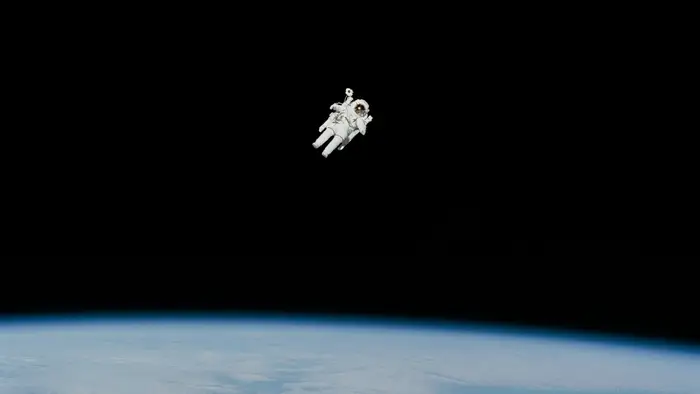
Earth seen from orbit, the market for satellite internet constellations. Image: Unsplash.
The view from orbit
Seen from the altitude where the 18 new satellites now fly, the significance of the mission is easy to miss: 18 small spacecraft, each one a node in a network that will eventually number in the thousands, circling the planet every hundred minutes or so. But networks are built one batch at a time, and the rockets that build them are judged not by their first flight but by their fiftieth. The Lijian-2’s second flight was a quiet success — no drama, no anomaly, just 18 satellites delivered to the right orbit by a rocket flying the mission it was designed for.
For CAS Space, the flight also validates a bet that extends beyond a single constellation. The same standardised booster core that carried Qianfan satellites on Tuesday is designed to carry low-cost cargo to the Tiangong space station and scientific satellites for research institutions. A rocket that can do all three, built on one production line, is a versatile asset in a space economy that is diversifying fast. The Qingzhou cargo prototype flown on the maiden mission was the first hint of that versatility; Tuesday’s constellation deployment is the second.
The satellite internet race, for all its commercial language, is ultimately about who connects the unconnected — the ships at sea, the villages beyond fibre, the aircraft over oceans, the disaster zones where ground networks fail. Each batch of satellites narrows the gap between the promise of global coverage and its delivery. On Tuesday morning in the desert of northwest China, that gap narrowed by 18 satellites, carried by a rocket that was built to be built again, and again, and again.
The stakes beyond the launch pad
There is a second race running underneath the satellite count, and it is measured in paperwork as much as in payloads. Orbital slots and radio frequencies are finite resources, allocated through international filings, and the operators that occupy them earliest gain lasting advantages. Every batch of Qianfan satellites that reaches its planned orbit strengthens China’s filings with operating hardware rather than paper claims, and every successful Lijian-2 flight shortens the time between filing and reality. That is one reason the deployment tempo of 2026 — more than 160 Qianfan satellites in a single year — matters beyond the raw numbers.
The same tempo raises questions that will follow the constellation as it grows. More satellites in near-polar orbit mean more traffic to coordinate, more conjunction warnings to process, and more responsibility for end-of-life disposal. China has not published detailed debris mitigation plans for Qianfan comparable to the public filings of some Western operators, and the international community will watch how the constellation’s operators handle retired spacecraft as the first batches age. A network built to connect the planet must also prove it can keep the orbital environment usable, and that proof will come from operational behaviour over years, not from launch-day press releases.
For now, though, the story of Tuesday’s flight is simpler. A commercial rocket company with research roots took a standardised, modular vehicle, flew it for the second time, and delivered exactly what it promised: 18 satellites, one clean deployment, and a wider road for the launches still to come. The constellation it serves is still far from its first-phase target, let alone its long-term goal, but the industrial machine behind it is visibly accelerating — and the Lijian-2 has earned its place on the manifest.

A rocket launching at night, its exhaust lighting up the sky. Image: Unsplash.

A satellite in orbit above Earth. Image: Unsplash.