SatNet LEO Group 30 Launch: Nine More Satellites for China's GuoWang Network
China’s satellite internet programme took another measured step forward on Friday, November 20, 2026, when a Long March 8A rocket lifted off from the country’s southern coast carrying a fresh batch of GuoWang broadband satellites into low Earth orbit. The launch, designated SatNet LEO Group 30, was the 30th batch of the state-backed constellation and the 13th GuoWang batch of 2026 — a cadence that looks relentless on a calendar, and yet still leaves China far behind the network it is chasing.
Liftoff came at 11:59 UTC, or 19:59 Beijing time, from Commercial Launch Complex 1 at the Wenchang Commercial Space Launch Site on Hainan Island. The rocket, a Long March 8A flying its 13th mission and designated Y13, climbed away from the coast and, according to official sources, delivered its payloads into their predetermined orbit. Xinhua, China’s state news agency, confirmed the launch a success. It did not say how many satellites were aboard.
Independent tracking fills in that gap, with a caveat. Launch trackers list nine payloads for Group 30, designated Hulianwang Digui 30 A through I, matching the nine-satellite batches that have become the standard GuoWang load. The flight was logged as a success by multiple tracking services, with the satellites entering a low Earth orbit inclined at 50 degrees to the equator. Until China publishes an official figure, the nine should be treated as the tracked count rather than the confirmed one — but it is the count every independent source agrees on, and it is consistent with the pattern of the batches before it.
There was nothing spectacular about the flight, and that is the point. GuoWang is not being built one dramatic mission at a time. It is being built the way a railway is built, section by section, launch by launch, until a network that barely existed two years ago becomes something a country can rely on. Friday’s flight added nine more sections to that railway. The question now is whether the railway is being built fast enough.
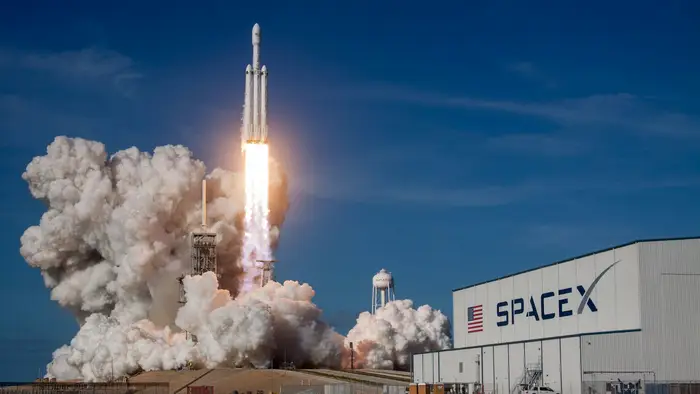
The Launch: Y13 From Wenchang’s Commercial Pad
The Wenchang site sits on the northeastern coast of Hainan, China’s southernmost province, at a latitude of about 19.6 degrees north. That low latitude is a genuine advantage: a rocket launched closer to the equator picks up more of Earth’s rotational speed for free, and it can carry a heavier payload to a given orbit than the same rocket launched from a site further north. For a programme that must put thousands of satellites into orbit, that advantage compounds with every flight.
The commercial launch site at Wenchang, with its dedicated pads for commercial vehicles, exists because the older, state-run Wenchang site next door could not carry the whole load alone. China’s launch rate has grown so fast that pads, integration buildings, and range capacity have become bottlenecks in their own right. The commercial site was built to relieve that pressure, and missions like Friday’s are its daily business: a medium-lift rocket, a batch of near-identical satellites, and a quick turnaround to the next flight.
Group 30 flew from Commercial Launch Complex 1, the pad that has become the workhorse of the GuoWang deployment. The launch window opened at 11:51 UTC, and the rocket left the pad eight minutes later, at 11:59 UTC. By 15:00 UTC the mission’s status had been updated to success in the launch trackers, with the satellites confirmed in their planned orbit. The flight carried the international launch designator 2026-260.
For the Long March 8A, the mission was the 13th flight of the variant and its 12th flight carrying satellites for the China Satellite Network Group, the state-owned company that operates GuoWang. The 8A has become the constellation’s primary launch vehicle, the rocket China reaches for when the job is to put another nine satellites into the same orbit as the 200-odd that came before them.
What Flew: Nine Satellites for the National Network
GuoWang — the name means “national network” — is run by China Satellite Network Group, known as China SatNet, a state-owned enterprise created in April 2021 specifically to build China’s satellite internet. Its filings with the International Telecommunication Union cover 12,992 satellites in several shells at different altitudes, organised into two sub-constellations: GW-A59, with 6,080 satellites, and GW-A2, with 6,912. The shells span roughly 500 to 1,145 kilometres above Earth, across a range of inclinations, a portfolio structure that lets the operator tune coverage between latitudes as the system fills.
Production launches began at the end of 2024, when the first batch of ten satellites flew in December, and accelerated through 2025 and 2026. By early October 2026, the 27th batch had brought the total in orbit to about 222 satellites, according to tracking catalogues. Three more batches have flown since: Group 28 on October 25, a Long March 12 batch on November 9, and now Group 30 on November 20, each carrying nine satellites. That puts the constellation at roughly 249 satellites in orbit — still barely two percent of the 12,992 filed.
The satellites themselves are built to a small, standardised platform. Coverage of earlier batches describes spacecraft weighing about 695 kilograms, manoeuvring in orbit with electric propulsion and powered by two solar panels. The satellites for the Group 30 batch were developed under the overall leadership of the Innovation Academy for Microsatellites of the Chinese Academy of Sciences, continuing a production line that has now delivered 30 batches in under two years.
That production line is the quiet heart of the programme. A constellation of 13,000 satellites cannot be built by hand. It needs factories, standardised designs, and a launch cadence that treats each flight as routine. China has been building all three. A factory near Wenchang is designed to produce up to 1,000 satellites a year, and the satellite maker Genesat claims an output of about 300 a year. The question is whether the rockets can keep up with the factories.
The Rocket: Long March 8A, the Constellation Workhorse
The Long March 8A is a medium-lift, cryogenic liquid-fuelled launch vehicle developed by the China Academy of Launch Vehicle Technology, part of the China Aerospace Science and Technology Corporation. It is a stretched, more powerful derivative of the Long March 8, built specifically to serve the constellation deployment market: big enough to carry a useful batch of satellites, cheap enough to fly often, and simple enough to turn around quickly.
Published specifications put the rocket at 50.5 metres tall, with a diameter of 3.35 metres and a fairing 5.2 metres across. At liftoff it weighs 371 metric tons, about 818,000 pounds. Those numbers make it a middleweight by modern standards — far smaller than a Falcon 9, far larger than the small launchers that serve the cubesat market — and that middleweight status is deliberate. GuoWang’s satellites are light enough that nine of them fit comfortably under the 8A’s fairing, and the rocket is cheap enough that flying one batch at a time makes economic sense.
Thirteen flights in, the 8A has not failed. That reliability matters more than any single performance figure. A constellation programme lives or dies on launch cadence, and cadence depends on a rocket that flies, comes back to the pad, and flies again without drama. The 8A has done that twelve times for China SatNet now, and the programme’s planners clearly trust it: of the 13 GuoWang batches launched in 2026, the 8A has carried the large majority.
The rocket is not reusable, and that is the ceiling on the programme’s ambitions. Every 8A flight throws its hardware away. China is working on reusable rockets — the Long March 10B made history earlier this year with the world’s first net-capture booster recovery at sea — but none of them is yet carrying GuoWang satellites. Until reusability arrives, every batch costs a full rocket, and the launch rate is limited by how fast new rockets can be built.
SatNet LEO Group 30 by the Numbers
| Quantity | Value |
|---|---|
| Mission | SatNet LEO Group 30 (GuoWang 30th batch) |
| Launch vehicle | Long March 8A Y13 |
| Liftoff | November 20, 2026, 11:59 UTC (19:59 Beijing time) |
| Launch site | Commercial LC-1, Wenchang Commercial Space Launch Site, Hainan |
| Satellites | 9 (per independent tracking; Xinhua gave no count) |
| Satellite designations | Hulianwang Digui 30 A–I |
| Target orbit | Low Earth orbit, 50.0° inclination |
| Launch designator | 2026-260 |
| GuoWang batch in 2026 | 13th |
| GuoWang total batches | 30 |
| Long March 8A flights | 13th overall; 12th for China SatNet |
| Rocket height | 50.5 m |
| Rocket diameter | 3.35 m |
| Fairing diameter | 5.2 m |
| Liftoff mass | 371 metric tons |
| Constellation in orbit | About 249 satellites (about 222 in early October, plus 27 in three batches since) |
| Constellation planned | 12,992 satellites (ITU filing) |
A Timeline of GuoWang’s Build-Out
From Filing to Flight
September 2020 — China files GuoWang with the International Telecommunication Union, staking a claim to orbital slots and radio spectrum for 12,992 satellites. The filing starts a regulatory clock: under ITU milestone rules, a share of the constellation must be deployed on schedule or the filing shrinks.
April 2021 — China Satellite Network Group, or China SatNet, is created as a state-owned enterprise to build and operate the constellation. GuoWang is national infrastructure by design, not a commercial venture chasing quarterly results.
December 2024 — After years of quiet preparation, the first operational batch of ten GuoWang satellites launches, beginning the deployment in earnest.
March 13, 2026 — The 20th group of low-orbit internet satellites flies, and the programme’s published schedule calls for about 1,300 satellites deployed by 2029, 6,500 by 2032, and the full 12,992 by 2034.
October 9, 2026 — The 27th batch launches from Wenchang, bringing the total in orbit to about 222 satellites.
October 25, 2026 — Group 28 flies on a Long March 8A, nine more satellites into the constellation, as covered in China’s GuoWang Network Grows Again as Long March 8A Launches Nine More Internet Satellites.
November 9, 2026 — A Long March 12 carries nine more GuoWang satellites to orbit, the rocket’s tenth success, as covered in Long March 12 SatNet Launch November 9 2026: Nine Satellites Join GuoWang as Rocket Logs 10th Success.
November 20, 2026 — SatNet LEO Group 30 launches on Long March 8A Y13 from Wenchang’s Commercial LC-1, nine satellites into a 50-degree low Earth orbit, the 30th batch of the constellation and the 13th of the year.
The Pace Problem: 26 Days Between Batches
If the launch itself was routine, the gap before it was not. Group 30 flew 26 days after Group 28 — about eight days longer than the fastest turnaround the Wenchang commercial pad has managed between GuoWang flights. For a programme that needs to launch more than a thousand satellites a year to meet its own schedule, every extra day between flights is a day the maths gets harder.
Analysts who follow the programme say the bottleneck is not the launch pads. It is the rockets. Satellite production, by their account, is not the limit: the maker Genesat claims about 300 satellites a year, and the factory near Wenchang is designed for up to 1,000. What is limited is the supply of launch vehicles — specifically, the supply of Long March 8A rockets, which are built one at a time and thrown away after a single flight. Until China fields a reusable medium-lift rocket, or sharply increases 8A production, the cadence will stay roughly where it is: a batch every few weeks, nine satellites at a time.
The arithmetic is unforgiving. GuoWang’s own schedule calls for about 1,300 satellites deployed by 2029, and the ITU’s milestone rules require 10 percent of the filed constellation — roughly 1,300 satellites — deployed by 2029, and 50 percent, about 6,500, by 2032. At nine satellites per launch and a batch every three to four weeks, China would deploy roughly 120 to 150 GuoWang satellites a year. That pace gets the constellation to perhaps 700 satellites by the end of 2029, barely half the milestone. Something has to change: bigger batches, more rockets, faster pad turnarounds, or all three.
China’s planners know this. The deployment plan discussed in Chinese analyses calls for 310 satellites in 2026, 900 in 2027, and 3,600 a year starting in 2028 — a steep ramp that assumes new rockets, new pads, and new production lines all arriving on schedule. Whether that ramp materialises is the central question hanging over GuoWang. Friday’s launch, 26 days after the last one, suggests the ramp has not started yet.
There is a second clock running alongside the ITU’s. Spectrum and orbital slots are allocated largely to whoever files and deploys first, and Chinese operators filed plans adding up to almost 200,000 satellites in early 2026. Starlink, with more than 11,000 satellites already in orbit, has the first-mover advantage in the most useful orbits. Every month GuoWang spends at nine satellites a batch is a month the best orbital real estate gets more crowded.
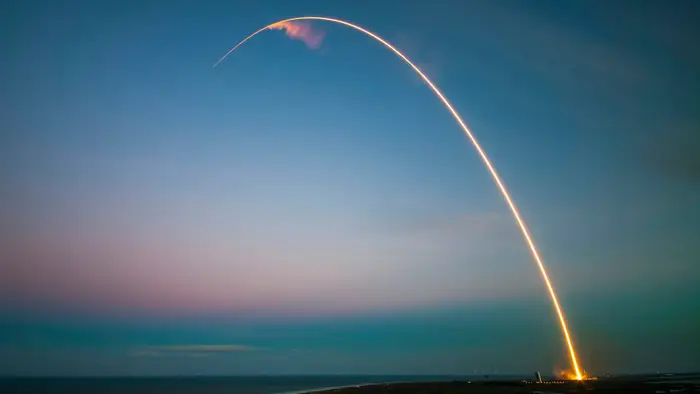
GuoWang Against the Field
GuoWang is not the only mega-constellation under construction, and the comparison is what makes its pace look slow. As of October 2026, the field looked like this:
| Constellation | Operator | Satellites in orbit (Oct 2026) | Planned total |
|---|---|---|---|
| Starlink | SpaceX | More than 11,000 | About 15,000 (Gen2 authorised) |
| Amazon Leo | Amazon | 392 | Thousands (deployment under way) |
| Qianfan (Thousand Sails) | Spacesail (Shanghai) | About 240–248 | About 15,000 |
| GuoWang | China SatNet | About 222 | 12,992 (ITU filing) |
Starlink is the only network on the list that looks finished, and it is still growing: SpaceX began launching its third-generation satellites on Starship in September. Amazon Leo, formerly Project Kuiper, had 392 satellites in orbit by October 2026 and is launching on its own heavy rockets, including the Ariane 64 flight due on November 23. Qianfan, China’s other national constellation, run by the Shanghai-backed Spacesail, had about 240 satellites in orbit and a planned total of about 15,000, with a first phase of 1,296 — and it is the first Chinese LEO network authorised in another market, Brazil, with a commercial start targeted for late 2026.
GuoWang, by contrast, has no commercial broadband offer announced. Inside China, satellite connectivity is still carried by licensed state operators on geostationary satellites, because Starlink is not licensed in the country. GuoWang’s purpose, at least for now, is not to sell internet subscriptions. It is to build sovereign capability: a national network that guarantees China is not dependent on a foreign provider for satellite connectivity, serves state and strategic users, and stakes a claim in the orbital spectrum before first-mover constellations absorb it.
That distinction matters when judging the pace. Starlink is a commercial product that must grow fast or lose money. GuoWang is state infrastructure, and state infrastructure moves at the speed of industrial policy, not venture capital. The 26-day gap between batches looks slow against Starlink’s weekly launches, but it looks steady against the history of state space programmes, which have always built in campaigns rather than sprints. The question is whether steady is fast enough when the ITU’s clock is ticking.
There is also a strategic reading of GuoWang that goes beyond broadband. Chinese state sources have said on the record that GuoWang satellites carry synthetic aperture radar and optical remote sensing payloads alongside broadband and laser communication. Every GuoWang satellite launched so far sits in the higher shell near 1,145 kilometres, roughly the altitude band of the PLA’s Yaogan-31 signals-intelligence triplets, and the larger GuoWang satellite platform launches at up to 1,000 kilograms — heavier than a Starlink V2 Mini broadband satellite. The programme collapses communications, sensing, relay, and positioning support into a single state architecture. Broadband is the public story. The rest of the stack is the reason the state is paying for it.
None of that changes the arithmetic of deployment. Whatever the satellites carry, there are about 249 of them in orbit against a plan for 12,992, and the gap is closed nine satellites at a time.
What Comes Next
The near term is more of the same, only faster if the plan holds. GuoWang batches will keep flying from Wenchang on Long March 8A rockets and, increasingly, on the Long March 12, which carried the November 9 batch and logged its tenth success on that flight. The Wenchang commercial site will keep turning pads around, and the satellite factories will keep producing. The test will be the gap between batches: if it shrinks from 26 days toward two weeks, the ramp is real; if it stays where it is, the 2029 milestone will slip out of reach.
The longer term depends on rockets China has not yet flown in service. Reusable medium-lift vehicles would change the economics of the whole programme, turning a thrown-away rocket into a flown-again asset and freeing production capacity for more flights. The Long March 10B’s net-capture booster recovery at sea earlier this year, as covered in Caught at Sea: China’s Long March-10B Rocket Makes History With the World’s First Net-Capture Booster Recovery, showed the technology is coming. It has not yet arrived in the GuoWang launch manifest.
There is also the question of what GuoWang becomes when it is big enough to use. A constellation of a few hundred satellites can serve government and military users. A constellation of a few thousand can serve a country. A constellation of 13,000 can serve the world — or at least the parts of it that buy Chinese infrastructure. The Belt and Road markets, where Chinese telecom equipment already dominates, are the natural customers for a sovereign satellite internet that does not depend on an American company. That is the prize the programme is building toward, one batch at a time.
For now, the story of GuoWang is a story of steady, unspectacular progress: a rocket that flies, a factory that produces, a pad that turns around, and a count that ticks upward by nine. Friday’s launch did not change the world. It changed a number, from 240 to about 249, on the way to 12,992. In the mega-constellation race, that is how the world changes — not in a single dramatic leap, but in 30 batches, 26 days apart, until one day the sky is full.

Sources
- Tech Times: China Satellite Internet Launch Came 26 Days After Last; Analysts Blame Rocket Supply, Not Pads
- Space Launch Live: Long March 8A | SatNet LEO Group 30
- LEO Sat Network: China’s LEO Constellations — Guowang, Qianfan (2026)
- KeepTrack: 10 Satellite Constellations Being Built Right Now (2026)