Euclid DR1 Foundation Billion Galaxies: ESA's Dark Universe Map Begins
On November 12, 2026, the European Space Agency opened the largest window humanity has ever had onto the dark Universe. The Euclid space telescope’s first major data release, called DR1-Foundation, captures the light of more than a billion objects — over 900 million galaxies, around 15,000 strong gravitational lenses, and more than 60 million quasar candidates — spread across a patch of sky equivalent to 9,500 full Moons. It is, in the words of the mission team, the foundation of the largest three-dimensional map of the cosmos ever attempted: a map that will eventually chart billions of galaxies across more than a third of the sky, reaching back 10 billion years, in the hope of finally explaining why the expansion of the Universe is speeding up.
The scale of the release is hard to hold in the mind all at once, and that is rather the point. Euclid’s previous data releases covered a few days of observations over roughly 60 square degrees of sky. DR1-Foundation rests on about 13 months of observations, gathered from the spring of 2024 to the spring of 2025, and covers 1,900 square degrees. It contains roughly 10,000 science images and 1.7 million gigabytes of data. Yet even this enormous haul covers only about 14 percent of the sky area Euclid is planned to survey over its six-year mission. The full Data Release 1, due in mid-2027, will build on it with weak-lensing measurements and a first analysis of how galaxies and clusters fit into the cosmic web. What arrived this week is the foundation, in the most literal sense: the first stone of a map that will take years to finish, and the first time astronomers have had the raw material to start building it in earnest.
“This is a change in scale from Euclid’s previous releases, which included a few days of observations over around 60 deg² of sky,” said Valeria Pettorino, Euclid project scientist at ESA. “We’re now releasing more than a year of data covering a significantly larger area. This unlocks groundbreaking science.” ESA’s director of science, Carole Mundell, put it more simply: “These are far more than beautiful pictures; today marks a scientific milestone in our study of the cosmos.”
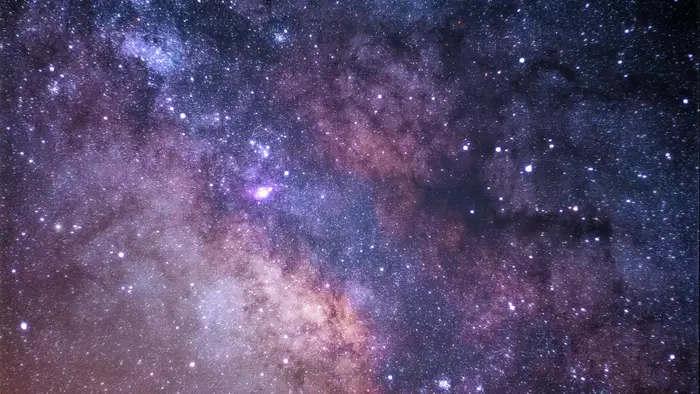
Euclid’s DR1-Foundation release catalogues more than 900 million galaxies like this one, laying the foundation for the largest 3D map of the Universe ever made. Image: Unsplash.
DR1-Foundation by the Numbers
Every figure in the release is a record of one kind or another, and the table below collects them in one place. Each number comes from the ESA release and the reporting that followed it, and together they describe a survey that has already become the largest space-based image dataset in the history of astronomy.
| Measure | DR1-Foundation figure |
|---|---|
| Release date | November 12, 2026 |
| Observations covered | About 13 months (spring 2024 – spring 2025) |
| Sky area covered | 1,900 square degrees |
| Equivalent area | About 9,500 full Moons |
| Total objects catalogued | More than 1 billion |
| Galaxies | More than 900 million |
| Strong gravitational lens candidates | Around 15,000 |
| Quasar candidates | More than 60 million |
| Spectra measured | More than 160 million sources |
| Science images analysed | About 10,000 |
| Data volume | 1.7 million GB (1,700 TB) |
| Share of planned six-year survey | About 14% |
| Previous Euclid releases | A few days of data over about 60 deg² |
| Full Data Release 1 | Mid-2027 (June 16, 2027) |
| Mission launch | July 1, 2023 |
| Telescope mirror | 1.2 metres |
| Planned final survey area | About 14,000 square degrees |
| Reach of the finished map | Billions of galaxies, out to 10 billion light-years |
The comparison with what came before is the most telling row in that table. Sixty square degrees grew to 1,900 — a jump of more than thirty times in a single release. The strong-lens catalogue tells a similar story: around 15,000 candidates in this one release, more than all previous strong-lens catalogues combined. Euclid is not improving on earlier surveys by a few percent. It is operating at a different order of magnitude, and the science it enables is different in kind, not just in degree.
What DR1-Foundation Actually Is
To understand why astronomers are treating a data release as a major event, it helps to understand what Euclid is for. The telescope, launched on July 1, 2023, sits at the Sun–Earth Lagrange point L2, about 1.5 million kilometres from Earth, where it can stare at the deep sky without the blurring and dimming of Earth’s atmosphere. Its job is to map the large-scale structure of the Universe — the distribution of galaxies, clusters, and the invisible scaffolding of the cosmic web — over the last 10 billion years of cosmic history. The purpose of that map is to attack the two greatest mysteries in modern cosmology: dark matter, which makes up most of the matter in the Universe but has never been directly seen, and dark energy, the unknown cause of the accelerating expansion of the Universe discovered in the 1990s.
Euclid does this with two instruments working in tandem. VIS is a 600-megapixel camera that photographs the sky in visible light, and NISP is a near-infrared spectrometer and photometer that splits the light of galaxies into spectra — rainbows that reveal each galaxy’s distance, and for the brightest ones, its composition and origin too. The images are the map’s shape; the spectra are its depth. By measuring distances to individual galaxies and placing them in three dimensions, scientists can trace how matter has clumped together over cosmic time, and how the expansion of the Universe has stretched that structure apart. That is why the mission is described as building a 3D map rather than simply taking pictures: the pictures are only the first step, and the spectra turn them into a model of the Universe in depth.
The data are being processed into scientifically usable form at centres across Europe and the United States, including the German Science Data Center, and the work involves scientists at more than 300 research institutions. More than 2,500 researchers are already using Euclid data. The images in this release were obtained with optical components contributed by the Max Planck Institute for Astronomy in Heidelberg and the Max Planck Institute for Extraterrestrial Physics in Garching, and the calibration of the telescope — the painstaking work of correcting for instrumental effects and translating raw detector readings into physical quantities — is coordinated by scientists at those institutes. The release is public, distributed through ESA’s Euclid Data Space platform, which means any astronomer in the world can now start mining it.
That openness matters, because the dataset is far too large for any single team to exhaust. The catalogue holds more than 900 million galaxies, but it also holds rarities that no one was specifically looking for: the 15,000 strong lenses, the 60 million quasar candidates, and, as one astronomer studying dwarf galaxies noted, an estimated several hundred thousand dwarf galaxies hiding in the data. By the end of the mission, when Euclid is expected to have surveyed about 14,000 square degrees of sky, that dwarf-galaxy count is expected to pass two million. Euclid is, in the mission team’s phrase, a machine for discovering rare objects — and a machine that anyone can now point at the sky.

DR1-Foundation contains spectra from more than 160 million sources, turning flat images into a three-dimensional map of the cosmos. Image: Unsplash.
Fifteen Thousand Lenses to Weigh the Dark
If one part of DR1-Foundation stands out, it is the strong gravitational lens catalogue. A strong lens forms when the light travelling to us from a distant galaxy is significantly distorted by a foreground galaxy sitting between us and it, bending the background galaxy’s light into arcs, rings, or multiple images. These lenses are extremely rare, and they are extraordinarily useful: the shape of the arc depends on the total mass of the foreground galaxy — stars and dark matter included — so measuring the arc effectively weighs the galaxy, dark matter and all.
DR1-Foundation lists around 15,000 strong lensing candidates. That is the largest strong lens catalogue ever assembled, larger than all previous catalogues combined. “Strong lensing provides unique insight into the dark Universe, allowing us to ‘weigh’ individual galaxies, including their invisible dark matter, and explore how the Universe is expanding,” said Natalie Lines of the University of Portsmouth, a member of the Euclid Consortium. Each of those 15,000 candidates is a scale on which a galaxy can be weighed, and together they offer a statistical sample that no earlier survey could approach. Candidates still need analysis and confirmation — an object flagged as a potential lens is not automatically a verified discovery — but the catalogue gives astronomers a target list that will keep them busy for years.
The lens haul is also a demonstration of what a wide, sharp survey from space can do that ground-based telescopes cannot. Above Earth’s atmosphere, Euclid can complete deep and wide surveys in a way that ground-based telescopes, fighting image-blurring air and light-dimming skies, simply cannot match. The same advantage applies to galaxy clusters, the other great quarry of this release. Clusters reveal how matter clumps together and how cosmic structure grows across the Universe, and Euclid’s combination of breadth and depth gives it an unprecedented view of large samples of ancient clusters that were previously out of reach. “Euclid doesn’t just look far back in time — it does so across vast areas of the sky,” said Barbara Sartoris of the JL Lagrange laboratory in Nice, France. “This gives us an unprecedented view of large samples of ancient galaxy clusters that were previously out of reach. We will explore these in the coming months to learn how these giants grew and to decipher what they reveal about the dark universe.”
One cluster in the release has already become its showcase image. As part of DR1-Foundation, Euclid observed Abell 3128, a cluster of hundreds of galaxies located about 800 million light-years away from us. In Euclid’s image, the cluster is a dense knot of galaxies against the dark, each one a point of light with its own history, bound together by gravity — and by dark matter — into a single structure. It is the kind of image that makes the abstract idea of a cosmic web concrete: matter does not spread evenly through the Universe, it gathers into filaments and knots, and Euclid is now mapping those knots by the million.
The Dwarf Galaxies Hiding in Plain Sight
The headline numbers — a billion objects, 900 million galaxies — are so large that they can obscure the smaller stories inside the data. One of the most interesting belongs to the faintest galaxies of all. Dwarf galaxies are small, dim, low-mass galaxies, and they are scientifically precious: their faintness makes them sensitive probes of dark matter, because a dwarf galaxy’s stars are held together by far more dark matter than visible matter, and their numbers test our models of how galaxies form. But their faintness also makes them hard to find, and most surveys have only ever catalogued the brightest of them.
Astronomer Francine Marleau of the University of Innsbruck, who serves as a scientific advisor to the mission and studies the dwarf galaxies observed by Euclid, estimates from an initial analysis of a small sky region conducted last year that the newly released dataset contains several hundred thousand dwarf galaxies. By the end of the mission, when Euclid is expected to have surveyed approximately 14,000 square degrees of the sky, she expects it to identify more than two million of them. That is a census of the Universe’s smallest galaxies at a scale no one has attempted before, and it arrives as a by-product of a survey designed for something else entirely. It is the kind of bonus that a dataset of this size keeps producing: the same images that map dark energy also contain, for free, the largest dwarf-galaxy survey ever made.
The dwarf story also illustrates why DR1-Foundation is a foundation rather than a finished product. The catalogue is a list of objects and measurements; the science comes from what astronomers do with it. Over the coming months and years, teams will mine the data to determine distances to individual galaxies, place them within the Universe’s 3D structure, and link them to the vast, invisible mesh of the cosmic web. They will confirm lens candidates, classify quasar candidates, count dwarf galaxies, and measure the clustering of galaxies at different epochs. The release is the beginning of that work, not the end of it — and the mission team has been careful to say so. “Euclid’s data have the potential to write an entirely new chapter in observational astronomy,” said Martin Kümmel of Ludwig Maximilian University. “Our images in the optical and the near-infrared, combined with the photometric redshifts, will lay the foundation for a vast number of exciting results.”

More than 60 million quasar candidates — the brilliant cores of distant galaxies — are catalogued in DR1-Foundation. Image: Unsplash.
Timeline: Euclid’s Road to a Billion Objects
Euclid’s journey to this release has been long, and the milestones along the way explain why a data release can feel like a launch all over again.
- 1990s — Observations of distant supernovae show that the expansion of the Universe is accelerating, not slowing down. The cause is given a name, dark energy, but its nature remains unknown — a mystery that has now challenged physics for nearly 30 years.
- 2000s–2010s — European astronomers develop the concept for a space telescope that can map dark matter and dark energy by surveying billions of galaxies. The mission that becomes Euclid takes shape, with scientists at more than 300 institutions eventually joining the consortium.
- July 1, 2023 — Euclid launches, beginning its journey to the Sun–Earth Lagrange point L2, 1.5 million kilometres from Earth.
- Late 2023 — Euclid’s first images are released, including early views of galaxy clusters and nebulae, demonstrating the sharpness of the VIS camera and NISP instrument.
- 2024 — Euclid’s first small data releases cover a few days of observations over around 60 square degrees of sky — a taste of the survey to come, and a test of the data-processing pipelines built over more than 15 years of preparatory work.
- Spring 2024 – spring 2025 — Euclid observes the sky for the 13 months of data that will become DR1-Foundation, sweeping across 1,900 square degrees in visible and near-infrared light.
- 2025–2026 — Along the way, Euclid keeps making discoveries of its own: it spots 31 of the Universe’s oldest quasars, as reported in our article on A Census of Dawn: Euclid Spots 31 of the Universe’s Oldest Quasars, and it even stumbles upon its first new comet, described in The Accidental Comet: How ESA’s Dark-Energy Telescope Stumbled Upon Its First New Comet.
- November 12, 2026 — ESA releases DR1-Foundation: more than a billion objects, around 15,000 strong lenses, more than 60 million quasar candidates, and 1.7 million gigabytes of data — the first major release of mission data since launch.
- Mid-2027 — The full Data Release 1 is due (June 16, 2027), adding weak-lensing measurements that map dark matter over enormous distances, and a first analysis of how galaxies and clusters fit into the cosmic web.
- 2029 and beyond — Euclid’s six-year survey continues toward its planned coverage of about 14,000 square degrees, building toward a final map of billions of galaxies out to 10 billion light-years.
The long preparation is worth remembering when the numbers feel abstract. More than 15 years of preparatory work went into Euclid before launch, and over three years in orbit have passed since. “More than 15 years of preparatory work prior to launch, and over three years in orbit, are now rewarding us with results that are groundbreaking,” said Frank Grupp of Ludwig Maximilian University and the Max Planck Institute for Extraterrestrial Physics, the German Euclid project manager and optical architect of the mission. The data-processing pipelines that turn raw detector readings into catalogues were developed over years by teams across Europe and now run on computing centres throughout Europe and in the United States — and processing these vast amounts of data, with exceptionally high requirements for photometric precision, remains one of the mission’s greatest challenges.
Why a Map, and Why Now
It is fair to ask why a map of galaxies should matter to anyone who is not a cosmologist. The answer is that the map is a tool for answering a question that affects our entire picture of reality: what is the Universe made of, and why is it behaving the way it is? Ordinary matter — the stuff of stars, planets, and people — accounts for only a small fraction of the cosmos. Most of the matter in the Universe is dark matter, invisible and detectable only through its gravity. And most of the energy in the Universe appears to be dark energy, the unknown force driving the accelerating expansion. Together, dark matter and dark energy dominate the Universe, and we do not know what either of them is.
That ignorance is not a minor embarrassment. It is the central problem of modern cosmology, and it has been open since the accelerating expansion was discovered in the 1990s. “I am delighted and excited that we can now take another step toward understanding why the expansion of the universe is accelerating — a mystery that has challenged physics for nearly 30 years,” said Jochen Weller of Ludwig Maximilian University. Euclid’s contribution is to give that problem a dataset worthy of it: a map of the cosmic web detailed enough to measure how dark matter has pulled galaxies together over 10 billion years, and how dark energy has pushed them apart, with enough precision to distinguish between competing theories.
The map also matters because of what it is not. It is not a single observation, or a single discovery, or a single image. It is an infrastructure — a public dataset that thousands of researchers will use for purposes the mission team never anticipated. The same images that weigh galaxies through gravitational lensing also contain dwarf galaxies, distant quasars, and rare objects no one has yet thought to look for. The strong-lens catalogue alone, larger than all previous catalogues combined, will fuel studies of dark matter in individual galaxies for years. And the clustering of galaxies in the map will test whether dark energy behaves like Einstein’s cosmological constant, or whether it changes over time — a distinction that would reshape physics if the answer turned out to be the latter. Our earlier report on El Gordo’s Strange Heart: A Two-State Dark Matter Model for the Universe’s ‘Fat One’ showed how a single massive cluster can challenge simple models of dark matter; Euclid’s map gives astronomers millions of clusters and lenses with which to run the same test at scale.
There is also a quieter, more human reason the release matters. Euclid is a European mission, built by a consortium spanning hundreds of institutions, and its data are public. The billion-object catalogue is not locked behind a paywall or reserved for a single team. It belongs, in a real sense, to everyone who wants to use it — including students, amateur astronomers, and researchers in countries that could never afford a space telescope of their own. The map of the dark Universe is being drawn in the open, and this week the first great sheet of it was laid on the table.

Euclid’s VIS camera and NISP instrument image the sky in visible and near-infrared light, revealing galaxies out to 10 billion light-years. Image: Unsplash.
What Comes Next
DR1-Foundation is only the beginning, and the mission team has been explicit about what is still to come. The full Data Release 1, due in mid-2027, will build on this release and add the pieces that turn a catalogue into a cosmology result: observations of weak lensing — the tiny distortions that affect countless galaxies and map dark matter over enormous distances — to complement the strong lensing in this release, and calculations of how galaxies and galaxy clusters fit into the cosmic web. The current release covers about 14 percent of the sky Euclid will survey; the finished survey will cover about 14,000 square degrees, more than a third of the sky, and will catalogue billions of galaxies.
That schedule means the most important Euclid results are still years away. The map will grow, release by release, and each release will sharpen the measurement of dark energy and dark matter. The 15,000 lenses will be confirmed and studied; the 60 million quasar candidates will be classified; the dwarf galaxies will be counted. Somewhere in those catalogues may be objects no one has ever seen before — new kinds of lenses, new kinds of clusters, new challenges to the standard model of cosmology. Euclid has already shown it can surprise us, with its quasars and its accidental comet, and a dataset a billion objects deep is a good place to keep looking for surprises.
For now, the achievement is the release itself: 13 months of observations, 1,900 square degrees, more than a billion objects, and the largest space-based image dataset astronomy has ever had — delivered, publicly, less than three and a half years after launch. “It is all the more exciting to see how the data processing pipelines developed by our team over the years are now coming together and delivering scientific results,” said Maximilian Fabricius of Ludwig Maximilian University and the Max Planck Institute for Extraterrestrial Physics, head of the German Euclid Data Center. The pipelines are working. The map is begun. And the dark Universe, which has kept its secrets for nearly 30 years, finally has a survey capable of asking it the right questions at the right scale.

The finished Euclid survey will map billions of galaxies across more than a third of the sky. Image: Unsplash.
A billion objects is a number too large to picture, and that is the honest truth of it. No one can hold 900 million galaxies in their head. But the number is not the point. The point is that, for the first time, astronomers can stop guessing at the shape of the dark Universe from samples and start measuring it from a map — a map with a billion points of light on it, each one a galaxy with a distance and a history, each one a clue. Euclid has laid the foundation. Now the building begins.
Sources
- Phys.org: Euclid offers best-ever 3D map of the universe to date
- The Open University: Euclid lays the foundation for its best-ever 3D map of the Universe, with help from OU scientists
- Starlust: ESA lays the foundation for its best-ever 3D map of the Universe, with over 900 million galaxies
- Tracker One: Euclid’s billion-object haul lays the base of a 3D map