BepiColombo Mercury Orbit Insertion November 21 2026: Two Orbiters, One Small Planet
On Saturday, November 21, 2026, a spacecraft that left Earth more than eight years ago will finally stop falling toward the Sun and start circling the smallest planet in the Solar System. BepiColombo, the joint mission of the European Space Agency (ESA) and the Japan Aerospace Exploration Agency (JAXA), is scheduled to be captured into orbit around Mercury — the end of a 9.9-billion-kilometre cruise and the beginning of one of the most intricate arrival sequences any space agency has ever attempted.
There will be no single dramatic burn to watch, no one moment when a giant engine fires and the mission is suddenly safe. Mercury’s gravity is feeble, and BepiColombo’s arrival has been designed around that fact. The spacecraft will be gently caught by the planet in what ESA calls a weak stability boundary capture, then nudged through a sequence of 16 manoeuvres spread across four months before it settles into its final science orbit in March 2027. Saturday is the first step, not the last — but it is the step that turns eight years of travel into an orbital mission.
If it works, BepiColombo will become only the second mission ever to orbit Mercury, following NASA’s MESSENGER, and the first to place two spacecraft around the planet at the same time. ESA’s Mercury Planetary Orbiter (MPO) and JAXA’s Mercury Magnetospheric Orbiter, nicknamed Mio, are still bolted together as they approach, and they will stay that way through capture. They separate in December, each taking up its own polar orbit, and the main science phase begins in April 2027.
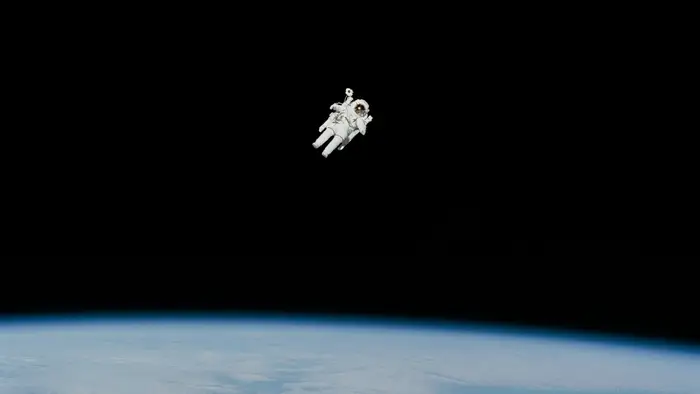
Mercury, the smallest and least-explored planet in the Solar System, is BepiColombo’s destination after an eight-year cruise. Image: Unsplash.
A capture, not a burn
Most planetary arrivals look the same in the popular imagination: a spacecraft screams in toward its target, fires a big engine at exactly the right moment, and either slows down enough to be captured or sails past into the dark. BepiColombo’s arrival will look nothing like that, and the difference is deliberate.
Mercury is small — barely larger than the Moon — and its gravity is weak. A spacecraft arriving at high speed cannot simply brake hard and drop into a neat orbit, because the braking burn would have to be enormous and precisely timed. Instead, ESA’s flight dynamics team designed an approach that lets Mercury’s gravity do most of the work. The spacecraft arrives on a trajectory that threads a narrow gravitational corridor, a weak stability boundary, where the competing pulls of the Sun and Mercury balance just enough for the planet to catch the spacecraft without a single make-or-break manoeuvre.
That is why the reporting around the arrival keeps stressing the same point: Saturday is the start of a process, not a pass-or-fail moment. ESA’s published timeline puts the capture on November 21, then lists a chain of further burns and separations stretching into March 2027. The orbit insertion sequence comprises 16 manoeuvres, according to Space.com’s account of the plan, and every date after capture carries ESA’s standing caveat that exact dates may change for operational reasons. If a burn underperforms or a check takes longer than planned, the schedule can flex. The spacecraft is already where it needs to be; the work now is shaping an orbit, not reaching a destination.
The spacecraft doing the flying at this point is a much smaller machine than the one that launched. For eight years BepiColombo travelled as a stack of four parts: the Mercury Transfer Module (MTM), which carried the solar-electric propulsion system and much of the electrical power; ESA’s MPO; JAXA’s Mio; and the Mio Sunshield and Interface Structure (MOSIF), a sunshade that protects Mio from the Sun’s glare. On September 3, 2026, the stack shed the transfer module, and the two science orbiters were left to complete the approach on their own, powered by MPO’s chemical propulsion system.
That separation was itself a milestone. In Goodbye to the Engine Room: BepiColombo Sheds Its Transfer Module as Mercury Arrival Begins, SpaceNews covered the moment ESA’s mission control in Darmstadt confirmed the MTM had drifted away, more than 200 million kilometres from Earth, leaving MPO in charge of the final approach. Three weeks later, on September 24, MPO tested its axial thrusters for the first time in the new configuration: an eight-minute, 42-second firing that delivered a precise push of 11.4 metres per second, tracked by ESA’s Cebreros deep-space antenna in Spain. It was the first planned trajectory correction since the separation, and it proved the spacecraft could still steer itself accurately toward the capture corridor.
Two spacecraft, two very different jobs
BepiColombo is really two missions flying as one, and the reason the arrival sequence is so complicated is that the two orbiters need to end up in very different orbits around the same planet.
ESA’s MPO is the close-in surveyor. It will fly a tight polar orbit, 480 by 1,500 kilometres above Mercury’s surface, circling the planet roughly every 2.3 hours, carrying 11 science instruments. Its job is the planet itself: mapping the surface in detail, measuring the composition of the rocks, probing the interior structure and the huge iron core that makes up most of Mercury’s mass, and investigating the origin of the planet’s magnetic field.
JAXA’s Mio is the space-weather watcher. It will take a much wider, looping polar orbit — 590 by 11,640 kilometres, with a period of about 9.3 hours — carrying five instrument groups. From out there, Mio will study Mercury’s magnetic field from the outside, watching how the magnetosphere is battered and reshaped by the solar wind, and how charged particles flow around and into the planet’s environment. The two orbiters will observe the same system from complementary vantage points, one close and one far, in a way no single spacecraft could.
That pairing is the mission’s defining idea, and it is why the arrival choreography matters so much. The stack enters Mercury orbit together on Saturday. Then, on December 9–10, MPO releases Mio into its own elliptical polar orbit. On December 16, MPO ejects the MOSIF sunshield that has protected Mio until now. MPO then spends the next three months lowering and circularising its own orbit, reaching its final science orbit on March 10, 2027. Science operations begin on April 6, 2027, after commissioning. The mission is planned to operate into late 2029.
| Orbiter | Agency | Science orbit | Orbital period | Instruments |
|---|---|---|---|---|
| Mercury Planetary Orbiter (MPO) | ESA | 480 × 1,500 km polar orbit | ~2.3 hours | 11 science instruments |
| Mercury Magnetospheric Orbiter (Mio) | JAXA | 590 × 11,640 km polar orbit | ~9.3 hours | 5 instrument groups |
The table makes the division of labour plain: one spacecraft hugs the planet, the other keeps its distance, and together they cover a system that a lone orbiter could only sample from one altitude at a time.

BepiColombo left Earth on an Ariane 5 rocket from Kourou in October 2018, beginning an eight-year journey through the inner Solar System. Image: Unsplash.
Eight years, nine flybys, one scare
Getting to Mercury is brutally difficult — not because the planet is far away, but because the Sun’s gravity well is so deep. A spacecraft falling inward from Earth picks up enormous speed, and shedding that energy to settle into orbit around the innermost planet takes years of careful braking. BepiColombo’s answer was a combination of gravity assists and patient, low-thrust ion propulsion: fly past planets to steal or shed momentum, and let efficient electric thrusters do the fine work in between.
The itinerary reads like a grand tour of the inner Solar System. Launched on October 20, 2018, aboard an Ariane 5 from Kourou in French Guiana, BepiColombo swung past Earth in April 2020, then past Venus twice — in October 2020 and August 2021 — each encounter bending its trajectory closer to the Sun. Then came six flybys of Mercury itself, from October 2021 through January 2025, each one bleeding off a little more energy and lining the spacecraft up for capture. Along the way the mission turned its cameras and instruments on its targets of opportunity: the fourth Mercury flyby, in September 2024, gave scientists their first clear view of the planet’s south pole; the fifth, in December 2024, made BepiColombo the first spacecraft ever to observe Mercury in mid-infrared light; and the sixth and final flyby, in January 2025, swooped just 165 kilometres above the surface — lower than the orbit the science mission will eventually use — photographing permanently shadowed craters near the north pole that may harbour water ice.
The cruise was not without drama. In April 2024, during a scheduled manoeuvre, engineers discovered that the spacecraft’s thrusters could not operate at full power. The investigation that followed traced the problem to unexpected electric currents flowing between the solar arrays and the power distribution unit, which cut the power available to the ion engines. In September 2024, ESA unveiled a revised trajectory that compensated for the reduced thrust by adding eleven months to the cruise — pushing the expected arrival from December 2025 to November 2026. It was a sobering reminder that deep-space missions must be designed to absorb failure, and a testament to the trajectory designers in Darmstadt who re-plotted a 9.9-billion-kilometre voyage on the fly.
By June 2026, the long burn was over. On June 15, at 15:24 Central European Summer Time, BepiColombo switched off its solar-electric propulsion for the final time. The ion engines that had fired, on and off, for the better part of a decade fell silent, and the spacecraft began a ballistic coast toward Mercury. All that remained was to discard the stage that had carried those engines — done on September 3 — and to let Mercury do the rest.
The cruise also delivered science of its own. Like ESA’s Juice mission, which used an Earth flyby to steal momentum on its way to Jupiter — covered in Earth Gave Juice a Push: ESA’s Jupiter Probe Completes Daring Gravity-Assist Flyby — BepiColombo treated every planetary encounter as both a navigational tool and an observing opportunity. And like JAXA’s Martian Moons eXploration mission, which is preparing the first sample return from a Martian moon as described in Japan’s MMX Mission Is About to Launch: Inside the First-Ever Sample Return From a Martian Moon, BepiColombo shows how much of modern planetary science now runs on international partnership: European hardware, Japanese hardware, and a shared destination neither could have reached alone.
Rehearsals, first light, and a spacecraft that talks back
The arrival has been rehearsed more thoroughly than almost any planetary encounter in ESA’s history — and the rehearsals had to happen while the spacecraft was already flying. On October 29, 2026, the BepiColombo Mission Control Team completed its final simulation ahead of the arrival milestones, closing an extensive simulation campaign that began in June 2026. The rehearsals covered every major step of the sequence: MTM separation, Mercury orbit insertion, the separation of MPO and Mio, and finally the MOSIF separation. The teams deliberately introduced unexpected problems and fault scenarios, forcing themselves to diagnose, decide, and adapt when operations did not go according to plan.
The simulations were not the only preparation. On September 15, all of MPO’s instruments were switched on together for the first time since the MTM separated, and the first analyses showed them in good health. The laser altimeter BELA fired its laser for the first time in space, emitting more than 700,000 pulses over 21.5 hours. The Mercury Radiometer and Thermal Imaging Spectrometer, MERTIS, observed deep space simultaneously through its planet and calibration viewing ports — the planet port had been blocked by the transfer module until separation — returning around a gigabit of data from a 22-hour test, with little to no loss in sensitivity since its last low-temperature ground calibration in 2013. The science camera SIMBIO-SYS activated its three optical channels and took its first image in space. These were not science observations yet; they were health checks, and they passed.
There is a human dimension to all of this that is easy to miss in the timeline. The people flying BepiColombo are operating a spacecraft more than 200 million kilometres away, where a radio signal takes roughly eleven minutes each way. There is no real-time control, no joystick, no chance to watch a problem develop and intervene in the moment. Every command is sent as a carefully checked sequence, and every confirmation arrives long after the fact. The mission control team at ESA’s European Space Operations Centre in Darmstadt has been doing this for eight years, and the arrival phase is the moment all of that patience is tested at once.
It is also worth noting what Saturday will not include. ESA has published no capture time and no burn-by-burn schedule for the day itself, and the agency’s own arrival pages carry the warning that exact dates may change for operational reasons. Confirmation, when it comes, will arrive through ESA’s arrival updates page — and given the light-travel time and the need to analyse tracking data, the world may learn the outcome hours after the spacecraft itself has already been caught.
Why Mercury, why now
Mercury is the least-explored of the Solar System’s rocky planets, and that is precisely why BepiColombo matters. It is a world of extremes: the smallest planet, the closest to the Sun, a surface baked on one side and frozen in permanently shadowed polar craters on the other, where water ice may survive metres from terrain hot enough to melt lead. Its iron core is disproportionately huge, taking up most of the planet’s interior, and yet it generates a global magnetic field — weak, but real — whose origin is still not fully understood. No current theory of planet formation cleanly explains how Mercury ended up the way it is, and that makes it a test case for how all the rocky planets, including Earth, came to be.
MESSENGER, NASA’s Mercury orbiter, mapped the planet and answered many questions between 2011 and 2015, but it carried one spacecraft’s worth of instruments and observed from one orbit. BepiColombo doubles the coverage: MPO will map the surface and interior at higher resolution and with a broader instrument suite, while Mio watches the magnetosphere’s response to the solar wind from farther out. Together they can connect what happens on the surface with what happens in the space around the planet — for example, how solar wind particles striking the surface knock atoms into Mercury’s wispy exosphere, and how the magnetic field channels that flow. Those are processes that also operate, in gentler form, at Earth, and Mercury’s harsh version of them is easier to read.
The timing carries a small, poetic bonus for skywatchers. Mercury reaches its greatest western elongation — its farthest apparent distance from the Sun in the morning sky — on November 20, 2026, the day before capture, at an angle of 19.6 degrees. For a few mornings around the arrival, the planet BepiColombo is about to orbit will be at its most visible from Earth, hanging low in the dawn. It is a coincidence of orbital geometry, nothing more, but it is a fitting one: the innermost planet, briefly easy to find, on the eve of the day humanity starts circling it with two spacecraft at once.
The road from Saturday to science
If Saturday goes as planned, the calendar from here is already written — in pencil, as ESA keeps reminding everyone, but written all the same. The table below follows the agency’s published arrival timeline.
Arrival timeline: from capture to science
| Planned date | Milestone |
|---|---|
| 21 November 2026 | MPO and Mio captured into polar orbit around Mercury, still attached |
| 9–10 December 2026 | MPO releases Mio into its own elliptical polar orbit |
| 16 December 2026 | MPO ejects the MOSIF sunshield protecting Mio |
| 10 March 2027 | MPO reaches its final science orbit (480 × 1,500 km) after 16 insertion manoeuvres |
| 6 April 2027 | Science operations begin |
The sequence is long because it has to be. Sixteen burns spread over four months, each one small and reversible, each one checked before the next is attempted. A single giant insertion burn would be faster, but it would also be a single point of failure: miss it, and the spacecraft sails past Mercury and out into the dark, with no second chance for years. BepiColombo’s gentle capture trades speed for safety, and after eight years of travel, the mission can afford a few more months.

Deep space is BepiColombo’s neighbourhood now: the spacecraft has spent eight years crossing the inner Solar System, and its next home is orbit around Mercury. Image: Unsplash.
There are risks, and ESA has never hidden them. The 2024 power problem is still part of the spacecraft’s history, and the ion engines that could have rescued a bad trajectory are gone — jettisoned with the transfer module in September. What remains is MPO’s chemical propulsion, a finite supply of propellant, and a navigation team that has spent five months rehearsing faults. If a burn misbehaves, the plan has room to adapt; the dates can move. What cannot be replaced is the opportunity itself: Mercury’s gravity will not wait, and the capture corridor is narrow.
But the evidence so far points the other way. The thruster test in September was precise. The instruments are healthy. The final simulation is done. The spacecraft has already survived the hardest part of the journey — eight years, nine flybys, a crippled propulsion system, and a complete replan of its route — and arrived at its destination with its science payload intact.
A first that took eight years
BepiColombo was named for Giuseppe “Bepi” Colombo, the Italian mathematician who worked out how to use Mercury’s gravity to put a spacecraft into orbit around it — the gravity-assist technique that made Mariner 10’s flybys possible in the 1970s and that BepiColombo has now used nine times over. It is a fitting namesake for a mission whose entire identity is patience: a spacecraft that spent eight years falling toward the Sun in slow motion, braking a little at every planet it passed, so that it could arrive gently enough for the smallest planet’s weak gravity to catch it.
On Saturday, that patience gets its payoff. A machine built by two space agencies, launched on a rocket that no longer flies in that configuration, powered for most of its life by engines that have now been switched off forever, will slip into orbit around a world it has already flown past six times — and this time, it will stay. The science begins in April. The story, eight years in the making, begins on Saturday.

From more than 200 million kilometres away, BepiColombo’s signals take roughly eleven minutes to reach Earth — a conversation conducted across the inner Solar System. Image: Unsplash.
On the morning of November 20, Mercury stands at its greatest western elongation — at its most visible from Earth, on the eve of BepiColombo’s arrival. Image: Unsplash.
Sources
- ESA: Latest updates — BepiColombo’s arrival at Mercury
- ESA: Training while flying — Inside BepiColombo’s arrival simulations
- ESA: End of the blue glow — BepiColombo turns off solar electric propulsion for Mercury arrival
- TechTimes: Mercury Orbit Saturday — BepiColombo Capture Starts 16 Maneuvers, Not One Final Burn