Vulcan LV-01 Launch Failure November 15 2026: ULA Loses 40 Amazon Leo Satellites
For two days, the rocket had refused to fly. On Friday, a power failure at a nitrogen plant stopped the countdown. On Saturday, a communications fault between the ground and the rocket ran out the clock. On Sunday, United Launch Alliance finally got its Vulcan rocket off the pad at Cape Canaveral — and ten minutes later, the mission was over. The Vulcan LV-01 launch failure on November 15, 2026, destroyed all 40 Amazon Leo internet satellites aboard and handed ULA the first outright failure in the company’s twenty-year history, on the very flight meant to restart its flagship rocket’s career and open a 38-launch campaign for Amazon.
The failure struck during the burn of the Centaur upper stage, the hydrogen-fueled stage that was supposed to carry the satellites the rest of the way to orbit. The six solid rocket boosters and the two BE-4 main engines appeared to do their jobs. The first stage seemed to burn longer than planned, and the Centaur was seen making unusual orientation adjustments early in its burn. Then the telemetry went quiet on the question that mattered, and about fifty minutes after liftoff ULA confirmed what the launch broadcast had never quite said: the mission had failed to reach orbit.
It was the fifth flight of a Vulcan rocket, the first in nine months, and the first Amazon Leo mission ever assigned to the vehicle. For Amazon, which has bought 38 Vulcan launches to build a satellite internet constellation to rival SpaceX’s Starlink, the loss of 40 spacecraft is a blow measured in months, not days. For ULA, a company that had flown roughly 170 missions across its Atlas V, Delta IV and Vulcan lines without ever losing one outright, it is the end of a record the company wore as a badge — and the start of an investigation that will keep its newest rocket grounded until engineers understand what went wrong.
What happened on Sunday
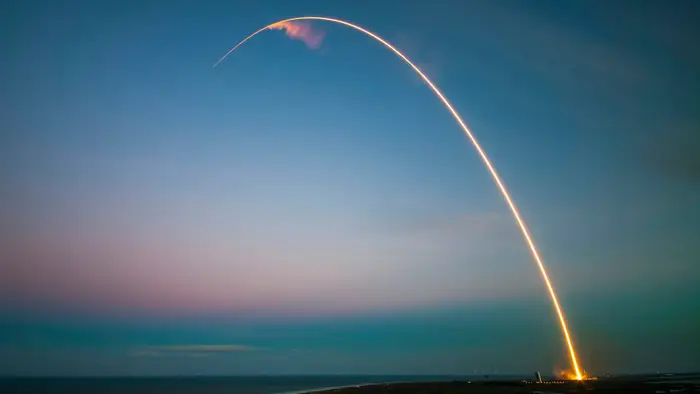
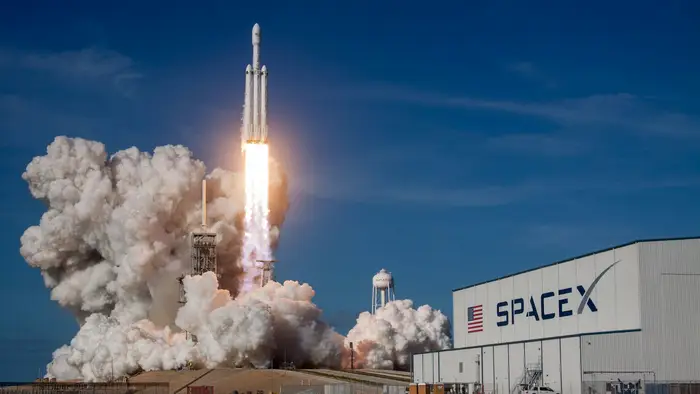
The day began with a countdown that nearly did not finish. The launch window opened at 12:11 p.m. Eastern time, but controllers called a hold at the T-minus 20-second mark because of an unexplained technical issue with the rocket. The clocks were recycled to T-minus 7 minutes, the problem was resolved, and ULA retargeted the end of the window. At 12:40 p.m. EST — 00:40 WIB on Monday, November 16 — the 214-foot-tall Vulcan thundered away from Space Launch Complex 41 at the Cape Canaveral Space Force Station, climbing on a northeasterly trajectory atop 3.8 million pounds of thrust from its six Northrop Grumman strap-on solid-fuel boosters and two methane-burning BE-4 engines.
The first ninety seconds looked like a textbook Vulcan flight. The six boosters burned out and peeled away from the first stage about a minute and 35 seconds after liftoff, falling away cleanly as the BE-4 engines continued the climb. But reporters watching the flight noted two things that did not match ULA’s pre-launch timeline: the first stage appeared to fire longer than expected, and it appeared to separate from the Centaur upper stage later than expected. The payload fairing was jettisoned about six minutes into the flight, with the vehicle roughly 95 miles above Earth, east of Charleston, South Carolina.
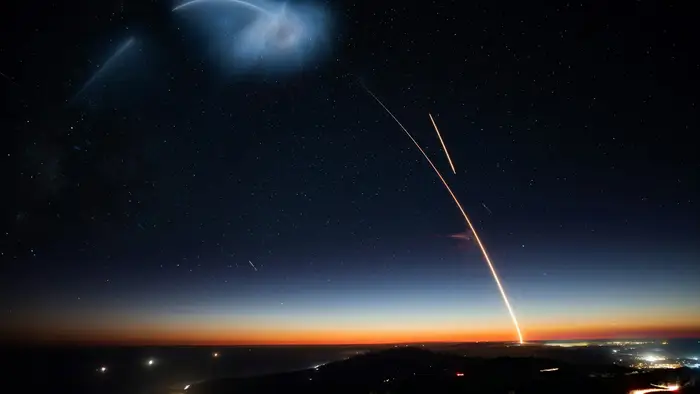
Then the Centaur took over. Its two RL10 engines, built by L3Harris, ignited for a planned first burn lasting 12 minutes and 15 seconds — the long push that would have put the 40 Amazon satellites on course for their 450-kilometre parking orbit. According to ULA’s update, something went wrong during that firing. Telemetry-driven animation on the launch broadcast showed the Centaur making unusual orientation adjustments early in its burn, but the company’s launch commentators did not mention any problems, and the broadcast came to an end without confirming whether the Centaur’s first planned engine firing had run for its full duration.
At 1:30 p.m. Eastern, about fifty minutes after liftoff, ULA posted the statement that ended the suspense. “Based on data received by our Launch Director, we confirm that the Vulcan vehicle launched from Space Launch Complex 41 suffered an anomaly 10 minutes into the flight and failed to deliver the Amazon mission to orbit,” the company said. “We will work closely with our customer and other appropriate organizations to find the cause, determine the appropriate corrective action and return to flight as quickly as possible.”
Ten minutes into the flight would have been during the planned first Centaur burn. ULA has not identified a failed part, a failed stage, or a cause. In the hours after the statement, the company said only that the anomaly had just occurred and that it did not yet have specific data on what had happened. Every account of the exact failure point remains unconfirmed until ULA or investigators release findings — and the company has promised its customers full visibility into an investigation it describes as rigorous.
LV-01 at a glance
| Item | Detail |
|---|---|
| Vehicle | Vulcan VC6L, tail number V-012 |
| Height | 214 feet (65 metres) |
| Liftoff thrust | 3.8 million pounds |
| Launch site | Space Launch Complex 41, Cape Canaveral Space Force Station, Florida |
| Liftoff | Sunday, November 15, 2026, 12:40 p.m. EST (00:40 WIB, Monday, November 16) |
| Launch window | Opened 12:11 p.m. EST; liftoff near the end of the window after a hold at T-minus 20 seconds |
| Boosters | Six Northrop Grumman GEM 63XL solid rocket boosters, separated at about T+1 minute 35 seconds |
| First stage | Two Blue Origin BE-4 methane engines; appeared to burn longer than planned |
| Upper stage | Centaur V with two L3Harris RL10 engines; first flight of a shorter, low-Earth-orbit-optimized Centaur |
| Planned Centaur burn | 12 minutes 15 seconds |
| Anomaly | About 10 minutes into flight, during the Centaur burn |
| Payload | 40 Amazon Leo broadband internet satellites |
| Payload outcome | All 40 satellites lost; none delivered to orbit |
| Vulcan flight number | Fifth since the rocket’s debut in 2024; first in nine months |
| Significance | First outright mission failure for ULA since the company was formed in 2006 |
Ten minutes that changed everything
The flight’s first phase gave no reason to worry. The solid boosters, which had been the subject of months of investigation and rework after nozzle problems on two earlier Vulcan flights, appeared to work normally on Sunday. They burned out and separated on schedule, and ULA’s own account of the ascent confirms the boosters did their part. Whatever went wrong came later, in the part of the flight that had never failed ULA before.
The first hint of trouble was subtle. The BE-4 first stage, according to reporters tracking the flight against ULA’s published timeline, kept firing past the point where it should have cut off. Stage separation then came later than expected. Neither deviation was explained on the broadcast, and neither, on its own, proves anything about the failure: a first stage can burn long for reasons that have nothing to do with the upper stage. But the Centaur’s behaviour after separation was harder to dismiss. The telemetry animation showed the stage making unusual orientation adjustments early in its burn — the kind of motion that suggests a vehicle fighting to hold its attitude rather than flying a planned profile.
The fairing had already come off, about six minutes in, exposing the 40 satellites stacked inside. The Centaur’s two RL10 engines were lit for a burn of just over twelve minutes. Somewhere around the ten-minute mark — roughly two-thirds of the way through that burn — the mission ended. ULA’s statement, when it came, was careful and narrow: an anomaly ten minutes into the flight, a failure to deliver the mission to orbit, and no more detail than that.
What the statement did not say matters as much as what it did. It did not say the vehicle had broken apart, or that the satellites had re-entered, or where any debris might have fallen. Multiple news outlets reported that the 40 satellites were destroyed, but ULA’s own words stopped short of describing their fate. It did not say whether the problem that forced the T-minus 20-second hold played any role in the failure. Spaceflight Now, which covered the flight in detail, noted explicitly that it is not yet known whether the countdown issue and the in-flight anomaly are connected — and that question will sit at the centre of the investigation until telemetry answers it.
The timing of the confirmation also tells its own story. Fifty minutes passed between liftoff and ULA’s statement. In that interval, the launch broadcast ended without the customary confirmation that the Centaur burn had completed, and the company’s launch team worked through the data its launch director had received. The delay was not foot-dragging; it was the time it took to be sure. When the statement arrived, it was short, factual, and free of speculation — the tone of a company that knows the next thing it says will be examined line by line.
A first failure in twenty years
To understand why this failure landed so hard, it helps to understand what ULA had never done before. The company was formed in 2006 as a joint venture between Boeing and Lockheed Martin, combining the Atlas and Delta rocket families into a single launch provider. Across the Atlas V, Delta IV and Vulcan lines, ULA flew roughly 170 missions without a single total loss. It had close calls — most recently the Vulcan Cert-2 flight in October 2024, when a solid rocket booster nozzle came apart 37 seconds after liftoff, showering sparks across the ascent — but the rocket still reached orbit, the payload still deployed, and the mission still counted as a success. On Sunday, for the first time, there was no such escape.
The Vulcan itself is ULA’s future, the rocket built to replace the Atlas V fleet. Sunday’s flight was only its fifth since its debut in 2024, and its first in nine months. The gap was not a scheduling choice. ULA and booster supplier Northrop Grumman spent months working to resolve the nozzle problems that marred two earlier flights: the Cert-2 nozzle failure in October 2024 and a nozzle observation on the USSF-87 national security mission on February 12, 2026, when sensors recorded an anomaly 69 seconds into flight. ULA chief executive Mark Peller told Aviation Week & Space Technology magazine in a pre-flight interview that the company had identified three credible causes for the nozzle issue and had taken positive steps to mitigate all of them. The boosters appeared to work normally on Sunday — but the rocket still failed, somewhere else entirely.
The grounding’s shadow fell unevenly. While ULA was free to press ahead with commercial flights, the U.S. Space Force put Vulcan launches of national security payloads on hold pending additional analysis of the nozzle issue. That hold, and the questions behind it, now gain a second chapter. The Defense Department had also been waiting on this flight before deciding whether to clear Vulcan for government missions, and the failure will inevitably shape that decision. A rocket that was supposed to prove it had moved past its booster troubles must now prove something harder: that it can find, fix and move past a failure in a part of the vehicle nobody expected to fail.
The Centaur question
The Centaur upper stage is one of the oldest and most proven pieces of hardware in American rocketry. The hydrogen-fueled stage, in various forms, has flown for more than sixty years, and its RL10 engines are among the most flown upper-stage engines in history. That pedigree is exactly why the LV-01 failure is so disorienting: the part of the rocket that failed was, on paper, the part with the least to prove.
Sunday’s Centaur was not quite the standard article, however. The flight was the first to use a shorter, low-Earth-orbit-optimized version of the Centaur V, built for missions like this one, where the payload is a flat stack of satellites bound for a relatively low orbit rather than a heavy spacecraft headed for deep space. The stage carried two RL10 engines and was scheduled to fire for 12 minutes and 15 seconds on its first burn, with further burns to follow to place the satellites and then dispose of itself. Nothing in ULA’s public statements suggests the shorter Centaur was at fault — but nothing rules it out either, and the investigation will have to examine whether the new configuration played any role.
There is a second thread the investigators will have to pull. The BE-4 engines that power Vulcan’s first stage are built by Blue Origin, the space company founded by Amazon founder Jeff Bezos — which makes Amazon both the customer and, one step removed, a supplier on this mission. In May 2026, a New Glenn rocket suffered a catastrophic explosion on its launch pad, caused by problems with an oxygen valve in one of its seven BE-4 first-stage engines. The BE-4 also powers Vulcan’s first stage, but the engines flown on Sunday had been retrofitted with a fix developed by Blue Origin engineers. Peller said Blue Origin had been at ULA’s facilities a couple of months earlier and implemented the retrofit kit on the engines for this mission, and was working through the rest of the engine inventory. The first stage appeared to burn longer than planned on Sunday, and whether that observation connects to the BE-4, to the Centaur, or to neither is precisely the kind of question the failure investigation exists to answer.
There is also the question of the hold. At T-minus 20 seconds, with the rocket fuelled and the window ticking down, launch controllers stopped the countdown for a technical issue with the rocket that was never explained in detail. The problem was resolved, the clocks were recycled, and the rocket flew 29 minutes later. It is not yet known whether the issue that interrupted the countdown played any role in the failure ten minutes into flight — but it is the kind of coincidence investigators will examine first, because a countdown hold and an in-flight anomaly on the same vehicle, on the same day, demand an explanation even if the answer turns out to be that they were unrelated.
What it means for Amazon Leo
For Amazon, the arithmetic of the failure is brutal and simple. Sunday’s flight was the first of 38 Vulcan launches Amazon has purchased to deploy its Leo constellation, the satellite internet network designed to compete head-to-head with SpaceX’s Starlink. Before Sunday, 396 Leo satellites had been launched across 14 missions, about 12 per cent of the more than 3,300 the full constellation will need. LV-01 would have pushed the total to 436. Instead, the count stays at 396, and Amazon must now wait on ULA’s failure investigation before it can try again with a Vulcan.
The company has spread its bets. Beyond the 38 Vulcan flights, Amazon has booked 24 Leo launches aboard Blue Origin’s New Glenn, 24 using the European Ariane 6, and 13 aboard SpaceX’s Falcon 9 rockets. ULA had already launched eight Leo flights using its Atlas 5 rockets. But Vulcan was meant to be the workhorse of the deployment campaign, and the rocket’s grounding — however long it lasts — removes the largest single block of Amazon’s launch manifest at the very moment the company had hoped to begin initial internet service.
Amazon’s public response was measured. In a post on X, Amazon Leo said there is risk with any launch, “and that’s especially true for inaugural missions like LV-01.” The company added that ULA has been a trusted partner and that it believes ULA will learn from the mission and deliver on its long-term plans. It was the language of a customer that needs its supplier healthy — and that knows saying anything sharper would not get its satellites to orbit any faster.
The setback also complicates the picture for Blue Origin. Amazon is waiting for New Glenn to fly again after the catastrophic on-pad explosion in May, and the BE-4 engine sits at the centre of both stories: it powers New Glenn’s first stage, and it powers Vulcan’s. If the LV-01 investigation points toward the BE-4, the consequences would reach beyond ULA, touching two rockets, two companies and the engine that was supposed to anchor both. If it points elsewhere, the BE-4 retrofit story becomes a footnote rather than a headline. Either way, the engine’s week has become a case study in how tightly the new space economy’s supply chains are wound together.
Three days at the Cape: a timeline
| When | What happened |
|---|---|
| Friday, November 13, morning | First attempt scrubbed after a power failure knocked out the Air Liquide gaseous nitrogen plant that serves multiple launch providers, losing a high-pressure pump during Centaur liquid oxygen loading. |
| Saturday, November 14 | Second attempt scrubbed because of a network communications problem between the ground systems and the rocket, which could not be fixed inside the 29-minute window. |
| Sunday, November 15, 12:11 p.m. EST | Launch window opens at Cape Canaveral’s Space Launch Complex 41. |
| Sunday, 12:11 p.m. EST, T-minus 20 seconds | Countdown held for an unexplained technical issue with the rocket; clocks recycled to T-minus 7 minutes. |
| Sunday, 12:40 p.m. EST (00:40 WIB Monday) | Vulcan lifts off at the end of the window, on 3.8 million pounds of thrust. |
| Sunday, about T+1 minute 35 seconds | Six solid rocket boosters burn out and separate cleanly. |
| Sunday, about T+6 minutes | Payload fairing jettisoned, about 95 miles above Earth east of Charleston, South Carolina. |
| Sunday, about T+10 minutes | Anomaly during the Centaur upper stage’s first burn; the mission fails to reach orbit. |
| Sunday, 1:30 p.m. EST | ULA confirms the failure in a statement, about 50 minutes after liftoff. |
The timeline is the story of the mission in miniature. Three attempts in three days, two scrubs for ground-side problems, a hold in the final seconds, a liftoff at the very edge of the window — and then a failure in the one phase of flight that nobody had flagged as a risk. The rocket that survived two scrubs and a countdown hold could not survive its own upper-stage burn.
The context of those three days matters for the investigation too. The Friday scrub was caused by infrastructure, not the rocket: a power outage at the Air Liquide nitrogen plant took out a high-pressure pump while liquid oxygen was being loaded into the Centaur. The Saturday scrub was a network fault between the ground and the vehicle. Both were the kind of problems that cost a day but leave no mark on the rocket. The question now is whether the third day’s problems — the unexplained hold at T-minus 20 seconds, the long first-stage burn, the Centaur’s unusual movements — belong in the same category of bad luck, or whether they were the first symptoms of the failure itself.
For readers following the campaign from the start, the road to this launch was covered in our earlier reporting on the Vulcan Leo 1 return to flight, the launch countdown that began the three-day campaign, and the final preview published on the eve of the third attempt.
What happens next
ULA’s immediate task is the investigation, and the company’s first statements set its terms. “ULA is committed to full transparency with our customers, and they will have visibility into the investigation process, which utilizes rigorous methodology and corrective action,” the company said. That is a promise with a history behind it: after the Cert-2 nozzle failure in 2024, ULA spent months on analysis, identified three credible causes, and carried mitigations into the fleet. The LV-01 investigation will follow the same pattern — telemetry review, hardware analysis, corrective action — but this time the failure is total, the payload is lost, and the stakes are higher.
The rocket will face a potentially significant grounding while engineers review telemetry and implement fixes for whatever caused the mishap. How long that lasts depends entirely on what the data shows. A clear-cut component failure with a straightforward fix could return Vulcan to flight in months. A systemic issue — in the Centaur, in the BE-4, or in the interaction between the stages — could take far longer, and would ripple through a manifest that includes not only Amazon’s 37 remaining Vulcan flights but the national security missions the Space Force has already paused. ULA has not announced a revised return-to-flight schedule, and none should be expected until the cause is known.
Help has already been offered from an unexpected quarter. NASA Administrator Jared Isaacman wrote on X after the failure, thanking ULA for keeping the public and its partners informed and offering the space agency’s assistance. “Appreciate you quickly keeping the public and your partners informed,” he wrote. “The team at @NASA is available to assist in all matters related to the investigation and remediation effort. Artemis, Moon Base, and the nation need ULA. We are in your corner and here to help.” It was a reminder that ULA’s health is not only a commercial matter: the same company builds the rockets that will carry the Space Launch System’s upper stages and support the Artemis programme, and the nation, as Isaacman put it, needs ULA flying.
For Amazon, the waiting game has already begun. The company will have to decide whether to shift near-term Leo launches to its other providers — Ariane 6, Falcon 9, and eventually New Glenn — or to hold its manifest and wait for Vulcan to return. Either choice costs something: shifting launches means renegotiating schedules with providers whose own manifests are full, while waiting means the constellation’s deployment clock keeps ticking against the Federal Communications Commission deadline of July 30, 2029, by which half the constellation must be in orbit. That deadline, and the waiver Amazon received in June 2026 that kept its deployment plan alive, now frame every decision the company makes about its launch campaign.

Vulcan’s troubled road: three flights, three warnings
| Flight | When | What happened |
|---|---|---|
| Cert-2 | October 2024 | Solid rocket booster nozzle came apart 37 seconds after liftoff, showering sparks across the ascent; the mission still reached orbit. ULA later identified three credible causes and mitigated all of them. |
| USSF-87 | February 12, 2026 | Nozzle observation recorded 69 seconds into flight on a national security mission; the Space Force put Vulcan national security launches on hold pending additional analysis. |
| LV-01 | November 15, 2026 | Anomaly about 10 minutes into flight during the Centaur upper stage burn; all 40 Amazon Leo satellites lost. First outright failure in ULA history. |
The pattern is worth stating plainly. Vulcan’s first five flights produced three separate anomalies in three different parts of the vehicle: a booster nozzle, a nozzle observation on a classified mission, and now the upper stage. The boosters were fixed, or so it appeared on Sunday, when they worked normally. But the failure moved, and that is the hardest kind of problem for a rocket programme — the kind where fixing the last failure does not protect you from the next one. ULA’s investigation will have to answer not only what failed on Sunday, but whether there is a thread connecting the three events, or whether Vulcan is simply a young rocket working through the failures that every new launch vehicle eventually faces.
The road back
Every new rocket fails eventually. The question is never whether it happens, but what the company does next — and on that measure, ULA’s record is genuinely strong. After Cert-2, it investigated openly, found three credible causes, and fixed them. After USSF-87, it accepted the Space Force’s hold and did the additional analysis. Now, after the first total loss in its history, it has promised the same rigour and full transparency to its customers. The test of that promise will be measured in months, in telemetry, and in the return of a rocket that must now prove itself all over again.
For Amazon, the road back runs through the same investigation. Thirty-seven Vulcan flights remain on its order, and the constellation they were meant to build is still 396 satellites strong — enough to keep the programme moving on other rockets while Vulcan is grounded, but not enough to meet the schedule Amazon set for itself. The company’s bet on Vulcan was a bet on ULA’s reliability, on a record of roughly 170 missions without a total loss. That record is gone now, spent on a Sunday afternoon in November, ten minutes after liftoff, somewhere above the Atlantic east of Charleston. What replaces it will be decided by the engineers now poring over the flight data — and by whether the next Vulcan to leave pad 41 carries its satellites all the way to orbit.

Sources
- Spaceflight Now: ULA suffers first outright failure with loss of Vulcan rocket carrying 40 Amazon Leo satellites
- GeekWire: Amazon loses 40 Leo satellites in ULA Vulcan launch failure
- Devdiscourse: Rocket from Boeing-Lockheed firm fails mid-flight, destroys payload of Amazon satellites
- Life News Agency: ULA Vulcan Rocket Fails, Destroying 40 Amazon Leo Satellites