Vulcan Leo 1 Launch Countdown November 13: ULA's Six-Booster Comeback Faces Its Final Hours
United Launch Alliance has spent nine months answering the same question, and in a few hours the answer will stop being a statement and start being a flight. The company’s Vulcan Centaur rocket is cleared to return to flight on Friday, November 13, 2026, carrying 40 satellites for Amazon’s Leo broadband constellation from Space Launch Complex 41 at Cape Canaveral Space Force Station in Florida. Liftoff is targeted for 12:54 p.m. EST, or 17:54 UTC, at the opening of a 29-minute window, and the weather forecast gives the attempt a 90 percent chance of favourable conditions. For readers in Indonesia, that is 00:54 WIB on Saturday, November 14, with the window closing at about 01:23 WIB.
This is not a routine satellite delivery, and everyone involved knows it. Vulcan Leo 1, designated LV-01, is the fifth flight of a rocket that debuted in January 2024, the first flight of the most powerful configuration ULA has ever assembled, and the first launch since a booster nozzle failed for the second time in February 2026. Six Northrop Grumman GEM 63XL solid rocket boosters are strapped to the core stage, a redesigned nozzle is flying on all six of them at once, and a shorter, low Earth orbit-optimised Centaur V upper stage is making its debut on the same mission. Amazon, meanwhile, is opening a 38-launch campaign that is supposed to put more than 1,500 of its satellites into orbit, and the United States Space Force is watching a commercial flight for the data it needs before it will clear Vulcan to carry national security payloads again. One rocket, in other words, has to prove a fix, open a constellation campaign, and restore confidence in a launch programme all in the same evening.
The countdown itself is the easy part to describe and the hard part to overstate. By the time this article reaches readers, the rocket will already be standing on the pad at Space Launch Complex 41, fuelled and waiting, with ULA’s webcast scheduled to begin 20 minutes before liftoff, at 12:34 p.m. EST. The window is short — 29 minutes, from 12:54 p.m. to 1:23 p.m. EST — which means there is little slack for a hold. A problem that cannot be cleared quickly becomes a scrub, and a scrub sends the team back to the start of the process with a new date to be announced. That is the reality of a final preview written hours before liftoff: everything described here is the plan as it stands, and the plan is one held breath away from changing.
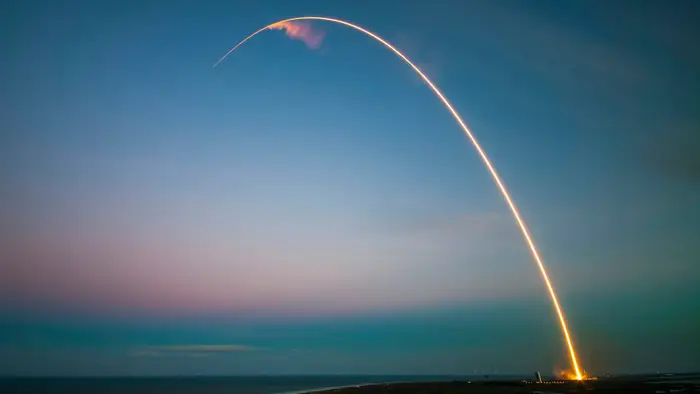
The final countdown: a 29-minute window and no room to spare
A launch window is not a suggestion. It is the span of time during which the geometry of the target orbit, the position of the launch site, and the range safety rules all line up, and for Vulcan Leo 1 that span is 29 minutes. The rocket must leave the pad between 12:54 p.m. and 1:23 p.m. EST on Friday, or it waits for another day. The short window is a consequence of the mission’s destination: the 40 Amazon Leo satellites need to be delivered into a specific orbital plane of a constellation that will eventually hold more than 3,200 spacecraft, and the plane passes over Cape Canaveral on a schedule the rocket cannot negotiate with.
That constraint shapes everything about the final hours. The countdown for a Vulcan launch is a long, methodical sequence — cryogenic propellants loaded into the core stage and the Centaur upper stage, the solid rocket boosters armed, the flight termination system checked, the range confirmed clear — and it is built around built-in holds that let the team pause and resolve problems without resetting the whole clock. But a hold only helps if the problem is small and the fix is fast. A weather violation, a sensor reading out of limits, or a range issue that eats more than a few minutes can consume the window entirely. ULA has not announced a backup date for this mission, which is itself a signal: the company and Amazon are treating November 13 as the day, not as the first of several attempts.
The good news for the countdown team is that the weather is cooperating. According to weather officials, there is a 90 percent chance of favourable conditions at the time of launch, with broken clouds over the site, a temperature of 71 degrees Fahrenheit, winds of 7 miles per hour, and a zero percent chance of precipitation. Cloud cover is forecast at 58 percent, which is high enough to be worth watching — thick cloud layers are one of the conditions that can delay a launch — but the overall picture is about as good as a Florida afternoon in November gets. The forecast has been stable in the days leading up to the attempt, which matters because a forecast that keeps improving is one thing and a forecast that keeps slipping is another. This one has held.
For viewers, the practical consequence is simple. ULA’s live coverage begins at 12:34 p.m. EST, 20 minutes before the opening of the window, and the company is streaming the flight on its own channels and through partners including Space.com. The first minutes of the broadcast will be the familiar ritual of a modern launch webcast: the rocket on the pad, the countdown clock, the calm voices of the launch team working through their checklists. The drama, if there is any, will come later, in the first minute of flight.
What happened on the ground: nine months of fixing
To understand why this launch matters so much, it helps to go back to the two flights that grounded the rocket. Vulcan Centaur debuted on January 8, 2024, and its second flight, known as Cert-2, lifted off on October 4, 2024. About 30 seconds after launch, a nozzle on one of the GEM 63XL solid rocket boosters burned through and fell off. The rocket still reached its intended orbit — the core stage engines compensated for the lost thrust — but a solid rocket booster shedding a piece of itself in flight is not something any launch provider can wave away. ULA investigated, identified contributing factors, and modified the nozzle design.
The rocket flew again on February 12, 2026, on USSF-87, its first national security mission, carrying two satellites for the Space Force’s Geosynchronous Space Situational Awareness Program and a demonstration payload. About 20 seconds after liftoff, one of the four GEM 63XL boosters on that flight experienced nozzle burn-through. The mission succeeded again — the core stage compensated again — but the result was unambiguous: the remediation after Cert-2 had not solved the underlying problem. The same component had failed the same way twice, and the Space Force, which had certified Vulcan for national security launches in March 2025, decided to pause national security launches on the rocket until ULA addressed the problem.
That is the context in which the nine-month grounding has to be understood. It was not a pause while a single part was swapped out. It was a pause while ULA and Northrop Grumman, which builds the GEM 63XL motor, went back to the nozzle and tried to find what the first fix had missed. Northrop Grumman said in July that it was taking a 91 million dollar charge against earnings to cover what it called corrective actions on the booster, including an unspecified component redesign that had been tested in a static-fire test. The company said then that it expected to start delivering redesigned motors by the end of the year. ULA, for its part, said in its October 28 return-to-flight announcement that its investigation team had identified several potential contributors to the anomaly and mitigated them through design and process improvements to the nozzle.
The company’s own words are worth quoting, because they are carefully chosen. “The integrated team has made great strides in improving our understanding of the SRB anomaly that occurred on the previous Vulcan flight and have identified several potential contributors, which have been mitigated through design and process improvements to the nozzle,” ULA said. “To support our customers, this upcoming launch will utilize the improved nozzle design, and additional testing and analysis will continue in parallel with the mission. By flying the improved design, ULA gains valuable flight data that validates these improvements and is the most beneficial path in support of all our customers.” The full background on the announcement and the nine-month grounding is covered in our earlier report, Vulcan Leo 1 Return to Flight November 13: ULA Bets Six Boosters on Its Comeback.
Read that last sentence again, because it contains the whole story of this launch. ULA is not saying the investigation is finished. It is saying that additional testing and analysis will continue in parallel with the mission, and that flying the improved design is the best way to get the data that validates it. In other words, Vulcan Leo 1 is not a victory lap after a fix. It is part of the fix. The flight data from Friday is evidence, and the people who will judge that evidence include the Space Force officers who decide whether Vulcan flies military payloads again.
There is a second hardware change on this flight that has received less attention but deserves some. Vulcan’s two Blue Origin BE-4 core engines carry a valve modification, applied after a liquid oxygen valve failure in a BE-4 engine was identified as the primary cause of a New Glenn pad explosion at Cape Canaveral on May 28, 2026 — the explosion and rebuild are covered in Explosion, Rebuild, Return: Blue Origin’s New Glenn Aims for a December Comeback. That explosion destroyed a New Glenn rocket during a static-fire test ahead of what would have been that rocket’s first launch of Amazon Leo satellites, and it is one of the reasons the Amazon constellation’s deployment has fallen behind the pace the company once planned. The valve fix means Vulcan Leo 1 is flying with two separately identified hardware changes at once — the GEM 63XL nozzle redesign and the BE-4 valve modification — which means that if anything goes wrong, engineers will have to determine which system was involved. It also means the flight is testing more than one thing at a time, which is the kind of calculated risk that launch providers take when a schedule demands it and the alternative is waiting longer.
The stakes of that risk are visible in the configuration itself. Vulcan Leo 1 is the first flight of the VC6L variant, with all six GEM 63XL boosters attached and a long payload fairing. It is the most powerful Vulcan ever flown, with a stated low Earth orbit capacity of approximately 27,200 kilograms, and the redesigned nozzle will be tested across all six boosters simultaneously. If the fix works on six boosters at once, that is a stronger result than a test on two or four. If it fails on any one of them, the failure will be visible to everyone watching, including the Space Force. There is no way to hedge that. It is the nature of the mission.
Vulcan Leo 1 mission data
| Item | Figure |
|---|---|
| Launch vehicle | ULA Vulcan Centaur, VC6L configuration |
| Flight number | 5th Vulcan flight; 1st with six solid rocket boosters |
| Liftoff (target) | Fri Nov 13, 2026, 12:54 p.m. EST (17:54 UTC; Sat Nov 14, 00:54 WIB) |
| Launch window | 29 minutes (closes 1:23 p.m. EST / 01:23 WIB) |
| Launch site | Space Launch Complex 41, Cape Canaveral Space Force Station, Florida |
| Weather forecast | 90% GO; 71°F; broken clouds; 58% cloud cover; 7 mph winds; 0% precipitation |
| Payload | 40 Amazon Leo broadband satellites (largest Leo payload flown) |
| Solid rocket boosters | 6 × Northrop Grumman GEM 63XL, 459,600 lbf thrust each |
| Core engines | 2 × Blue Origin BE-4 |
| Upper stage | Centaur V, LEO-optimised variant, 2 × RL10C-1-1A engines |
| Rocket dimensions | 67.4 m long; 5.4 m diameter; 877 tonnes liftoff mass |
| Liftoff thrust | 18,110 kN |
| LEO capacity | 27,200 kg |
| Deployment | 40 satellites over ~25 minutes, starting ~70 minutes after liftoff |
| Deployment altitude | ~435 km (270 miles) |
| Constellation altitude | ~630 km |
| Grounding before flight | 9 months (last flight USSF-87, Feb 12, 2026) |
| Live coverage begins | 12:34 p.m. EST (20 minutes before liftoff) |
The deployment: 40 satellites in 25 minutes
If the first minute of flight is the test, the second hour is the delivery. Vulcan Leo 1 will not simply drop its payload and go home. The plan, as described by ULA and Amazon and reported ahead of the launch, is for the Centaur V upper stage to carry the 40 satellites to an altitude of about 435 kilometres, or 270 miles, and then release them over a span of about 25 minutes beginning roughly 70 minutes after liftoff. That means the first satellite should separate at about 02:04 WIB on Saturday morning, with the last of the 40 following by about 02:29 WIB, assuming liftoff happens at the opening of the window.
The satellites are encapsulated inside a 70-foot-tall payload fairing, the largest Leo payload Amazon has flown to date, and they will be released from an adapter on the Centaur upper stage in a carefully sequenced series of separations. The reason for the slow, staged release is traffic management: 40 satellites leaving a single dispenser at once would create a collision risk, so they are let go in groups, each with a slightly different velocity, so that they drift apart into a safe formation before they begin raising their own orbits. The satellites will then use their own propulsion to climb from the deployment altitude of about 435 kilometres to their operational altitude of about 630 kilometres, where they will join the constellation’s orbital planes.
That climb is worth pausing on, because it explains a design choice that is easy to miss. The Centaur V flying on this mission is not the standard high-energy variant that carried Vulcan’s earlier payloads to higher orbits. It is a shorter, low Earth orbit-optimised version, roughly 1.8 metres shorter than the high-energy variant and carrying about one-third less propellant. The logic is straightforward: a constellation satellite does not need to be delivered to geostationary orbit, and a lighter upper stage with less propellant can carry more satellites to low orbit. The trade-off is that the stage is a new variant on its first flight, which adds one more first to a mission that already has several. ULA and Amazon have presented the LEO-optimised Centaur as a straightforward optimisation, and it is, but it is also another piece of hardware that has to work the first time.
The deployment will be the longest part of the mission that viewers can actually follow. The launch itself will take about eight minutes to reach orbit, and then there will be a long coast phase while Centaur circles the planet to the right position for deployment. ULA’s webcast will not cover every minute of that coast, but the company is expected to confirm the deployment sequence as it happens, and the final confirmation — all 40 satellites released — will be the moment the mission can be called a success from Amazon’s point of view. A rocket can fly perfectly and still fail its customer if the satellites do not separate cleanly, which is why the deployment sequence, unglamorous as it sounds, is the part of the mission that Amazon’s engineers will be watching most closely.
There is also a quieter milestone tucked into the flight plan. After the satellites are away, the Centaur upper stage is expected to deorbit itself, burning up in the atmosphere rather than remaining in orbit as debris. That is standard practice for modern launches, but it is worth noting in a mission that is deploying 40 new objects into low Earth orbit: the launch provider is adding satellites to the constellation while removing its own hardware from orbit, and that discipline is part of what makes a constellation of thousands of satellites sustainable.
Why the Space Force is watching a commercial launch
The most unusual thing about Vulcan Leo 1 is that its most important audience is not the customer paying for the launch. It is the United States Space Force, which is not a party to this mission at all and yet has more riding on its outcome than almost anyone else.
The connection is the grounding. Vulcan was certified for national security launches in March 2025, and its third and fourth flights were Space Force missions. Then the nozzle failed for the second time on USSF-87 in February 2026, and the Space Force paused national security launches on Vulcan until the problem was addressed. The pause has now lasted nine months, and during that time the Space Force has had to find other rockets for payloads that were meant to fly on Vulcan. The military’s launch manifest is not something that can be rearranged indefinitely, and the longer Vulcan stays grounded, the more pressure builds on the rest of the national security launch fleet.
Brigadier General Eric Zarybnisky, the Space Force’s portfolio acquisition executive for space access, said it plainly to reporters on October 21, eight days before ULA announced the return-to-flight date. The military’s clearance decision, he said, would depend heavily on flight data from Vulcan’s commercial missions. “It’ll depend a lot on what we see, not only on the engineering and tests that we’re doing on the ground, but also what we see from the flight data from the commercial missions they fly,” he said. That is an unusually direct statement from a senior officer about a commercial launch, and it reframes the whole mission. Vulcan Leo 1 is, by the Space Force’s own characterisation, an unofficial validation test. The Amazon launch and the military’s clearance decision are directly linked, with neither the commercial deployment nor the national security blessing guaranteed, and both riding on the same flight.
That linkage is the defining fact about November 13, and it explains why the launch is being covered as more than a satellite delivery. If the redesigned nozzle performs cleanly on all six boosters, the Space Force will have the flight data it asked for, and the path back to national security launches will be open. If a nozzle fails again — even if the mission still reaches orbit, as the previous two flights did — the Space Force will have to decide whether the fix has failed a third time, and the grounding will almost certainly be extended. The rocket has already shown, twice, that it can survive a nozzle failure and still deliver its payload. What it has not shown is that the failure will not happen again, and that is the only thing that matters now.
It is also worth noting what the Space Force is not doing. It has not certified the fix in advance, and it has not promised that a successful flight will automatically restore Vulcan to the national security manifest. The decision will be made after the data is reviewed, and it will weigh the ground testing, the flight data, and the investigation that ULA says is still continuing in parallel with the mission. That is the right way to make the decision, and it is also the reason Friday’s flight is a beginning rather than an ending. A good flight opens the door. It does not walk through it.
For ULA, the stakes go beyond a single clearance decision. Vulcan is the successor to the Atlas V, which has just a half-dozen launches left on its manifest, and it is the rocket the company has built its future around. The joint venture between Boeing and Lockheed Martin has flown 175 launches without a failure, a record the company cites with pride, and that record survived both nozzle failures because the missions still reached orbit. But a record of mission success is not the same as a record of hardware reliability, and the Space Force knows the difference. Friday’s flight is the moment ULA gets to show that the difference has been closed.
Amazon Leo: the constellation behind the launch
While ULA is flying for its future, Amazon is flying for a deadline. The Leo constellation, formerly known as Project Kuiper, is planned to consist of 3,276 satellites in 98 orbital planes across three layers at altitudes of 590, 610 and 630 kilometres, and it is meant to offer broadband internet access to unserved and underserved communities around the world, competing with SpaceX’s Starlink network, which has been operating for several years. About 400 of the satellites have reached space to date, carried on 15 launches by three different rockets: ULA’s Atlas V, SpaceX’s Falcon 9, and Arianespace’s Ariane 6. That is a long way from 3,276, and the pace of deployment has been slowed by problems with both Vulcan and Blue Origin’s New Glenn, which suffered the pad explosion in May that also prompted the BE-4 valve fix flying on Friday.
The numbers tell the story of the campaign that Vulcan Leo 1 is opening. Amazon has booked 38 Vulcan launches, and LV-01 is the first of them. Those 38 launches are meant to carry more than 1,500 satellites, which is close to half the planned constellation. The company has said it has finished building more than 1,000 satellites, all sitting on the ground waiting for a ride, which means the constraint on the constellation is not manufacturing but launch capacity. Every Vulcan that flies is a bottleneck removed, and every Vulcan that does not fly is a bottleneck that stays.
The campaign is already moving fast by the standards of a new rocket. A second vehicle is assembled for Vulcan Leo 2, and Amazon says that mission is being readied in parallel in a facility it calls VIF-G, while LV-01’s vehicle was assembled in VIF-A, a new Vertical Integration Facility built specifically for the Amazon campaign. The two facilities are the physical expression of the plan: ULA has said it wants to prepare two Vulcan missions side by side and cut the gap between launches to days or weeks. If LV-01 goes well, LV-02 could follow within weeks, and the company has said the launch cadence is the point. A rocket that flies once every nine months cannot build a constellation. A rocket that flies every few weeks can.
Amazon is not relying on Vulcan alone. Its next mission after LV-01 is scheduled to be an Arianespace Ariane 6 launch, designated LE-04, carrying 36 Leo satellites from French Guiana no earlier than November 23, and the company has covered that launcher in its own campaign as well — our earlier report on The Heavyweight Debut: Ariane 64’s New P160C Boosters Haul 36 Amazon Leo Satellites to Orbit describes the Ariane 6 side of the same deployment push. If both launches happen on schedule, 76 satellites could reach orbit within about 10 days, which would be the fastest deployment stretch in the constellation’s history. That is the scale of the catch-up Amazon is attempting, and it is the reason the company has been willing to fly on three different rockets while it waits for Vulcan to return.
The commercial case for the constellation is straightforward, and Amazon’s chief executive Andy Jassy made it on an earnings call on October 29, telling Wall Street analysts that Amazon Leo remains on track to get initial service this year. Initial service means the first customers coming online, which is the moment a constellation stops being a construction project and starts being a business. Getting there depends on having enough satellites in orbit to provide continuous coverage, and that depends on launch cadence, and that depends, right now, on a rocket that has not flown in nine months. The chain is that direct. Friday’s launch is the first link in it.
There is a broader context here that is easy to lose in the technical detail. Amazon Leo is the second mega-constellation in low Earth orbit, and the first that is not SpaceX’s Starlink. Its success or failure will shape the market for satellite broadband for a decade, and it will shape the launch market too, because a constellation of 3,276 satellites needs a launch provider that can fly often and reliably. Vulcan was designed, in part, to be that provider. The rocket’s debut in January 2024 was the beginning of that story. Friday’s flight is the chapter where the story either resumes or stalls.
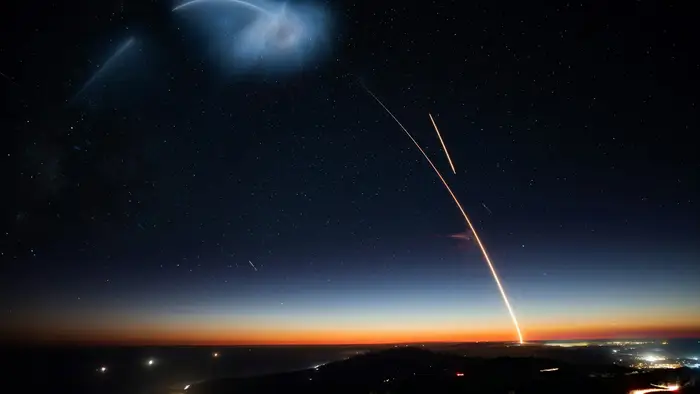
Timeline: from grounding to comeback
| Date | Milestone |
|---|---|
| Jan 8, 2024 | Vulcan Centaur debuts (Cert-1) |
| Oct 4, 2024 | Cert-2: GEM 63XL nozzle burns through and falls off ~30 seconds after liftoff; mission still reaches orbit |
| Mar 2025 | Space Force certifies Vulcan for national security launches |
| Feb 12, 2026 | USSF-87: second GEM 63XL nozzle burn-through ~20 seconds after liftoff; mission succeeds but Space Force pauses Vulcan national security launches |
| May 14, 2026 | LV-01 first stage hoisted into VIF-A, ULA’s new Amazon-dedicated integration facility |
| May 28, 2026 | New Glenn pad explosion at Cape Canaveral; BE-4 liquid oxygen valve failure later identified as primary cause |
| Jul 2026 | Northrop Grumman takes $91 million charge for GEM 63XL corrective actions, including a component redesign |
| Aug 2026 | Integrated LV-01 stack rolls to SLC-41 for fueling tests, then returns to VIF-A for booster installation |
| Oct 21, 2026 | Fairing containing 40 Leo satellites delivered to the rocket; Brig. Gen. Zarybnisky says clearance depends on commercial flight data |
| Oct 28, 2026 | ULA announces November 13 return to flight; Amazon confirms the same target |
| Oct 29, 2026 | Amazon CEO Andy Jassy says Leo remains on track for initial service this year |
| Nov 12, 2026 | Weather forecast updated to 90% GO for launch day |
| Nov 13, 2026, 12:54 p.m. EST | Vulcan Leo 1 targeted liftoff from SLC-41 (Sat Nov 14, 00:54 WIB) |
| ~Nov 14, 2026, 02:04–02:29 WIB | 40 satellites deployed over ~25 minutes at ~435 km |
| Nov 23, 2026 (NET) | Ariane 6 LE-04 scheduled to launch 36 more Leo satellites from French Guiana |
How to watch, and what to watch for
The practical details are simple. ULA’s live coverage begins at 12:34 p.m. EST on Friday, 20 minutes before liftoff, and the company streams the launch on its own channels and through partners. The launch window opens at 12:54 p.m. EST and closes at 1:23 p.m. EST, which is 00:54 to 01:23 WIB on Saturday morning in Indonesia. The trajectory takes the rocket northeast from Cape Canaveral, and viewers along the Florida coast may be able to see the ascent, although the midday timing means the launch will be less visible in the sky than a dawn or dusk flight.
What to watch for is a shorter list than it might seem. The first minute of flight is the critical window: both previous nozzle failures happened within 30 seconds of liftoff, so the moment the six GEM 63XL boosters light and the rocket clears the tower, the people who know this rocket will be watching the boosters, not the core stage. A clean first minute does not guarantee a successful mission, but it would be the first time a Vulcan has flown a full booster burn without a nozzle problem, and that is the result the whole programme is waiting for.
The second thing to watch for is the booster separation and the Centaur ignition, which come a few minutes into flight. The GEM 63XL boosters burn for about a minute and a half and then separate, and the core stage continues on its two BE-4 engines before handing over to Centaur’s two RL10 engines. The third is the deployment confirmation, which will come more than an hour after liftoff and will be the moment Amazon can start counting new satellites. ULA is expected to confirm the separations as they happen, and the final tally — 40 of 40 — is the number that matters.
If the launch scrubs, the story does not end; it pauses. ULA has not announced a backup date, and a scrub for weather or a technical issue would mean a new date to be announced after the team reviews the cause. The 29-minute window means a scrub is a real possibility even on a day with a 90 percent forecast, because a single hold that runs long is enough. That is worth saying plainly in a preview: a forecast is not a launch, and a countdown is not a liftoff. The only thing that counts is the rocket leaving the pad.
Friday is also, remarkably, part of one of the busiest stretches in recent launch history. SpaceX plans to launch its Starship megarocket on the same afternoon, on a test flight featuring the first-ever catch attempt of the vehicle’s Ship upper stage, and Rocket Lab is scheduled to launch its 100th mission at 12:30 a.m. EST on Saturday. Three major launches in about 12 hours, from three different providers, on two different coasts. Vulcan Leo 1 is the first of them, and it sets the tone for the rest.
What success — and failure — would mean
It is tempting to write a preview as if the outcome were already known, and it is a temptation worth resisting. Vulcan Leo 1 could fly cleanly, deploy all 40 satellites, and hand the Space Force the data it asked for. It could also fly cleanly through the first minute, reach orbit, and still fail to deploy a satellite. It could scrub on a weather violation that nobody forecast. Or a nozzle could fail a third time, and the rocket could still reach orbit, as it did twice before, leaving everyone to argue about whether a successful mission with a failed component is a success at all.
The honest way to frame it is this: the launch has three separate tests, and they will be graded separately. The first is the nozzle. Six redesigned nozzles, six boosters, one first minute. The second is the deployment. Forty satellites, 25 minutes, one new upper stage variant. The third is the campaign. Thirty-eight launches, more than 1,500 satellites, a constellation that needs to reach initial service this year. Friday’s flight answers the first two. The third will take months, and it will be answered one launch at a time.
That is why the countdown matters, and why it is worth staying up for in Jakarta at nearly one in the morning. A rocket that has been grounded for nine months is about to tell the world whether its fix works, and the answer will shape the launch plans of a constellation, the manifest of a military service, and the future of a company that has bet its next decade on a single vehicle. The countdown clock is running. The window opens at 12:54 p.m. EST. Everything else is just waiting.
Sources
- Space Launch Schedule: ULA Vulcan VC6L Amazon Leo (LV-01)
- Space.com: Powerful Vulcan Centaur rocket launching for 1st time in 9 months today
- Broadband Breakfast: Amazon Leo to Launch 40 More Broadband Satellites Nov. 13
- Cosmic Herald: ULA’s Vulcan Returns to Flight Nov. 13 With 40 Amazon Leo Satellites