Sunlight on Demand: The Startup Selling Nighttime Sunlight From Orbit Just Booked Two Indian Rockets
For most of human history, darkness was non-negotiable. Night fell, and the world went dark until the planet’s rotation brought the Sun back into view. On October 14, a small California startup took another step toward making that arrangement optional. Reflect Orbital, a Hawthorne-based company building satellites that redirect sunlight onto Earth after dark, announced it had purchased two dedicated rocket launches from India’s Skyroot Aerospace to deploy its orbital mirror spacecraft — one on the proven Vikram-1 rocket and one on the in-development Vikram-1U.
The deal is the latest collision between two of the space industry’s biggest storylines: a global shortage of launch capacity that is pushing ambitious American startups to buy rides far beyond domestic launch pads, and a controversial technology that its backers call clean-energy infrastructure and its critics call an assault on the night sky. If Reflect Orbital’s mirrors work as advertised, selected five-kilometer-wide patches of Earth could receive sunlight on demand — to extend the generating hours of solar farms, light up disaster zones for search-and-rescue crews, or keep construction sites running through the night. If they don’t, they will be two of the brightest, most contentious pieces of debris humanity has ever put in orbit.
Neither company disclosed the financial terms or the launch dates. But the announcement carried something rarer than a price tag: a Federal Communications Commission license granted in July 2026 for Reflect Orbital’s first demonstration mirror, Eärendil-1, and a rocket provider, Skyroot, that three months earlier became the first private Indian company to reach orbit.

The Deal: Two Rockets for a Fleet of Mirrors
The October 14 announcement, issued over PR Newswire, framed the agreement as Reflect Orbital’s answer to a problem now familiar across the space industry: there simply aren’t enough rockets. “There’s a real launch capacity shortage right now. We’re excited to work with a new launch provider, Skyroot, to help ensure access to space,” said Reflect Orbital co-founder and CEO Ben Nowack in the release. He added that “for decades, the promise of space has been a better life here on Earth; expanding solar energy generation to reduce reliance on fossil fuels and helping save lives in emergency situations follow in that tradition.”
Skyroot’s co-founder and CEO, Pawan Kumar Chandana, returned the compliment: “Reflect Orbital represents the kind of ambitious global space mission the Vikram family is being built to serve. We are pleased to partner with Ben and the Reflect Orbital team across two dedicated launches, providing schedule certainty and mission flexibility.”
The contract covers a dedicated launch on Vikram-1 — the rocket that flew India’s first private orbital mission in July — and a second on Vikram-1U, an upgraded variant with additional first-stage boosters and improved performance that is still in development. The choice of dedicated launches, rather than cheaper rideshare slots on larger rockets, is deliberate. As analysts noted after the announcement, a dedicated mission gives the payload operator far more influence over the flight: the launch can be tailored around the spacecraft’s orbit, deployment requirements and preferred injection conditions. For a sunlight reflector, that matters more than usual. The usefulness of a mirror in orbit depends entirely on the geometry between the Sun, the spacecraft and the patch of ground it is meant to illuminate — buy a random rideshare slot and you may end up with a mirror that can never catch the light it needs.
Reflect Orbital said the two Skyroot launches complement other planned launches from sites in the United States, suggesting the company is assembling a multi-provider manifest for its early constellation. But neither the Hawthorne startup nor Skyroot has said when the mirror missions will fly.
Eärendil-1: A Mirror the Size of a Tennis Court, Thin as a Soap Film
The spacecraft at the center of all this is called Eärendil-1, and its specifications read like science fiction that got a regulatory filing. Founded in January 2021 by Ben Nowack and Tristan Semmelhack, Reflect Orbital — a private company now employing about 60 people in Hawthorne — designs and builds satellites carrying large deployable mirrors meant to point sunlight at chosen spots on Earth’s surface. The first of them, Eärendil-1, is built around a mirror measuring 18 by 18 meters: roughly the footprint of a tennis court, with a mass of about 142 kilograms.
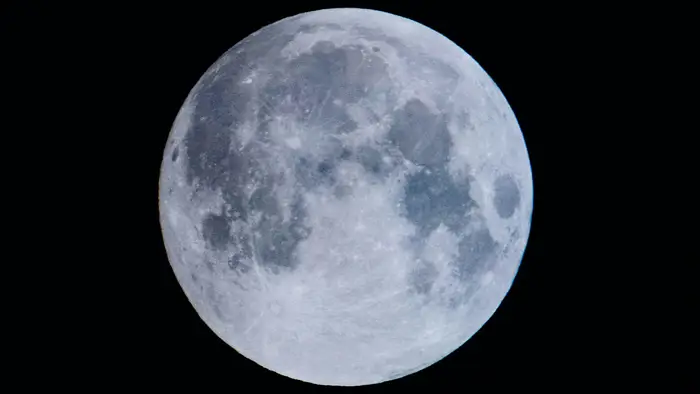
When stowed for launch, the satellite is roughly twice the size of a microwave oven. Once in orbit, it is designed to unfurl four triangular aluminum-coated plastic panels, each only about 15,000 atoms thick and weighing approximately half a kilogram, forming a flat square mirror. Flying at an altitude of about 625 kilometers, the device would capture sunlight and focus it into a five-kilometer-wide beam on the ground — illuminating a target area with the intensity of a full moon for roughly four minutes at a time, before its orbit carries it on.
The company describes its product as “sunlight on demand” and itself as “The Sunlight Company.” Its proposed applications range across industries: giving solar farms extra generating hours after sunset, illuminating disaster-hit areas to support search-and-rescue operations, supporting industrial activity in remote locations, lighting infrastructure and public events, and even allowing users to switch the light off when required. Reflect Orbital has said the technology is designed to provide adjustable illumination across a five-kilometer-wide area. It has also reported receiving more than 260,000 inquiries for the service — a figure the company cites as evidence of demand, though it is unverified by any independent party.
The scale of ambition is staggering. Reflect Orbital has said it ultimately aims to operate as many as 50,000 reflector satellites by 2035. The single license the company holds covers exactly one satellite — 0.002 percent of that target. Analysts who ran the numbers found that hitting 50,000 by 2035 would require adding about 9,000 spacecraft a year between 2031 and 2035, or roughly 25 satellites per day — nearly three times the rate at which SpaceX deployed Starlink satellites during its record year of 2025, when it placed 3,180 in orbit. At that scale, Reflect Orbital’s fleet alone would number roughly 3.1 times the entire active satellite population counted in July 2026.
The Rocket Provider: India’s Newest Path to Orbit
On the other side of the deal is a company that, until this year, had never reached orbit. Skyroot Aerospace was founded in 2018 by former Indian Space Research Organisation engineers Pawan Kumar Chandana and Naga Bharath Daka, and it is building a family of launch vehicles — the Vikram series — for the commercial small-satellite market.
Its flagship, Vikram-1, is a four-stage, expendable orbital rocket: three solid-fueled stages topped by a liquid-fueled fourth stage burning hypergolic propellant. Skyroot advertises capacity of up to 350 kilograms to low Earth orbit and up to 260 kilograms to Sun-synchronous orbit, along with a carbon-composite structure, a 3D-printed liquid engine and customized orbital deployment. The vehicle is named after Vikram Sarabhai, widely regarded as the father of the Indian space program.
On July 18, 2026, Vikram-1 made its debut — and made history. The flight, dubbed “Mission Aagaman,” Sanskrit for “arrival,” lifted off from the Satish Dhawan Space Centre at Sriharikota at 12:05 p.m. local time. About fifteen minutes later it had placed its payloads into a low Earth orbit at roughly 450 kilometers. It was the first time a privately developed Indian rocket reached orbit from Indian soil, and it made India the third country — after the United States and China — with a private orbital launch capability.
The debut was the visible result of six years of reform that opened orbital launch to private builders alongside the state space agency. India’s government announced the opening of the sector in 2020, set up IN-SPACe as a single-window regulatory authority and adopted a formal space policy in 2023. Much of the path beneath the private rocket was public: ISRO provided motor casting and test facilities, liquid-engine testing, trajectory analysis, safety support, vehicle integration and the launchpad itself, while IN-SPACe coordinated access and authorization. Skyroot’s own development arc included the suborbital Vikram-S demonstrator in November 2022, a full-duration static test of the Kalam-100 solid rocket stage in May 2022, the unveiling of Vikram-1 in October 2023, and a November 2025 ceremony in which Prime Minister Narendra Modi unveiled the flight-ready configuration during the inauguration of the company’s Infinity Campus in Hyderabad.
One successful flight does not make a commercial launch service. Skyroot has said it plans at least two more test flights before declaring commercial readiness, with full commercial operations targeted for 2027, and it claims manufacturing capacity for roughly one rocket per month when demand requires. Investors are clearly paying attention: reports this month said Skyroot is seeking to raise $300 million across two funding tranches at a valuation near $3 billion. The Reflect Orbital agreement is exactly the kind of contract that case depends on — an international customer buying dedicated missions, signaling confidence in a provider with a single orbital flight under its belt.

A Century-Old Idea, Flown Once Before
The idea of mirrors in orbit predates rockets themselves. The physicist Hermann Oberth first proposed large orbital mirrors in 1923, envisioning them lighting the surface and even influencing the climate. It took seven decades for anyone to actually fly one. In February 1993, Russia deployed Znamya 2 — a 20-meter mylar reflector unfurled from a Progress cargo craft near the Mir space station — and for a brief moment it cast a moonlight-bright, roughly five-kilometer spot of sunlight that swept across Europe. The follow-on mission, Znamya 2.5, failed during deployment in 1999 due to human error, and the idea went back into hibernation.
Reflect Orbital is the first company to attempt a commercial revival, and its argument is economic rather than romantic. The venture’s backers include Sequoia Capital, Lux Capital and Starship Ventures, and the company has raised $35.2 million in venture funding. The business case rests on the idea that a precisely aimed beam of sunlight has real monetary value: electricity from solar panels that would otherwise sit idle after dark, hours saved at construction sites that can work through the night, and — in the most compelling telling — lives saved when rescue teams can see in disaster zones without hauling generators and floodlights into the wreckage.
Whether the physics pays off is the entire bet. A full-moon-bright spot of light is impressive as a spectacle, but solar panels need far more than moonlight to generate meaningful electricity. The company’s roadmap implicitly acknowledges this: the first mirrors are test articles, and the commercial service would require far more — and larger — reflectors. Reflect Orbital has said its FCC license is “the first step toward rigorously testing our technology’s efficacy,” with the demonstration focused on measured brightness, pointing accuracy, how long the beam lasts, power output, and proving the safeguards work.
The Astronomers’ Revolt
Long before the Skyroot deal, Reflect Orbital’s mirrors had drawn a furious response from the astronomical community — and from some of the public too. When the FCC approved the Eärendil-1 demonstration license on July 9, 2026, the commission received nearly 2,000 public comments against the approval, most from astronomers. The American Astronomical Society warned that the mirror posed a risk of retinal damage to amateur astronomers who accidentally viewed the satellite through a telescope larger than 12 inches, a risk of temporarily blinding pilots and drivers, and a broader threat to astronomical research as scattered light brightens the sky even at remote observatories. The European Southern Observatory went further: it concluded that Reflect Orbital’s eventual full constellation could increase sky brightness by a factor of two to three, and its analysis labeled the project an “existential threat” for optical astronomy that could effectively invalidate the science program of the Vera Rubin Observatory — the telescope now scanning the entire southern sky nightly from Chile.
The FCC acknowledged the concerns but said optical astronomy and the environment lie outside its jurisdiction: it can only regulate radio spectrum use and orbital debris. The July 9 order granted radio-frequency authority for UHF, S-band and X-band links, set a two-year license term — roughly one year of operations and the remainder for deorbit — required a surety bond by August 10, and set July 9, 2032 as the latest permitted launch date. The agency described Eärendil-1 as a “limited, short-duration technology test exercise.” Notably, no U.S. agency regulates how bright a satellite may shine — a gap the mirror debate has thrown into sharp relief.

Reflect Orbital says it will keep engaging. In the October announcement, Nowack pledged that the company “will continue to work with astronomers, local communities and regulators to earn the right to scale.” The demonstration satellite is designed to be switchable — users can turn the light off — and the company says the test will validate the safeguards that critics doubt. The environmental questions remain open: the company has not published a full environmental assessment of a 50,000-satellite fleet, and critics argue that “consultation” is not a substitute for regulation.
What It Means for India’s Space Economy
For India, the deal is another data point in a remarkable year. The country’s private space sector did not exist in any meaningful form before 2020. Six years later, a Hyderabad startup’s rocket is selling dedicated launch contracts to a Sequoia-backed American company. The Reflect Orbital agreement adds an international customer to Skyroot’s commercial pipeline at the exact moment the company is trying to convert a successful test flight into a launch business — and international contracts are precisely what skeptics wanted to see before believing India’s private launchers could compete beyond the domestic market.
The mirror missions will also be a technical proving ground. A dedicated launch on Vikram-1 — and eventually on the larger Vikram-1U — gives Skyroot early commercial flights to refine its operations before the 2027 commercial-readiness target. For Reflect Orbital, the Skyroot flights complement its planned launches from the United States, diversifying its manifest at a time when the company’s own leadership says launch capacity is the binding constraint on its plans.
And the company’s plans are vast. Eärendil-1 itself is slated to launch aboard a SpaceX Falcon 9 rideshare mission later this year, according to the company — meaning the first mirror could be in orbit before either of the Skyroot missions flies. What it sees and does during its year of operations will shape everything: the brightness measurements, the pointing accuracy, the power output, and above all the response from the astronomers watching it. If the demonstration proves the technology works and the safeguards hold, Reflect Orbital will go back to regulators — and to launch providers — with a much stronger hand. If it fails, visibly, at 625 kilometers with the whole sky watching, the backlash could bury the 50,000-satellite vision before it leaves the drawing board.
A Bet on the Sun, the Sky, and the Launch Market
Strip away the spectacle and the Reflect Orbital–Skyroot deal is a transaction between two companies that each need the other to validate a radical thesis. Reflect Orbital needs rockets — lots of them, on schedules it controls — to test whether sunlight can be sold as a service. Skyroot needs customers willing to stake missions on a rocket that has flown exactly once, to prove that India’s private launchers can compete in the open market. Both are asking the world to take a leap: the startup asks astronomers and regulators to accept artificial dawns over the night side of Earth; the rocket company asks the market to accept an unproven vehicle family for missions its own engineers admit will be learning flights.

There is a deeper irony in the pairing. Oberth imagined orbital mirrors more than a century ago as instruments of civilization-scale power — sunlight redirected for the benefit of the surface below. Znamya 2 proved it could be done, once, briefly, with Cold War hardware. Now the idea has returned in the form of a venture-backed startup with a $35 million war chest and a purchase order on two rockets from a country whose private space industry is barely out of diapers. Whether the mirrors become infrastructure or infamy will be decided first by physics — can a foil-thin mirror really be steered, aimed and switched off reliably? — and second by politics: can any company earn the right to reshape the night sky when the night sky belongs to everyone?
The first answers will come soon. Eärendil-1 is expected to fly before the year is out, and the two Skyroot missions will follow as Vikram-1U completes development. Somewhere above the night side of Earth, in the next year or two, a beam of reflected sunlight five kilometers wide will sweep across the dark — and every astronomer, regulator and solar-farm operator on the planet will be watching to see whether it is a spotlight on the future or a flare over it.