Pentagon $300 Million Loans to Rocket Lab and Stoke Space Hedge the Falcon 9 Wind-Down
The Pentagon has placed a $300 million bet on the post-Falcon 9 era, and it has placed it on two rockets that have never flown. In the space of two weeks, the Defense Department’s Office of Strategic Capital committed $150 million in conditional loans to Stoke Space and another $150 million to Rocket Lab, the first significant backing the office has ever given to launch companies. The timing is no coincidence. SpaceX has stopped taking commercial Falcon 9 orders for launches after 2028, and the rocket that has carried the overwhelming majority of American national-security payloads for a decade is now on a countdown to retirement. Washington is buying insurance while the policy is still cheap, and it is buying it from the two companies most likely to matter when the Falcon era ends.
The loans are conditional, not cash in hand. Both companies must still clear financial, legal, and technical due-diligence requirements before the money is disbursed, and neither commitment has a disclosed interest rate, maturity date, or construction budget attached. But the signal is unmistakable: defense officials now treat the Falcon 9’s retirement as a supply risk to national security, not merely as a commercial transition for one company. For the first time, the Pentagon is using federal credit, rather than a procurement contract, to shape the future launch market, and it is doing so before the rockets it is backing have proven themselves in flight.
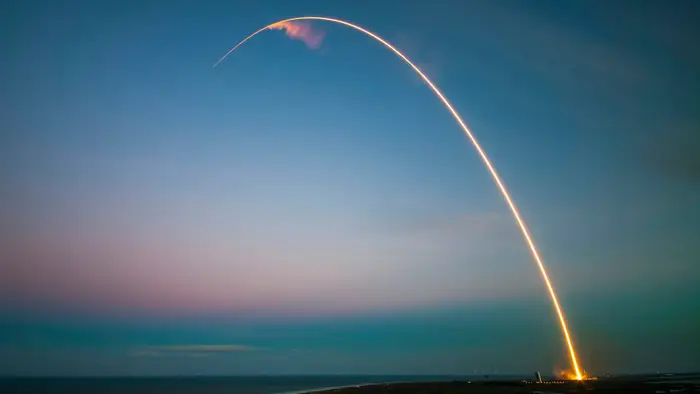
Two loans, two weeks, one worry
The first commitment landed on October 26, when the Office of Strategic Capital announced a $150 million conditional loan commitment to Stoke Space to help build a second launch pad at Cape Canaveral Space Force Station in Florida. The second came on November 9, when the office announced a matching $150 million conditional commitment to Rocket Lab, disclosed publicly the following day. Together they add up to $300 million of federal credit aimed at a single problem: when the Falcon 9 goes away, who launches America’s satellites?
The two companies are the first launch providers to receive major backing from the office, which was created in 2022 to connect firms developing critical defense technology with private capital. Until now, the office had stayed out of the launch business entirely. Its recent lending spree has touched batteries, drones, and semiconductors, including a $1.5 billion loan plan for semiconductor materials maker Wolfspeed announced on October 8 and a conditional commitment with biomanufacturer Antheia on October 17. In the space sector alone, the office also provided a $150 million loan to LeoLabs, a commercial satellite-tracking company, to expand production and deployment of its radar units, a deal announced in early November that must be matched dollar-for-dollar by private investment, bringing the total new investment for that company to $300 million.
The pattern is deliberate. Rather than awarding a traditional procurement contract, which pays a company to deliver a specific service, the Office of Strategic Capital lends money that a company must repay, using federal credit to crowd private investment into technologies the Pentagon considers vital. The approach lets the government shape industrial capacity without owning it, and it puts the risk of failure partly on the borrower. For launch, that matters: the Pentagon wants more than one company capable of putting its satellites in orbit, but it does not want to pick the winner by contract alone. A loan says, in effect, we believe you can get there, and we are willing to help you scale, but you still have to fly.
Why the Falcon 9’s retirement keeps generals awake
To understand why the Pentagon is suddenly lending money to rocket startups, it helps to understand what the Falcon 9 has become. For most of the last decade, the Falcon 9 has been the workhorse of American spaceflight, flying national-security missions, commercial constellations, cargo runs to the International Space Station, and crewed flights, often several times a week. Its reusability drove launch costs down and flight rates up, and the Space Force built its planning around the assumption that the rocket would be available, affordable, and frequent.
That assumption now has an expiry date. SpaceX has stopped taking commercial Falcon 9 orders for launches after 2028. The Space Force can still order Falcon 9 and Falcon Heavy missions through 2029, with those launches running through 2033, so the rocket will not vanish overnight. But the direction of travel is clear, and it points toward Starship, SpaceX’s far larger and still maturing vehicle. SpaceX is preparing to shift more of its launch business from Falcon 9 to Starship, and the company’s own schedule reflects that: Starship’s Flight 15, targeted for November 13, is planned to attempt the recovery of both the Super Heavy booster and the Starship upper stage at the launch tower, a milestone that would bring the giant rocket closer to the high flight rate its business case requires.
For the Pentagon, that transition is a risk wrapped in a dependency. The United States military has effectively one supplier for the overwhelming majority of its launches, and that supplier is retiring its proven product in favor of a much bigger rocket that has not yet demonstrated routine, reliable operations. If Starship’s development slips, or if its flight rate ramps more slowly than planned, the gap would fall squarely on national-security missions that cannot wait. Defense officials, as Ars Technica’s reporting framed it, see the Falcon retirement as a potential national-security risk, and the two loans are the clearest public evidence yet that the concern has moved from internal briefings into policy.
The loans also reflect a second, quieter worry: price and availability. A market with one dominant provider is a market where the customer has little leverage. By helping Rocket Lab and Stoke Space scale their factories, recovery fleets, and launch pads now, the Pentagon is trying to make sure there are credible alternatives in the medium-lift class, the segment where most national-security satellites actually fly, before it needs them rather than after.
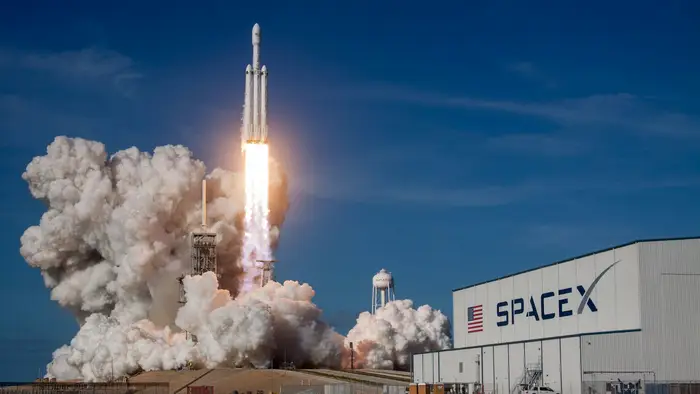
Rocket Lab: scaling Neutron before it flies
Rocket Lab’s share of the money is aimed squarely at Neutron, the company’s medium-lift reusable rocket, which is now expected to make its debut in 2027. The conditional loan commitment would help Rocket Lab increase production of rocket engines and composite structures, expand its fleet of maritime recovery vessels, and reduce the time needed to prepare Neutron for another launch. In other words, the Pentagon is not paying for the rocket’s development. It is paying for the factory, the fleet, and the turnaround speed that would let Neutron fly often once it exists.
That distinction matters, because Neutron is behind schedule. The rocket has experienced manufacturing setbacks, and its first flight slipped into 2027 after engineers discovered voids in a composite propellant tank dome during manufacturing. Neutron is a 43-meter-tall, two-stage rocket designed to carry up to 13 metric tons to low Earth orbit, making it one of the more direct prospective competitors to the Falcon 9 in the medium-lift market, although it is smaller and has yet to demonstrate its performance. The Falcon 9, by comparison, can carry up to 22.8 metric tons to low Earth orbit in a fully expendable configuration.
What Neutron lacks in flight history, it is making up for in demand. The Pentagon’s financing announcement came the same day Rocket Lab reported more than $515 million in new Neutron launch contracts signed during the third quarter, bringing the rocket’s backlog to 16 missions before its inaugural flight. The company said its first 16 Neutron missions have been booked, with the next available launch opportunities now extending into the 2030s. Trade press also noted that the price of a Neutron launch has risen to $70 million, a sign that demand is outrunning near-term supply.
The government demand is real, too. Rocket Lab received a $397 million Space Force award in August to build, launch, and operate satellites, and it was selected in 2025 to compete for National Security Space Launch Phase 3 Lane 1 missions. But that eligibility comes with a condition that cuts to the heart of the Pentagon’s gamble: Rocket Lab cannot actually receive launch task orders under the program until Neutron flies successfully. The loan, in that sense, is a bet on a flight that has not happened yet, made in the hope of accelerating everything that must happen after it.
Peter Anderson, senior vice president of investments at the Office of Strategic Capital, framed the commitment in exactly those terms, saying the financing would create “more launch opportunities for commercial and government customers using its Neutron rocket” and strengthen American launch capacity. The phrasing is careful, and it should be: the loan buys capacity, not a guarantee.
Rocket Lab is not starting from zero. The company has flown its small Electron rocket nearly 100 times, and its 100th Electron mission, carrying a Japanese radar satellite, is scheduled for November 14. That operational record is precisely what separates Rocket Lab from most of its would-be rivals: it knows how to build rockets, fly them often, and recover from failures. But Electron is a small rocket, and Neutron is a much bigger machine with a reusable first stage designed to land on a ship at sea. The leap from one to the other is the whole bet.
Read more about Rocket Lab’s path to this moment: the company’s 100th Electron launch, carrying a Japanese radar satellite, and the manufacturing setback that pushed Neutron’s debut into 2027.
Stoke Space: a second pad for a rocket that has not flown
If the Rocket Lab loan is a bet on a rocket that is nearly ready, the Stoke Space loan is a bet on a company that has not yet reached orbit at all. The $150 million conditional commitment announced on October 26 would help finance a second launch pad at Cape Canaveral Space Force Station, and the pad is sized not for the rocket Stoke is about to fly, but for the bigger one it hopes to fly in 2029.
Stoke’s current vehicle is Nova, a roughly 40-meter rocket designed from the first metal cut to be fully reusable, both stages. The first version, sometimes called Pathfinder, is designed to deliver approximately 3,000 kilograms to low Earth orbit in a fully reusable configuration, or 7,000 kilograms if the second stage is expended. It can also place 2,500 kilograms into geostationary transfer orbit and 1,250 kilograms on a translunar injection trajectory. The fully assembled vehicle stands 40.2 meters tall and 4.2 meters in diameter, with a reusable first stage powered by seven full-flow staged-combustion Zenith engines burning methane and liquid oxygen, producing 3,110 kilonewtons of thrust at liftoff. Its 13.1-meter second stage uses the Andromeda 2 engine, fueled by liquid hydrogen and liquid oxygen, with a ring of 24 thruster chambers arranged around a conical base that doubles as a heat shield.
Nova’s first flight is targeted for late 2026, with more recent reporting pointing to early 2027, and the debut mission is planned to be expendable, flying to a heliocentric orbit to prove the vehicle’s capabilities and reduce risk. The schedule has already slipped twice, from 2025 to early 2026 in mid-2025, then to late 2026 by the following spring. The company has completed stage-one structural verification, mated its second stage for fit checks, and shipped three flight-ready Zenith engines for hot-fire validation, but it has not yet performed an integrated vehicle test. The pad at Launch Complex 14, the historic site from which John Glenn became the first American to complete an orbital flight in February 1962, is essentially finished, with the launch mount, umbilical tower, flame trench, and propellant farms standing and waiting on flight hardware.
The Pentagon’s loan, notably, is not for that pad. It is for a second one, sized for Nova Block 2, a larger variant designed to carry 15 metric tons to low Earth orbit in a fully reusable configuration with a 5-meter fairing, targeted for 2029. That is six times the reusable payload of the first Nova, and it would put Block 2 between Rocket Lab’s Neutron and Relativity’s Terran R on paper. The Pentagon is, in effect, paying for the infrastructure of a rocket that does not exist yet, built by a company whose first rocket has not flown, on the strength of an architecture that no company has ever demonstrated: the full recovery and reuse of an orbital rocket’s second stage.
That is an extraordinary vote of confidence, and it is worth asking what justifies it. Part of the answer is money already raised: Stoke closed a $1 billion Series E round on September 8, 2026, co-led by Point72 Ventures and Spark Capital, bringing its total capital raised to $2.3 billion, all of it before a single orbital flight. Part of it is the technical pedigree: Stoke was founded in 2019 by two Blue Origin propulsion veterans, and its approach to second-stage recovery, a heat shield integrated with the engine structure, is genuinely different from anything SpaceX has attempted. And part of it is the Pentagon’s own framing. Jordan Sebold, the Office of Strategic Capital’s senior managing director for investments, described the commitment as a capacity problem rather than a company bet, saying, “This conditional commitment would enable Stoke Space to scale its Cape Canaveral infrastructure and facilities efficiently.”
Read more: Stoke Space’s second launch pad at Cape Canaveral and what Nova is designed to do.
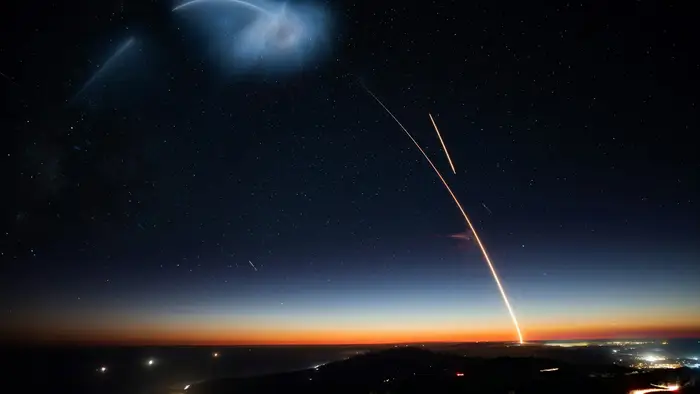
The Falcon 9 replacement race, by the numbers
The two loans only make sense in comparison with the rocket they are meant to eventually replace, and with each other. The table below lays out the key figures for the Falcon 9, Neutron, and Nova, using the companies’ published specifications and the reporting behind this story. Every figure is a design target or a published rating, not a demonstrated result, and for Neutron and Nova that distinction is the entire story.
| Rocket | Height | Payload to low Earth orbit | Reusability | First flight | Status |
|---|---|---|---|---|---|
| Falcon 9 | 70 m | Up to 22.8 t (expendable) | First stage reusable | June 2010 | Operational; commercial orders end after 2028 |
| Neutron (Rocket Lab) | 43 m | Up to 13 t | First stage reusable, ocean landing | Targeted 2027 | In production; debut delayed by tank dome voids |
| Nova Pathfinder (Stoke Space) | 40.2 m | ~3 t reusable; 7 t expendable | Both stages designed reusable | Targeted late 2026 / early 2027 | Pad ready; no integrated vehicle test yet |
| Nova Block 2 (Stoke Space) | Not published | 15 t (fully reusable) | Both stages designed reusable | Targeted 2029 | Second pad financed by Pentagon loan |
The gap the table exposes is the size of the Pentagon’s problem. Even if both rockets fly on schedule, neither matches the Falcon 9’s payload, and neither will have flown a single operational mission by the time SpaceX stops taking new commercial Falcon 9 orders. Neutron, at 13 tons, covers the middle of the national-security manifest, where many military satellites actually live. Nova Pathfinder, at 3 tons reusable, serves the small end of the market, and only Block 2, years away, reaches into Neutron’s class. The Pentagon is not buying a replacement for the Falcon 9. It is buying the beginnings of a bench, and it is buying it years before the starter retires, because building rockets takes years and the alternative is arriving at 2029 with nowhere else to go.
The comparison also shows why the loans are structured the way they are. Rocket Lab’s money goes to production and recovery, the unglamorous machinery of flying often. Stoke’s money goes to concrete and steel, a second pad for a bigger rocket. Neither loan pays for the rocket itself. Both assume the companies can finish their vehicles with the private capital they have already raised, and both will only convert into real money if the companies clear the office’s due-diligence conditions. The Pentagon is sharing the risk of scaling, not underwriting the risk of invention.
A two-week lending spree: the OSC timeline
The two launch loans did not arrive in isolation. They are the most visible part of a rapid expansion of the Office of Strategic Capital’s activity in the autumn of 2026. The sequence, as reported, runs like this:
Timeline: the Office of Strategic Capital’s autumn 2026
- September 8, 2026 — Stoke Space closes a $1 billion Series E round, co-led by Point72 Ventures and Spark Capital, bringing its total capital raised to $2.3 billion before its first orbital flight.
- October 8, 2026 — The Office of Strategic Capital announces a $1.5 billion loan plan for Wolfspeed, a semiconductor materials maker, the largest single commitment in the office’s recent spree.
- October 17, 2026 — The office announces a conditional commitment with Antheia, a biomanufacturer, extending its lending beyond hardware into biotechnology.
- October 26, 2026 — The office announces a $150 million conditional loan commitment to Stoke Space for a second launch pad at Cape Canaveral, sized for the Nova Block 2 rocket.
- November 4–5, 2026 — The office announces a $150 million loan to LeoLabs to expand its radar network, matched dollar-for-dollar by private investment for $300 million in total new capital.
- November 9, 2026 — The office announces a $150 million conditional loan commitment to Rocket Lab to scale Neutron production, engine manufacturing, recovery vessels, and turnaround speed.
- November 10–11, 2026 — The Rocket Lab commitment becomes public, and reporting confirms the two launch loans total $300 million, the first significant OSC backing for launch companies.
The timeline matters because it shows the office moving from a single-sector lender into something broader: a tool of industrial policy that uses credit to build capacity in technologies the Defense Department deems critical, from chips to rockets to radar. The launch loans are the newest front in that campaign, and the fact that they are the office’s first for launch companies says as much about how seriously the Pentagon now takes the Falcon 9 wind-down as the dollar figures do.
What “conditional” really means
It is worth pausing on the word that appears in every announcement: conditional. A conditional loan commitment is not a loan. It is a promise to lend, subject to the borrower satisfying financial, technical, legal, and other due-diligence requirements before the transaction closes. If Rocket Lab or Stoke Space fails those checks, the money never moves. If the companies meet them, the money arrives as debt that must be repaid, not as a grant or a contract payment.
That structure cuts both ways. For the taxpayer, it limits the downside: the government is not writing a check to a company whose rocket has never flown and hoping for the best. For the companies, the commitment is still valuable even before it closes, because it signals to private investors that the Pentagon has done its homework and likes what it sees, which can make raising the next round of capital easier. For the Pentagon, it is a way to move quickly, announcing support in weeks rather than running a procurement that takes years, while retaining the right to walk away.
There are also things the announcements do not disclose. Neither release states an interest rate, a loan maturity, or the total cost of the projects the loans will support. The Stoke announcement does not say what the second pad will cost to build, and the Rocket Lab announcement does not break down how the $150 million would be split between engines, structures, ships, and turnaround. Those details will matter when the loans close, if they close, and they are the right questions to keep asking. A $150 million loan that covers a fraction of a factory is a different proposition from one that covers the whole project.
The conditional nature of the loans also means the story is far from over. The real test is not the announcement but the closing, and after that, the first flights. Rocket Lab must fly Neutron successfully, not just once but repeatedly, and then prove it can build and recover the vehicle fast enough to matter. Stoke must fly Nova at all, then attempt the second-stage recovery that no company has ever achieved, then build Block 2 and its pad. Either company could stumble at any of those steps, and the history of new rockets is littered with schedules that slipped by years.

What to watch next
The next twelve months will show whether the Pentagon’s bet was early or merely optimistic. The milestones to watch are concrete, and each has a date or a test attached to it.
First, Neutron’s debut. Rocket Lab now targets 2027 for the first flight, and the company’s ability to hold that date after the tank-dome setback will be the first real test of the program. A successful flight would unlock eligibility for National Security Space Launch task orders, turning the Pentagon’s loan into a pipeline of paid missions. A further slip would raise the question of whether the medium-lift gap the loans are meant to fill will still be open when Neutron is ready to fill it.
Second, Nova’s first flight. Stoke’s debut is targeted for late 2026 or early 2027, and the flight is planned to be expendable, flying to a heliocentric orbit. The launch itself would be a milestone for a company that has never reached orbit, but the more important test comes later: the attempted recovery of the second stage, which is the core of Nova’s design and the capability the Pentagon is ultimately paying to scale. Watch for the integrated vehicle test and the pad abort demonstration, both of which still lie ahead.
Third, the loan closings themselves. Both commitments remain subject to due diligence, and the dates on which they close, or fail to, will say a great deal about how the Office of Strategic Capital judges the two companies behind closed doors. A swift closing would signal confidence. A long silence would suggest the conditions are harder to meet than the announcements implied.
Fourth, the Falcon 9’s own twilight. SpaceX’s order book runs through 2029, with launches through 2033, and Starship’s progress will determine how steep the transition is. Flight 15, targeted for November 13 with an attempted double tower catch, is the next data point, and its outcome will shape how urgently the Pentagon feels it needs alternatives. If Starship ramps quickly, the pressure eases. If it does not, the $300 million in loans may come to look like a down payment rather than a solution.
Finally, watch whether the Office of Strategic Capital lends to a third launch company. The office has now backed two, and the logic of assured access points toward more, not fewer, providers. Relativity Space, with its Terran R, and Blue Origin, with New Glenn, are the obvious candidates, and any further commitments would confirm that the Pentagon sees launch diversity as a permanent policy rather than a one-off hedge. The two loans announced in the last two weeks may be the beginning of a pattern, and the pattern, if it holds, would reshape the American launch industry more profoundly than any single rocket.
The Falcon 9 era is ending on a published schedule, and for the first time the Pentagon has said so with its checkbook, or at least with its promise of one. The rockets it is backing have not flown, the money has not closed, and the gap it fears has not yet opened. That is exactly the point. Assured access to space is not something a country can buy in a hurry when it needs it. It is something it has to build years in advance, on rockets that do not yet exist, with money that is conditional on the future going roughly as planned. The $300 million question is whether it will.

Sources
- SpaceNews: Rocket Lab gets Pentagon financing to boost Neutron production
- Ars Technica via Zot News: Pentagon office commits $300m in conditional loans to SpaceX rivals as SpaceX eyes Falcon wind-down
- KeepTrack Space Brief: Pentagon lends $300M to Stoke and Rocket Lab
- Air & Space Forces Magazine: Pentagon loans $150M to LeoLabs to build ground radars
- NASASpaceFlight: Stoke Space conducts second stage fit checks, completes first stage engines ahead of Nova debut