Hubble Dwarf Galaxies Missing Oxygen November 2026: The Cosmic Census That Found Only a Tenth Left
Somewhere in our cosmic neighbourhood, dozens of small galaxies are running a chemical deficit they cannot explain away. Their stars have spent billions of years forging oxygen — the third most abundant element in the universe, the same element that fills human lungs and rusts iron — and yet when astronomers went looking for it, most of it was simply not there. A new census of 37 nearby dwarf galaxies, built from archival observations by NASA’s Hubble Space Telescope and published November 2, 2026, in The Astrophysical Journal, finds that these galaxies retain only between 4 and 25 percent of the oxygen their stars produced, an average of just 11 percent. The rest, the researchers conclude, must have been blown clean out of the galaxies by the winds of dying stars — and the winds appear to be far more efficient at the job than current models of galaxy evolution predict.
The study, titled “GLOW. II. A Census of Oxygen in Low-mass Galaxies,” comes from the Galaxies Losing Oxygen via Winds (GLOW) project, a NASA- and National Science Foundation-funded effort led by Kristen Wingfield McQuinn of the Space Telescope Science Institute and Rutgers University. Its result is one of those rare findings that is simultaneously a precise measurement and a blunt challenge: the numbers are now firm, and the theories that were supposed to explain them do not fit. Dwarf galaxies, it turns out, are far leakier than anyone had calculated.
A census of the smallest galaxies
Dwarf galaxies are the runts of the cosmic litter. The 37 galaxies in the GLOW sample contain anywhere from a few thousand to a few hundred million stars, compared with the Milky Way’s roughly 100 billion, and their stellar masses range from about 3 million to 3 billion times the mass of the Sun. They are gas-rich and actively forming stars, which is exactly what made them useful for this study: they are still making oxygen today, and their histories are still readable in their light.
Crucially, all 37 lie close enough to Earth — within roughly 19.5 to 22 million light-years — for Hubble to resolve their individual stars. That is not true for the vast majority of known dwarf galaxies, which are too far away for this kind of work. Resolving individual stars matters because it lets astronomers reconstruct each galaxy’s entire star-formation history: which stars were born, when, and in what numbers. From that history, the team could calculate how much oxygen those stars should have produced over cosmic time. Then they tallied how much oxygen is actually present today, in the galaxies’ gas, stars, and dust. The gap between the two numbers is the story.
The team did not rely on Hubble alone. Alongside archival optical imaging from Hubble, the researchers drew on infrared data from NASA’s retired Spitzer Space Telescope and radio observations from the ground-based Very Large Array and the Australian Telescope Compact Array. Each wavelength filled in a different part of the ledger: Hubble’s sharp optical images picked apart the stellar populations, while the other observatories traced the gas and dust where surviving oxygen might hide.
One of the best-known members of the sample is NGC 4449, a clumpy, irregular starburst dwarf galaxy about 12 million light-years away in the constellation Canes Venatici, whose Hubble portrait — speckled with bright blue points of light and pink patches of glowing gas — accompanied NASA’s announcement of the result. NGC 4449 is bursting with star formation, which means it is manufacturing oxygen at a furious rate. And yet, like its quieter cousins in the sample, it keeps only a small fraction of what it makes.

Oxygen forged in stars is the same element that fills Earth’s atmosphere — yet dwarf galaxies keep only a fraction of what they make. Image: Unsplash.
Why oxygen, and why it matters
Of all the elements in a galaxy, the GLOW team chose oxygen for practical reasons, and the choice is revealing about how astronomy works. Oxygen is the most abundant element in the universe after hydrogen and helium, it is relatively easy to detect and measure, and the nuclear physics of its production inside stars is well understood. That combination makes oxygen a reliable tracer — a stand-in for the whole family of heavy elements that stars forge and scatter.
“Oxygen is one of the primary elements formed by stars. Being able to trace how much oxygen gets made, and then how much is distributed inside and outside of galaxies, helps us understand galaxy evolution,” McQuinn said. “It also helps us learn where and how much galaxies are enriching the space between galaxies, called the intergalactic medium.”
That enrichment is the deeper prize. The oxygen in Earth’s atmosphere, in the water of its oceans, and in the minerals of its rocks was not here at the beginning. It was cooked inside stars and then released — by stellar winds and supernova explosions — into the gas between stars, and eventually into the space between galaxies. Every galaxy is therefore both a factory and a distributor of the periodic table’s heavier elements, and the balance between what a galaxy keeps and what it exports shapes everything from the chemistry of future stars to the habitability of future planets. A galaxy that loses 89 percent of its oxygen is not just tidier than expected; it is a far more generous polluter of intergalactic space than the models assumed.
Astronomers already suspected that galaxies expel a large fraction of their heavy elements. The open question was where those metals end up, and how much actually escapes. A 2014 study of Milky Way-like, star-forming galaxies found that those larger systems also lost a large fraction of their oxygen, some of it turning up in the diffuse haloes of gas surrounding galaxies beyond their disks — the circumgalactic medium. The GLOW study extends that accounting to low-mass galaxies across a wide range of masses and environments, and the deficit it finds is starker than the one seen in big galaxies.
Blown away by supernova winds
The prime suspect in the disappearance is no mystery at all: the galaxies’ own most massive stars. A massive star lives fast and dies violently, exploding as a supernova that dumps an enormous amount of energy into its surroundings. A single explosion can heat gas to millions of degrees and drive it outward at hundreds of kilometres per second. In a small galaxy, whose gravity is weak, that is enough to push gas — and the oxygen dissolved in it — clean out of the galaxy altogether. String enough supernovae together over billions of years, and the cumulative wind can strip a dwarf galaxy of most of its chemical inheritance.
“Oxygen is produced by stars, which are inside of galaxies. We know that the oxygen had to be inside of the galaxies at some point in the past, so the oxygen must have been ejected,” said co-investigator Grace Telford, an assistant professor in the Department of Physics and Astronomy at the University of Utah. “And to do that, you need energy from massive stars and supernova explosions to drive material out of the host galaxies and into the space between galaxies.”
The new census puts firm numbers on an idea that had previously been more qualitative. Nearly all of the oxygen that the dwarf galaxies do retain sits in their gas rather than in their stars or dust — a detail that matters, because gas is the reservoir from which future stars will form. A galaxy that has lost most of its oxygen from its gas has, in effect, lost the raw material for enriching the next generation of stars. The finding also sharpens a long-standing puzzle about dwarf galaxies: they are observed to be far more metal-poor than their star-formation histories would suggest, and now astronomers can say precisely how metal-poor, and how much of the shortfall is export rather than underproduction.
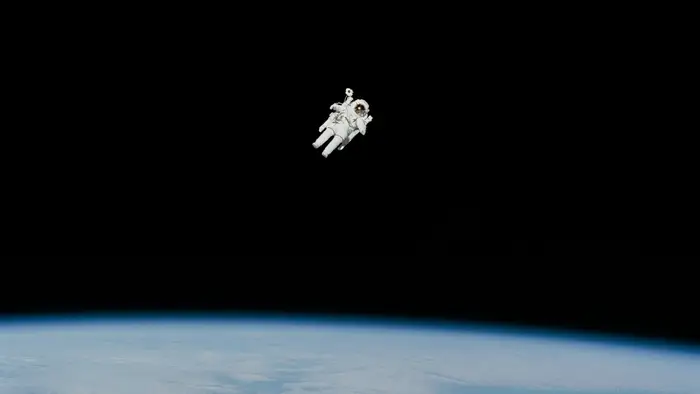
Dwarf galaxies are the smallest star-forming systems, and their weak gravity makes them especially vulnerable to supernova winds. Image: Unsplash.
The environment makes a difference
One of the most intriguing patterns in the census is not the average but the scatter around it. Galaxies that sit more than about 3.3 million light-years from a massive neighbour consistently retained less than 15 percent of their oxygen — the isolated dwarfs are the leakiest of all, with nowhere to hide and no neighbour to catch what they lose. Galaxies in denser surroundings, or within 3.3 million light-years of a big galaxy, showed much more variation, including most of the highest retention values in the sample.
That pattern hints at a second process running in the opposite direction: recycling. A dwarf galaxy near a massive neighbour may be sweeping up gas that its neighbour has already enriched, topping up its own oxygen account with imported material. It may also be recapturing some of its own expelled gas, pulled back by the neighbour’s gravity or by the denser environment. The isolated dwarfs have no such safety net. Whatever they blow out is gone for good, and their ledgers show it.
The result is a picture of dwarf galaxies not as closed boxes but as open systems, constantly trading material with their surroundings. Some of that trade is loss, driven by supernovae. Some of it is gain, driven by accretion from the cosmic web and from neighbours. The balance depends on where a galaxy lives, and the GLOW census is the first to measure that balance across enough galaxies, in enough environments, to see the pattern emerge.
Where did the missing oxygen go?
If 89 percent of the oxygen is missing from the galaxies themselves, the obvious next question is where it went. There are two broad possibilities, and the study cannot yet fully separate them. Some of the oxygen may be sitting in the circumgalactic medium — the diffuse halo of gas that surrounds each galaxy beyond its visible disk, too faint and spread out to show up in the census of the galaxy proper. The rest may have escaped the galaxy’s gravitational reach entirely, joining the intergalactic medium that fills the space between galaxies.
Earlier ultraviolet observations of a highly ionized form of oxygen in galaxy haloes account for only about 1 to 7 percent of what the galaxies produced. After correcting for other ionization states of oxygen that are harder to observe, the authors estimate that the haloes could hold somewhere between 5 and 35 percent of the total. That is a wide range, and even at its upper end it leaves a large share unaccounted for — a share that may have left the galaxies’ surroundings entirely. The missing oxygen, in other words, may genuinely be missing, dispersed so thinly through intergalactic space that no telescope can yet gather it back into a single account.
This is where the study becomes a challenge to theory rather than just a measurement. The team compared its results with three cosmological simulations — the large computer models that attempt to grow a universe from the Big Bang to the present day, tracking dark matter, gas, stars, and feedback from supernovae. All three simulations reproduce the observed relationship between a galaxy’s mass and its metal content, which is often taken as a sign that they understand chemical enrichment. But all three predict that dwarf galaxies keep more of their metals than the observations show. Getting the average right while getting the distribution wrong is a classic symptom of a model that has tuned its knobs to match one observable while missing the underlying physics.
Using a simpler galaxy-evolution model, the researchers found that the data are best matched when three conditions hold: outflows carry away proportionally more mass from smaller galaxies, the outflowing gas is about twice as metal-rich as the galaxy’s interstellar medium, and gas accretion onto these galaxies is suppressed by about 40 percent. In plain language: the winds are stronger, richer, and harder to replace than the simulations assume. Supernova feedback — the catch-all term for how exploding stars push gas around — needs to be more violent in small galaxies, and the inflow of fresh, pristine gas that would dilute the loss needs to be weaker. Those are specific, testable adjustments, and simulation teams now have a precise target to hit: an 11 percent average retention, with a floor of 4 percent and a ceiling of 25 percent, varying systematically with environment.
For readers following how galaxies grow and change, the result connects to other recent work on the same theme. SpaceNews has covered the JWST Most Distant Jellyfish Galaxy 2026 discovery, in which a galaxy trailing tentacles of newborn stars showed how violently a galaxy’s surroundings can strip and reshape it, and the El Gordo’s Strange Heart: A Two-State Dark Matter Model study, which showed how even the most massive structures in the universe can defy the standard model’s predictions. The dwarf-galaxy oxygen census belongs in the same lineage: small systems, measured carefully, exposing gaps in the big picture.
What comes next: Roman, Webb, and the smallest galaxies
The GLOW project is not finished. McQuinn has an approved program to use NASA’s Nancy Grace Roman Space Telescope — the panoramic observatory whose wide field of view can survey huge swaths of sky at once — to find even smaller and fainter galaxies in the nearby universe. Once those systems are identified, she hopes to follow them up with Hubble and the James Webb Space Telescope, obtaining deeper observations of their stars so that their histories can be reconstructed the same way. Pushing the census to still lower masses is a direct test of the trend the current study found: if outflows carry away proportionally more mass from smaller galaxies, then the tiniest galaxies should be the leakiest of all, perhaps retaining almost nothing.
Telford’s future work takes the opposite approach: zooming in rather than widening out. She plans to use Hubble to study the individual massive stars that produce oxygen and eject it from their host galaxies, using some of the nearby GLOW targets to characterize in detail how massive stars in small galaxies differ from their counterparts in larger systems. If the stars themselves behave differently in low-metallicity, low-mass environments — burning hotter, blowing stronger winds, exploding more violently — then the winds that strip dwarf galaxies may be a stellar story as much as a galactic one.
The timing is fortunate. Hubble has now been operating for more than three and a half decades, and it continues to make discoveries that reshape fundamental understanding — a point NASA emphasised in its announcement. The telescope’s ability to resolve individual stars in galaxies tens of millions of light-years away remains unmatched for this kind of archival census work, and the GLOW study is a reminder that old data, asked a new question, can still overturn an assumption. The same archival images that were taken for other purposes, sometimes decades ago, became the ledger for a chemical audit of 37 galaxies.

Star-forming regions like this one are where massive stars forge oxygen — and where supernovae later blast it away. Image: Unsplash.
A leakier universe than we thought
There is a pleasing irony in the result. Oxygen is the element we associate most with breath, life, and permanence — the air itself. Yet on galactic scales it turns out to be one of the most fugitive substances in the universe, made inside stars and then promptly exiled by the very explosions that create the conditions for new stars. Dwarf galaxies, the most common type of galaxy in the universe, are not hoarders of the elements they make. They are sieves, and the universe’s chemistry is richer for their leakiness: the oxygen that escapes them becomes the raw material of the intergalactic medium, the gas that will one day fall into other galaxies, form other stars, and perhaps, around one of those stars, become part of an atmosphere someone can breathe.
The census also reframes what it means for a galaxy to be “small.” A dwarf galaxy’s influence is not confined to its visible disk. If it exports most of its oxygen, its chemical footprint extends far beyond its stars, into a halo and perhaps into intergalactic space. The smallest galaxies may be the most important polluters of the cosmos, precisely because they cannot hold on to what they make. That is a profound shift from the image of galaxies as self-contained islands, and it is now backed by a number: 11 percent kept, 89 percent gone, measured across 37 galaxies, in a study that the simulators must now answer.
The GLOW team’s next steps — Roman’s wide surveys, Webb’s deep stares, Hubble’s close-ups of individual massive stars — will extend the audit to fainter galaxies and finer detail. But the headline is already secure, and it is worth stating plainly. Thirty-seven small galaxies, weighed element by element against their own histories, are missing most of their oxygen. The winds that took it are stronger than our models said. And the space between galaxies, that supposedly empty void, is richer — because of it — than we knew. As Webb’s Breakthrough Year showed, 2026 has been a year in which the great observatories turned from discovery to dissection; the oxygen census is dissection at its finest, taking a galaxy apart atom by atom and finding that most of it has already left the building.

The night sky over Earth is lit by stars whose predecessors scattered oxygen across the cosmos. Image: Unsplash.