Habitable Worlds Observatory 6-Meter Design Takes Shape in NASA's New Architecture Study
NASA’s most ambitious telescope since the James Webb Space Telescope does not yet have a final shape, but the outlines of that shape are now coming into view. In a new architecture study detailed this week, NASA’s Systems Engineering Team has laid out three candidate designs for the Habitable Worlds Observatory, the future flagship observatory meant to photograph Earth-like planets around other stars and read the light of their atmospheres for signs of habitability. The concepts, called Exploratory Analytic Cases, compare telescope sizes from six to eight metres and two fundamentally different optical layouts, and they already point toward a preferred direction: keep the telescope’s structure out of the incoming light, and make the mirror as large as practical.
That preference matters because the Habitable Worlds Observatory, known as HWO, faces one of the hardest measurement problems in all of astronomy. An Earth-like planet orbiting a Sun-like star is extraordinarily faint next to its host, drowned in glare that is billions of times brighter. Taking a direct picture of such a world, and then spreading its faint light into a spectrum that can reveal water vapour, oxygen, or other gases, demands a telescope that gathers as much light as possible while suppressing starlight to an almost unimaginable degree. Every early design choice, from the diameter of the mirror to the placement of the secondary mirror and its supports, ripples through that challenge. The new study is therefore less a beauty contest between mirror shapes than a careful weighing of how much light each design can actually deliver to the instruments that will do the science.
Why the Habitable Worlds Observatory exists
The Habitable Worlds Observatory is the leading recommendation of the Astro2020 decadal survey, the once-a-decade consensus of the United States astronomy community that sets priorities for the coming years. The survey called for a large space telescope that could directly image Earth-like exoplanets and search their atmospheres for biosignatures, the chemical fingerprints that might betray the presence of life. It was conceived as the successor to Webb, carrying forward the flagship tradition of Hubble and Webb while aiming at a target neither could reach: a true portrait of another Earth.
Under the concept as it has matured, the observatory would survey about 100 of the nearest stellar systems and their habitable zones, the temperate regions around stars where liquid water could exist on a rocky planet’s surface. From that survey, it would aim to detect and spectroscopically characterise around 25 potentially Earth-like planets. Those numbers describe ambition, not a promise. They set the scale of the engineering problem: the telescope must be sensitive enough to find dozens of faint worlds, and stable enough to hold starlight at bay while it studies them one by one.
The observatory is expected to launch in the early 2040s, roughly two decades from now, and to operate at the Sun-Earth Lagrange point 2, known as L2, about 1.5 million kilometres behind Earth as seen from the Sun. That is the same quiet gravitational harbour where Webb now works, a location that offers a stable thermal environment and an unobstructed view of deep space. Getting there will require a heavy-lift rocket, with NASA’s Space Launch System, SpaceX’s Starship, and Blue Origin’s New Glenn all discussed as candidate launchers. The mirror, at least six metres across, will have to be segmented in some way, folded or assembled to fit inside a rocket fairing, and then deployed and aligned in space with exquisite precision.
The wavelength coverage is also settled in broad terms. The observatory will span roughly the same range as Hubble, from ultraviolet light through visible light and into the infrared. Astrophysicist Kevin France of the University of Colorado has described the concept, in a phrase that has stuck, as basically a super-Hubble. The comparison is apt: Hubble showed what a versatile optical and ultraviolet observatory in space could do for astronomy across the board, and HWO is meant to do that job at a far larger scale while adding the specialised ability to image exoplanets directly.
At least three large scientific instruments are foreseen. One is a high-resolution, wide-field imaging camera covering about three by two arcminutes, equipped with dozens of filters to isolate specific wavelengths. Another is an ultraviolet multi-object spectrograph, which can take spectra of many targets at once. The third, and for exoplanet science the most important, is a coronagraph, an instrument that blocks a star’s glare so that orbiting planets become visible. A fourth instrument has yet to be defined. The coronagraph is the heart of the exoplanet mission, and much of the new architecture study revolves around giving it the cleanest possible light.

Distant galaxies crowd a deep view of the sky, the kind of field a future flagship observatory will survey. Image: Unsplash.
Three candidate architectures, one clear leaning
The study discussed the first three of five planned Exploratory Analytic Cases, focusing on telescope type, size, and whether the design should be on-axis or off-axis. Those terms deserve unpacking, because they drive the study’s conclusions. In an on-axis design, the secondary mirror and its supporting structure sit within the path of incoming light, in front of the primary mirror, and therefore block part of the view. In an off-axis design, all of the telescope’s components sit outside the field of view of the incoming light, leaving the aperture unobstructed. The trade is familiar to telescope builders: on-axis designs are often more compact and symmetric, while off-axis designs waste no light on obstructions but can be harder to build and align.
Size, too, is measured in more than one way, and the study is careful about its vocabulary. An inscribed diameter measures the inner baseline of a segmented mirror arrangement, while a circumscribed diameter measures the outer region that holds the set of mirrors. A round mirror is what it sounds like, a single circular aperture, while an outer diameter denotes the maximum edge-to-edge measurement. These distinctions matter when comparing segmented designs, where the usable collecting area depends on how the segments are arranged and how much of the enclosing circle they actually fill.
Against that background, the three cases are straightforward to state. The first, EAC1, is a 6-metre inscribed and 7.2-metre circumscribed off-axis design, a segmented mirror whose segments fill an off-axis aperture. The second, EAC2, is a 6-metre round off-axis design, a circular mirror kept clear of obstructions. The third, EAC3, scales up to an 8-metre outer diameter on-axis design, the largest aperture of the three, but with its secondary mirror and supports sitting in the light path.
The researchers favoured the off-axis approach. Keeping structural components out of the light path allows greater light-gathering, they concluded, which is crucial for detecting faint exoplanets. They also favoured a larger aperture size, for the same reason: a bigger mirror collects more light and reveals fainter objects. Put together, the two preferences point toward a large, unobstructed design, even if the largest single option in the study achieves its size with an on-axis layout. The study does not select a final design; that decision awaits a later mission concept review. But it narrows the field and gives engineers a direction of travel: unobstructed first, and as large as the launcher, the budget, and the technology will allow.
The study also emphasised temperature properties, which influence light collection and overall telescope operations. That emphasis may sound like engineering detail, but for this mission it is science-critical. The coronagraph must suppress starlight by a factor of about ten billion, a raw contrast of ten to the power of ten, with post-processing pushing the effective contrast further still. At that level, even tiny thermal drifts can matter. As materials warm and cool, mirrors and structures expand and contract by minute amounts, and those motions distort the wavefront of light just enough to let starlight leak past the coronagraph’s masks. Holding the telescope thermally stable, therefore, is not housekeeping. It is part of the instrument.
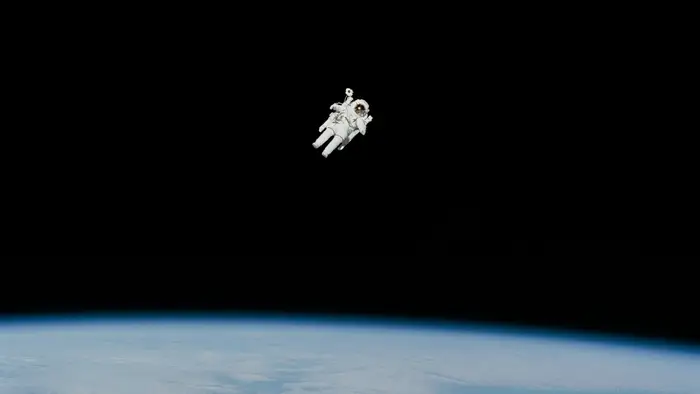
Starlight that looks effortless from the ground becomes an extreme engineering challenge when the target is a planet beside its star. Image: Unsplash.
The coronagraph problem, and why Roman matters first
To understand why the architecture study spends so much attention on the coronagraph, it helps to picture the task. A coronagraph works by blocking the bright disc of a star, much as the Moon blocks the Sun during a solar eclipse, or as early solar coronagraphs blocked the Sun’s disc to reveal its faint outer atmosphere, the corona. The modern exoplanet version must do far better: it must blot out a star while preserving the light of a planet sitting extremely close to it on the sky, separated by an angle comparable to the width of a coin seen from kilometres away, and roughly ten billion times fainter.
No telescope has yet done this for an Earth-like planet around a Sun-like star. The nearest rehearsal is flying soon. NASA’s Nancy Grace Roman Space Telescope, planned for launch in 2027, carries a coronagraph technology demonstration that will attempt to image giant exoplanets, which are brighter and easier targets than Earth twins. Roman’s coronagraph will give engineers their first in-space experience with the deformable mirrors, wavefront sensing, and control loops that a flagship coronagraph will need, and its lessons will feed directly into HWO. The new architecture study builds on that lineage, and on the earlier LUVOIR and HabEx concept studies that preceded HWO in the decadal process, both of which explored large ultraviolet, optical, and infrared observatories with coronagraphs.
The technology road to HWO is already being walked in laboratories. The HWO Technology Maturation Project Office, formed in August 2024 at NASA’s Goddard Space Flight Center in collaboration with the Jet Propulsion Laboratory, is working to mature coronagraph and telescope technologies in parallel with the precursor science programme. It delivered a technology development plan of more than 100 pages to NASA headquarters in April 2025, organised along three tracks: coronagraph system technologies, ultra-stable telescope system technologies, and high-sensitivity ultraviolet and visible instrumentation. The target milestone for all critical technologies is Technology Readiness Level 5, meaning validated in a relevant laboratory environment, by 2029, as a prerequisite for beginning the Mission Concept Review and entering Phase A, the preliminary design phase, by 2030.
Two testbed facilities are central to that effort. At Goddard, the Ultra-Stable Structures Laboratory and its companion instrument Mini-MUST are being developed to test how telescope structures behave under thermal and mechanical stress. At JPL, the Decadal Survey Testbed 2 operates inside a large 12-metre vacuum chamber, providing a space-like environment for coronagraph experiments. Mini-MUST’s thermal vacuum chamber was delivered to Goddard in July 2025. These are the unglamorous, essential steps between a concept on paper and a telescope that can hold starlight at bay in orbit: proving, piece by piece, that mirrors stay put, that structures do not creep, and that a coronagraph can maintain its dark hole around a star for the hours a spectrum requires.
The three telescope design concepts now being evaluated in parallel are also described in the technology development plan as Engineering Architecture Concepts. All three include an extendable barrel to protect the primary mirror from micrometeorite impacts, a reminder that a flagship observatory at L2 is exposed to the same dust environment that has already left its marks on Webb’s mirrors. A barrel, or baffle, also helps control stray light, another enemy of faint-planet imaging. Details like these show how far the concept has moved from a sketch toward a buildable spacecraft, even while the headline choice of mirror size and layout remains open.

A heavy-lift rocket will be needed to carry a six-metre-class observatory to its distant observing post. Image: Unsplash.
What a bigger, unobstructed mirror actually buys
It is worth pausing on why aperture size dominates so much of this discussion. For a normal telescope, a larger mirror gathers more light and resolves finer detail, both straightforward benefits. For a coronagraphic telescope hunting Earth-like planets, aperture brings a third benefit that is arguably the most important: it determines how many stars can be searched, and how quickly. The faintness of an Earth twin means that each target requires long exposures, and the number of accessible targets grows steeply with mirror size. A telescope that is too small may find only a handful of candidates, too few to draw conclusions about how common habitable worlds are. A larger telescope opens a bigger volume of nearby space, bringing more Sun-like stars within reach and improving the odds of finding planets in their habitable zones.
That is why the study’s dual preference matters. An off-axis design preserves the light the mirror collects, rather than losing a fraction to a secondary mirror and its supports. A larger aperture collects more light in the first place. Together, they maximise the yield of the survey, the number of potentially Earth-like planets the mission can detect and characterise within its lifetime. The study’s authors also noted that a larger aperture improves light-collecting area, a point that sounds obvious until one remembers that segmented mirrors do not fill their enclosing circles perfectly. The difference between inscribed and circumscribed diameters is precisely the gap between the mirror you draw on paper and the mirror you actually fly.
There are costs to both preferences, and the study’s framing acknowledges them implicitly. Off-axis telescopes are asymmetric, which complicates manufacturing, alignment, and testing. A segmented off-axis mirror must be phased, its segments aligned to a fraction of a wavelength, across an asymmetric geometry. Larger mirrors are heavier, harder to fold into a fairing, and more demanding on the spacecraft’s structure and thermal control. The five Exploratory Analytic Cases, of which three have now been detailed, exist to quantify those costs against the scientific gains. The remaining two cases, not yet covered in this round of reporting, will presumably push further into the trade space, testing whether the off-axis advantage holds at still larger sizes or different segment arrangements. For now, the direction is clear, even if the destination is not.
The launcher question sharpens the trade. A six-metre-class telescope can fit, folded, inside the fairings now in development for Starship and New Glenn, and studies have examined both folded and upright, or cup-up, configurations. A monolithic mirror larger than about six and a half metres would fit only in Starship’s fairing, while segmented designs above that size can fit in either vehicle. The Space Launch System, by contrast, does not currently offer a large fairing comparable to those in development. These constraints will not decide the mirror on their own, but they bound the art of the possible. A design that no available rocket can carry to L2 in the 2040s is not a design at all, and the architecture study keeps one eye on that reality throughout.
Readers who follow NASA’s other future observatories will recognise the pattern. The Nancy Grace Roman Space Telescope has moved from concept to a fully functional observatory now heading toward science commissioning, and its wide-field surveys will complement HWO’s targeted planet hunting. The PRIMA far-infrared telescope concept shows how a different wavelength regime opens a different window on cosmic history, while the James Webb Space Telescope’s 2026 discoveries continue to demonstrate what a flagship observatory at L2 can achieve. HWO is designed to sit in that lineage, not apart from it: a general-purpose ultraviolet, optical, and infrared observatory that also happens to be the first telescope built from the start to photograph other Earths.

Launch vehicles now in development will decide how large a mirror can actually be flown. Image: Unsplash.
The long road from study to launch
It is tempting to read an architecture study as a promise, but its real value is as a filter. By comparing candidate designs early, while changes are still cheap, NASA avoids locking in a geometry that later proves unable to deliver the science. The Exploratory Analytic Cases are part of a longer maturation process that will run through the rest of this decade. Critical technologies must reach laboratory validation by 2029. A mission concept review must follow, and only then does the project enter Phase A, where a baseline design is chosen and costed in earnest. Launch, if all goes to plan, follows in the early 2040s, which means the engineers now sketching mirror layouts are designing a telescope that many of its eventual users have not yet finished their training.
That timescale also explains why the study is news now, even though no hardware is being cut. The decisions made in the next few years will determine what HWO can see for the decades after it launches. A mirror chosen too small cannot be enlarged in orbit. A coronagraph starved of light by an obstructed aperture cannot be fixed by software. A telescope that drifts thermally cannot be steadied from the ground. Getting the architecture right, before the design hardens, is the cheapest insurance the mission will ever buy.
There is also a broader scientific context that makes the timing significant. The search for habitable worlds has moved, in a single generation, from speculation to statistics. Thousands of exoplanets are now known, and surveys have shown that small, rocky planets are common. What remains unknown is whether any of them are truly Earth-like: rocky, temperate, with liquid water and an atmosphere that bears the chemical marks of habitability, or even life. Transit surveys and radial-velocity measurements can find such planets and weigh them, but they cannot photograph them or read their atmospheres in reflected starlight. Only direct imaging can do that, and only a telescope like HWO can do it for planets around Sun-like stars. The architecture study is therefore not just about mirrors. It is about whether humanity’s first portrait of another Earth will be sharp enough to read.
The study’s emphasis on temperature control points to the same conclusion from a different angle. Ultra-stability is now treated as a system-level requirement, not an instrument specification. The telescope, the spacecraft, the sunshield, and the thermal control system must work together to hold the observatory still at the level of picometres, a fraction of the size of an atom, over the duration of an observation. That requirement flows down into materials, into structural design, into the placement of heaters and sensors, and into the test programme at Goddard and JPL. It is the kind of requirement that is easy to state and enormously hard to meet, and it is why the technology maturation effort runs years ahead of any decision on the final mirror.
For the public, the most vivid takeaway may be simpler. Somewhere in the 2040s, if this programme holds its course, a telescope larger than any optical observatory ever flown will unfold at L2, turn its unobstructed eye toward a nearby star, blot out that star’s light, and reveal a pale point of light beside it. That point will be a world. Its spectrum, gathered over hours or days, may show water vapour, or oxygen, or methane, or nothing at all. Whatever it shows, it will be the first time humanity has looked directly at a planet that could, in principle, be like home. The choice between a six-metre off-axis mirror and an eight-metre on-axis one will have helped decide whether that point is visible at all.

Among the stars in a view like this one, the Habitable Worlds Observatory will search the nearest systems for Earth-like worlds. Image: Unsplash.
What to watch next
Three things deserve attention as this design process continues. The first is the remaining Exploratory Analytic Cases. The study so far covers three of five, and the last two may test larger apertures, different segment geometries, or alternative approaches to the off-axis preference. If they confirm the off-axis, large-aperture direction, the case for that architecture will harden considerably. If they reveal a surprise, a configuration that delivers comparable yield at lower risk or cost, the field could shift again. Either outcome is useful, and both are the point of doing the study.
The second is the technology maturation milestones. Reaching Technology Readiness Level 5 by 2029 for the coronagraph, the ultra-stable telescope, and the ultraviolet and visible instruments is an ambitious schedule, and progress in the testbeds at Goddard and JPL will be the earliest signal of whether it is achievable. Watch for results from the Decadal Survey Testbed 2, in particular, where coronagraph contrast demonstrations in a vacuum environment provide the most realistic preview of in-space performance. A coronagraph that can hold its dark hole in the laboratory is not yet a flight instrument, but it is a necessary step toward one.
The third is the interplay with Roman. As Roman’s coronagraph demonstrates its capabilities in space, starting with giant planets, engineers will learn how wavefront control behaves outside the laboratory, how stable a real spacecraft is, and how much post-processing can improve contrast. Those lessons will arrive just as HWO’s design is being frozen, and they may be the most valuable data the architecture study receives. A flagship that learns from its predecessor is a flagship less likely to repeat its predecessor’s surprises.
None of this will be decided quickly, and none of it should be. The Habitable Worlds Observatory is a telescope meant to answer one of the oldest questions humans have asked: are we alone? A question that large deserves a telescope designed with care, and the new architecture study is evidence that the care is being taken now, two decades before launch, while the mirror is still a choice rather than a constraint. The leaning toward a large, unobstructed eye is a promising sign. It suggests that when HWO finally opens its eye at L2, it will gather every photon it can, and waste as few as possible on the way in. For a mission hunting worlds as faint as Earths around other suns, that may be the difference between a portrait and a blank frame.
That is the kicker worth keeping in mind as the design evolves. Telescopes are often described by their size, and HWO will be described that way too, as a six-metre or eight-metre observatory. But the new study argues that size alone is not the story. What matters is how much of the light that mirror collects actually reaches the instruments, how steadily the telescope holds its shape while it works, and how completely it can hide a star to reveal the world beside it. Get those three things right, and the mirror’s diameter becomes a promise rather than a boast: a promise that, somewhere in the 2040s, we will finally see another Earth, not as a dip in a light curve or a wobble in a star’s motion, but as a point of light in its own right, photographed directly, waiting to be understood.