TOI-1355 b Transit Window Closes 2033: NASA Adds 13 Exoplanets
NASA’s catalog of known worlds beyond our solar system grew by thirteen planets this week, and two of the newcomers are already rewriting the rules of what astronomers thought they knew about how planets move. The additions, posted to the NASA Exoplanet Archive on November 5, 2026, span eleven stellar systems and range from a rocky super-Earth barely larger than our own planet to a bloated gas giant more than 40 percent wider than Jupiter. But the headline belongs to a single scorching world called TOI-1355 b: a hot super-Jupiter whose transits — the brief eclipses that let astronomers study it at all — will stop happening around 2033, closing an observational window that will not reopen for centuries.
The clock is now ticking. Every transit TOI-1355 b makes between now and the early 2030s is a one-time scientific opportunity, and astronomers are already treating the system as a priority target for the world’s most powerful telescopes. The planet’s story, and the story of its wildly eccentric sibling TOI-7025 b, shows how a single catalog update can open entirely new chapters in the science of planets.
A Batch of Thirteen, Eleven Stars, One Method
All thirteen of the newly added planets were detected by the transit method, the workhorse technique that has driven the exoplanet revolution for two decades. When a planet crosses the face of its star as seen from Earth, it blocks a tiny fraction of the starlight — typically between 0.01 and 1 percent, depending on the relative sizes of the planet and the star — in a periodic, repeatable dip that telescopes can measure with exquisite precision. That dip yields the planet’s radius directly, and follow-up observations can then reveal its mass, its atmosphere, and sometimes even its weather.
Every one of the thirteen worlds carries a TESS Object of Interest, or TOI, designation, marking them as candidates first flagged by NASA’s Transiting Exoplanet Survey Satellite — with one notable exception from the earlier Kepler mission era. TESS, launched in April 2018, surveys nearly the entire sky in overlapping 27-day sectors from a highly elliptical high-Earth orbit tuned to a 2:1 resonance with the Moon, keeping it outside the radiation belts for most of each orbit and enabling the stable, precise photometry that transit hunting demands. The mission has now contributed 1,024 confirmed discoveries to the archive, and with this week’s batch the total count of confirmed exoplanets stands at 6,464.
The new batch is remarkable for its range. Orbital periods stretch from under two days to more than two months. Sizes run from a super-Earth just 17 percent wider than Earth to a gas giant 42 percent wider than Jupiter. Two of the eleven systems contribute two planets each — TOI-713 and TOI-214 — making them the batch’s first confirmed multi-planet systems. And one entry, K2-105 c, carries a designation from NASA’s Kepler spacecraft during its extended K2 mission, a reminder that the boundary between mission eras in exoplanet science is porous: older datasets and new observations together keep producing discoveries long after the original surveys ended.

Thirteen new exoplanets joined NASA’s catalog on November 5, 2026, spanning eleven star systems. Image: Unsplash.
TOI-1355 b: A Hot Super-Jupiter With Seven Years Left
The planet that gives this story its urgency is TOI-1355 b, a gas giant on a searing 2.2-day orbit sitting just 0.04 astronomical units from its host star — roughly one-tenth the distance between Mercury and the Sun. At that distance, a year lasts barely longer than a long weekend on Earth, and the planet is baked by stellar radiation far more intense than anything in our own solar system.
What makes TOI-1355 b more than a standard hot Jupiter is its host star. Unlike the overwhelming majority of hot Jupiter systems, which orbit ordinary Sun-like F, G, or K-type stars, TOI-1355 orbits an early A-type star, a class of stars significantly hotter, larger, and more massive than the Sun, with surface temperatures of roughly 7,500 to 10,000 Kelvin compared to the Sun’s 5,778 Kelvin. Hot Jupiters around A-type stars are exceptionally rare, partly because A-type stars lack the strong convective envelopes that enable the radial-velocity detections used to characterize many hot Jupiter systems, and partly because A-type stars are younger and shorter-lived, limiting the time available for planetary migration.
The more immediately striking consequence of that A-type host involves orbital precession. A-type stars rotate rapidly — their rotation periods span hours to a few days, compared to the Sun’s 25-day rotation — and that rapid rotation causes them to bulge at the equator, becoming oblate spheroids rather than perfect spheres. This oblateness creates a gravitational quadrupole, a slight non-spherical component in the star’s gravitational field that exerts a torque on the orbital plane of a close-in planet, causing the orientation of the entire orbit to rotate over time. Combined with general-relativistic precession and tidal deformation of the planet, the result for TOI-1355 b is dramatic: the orbit’s inclination relative to our line of sight is changing measurably on a human timescale.
According to the University of Tokyo announcement, the orbital precession is proceeding fast enough that TOI-1355 b will no longer transit its host star from Earth’s vantage point by approximately 2033. After that point, the geometry will be wrong for a transit detection for centuries. Every transit observation window open right now for TOI-1355 b is therefore irreplaceable, making this system a priority for detailed atmospheric characterization and mass measurement before the window closes.
The discovery paper for TOI-1355 b, authored by Watanabe, Narita, and colleagues at the University of Tokyo and titled “Discovery of an Eccentric Hot Super-Jupiter Leaving the Transiting Geometry of the Early-A-type star TOI-1355,” was published September 18, 2026, in the Publications of the Astronomical Society of Japan. The paper’s title says it plainly: this is a planet literally leaving the geometry that made it discoverable.
TOI-1355 b has a radius of 1.424 Jupiters — notably large even by hot Jupiter standards — and an orbital eccentricity of 0.22. Its mass has not yet been measured from the catalog entry, though the discovery paper classifies the planet as a hot super-Jupiter, implying a mass significantly above Jupiter’s. The nonzero eccentricity is itself noteworthy for a planet this close: at 0.04 AU, tidal forces between planet and star are powerful enough that most hot Jupiters found at this distance have circularized orbits. If the eccentricity of 0.22 is confirmed by the full mass-and-orbit solution in the discovery paper, it may imply a recent dynamical event or an unseen perturber maintaining the eccentricity against tidal damping — a question the rapidly closing observational window makes urgent.
For astronomers, the arithmetic is stark. Seven years of transits remain, at most. Each transit lasts a few hours and recurs every 2.2 days, so the raw number of remaining opportunities is large — more than a thousand transits before 2033. But the highest-value observations, the ones that require the largest telescopes and the most careful scheduling, must be planned years in advance. Space telescopes operate on competitive proposal cycles, ground-based observatories juggle hundreds of programs, and the atmospheric characterization that would reveal what TOI-1355 b is actually made of cannot be done in a single night. The seven-year deadline is not generous. It is a countdown.

TOI-1355 b orbits an early A-type star far hotter than the Sun, and its orbit is precessing out of transit view. Image: Unsplash.
TOI-7025 b: The Most Eccentric Orbit in the Batch
At the opposite architectural extreme from TOI-1355 b sits the planet attracting the most scientific interest in this batch: TOI-7025 b, a Jupiter-class world on a 67-day elliptical orbit so elongated that it places the planet at radically different distances from its star across a single year. The reason is a single number — an orbital eccentricity of 0.81 that ranks it among the most extreme known for any transiting gas giant.
Eccentricity is the measure of how far an orbit deviates from a perfect circle. A value of zero is a circle; 1.0 is a parabola, the boundary at which an object is no longer gravitationally bound to its star. At 0.81, TOI-7025 b has one of the most elongated orbits measured for a transiting gas giant. For comparison, Mercury — the most eccentric planet in our own solar system — has an eccentricity of about 0.206. The most extreme known transiting gas giant by this measure is HD 80606 b, a world Webb has watched being roasted by its star, with an eccentricity of 0.93 and an orbital period of 111 days, thought to have been driven to its current orbit by gravitational interactions with a distant stellar companion. At 0.81, TOI-7025 b places itself in that select, dynamically violent company.
TOI-7025 b is a gas giant with a mass of 0.873 Jupiters and a radius of 1.152 Jupiters, taking 67 days to complete one orbit at a mean distance of 0.3485 AU from its star. That mean distance sits squarely in the inner part of the system, comparable to where Mercury orbits the Sun — but because the orbit is so elongated, the actual distance the planet maintains from its star swings dramatically through its year. At closest approach, or periapsis, the planet dives to roughly 0.066 AU from its star, well inside Mercury’s orbit around the Sun. At its farthest point, or apoapsis, it recedes to about 0.63 AU — closer to Venus’s distance from the Sun. The result is an extreme variation in stellar irradiation across a single orbital period, with the planet receiving roughly 90 times more flux at closest approach than at greatest separation.
Imagine the seasons on such a world. There are no gentle transitions. For most of its 67-day year, TOI-7025 b drifts through the relatively cool outer reaches of its orbit. Then, in a rush lasting only days, it plunges toward its star, its atmosphere heated by a flood of radiation ninety times stronger than what it received at apoapsis, before swinging back out into the cold. Any atmosphere on this planet is subjected to a violent thermal pulse every two months, a natural experiment in atmospheric physics that no laboratory could reproduce and that telescopes can watch in real time.
This architecture is precisely the kind that planetary scientists study to understand how giant planets form and migrate. The leading hypothesis for such high eccentricities involves gravitational interactions — either with another planet in the system, a process called planet-planet scattering, or with a distant stellar companion through Kozai-Lidov oscillations, both of which can pump an initially circular orbit into something far more elongated over millions of years. The Kozai-Lidov mechanism works in hierarchical triple systems — an inner orbit plus a distant third body — by exchanging eccentricity and inclination over long timescales; a near-circular, highly inclined orbit can be driven to very high eccentricity, bringing the planet’s closest approach dangerously near the star. TOI-7025 b is therefore a natural laboratory for studying these dynamical processes, particularly because its 67-day period places it at a distance where orbital circularization through tidal interactions with the host star should be ongoing but incomplete — which may explain why the extreme eccentricity has not yet been eroded away.
In other words, TOI-7025 b is a planet caught in the act. Its orbit is still evolving, still being slowly circularized by tides, and the eccentricity we measure today is a snapshot of a process that has been running for millions of years and will continue for millions more. Planets like this one are how astronomers test their theories of how solar systems are assembled, rearranged, and sometimes torn apart.
The Middle Ground: A Warm Jupiter and a Super-Earth
Filling the orbital middle ground is TOI-5893 b, a planet that fits the working definition of a “warm Jupiter” — a gas giant on an intermediate orbit too far from its star to qualify as a hot Jupiter but too close-in to be in the temperate zone. TOI-5893 b has a mass of 1.012 Jupiters and a radius of 0.973 Jupiters, with a 40.4-day orbital period at a distance of 0.2348 AU from its star, and a measured eccentricity of 0.0. With an essentially circular orbit, a mass close to Jupiter’s, and a radius slightly smaller than Jupiter’s — giving it a density modestly above Jupiter’s own — TOI-5893 b looks like a gas giant that has settled into a stable, tidally relaxed configuration. Its 40-day orbit places it outside the region where tidal circularization would be rapid, which makes the eccentricity result of zero either a genuine measurement or a present orbital state maintained by some balance of forces. The mass of 1.012 Jupiters and sub-Jupiter radius means this is one of the denser planets in the new batch, suggesting a relatively compact interior compared with the inflated TOI-1355 b.
Warm Jupiters like TOI-5893 b matter because they are the control group. Hot Jupiters are extreme; eccentric giants are dramatic; but warm Jupiters on circular orbits are the planets that seem to have formed more or less where we find them, or migrated gently inward without the violent gravitational encounters that scar the orbits of their cousins. By comparing the three classes, astronomers can separate the effects of formation location, migration history, and tidal evolution — and TOI-5893 b, sitting almost exactly at Jupiter’s own mass, is an almost ideal reference point.
Not all of the new planets are gas giants. TOI-713 b is a super-Earth — a category of planet with no analog in our own solar system but arguably the most common type of world in the galaxy. TOI-713 b has a mass of 1.754 Earths and a radius of 1.169 Earths, with a 1.9-day orbital period and a circular orbit. At 1.169 Earth radii, TOI-713 b straddles the boundary that planetary scientists call the “radius gap” — a dearth of planets in the 1.5-to-2.0 Earth-radius range thought to result from photoevaporation of planetary atmospheres by stellar X-ray and ultraviolet radiation. Planets below roughly 1.5 Earth radii tend to be rocky with thin or absent atmospheres; those above 2.0 Earth radii often retain substantial hydrogen-helium envelopes. At 1.17 Earth radii with a mass of 1.75 Earths, TOI-713 b’s bulk density is consistent with a rocky or partially iron-enriched interior, though without atmospheric characterization the composition remains open.
The system is notable because the catalog also adds TOI-713 c, making this batch’s first confirmed multi-planet system. The TOI-214 system also contributes two planets, TOI-214 b and TOI-214 c, in this batch, making it a second multi-planet entry. Multi-planet systems are disproportionately valuable to astronomers because planets in the same system share a formation history, so differences between siblings reveal the processes that shaped each one. A rocky super-Earth and whatever its companion turns out to be, orbiting the same star, are two data points from a single controlled experiment run by nature itself.
Among the remaining entries, TOI-783 b stands out as a Neptune-like world orbiting a K-type star, with a mass of 6.66 Earths, an 8.1-day orbital period, and a distance of 0.0705 AU from its star. Neptune-like planets in this size and mass range are among the most common outcomes of planet formation, yet they remain poorly understood precisely because our own solar system offers only two examples — Neptune and Uranus — both far from their star and frigid. Close-in Neptunes like TOI-783 b, baked by their stars, test whether these worlds keep their atmospheres or lose them to space, a question that feeds directly into understanding the rocky planets that orbit even closer in.

The batch includes a rocky super-Earth, TOI-713 b, barely larger than Earth itself. Image: Unsplash.
Why TESS Keeps Finding Worlds Like These
All thirteen planets in this batch were detected via the transit method, which remains the most productive technique in the exoplanet hunter’s toolkit. Transit photometry has three decisive advantages: it is sensitive to planets across a wide range of host star types; it yields the planet’s radius directly from the depth of the light-curve dip; and it allows mass determination through follow-up radial velocity spectroscopy or through transit timing variations when multiple planets interact gravitationally.
The mix of orbital periods in this batch — from under two days to 67 days — illustrates TESS’s detection profile. The satellite’s 27-day sector windows mean it is most sensitive to planets with short periods, which transit often enough to build a strong signal within a single sector. Longer-period planets like TOI-7025 b, with its 67-day year, require observations spanning multiple sectors, patiently stitched together across months of data. That such a planet appears in this batch at all is a sign of how thoroughly the TESS dataset is now being mined, with candidates first flagged years ago finally passing the full gauntlet of confirmation: repeated transits, ground-based follow-up, radial velocity measurements, and the careful exclusion of false positives such as eclipsing binary stars or instrumental artifacts.
The confirmation process is what separates a candidate from a catalog entry. A TOI designation means only that TESS saw something transit-like. Turning that signal into a confirmed planet requires independent evidence, and the teams behind these thirteen worlds did that work across the global network of follow-up telescopes. The University of Tokyo team behind TOI-1355 b, for example, published their result in a peer-reviewed journal nearly two months before the catalog update, giving the community time to absorb the finding that this particular planet is on a deadline.
There is a broader lesson in the composition of the batch. The planets span the full taxonomy of the field — hot Jupiters, warm Jupiters, eccentric giants, super-Earths, Neptune-like worlds, multi-planet systems, and a holdover from the Kepler era. That diversity is not an accident of sampling. It reflects the reality that planetary systems come in far more architectures than the single example of our solar system ever suggested, and that every new survey peels back another layer of that diversity. Earlier work on two families of planetary systems has already shown how sharply exoplanet architectures split into distinct groups; batches like this one keep filling in the details of each family. And for planets at the extreme edge of what telescopes can characterize, such as the lava world TOI-561 b, whose atmosphere has been probed in detail, the techniques honed on one world are rapidly applied to the next.
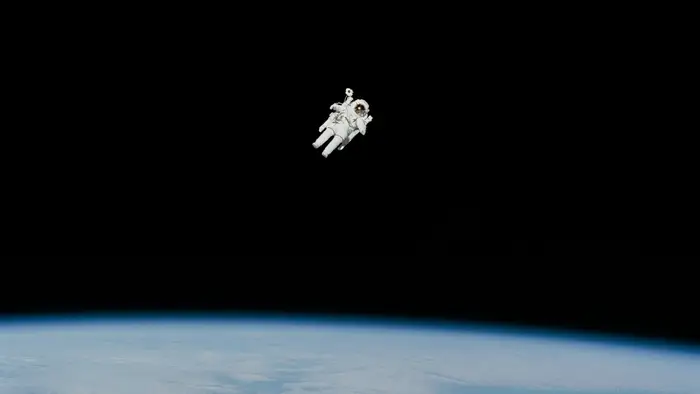
TESS has now contributed 1,024 confirmed planets to the archive, out of 6,464 known exoplanets. Image: Unsplash.
What Happens Next: Seven Years to Study a Vanishing Planet
The most urgent scientific question raised by this batch is what astronomers can learn about TOI-1355 b before its transits stop. The planet’s inflated radius of 1.424 Jupiters makes it an excellent target for transmission spectroscopy, the technique in which starlight filtering through a planet’s atmosphere during transit reveals the gases it contains. Its A-type host star is bright and hot, which is good for signal but challenging for interpretation, since the star’s own rapid rotation and surface activity must be disentangled from the planetary signal. Its nonzero eccentricity adds another layer of interest: a planet on an eccentric orbit experiences varying tidal heating, and the resulting atmospheric dynamics may be detectable in the timing and shape of its transits.
The James Webb Space Telescope is the obvious instrument for this work, and the seven-year window is, in Webb’s terms, a comfortable planning horizon — but only if the observations are proposed and scheduled soon. Webb’s observing time is allocated competitively, a year or more in advance, and the most valuable datasets for TOI-1355 b will require multiple transits observed at different wavelengths. Ground-based giants, including the extremely large telescopes now under construction, will also play a role, as will the continued monitoring of the system’s transit timing, which tracks the precession itself and refines the prediction of when the final transit will occur.
There is also a deeper significance to the 2033 deadline. TOI-1355 b is not the first planet whose transits will end — orbital precession affects other systems too — but it is one of the most dramatic cases, and the most publicized, because the timescale is so human. Seven years is within a single research career, within a single graduate student’s PhD and postdoc, within the operating lifetime of the telescopes now in service. Astronomers alive today will watch this planet’s transits slow, shift, and finally stop. And when they do, the planet will not be gone — it will still be there, orbiting its star every 2.2 days, invisible to the transit method, detectable only by the subtle radial-velocity wobble of its star or by direct imaging techniques that may not yet be equal to the task. The planet will slip from the catalog of the observable into the catalog of the known-but-unseen, a world we discovered and then lost sight of.
For TOI-7025 b, the future is different but no less interesting. Its eccentric orbit makes it a prime target for observations near periapsis, when the planet is closest to its star and its atmosphere is at its hottest. Telescopes can catch the planet at different points in its orbit and watch its atmosphere respond to the changing radiation — a time-resolved experiment in planetary climate that a circular-orbit planet could never offer. The planet’s 67-day period means these campaigns can be planned and repeated, and each periapsis passage is a fresh data point.
The Catalog Keeps Growing
The addition of thirteen planets on a single day in November 2026 is, by the standards of the field, a routine event — the archive grows by batches like this several times a year, and the total of 6,464 confirmed exoplanets is a number that will look small within a decade. But routine does not mean unimportant. Each batch is a census update for the galaxy, and each planet in it is a world with its own history, its own chemistry, and its own future. The thirteen worlds added this week include a planet that will vanish from view within seven years, a planet whose orbit is among the most stretched ever measured, a near-twin of Jupiter on a calm circular path, and a rocky world barely larger than Earth. That range, in a single day’s update, is the story of exoplanet science in miniature: a field that began with a single hot Jupiter in 1995 and now counts thousands of worlds, each one stranger than the last, each one a reminder of how much of the universe remains to be explored.
The work now falls to the observers. TOI-1355 b has given them a deadline. TOI-7025 b has given them a laboratory. The other eleven have given them new targets, new questions, and new reasons to keep watching the sky. The catalog will keep growing — but for at least one of its newest entries, the clock is already running.

Seven years of transits remain for TOI-1355 b — after 2033, its eclipses will not return for centuries. Image: Unsplash.