Rocket Lab 99th Mission 'The Sea God Surveys' Delivers iQPS Radar Satellite to Orbit
Rocket Lab is one launch away from a century. The company’s 99th mission, “The Sea God Surveys,” lifted off from New Zealand in the early hours of Tuesday morning local time and placed another radar-imaging satellite into orbit for Japan’s iQPS, extending one of the most durable partnerships in the commercial small-launch business and setting up a milestone flight that is now less than two weeks away.
The Electron rocket lifted off from Rocket Lab Launch Complex 1 on the Mahia Peninsula at 16:41 UTC on Monday, November 2 — 11:41 a.m. Eastern time in the United States and 5:41 a.m. on Tuesday, November 3, in New Zealand. About 56 minutes later, the rocket’s Kick Stage deployed its payload, the QPS-SAR satellite known as WADATSUMI-II, into a 575-kilometre low Earth orbit. Rocket Lab confirmed the deployment on social media shortly afterwards, writing: “Mission success! Payload deployment confirmed from Electron’s Kick Stage for the latest QPS-SAR satellite by @QPS_Inc — our tenth launch for their constellation with 100% mission success.”
It was, by Rocket Lab’s own count, the company’s 20th mission of 2026, a record pace for the small launcher, and the tenth consecutive dedicated Electron flight for iQPS with a perfect success record. The next flight on the manifest, “The Mountain God Rises,” is scheduled for no earlier than November 14 and will carry another QPS-SAR satellite for iQPS. That flight will be Rocket Lab’s 100th — a total no privately developed small-lift rocket has previously reached.

A rocket lifts off from its launch pad. Image: Unsplash.
A dawn launch from Mahia
“The Sea God Surveys” was designated iQPS Launch 9 in the companies’ joint manifest, though it was the tenth Electron flight Rocket Lab has flown for the Japanese operator — a numbering quirk that reflects how the partnership’s missions have been counted across its history. The rocket flew from Launch Complex 1A at Mahia, Rocket Lab’s private orbital launch site on New Zealand’s North Island, during a two-hour-and-twenty-minute window, and headed east to deliver its passenger to an orbit inclined to optimise revisit rates over the Asia-Pacific region.
The satellite itself is a study in miniaturised radar engineering. Built by the Institute for Q-shu Pioneers of Space, Inc. — iQPS, a Fukuoka-based company — the QPS-SAR spacecraft weighs roughly 100 kilograms, about one-tenth the mass of a traditional military synthetic aperture radar satellite, yet carries a 3.6-metre deployable antenna that folds down to just 0.8 metres in diameter for launch. That combination of a small bus and a large antenna is what allows iQPS to pack genuine radar-imaging capability into a spacecraft light enough to fly dedicated on Electron rather than sharing a ride on a much larger rocket.
Once in orbit, WADATSUMI-II will join iQPS’s growing fleet of radar satellites, taking the operational constellation into double digits. The company is building toward a 36-spacecraft constellation in low Earth orbit, designed to image nearly any point on Earth at intervals of roughly ten minutes once complete. Eight more dedicated Electron launches are already booked to finish that network by 2030, a backlog that makes iQPS one of Rocket Lab’s most important repeat customers and gives the launch provider unusual visibility into its manifest years ahead.
Why radar, and why it matters
Synthetic aperture radar, or SAR, works very differently from the cameras most people picture when they think of Earth observation. Instead of capturing sunlight reflected from the ground, a SAR satellite transmits microwave signals toward the surface and analyses the echoes that return. Because the instrument supplies its own illumination, it can produce images regardless of whether the ground below is in daylight or darkness. Microwaves also pass through cloud cover, which means a SAR satellite can keep watching through storms, monsoon seasons, and the long polar night — exactly the conditions under which optical satellites go blind.
Those capabilities make radar imagery especially valuable for disaster monitoring. When floods inundate a region or a landslide reshapes a hillside, the skies above are often thick with the same weather system that caused the damage. A SAR satellite can map flood extents, track ground deformation near roads, bridges, and urban developments, and monitor coastlines and forests through conditions that ground optical imagers. In maritime environments, radar can detect vessels and monitor activity across wide ocean areas, day or night and in any weather.
For iQPS, the commercial logic is revisit time. A single radar satellite passes over a given location only occasionally, but a constellation of 36 spacecraft, spread across carefully chosen orbits, can return to the same spot every few minutes. That near-real-time cadence is what turns satellite imagery from a historical record into a live monitoring tool — useful for tracking a flood as it spreads, watching a volcano’s flanks deform, or following shipping through congested straits. Each additional satellite shortens the gap between observations, which is why the company has been adding spacecraft at a steady clip and why the tenth launch matters beyond its round number.
Japan’s interest in domestic radar capability is not purely commercial. The country sits on some of the most disaster-prone geography on Earth, exposed to earthquakes, tsunamis, typhoons, and volcanic eruptions, and it has invested for decades in space-based tools for monitoring its own territory. A Japanese-owned radar constellation, launched on a schedule its operator controls, gives Tokyo an independent source of all-weather imagery that does not depend on foreign governments or on the availability of rideshare slots aboard other nations’ rockets.

A launch vehicle climbs through the atmosphere. Image: Unsplash.
Electron’s remarkable run
Standing about 18 metres tall, Electron is a two-stage rocket designed to carry relatively small spacecraft — up to around 300 kilograms to low Earth orbit — on dedicated missions. That dedicated-launch model is the core of Rocket Lab’s pitch: rather than waiting for a rideshare slot on a large rocket and accepting whatever orbit the primary payload dictates, a satellite operator can buy an entire Electron, choose its launch date, and specify its target orbit. For companies assembling coordinated constellations, that flexibility can be worth more than the lower per-kilogram price of sharing a big rocket.
The numbers behind Electron’s career are striking. The vehicle has now flown 90 orbital missions, with nine additional flights of HASTE, its suborbital hypersonic-test variant, bringing Rocket Lab’s total launch count to 99. The company flew 21 Electron missions in 2025, its previous annual high, and has already reached 20 in 2026 with weeks still to run — meaning the record could fall again before the year ends. Rocket Lab describes Electron as the most frequently launched commercial small rocket in the world, a claim that reflects both its cadence and its longevity in a market where many small launchers have struggled to reach orbit at all, let alone repeatedly.
The iQPS relationship illustrates how that cadence compounds. Rocket Lab’s previous dedicated flight for the Japanese company, “The Lightning God Defends,” flew on August 20, 2026. Before that came a string of similarly named missions drawing on Japanese mythology — a naming tradition that gives each iQPS flight a distinct identity while tying the whole series together. “The Sea God Surveys” and the upcoming “The Mountain God Rises” continue that pattern, and the mythology theme has become a small but recognisable signature of the partnership.
The relationship also matters for what it says about Rocket Lab’s business model. Launch providers live or die on repeat customers: a single spectacular debut means little if the manifest empties afterwards. Ten consecutive successful launches for the same customer, with eight more already booked, is the kind of backlog that lets a company plan factory throughput, staffing, and pad operations years in advance. It is also a signal to other constellation operators that Electron can be relied upon as a workhorse rather than a one-off ride.
Rocket Lab’s broader customer base reinforces that picture. The company recently signed a 20-launch deal with Synspective, another radar-satellite operator, whose tenth StriX satellite flew aboard the “Ten Owl Of Ten” mission earlier this year. Radar imaging, it turns out, is a growth market for small launchers: the satellites are compact, the constellations need many of them, and the operators value schedule control. Electron’s dedicated model fits that demand almost exactly.
A busy week for global launch
“The Sea God Surveys” opened what launch watchers expected to be one of the busiest weeks of the year. Eight launches were scheduled worldwide between November 2 and 8, from sites in the United States, China, New Zealand, and South Korea. SpaceX was due to return to Vandenberg Space Force Base in California for a classified U.S. Space Force mission, following its earlier USSF-385 flight from the same facility, while China had four orbital launches planned and South Korea an uncrewed demonstration flight for its defence agency.
That tempo reflects a launch industry that has changed fundamentally in the past decade. Where a handful of government rockets once dominated, dozens of commercial vehicles now compete across every payload class, from Electron’s small dedicated missions to heavy-lift rockets carrying dozens of satellites at once. The result is a market in which a radar constellation for a Japanese start-up, a classified American military payload, and a Chinese internet-satellite deployment can all fly within days of one another — and in which a New Zealand peninsula that few people had heard of a decade ago now hosts one of the world’s busiest commercial spaceports.
Rocket Lab itself is no longer just a launch company. The firm, listed on the Nasdaq as RKLB, builds satellites and spacecraft components alongside its rockets, and it designed and built the twin ESCAPADE spacecraft now en route to Mars after launching aboard Blue Origin’s New Glenn in November 2025. Those spacecraft are due to perform a first-of-its-kind powered flyby of Earth on November 7 and 9, using the planet’s gravity plus an engine burn to slingshot toward the Red Planet. The company’s evolution from a small-rocket start-up into a vertically integrated space firm mirrors the wider industry’s shift toward end-to-end services.
What comes next: the 100th flight
All eyes now turn to “The Mountain God Rises,” scheduled for no earlier than November 14 from the same Mahia pad. The mission will carry another QPS-SAR satellite — designated QPS-SAR-19 in some manifests — and will mark Rocket Lab’s 100th launch, a milestone the company describes as unprecedented for a commercial small-lift rocket. No privately developed small launcher has previously reached triple digits, and Rocket Lab has been building toward the moment with deliberate publicity, including a live broadcast for the 99th flight.
The 100th launch also arrives at a strategically interesting moment for the company. Its medium-lift Neutron rocket, intended to compete with SpaceX’s Falcon 9 for larger payloads, has slipped to 2027 after a carbon-composite tank manufacturing fault, as SpaceNews reported in coverage of the Neutron delay. Until Neutron flies, Electron remains the company’s only orbital vehicle, and its reliability and cadence carry the full weight of the launch business. A flawless 100th flight would be a powerful statement of that vehicle’s maturity; any setback would be magnified by the milestone’s spotlight.
For iQPS, the 100th flight is simply the next step in a methodical build-out. With ten satellites now in orbit and eight more launches booked, the constellation is roughly a third of the way to its planned 36 spacecraft. Each launch tightens revisit times over the Asia-Pacific, the region the constellation is optimised to serve, and moves the company closer to the near-real-time radar coverage it promises customers. The company’s satellites are already being used for disaster monitoring and infrastructure observation, and the value of the data grows with every additional spacecraft.
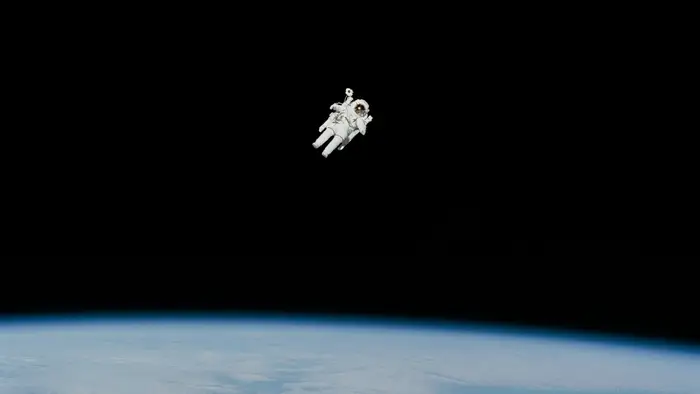
Earth observation satellites watch the planet day and night. Image: Unsplash.
The final leg: Kick Stage and a tailored orbit
The last act of the mission belonged to Electron’s Kick Stage, the small upper stage that has become one of Rocket Lab’s quiet advantages. After the rocket’s two main stages did the heavy lifting, the Kick Stage took over, circularising the orbit and releasing WADATSUMI-II precisely where iQPS wanted it. Deployment came about 56 minutes after liftoff, and the satellite made contact with its operators shortly afterwards — the tenth time in a row that sequence has gone exactly to plan for this customer.
The orbit itself was chosen with intent. Rocket Lab said the satellite was delivered to an inclination tailored specifically to optimise iQPS’s revisit rates over the Asia-Pacific region, the constellation’s home market. That tailoring is the practical payoff of a dedicated launch: on a rideshare mission, a small satellite accepts the orbit of the primary payload and lives with the revisit pattern that results. On Electron, the customer specifies the destination, and the rocket flies there. For a radar constellation whose entire value proposition is returning to the same place frequently, that difference is not cosmetic — it directly determines how useful the imagery will be to customers tracking floods, coastlines, and shipping lanes across Asia and the Pacific.
It also explains why iQPS has stayed loyal. Each of its satellites has flown on Electron, and each has arrived in the orbit its operator requested. In a business where a satellite in the wrong inclination is a satellite delivering the wrong product, reliability of delivery matters as much as reliability of launch. The eight further launches already booked will follow the same pattern, filling out the constellation’s orbital planes one tailored deployment at a time until the network reaches its planned 36 spacecraft by 2030.
The bigger picture: small rockets, big constellations
The story of “The Sea God Surveys” is, in miniature, the story of the modern space economy. A Japanese start-up with a clever antenna design, a New Zealand launch pad, an American-listed rocket company, and a satellite weighing about as much as a large adult have combined to put a radar eye in orbit that can see through clouds and darkness. None of the pieces required a government megaproject; all of them depended on commercial markets, private capital, and a launch vehicle small enough to be booked like a charter flight.
That model is spreading. Constellation operators across Earth observation, communications, and signals intelligence increasingly prefer dedicated small launches for at least part of their fleets, because schedule certainty and orbital precision matter more than squeezing the last dollar out of per-kilogram cost. Rocket Lab’s order book — iQPS, Synspective, HawkEye 360, and a growing list of government customers — suggests the demand is real and durable. The company’s 98th mission, “We’re Not Hawking Around,” carried three HawkEye 360 radio-frequency intelligence satellites in October, another example of a constellation operator choosing Electron for a tailored deployment.
There are risks, of course. The small-launch market remains brutally competitive, with several well-funded rivals chasing the same constellation customers, and the economics of a 300-kilogram-class rocket are unforgiving: a single failure can erase years of margin and shake customer confidence. Rocket Lab’s answer has been relentlessness — flying often, flying successfully, and turning reliability into a brand. Ninety orbital Electron flights and a perfect record across ten iQPS missions are the evidence it points to.
There is also the question of what happens after 100. Rocket Lab has said the milestone is a beginning rather than a capstone: Neutron is meant to open the medium-lift market, the company’s satellite-manufacturing arm is growing, and the iQPS backlog alone guarantees Electron work into 2030. The 100th flight will be celebrated, but the company’s future will be decided by what comes after it — whether Neutron flies on its revised schedule, whether the constellation business keeps growing, and whether Electron can maintain its cadence as its production lines age.
For now, though, the milestone is close enough to touch. A radar satellite named for a sea god is circling the planet at 575 kilometres, sending back images no camera could capture, and in less than two weeks another Electron will stand on the same Mahia pad, carrying another satellite for the same customer, chasing a number no small rocket has ever reached. In an industry built on superlatives, that is a quiet kind of history — made not with a single giant leap, but with 99 careful ones, and counting.

Radar satellites can observe Earth through cloud and darkness. Image: Unsplash.

The night sky over Mahia, New Zealand, home of Rocket Lab’s Launch Complex 1. Image: Unsplash.