Three More BlueBirds Take Wing: SpaceX Lofts AST SpaceMobile's Direct-to-Cell Trio as Booster B1077 Hits 30 Flights
Long before sunrise on Wednesday, August 5, 2026, a Falcon 9 rocket stood lit against the Florida dark at Space Launch Complex 40, three of the largest communications satellites ever built tucked inside its fairing. At 3:49 a.m. EDT, nine Merlin engines lit and the rocket climbed on a northeasterly track, carrying AST SpaceMobile’s BlueBirds 11, 12 and 13 toward low Earth orbit — and carrying one very well-traveled booster toward a personal milestone.
About eight and a half minutes later, first stage B1077 settled onto the droneship A Shortfall of Gravitas in the Atlantic, completing its 30th flight. Only four other Falcon boosters had ever reached that mark, and four of the five were still in active service. The landing was the 162nd on that particular vessel and the 645th Falcon booster recovery overall — numbers that would have sounded like science fiction a decade ago and now scroll by as routine bookkeeping.
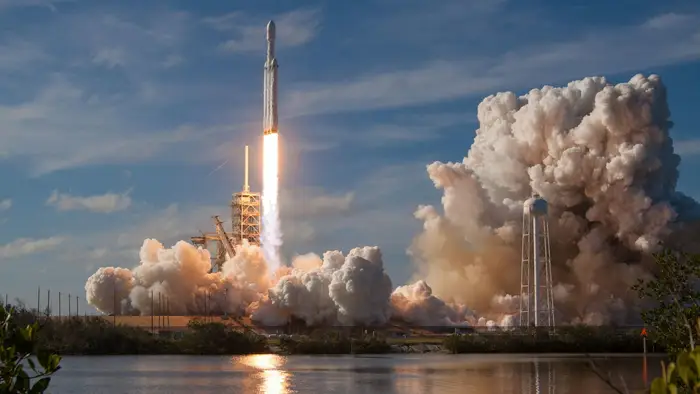
A textbook night, weather-wise
The 45th Weather Squadron had given the attempt an 85 percent chance of favorable conditions, with meteorologists watching for interference from anvil, thick and cumulus clouds. A weak mid-level low centered over Georgia was expected to dissipate overnight, leaving light southwesterly flow through the launch window — and in the event, the weather cooperated without drama.
Roughly 54 minutes after liftoff, the three BlueBird spacecraft began separating from the Falcon 9 upper stage, with SpaceX confirming deployment at 6:09 a.m. EDT. The mission came about six weeks after the BlueBird 8–10 launch on June 17, and AST SpaceMobile noted that six spacecraft had reached orbit within a span of about 50 days — the fastest sustained cadence in the company’s history.
That cadence matters enormously, because AST SpaceMobile is in a race against arithmetic. Its stated goal has long been 45 BlueBird satellites in orbit to enable continuous space-based cellular broadband service. With BlueBirds 11, 12 and 13, the in-orbit count reached 13 spacecraft — counting the BlueWalker 3 test satellite, that meant a working fleet of 12 BlueBirds: five first-generation Block 1 satellites and seven of the much larger Block 2 spacecraft. The original target of 45 by the end of 2026 has since slipped toward early 2027, but the direction of travel is unmistakable.
The biggest antennas ever flown
What makes the BlueBirds remarkable is not just their number but their size. AST SpaceMobile describes them as the largest communications arrays ever deployed in low Earth orbit — enormous phased-array antennas designed to do something no commercial system has done at scale: deliver broadband directly to ordinary, unmodified smartphones.
The physics is unforgiving. A phone’s antenna is tiny and its transmitter weak, so the satellite has to compensate with a gigantic aperture and sensitive receivers. The Block 2 BlueBirds are substantially larger than the five Block 1 satellites launched in September 2024, and the company says the new generation should support peak data rates approaching 200 Mbps straight to everyday handsets — speeds that would make a phone in a coverage gap behave as though it were on terrestrial 5G.
That capability is aimed at both commercial and government markets. The company has been stacking up defense business alongside its consumer ambitions: a $30 million prime contract from the Space Development Agency, a position on the Missile Defense Agency’s SHIELD contract vehicle, and — disclosed on its August 2026 earnings call — three U.S. government contracts with funded near-term value above $100 million expected across 2026 and 2027. With BlueBirds 14, 15 and 16 already preparing for the next mission and production advancing through BlueBird satellite 42, the factory side of the business is being asked to keep pace with the launch side.

From BlueWalker to Block 2: a bumpy road
The August flight was the latest chapter in a deployment history that has included both steady progress and at least one expensive lesson. The test satellite BlueWalker 3 flew in 2022 and proved the basic direct-to-cell concept. Five Block 1 BlueBirds followed on a Falcon 9 in September 2024. Then came the Block 2 era: BlueBird 6, the first of the larger generation, launched on an Indian LVM3 rocket in December 2025.
BlueBird 7 was supposed to ride Blue Origin’s New Glenn in April 2026 — but the upper stage placed it in a lower orbit than planned, and the satellite lacked the altitude to maintain itself on its own thrusters. The spacecraft was lost, covered by insurance, with the company’s second-quarter accounts recording a $125.9 million loss on involuntary conversion against an estimated carrying value of $155–160 million.
The failure reshaped AST’s launch strategy. New Glenn was meant to carry more BlueBirds per flight than Falcon 9, whose five-meter fairing limits each mission to three of the bulky Block 2 satellites. With New Glenn grounded, the company fell back on SpaceX — and the math of that fallback is stark. Analysts estimate each Falcon 9 mission costs $55–65 million, and reaching the 45-satellite threshold for continuous service requires at least eleven more launches at three satellites apiece. That implies a launch-services bill of roughly $600–715 million, which helps explain why the company raised $1.15 billion in debt just two weeks before the August 5 flight.
Management said in August 2026 that it had ten launches booked across two providers, not counting Blue Origin, and was aiming for a launch every one to two months. As one industry analysis put it, a constellation plan is only as fast as its launch supply — and for AST SpaceMobile, launch supply is now the binding constraint on everything else.
Thirty flights: the reusability ledger
Lost in the satellite story was a milestone worth pausing on. B1077’s 30th flight made it the fifth Falcon booster to reach that number. Consider what that means: a single orbital-class booster, recovered and reflown 30 times, each turnaround cheaper and faster than building anew. The 645th Falcon landing overall is no longer news in itself — which is precisely the point. Reusability has crossed from experiment to infrastructure.
That infrastructure is what makes the current launch market possible. When AST SpaceMobile needs a ride every month or two, it is SpaceX’s flight-proven fleet — and its relentless cadence — that can actually offer the slots. The company’s pivot away from New Glenn after the BlueBird 7 loss was, in that sense, a vote of confidence in the only system currently delivering that kind of tempo.
It is worth remembering how recently this was unthinkable. The first successful drone-ship landing was in 2016; a decade later, a booster flying for the 30th time barely makes the highlight reel. Each reuse drives down the marginal cost of access to orbit, and that falling cost is the quiet engine behind everything from megaconstellations to direct-to-cell startups. B1077 is not just a workhorse — it is a data point in the steepest learning curve in aerospace history.
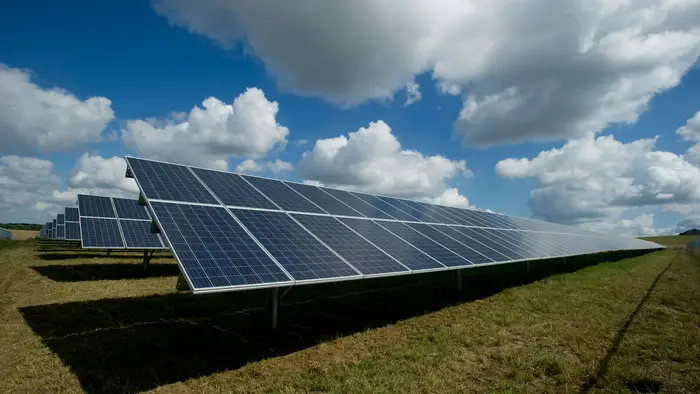
How you talk to a satellite with an ordinary phone
To appreciate why the BlueBirds have to be so enormous, it helps to think about what a normal cell tower does. Your phone was designed to chat with antennas a few kilometers away, mounted on masts you can see from the highway. A satellite in low Earth orbit is hundreds of kilometers overhead, racing past at roughly 7.5 kilometers per second, and your phone’s little antenna and milliwatt-class transmitter were never meant to reach it.
Closing that link budget from space is an exercise in extremes. The satellite needs a colossal collecting area to hear the phone’s whisper, extraordinarily sensitive receivers, and enough transmit power — focused into tight, steerable beams — to be heard back on the ground. It also needs to handle the Doppler shift as it screams overhead, hand calls off from beam to beam and satellite to satellite every few minutes, and do all of this while sharing radio spectrum with the terrestrial mobile networks whose frequencies it borrows.
That is why each BlueBird unfurls an antenna array measured in hundreds of square meters — by far the largest commercial communications structures ever flown in low orbit. The Block 2 generation is bigger still than the Block 1s, because bigger means more gain, more simultaneous beams, and more users served per pass. There is no Moore’s-law shortcut here; in antenna physics, aperture is destiny.
The regulatory side is nearly as demanding as the physics. Operating on frequencies licensed to terrestrial mobile carriers requires coordination with those carriers and approval from regulators — in the United States, the Federal Communications Commission’s supplemental-coverage-from-space framework. AST SpaceMobile’s business model is built on partnerships with mobile network operators around the world, which supply the spectrum and the subscribers while AST supplies the space segment. It is a wholesale model: the satellite company does not sell you a phone plan; it sells coverage to the carrier you already pay.
The April setback
The road to thirteen spacecraft in orbit was not smooth. The loss of BlueBird 7 in April 2026 still shapes the company’s planning. The satellite had been entrusted to Blue Origin’s New Glenn — a heavy-lift vehicle that, on paper, could carry more BlueBirds per flight than Falcon 9’s three-at-a-time limit. Instead, the upper stage delivered the spacecraft to a lower orbit than planned, and BlueBird 7 could not climb out on its own thrusters.
The financial footprint was significant: an estimated carrying value of $155–160 million, a $125.9 million loss on involuntary conversion booked in the second quarter, and an insurance claim to offset the damage. But the strategic footprint was larger. With New Glenn grounded in the aftermath, AST SpaceMobile lost its high-capacity ride and fell back entirely on Falcon 9 — accepting the three-per-flight constraint and the grinding arithmetic of eleven-plus more launches to reach continuous service.
There is a broader lesson in the episode for the whole industry. Constellation business plans tend to be written around the launch vehicles their authors hope will exist; they survive on the ones that actually fly. In 2026, the vehicle that actually flies, month after month, is Falcon 9. Every other heavy-lift option — New Glenn, Vulcan’s ramp-up, Starship’s test campaign — is still earning its reliability credentials. AST SpaceMobile’s pivot was less a choice than a recognition of that reality.
Money follows the signal
None of this is cheap, and the company’s financing tells the story of a capital-intensive business racing to scale. The $1.15 billion debt raise completed about two weeks before the August 5 launch was explicitly about funding the road to 45 satellites: at an estimated $55–65 million per Falcon 9 mission, the remaining launch manifest alone represents a $600–715 million bill, before counting satellite manufacturing, insurance, and ground operations.
Against that burn, the company has been assembling revenue streams. The defense side has moved fastest: a $30 million prime contract from the Space Development Agency, a slot on the Missile Defense Agency’s SHIELD contract vehicle, and the three government contracts disclosed in August 2026 with funded near-term value above $100 million across 2026 and 2027. Government customers value exactly what AST is building — resilient, space-based connectivity that does not depend on local infrastructure — and they pay before the consumer business reaches scale.
The consumer side remains the prize, though. If direct-to-cell broadband works at the promised data rates, it turns every dead zone on Earth — oceans, deserts, mountains, disaster areas — into covered territory for billions of existing handsets. No new phone required, no special app, just bars where there were none. That is a market measured not in satellite-industry terms but in mobile-industry terms, which is why the funding rounds keep coming despite the daunting capex.

What comes next
With BlueBirds 14, 15 and 16 preparing for the next mission, the near-term question is cadence: can AST SpaceMobile and SpaceX sustain a launch every one to two months through the rest of 2026 and into 2027? Each trio of Block 2 satellites measurably expands the network’s capacity and coverage, and the company’s government contracts give it revenue to chase while the commercial service matures.
The 45-satellite figure itself deserves unpacking. It is not a marketing number but an orbital-geometry one: with satellites in low Earth orbit each visible from a given point on the ground for only a few minutes at a time, continuous coverage of a region requires enough spacecraft that one is always overhead. Fall short of that number and the service becomes intermittent — usable for messaging that can wait for the next pass, but not for the always-on broadband the company promises. Every launch between now and that threshold narrows the gaps; the business only truly starts when the gaps close.
The longer-term question is competition. SpaceX’s own direct-to-cell Starlink service is pursuing the same prize — broadband to unmodified phones — from a vastly larger constellation, and the two approaches differ sharply in architecture: thousands of smaller satellites versus dozens of giant ones. Which geometry wins the economics of beaming broadband from orbit to a phone in your pocket is one of the defining business questions of the space industry’s next decade. Smaller players like Lynk Global are in the race as well, betting that even modest text-and-voice service from space has a market.
There is also the question of what happens to launch supply. AST SpaceMobile has said it holds ten launches booked across two providers, excluding Blue Origin — but the identity and readiness of that second provider matters enormously. If New Glenn returns to flight and proves it can deliver BlueBirds in larger batches, the cadence math improves dramatically. If not, the company remains dependent on Falcon 9’s three-at-a-time rhythm, and the 45-satellite goal stays a long grind of $60-million increments.
For now, though, the scoreboard is simple. Thirteen spacecraft in orbit. Twelve working BlueBirds. Six launched in fifty days. And one booster, B1077, touching down for the 30th time in the dark Atlantic — proof, if any were needed, that the rockets doing this work are built to come back.

The race to connect every phone on Earth from space is no longer a question of whether the technology works. BlueWalker 3 proved that years ago. It is a question of logistics — of factories, fairings, boosters and launch windows — and on a humid August morning in Florida, the logistics worked exactly as planned. The next trio is already waiting.